The Classics Club – December Meme Question #17

What is your favourite classic book?
A Young Girl Reading by Jean-Honoré Fragonard

Being a lover of the classics it is impossible for me to pick just one book. There are a few dozen that come to mind, all with special memories.  It is like trying to choose a favourite from among your children.  So instead, I am going to choose my favourite classic book from this year: 2013.

And the winner is:
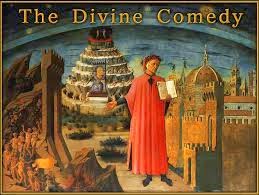
Dante Alighieri’s epic work, The Divine Comedy, was just amazing in its scope. This was my first read, so I spent much of my time attempting to familiarize myself with the various historical figures and allusions.  I plan a re-read in another couple of years.  This time I read the translation by John Ciardi that, while not the best one for sticking to original content, apparently conveys the “flavour” of Dante the best of all the translations.  Next time I will probably try the Mandelbaum translation which is more balanced in content.  Dorothy Sayers’ translation intrigues me as well but she sacrificed content for form, so it is not one of the higher recommendations.

Honorable mentions go to:

The House of Mirth was a surprise star for me this year.  Wharton’s masterful handling of the character of Lily Bart captured my respect and admiration.  She paints on the surface, a scheming, artful coquette who is, in spite of her humble origins, at ease in fashionable society, yet underneath we get glimpses of a purity and innocence that seem impossible given her experiences.  The story unfolds into a poignant and tragic ending which left me speechless yet anticipating my next Wharton read.

What can one say about Pride and Prejudice?  I usually read it at least once every two years and enjoy it just as much each time.  Lizzy’s spunky character and her ability to mold Darcy’s prideful reserve into to a more mellow and empathetic character is an entertaining read, and the cast of supporting characters is outstanding!  A true classic!

____________________________________________________________

The Pilgrim’s Regress by C.S. Lewis

“I dreamed of a boy who was born in the land of Puritania and his name was John.”

In The Pilgrim’s Regress, John is a boy who lives in Puritania and is given a rather legalistic view of the Landlord of his country by the overseer or Steward.  When he sees a shimmering Island in a vision through a crack in a wall, he experiences such an intense longing that he leaves Puritania, setting out on a journey to discover its location.  With this incredible longing (Sehensucht) throbbing inside him, he tries to assuage it by a number of worldly means.  The basic gist of the story is that John starts out, running from something he doesn’t truly understand and running to something he doesn’t truly understand.  Through his numerous adventures, many with his friend Vertue, he discovers that he has run right back to where he had begun, Puritania, but thanks to the enlightenment he has received on his travels from Mr. Halfway & son, the Clevers, Mr. Mammon, the Giant, Reason, Mother Kirk, Three Pale Men, Mr. Savage, Mr. Broad, Wisdom, Contemplation, the Hermit, and Silkisteinsauga, he finds the answers to his questions and is able to pass over the brook and into the light.

One of the many strengths of this book lies in the fact that John didn’t simply learn from the “good” people he met along his journey.  Each of his encounters taught him something about life and his beliefs, which helped him to grow into the person he became at the end of the story.

This was one of the hardest reviews I have written so far.  You begin with what appears to be a simple allegory of C.S. Lewis’ own journey to faith, yet the reader is soon made aware that embedded in this simple story is a plethora of incredibly complex material and ideas.  Lewis incorporated numerous ideologies such as Romanticism, Neo-Romanticism, Communism, Freudianism, Facism, etc. along with imagery, metaphors, and a host of allusions and quotes that is mind-boggling.  The fact that he wrote this book while on vacation at his friend Arthur Greeves’ house in a mere two weeks, and was able to incorporate the wide-ranging scope of material that he did, is astounding!

In talking about his book years later, Lewis appeared almost embarrassed by it:  “On re-reading this book ten years after I wrote it, I find its chief faults to be those two which I myself least easily forgive in the books of other men: needless obscurity, and an uncharitable temper.”  He blames his youthful idealism on failing to give the reader the guidance to understand his personal journey.  I, for one, can forgive him this minor fault.  To mine The Pilgrim’s Regress of its treasures is a difficult task, but one that is well worth the effort.

The Arthurian Literature Reading Challenge 2014

Jean over at Howling Frog Books has put together this great challenge for 2014:  The Arthurian Literature Reading Challenge.

The rules are as follows:

1.  The challenge runs from January 1, 2014 – December 31, 2014

2.  Sign-ups are open until November 30, 2014.

3.  To sign up, grab the button, write a post, and comment ON THE PAGE.
     Include the link to your sign-up post for it to count.  Keep track of your 
     reading and write a wrap-up post when you’re done, which you will submit
     at the end of the year.  She will follow your blog, and you follow hers, and
     you can discuss as you read.

4.  Books chosen for this challenge can overlap with other challenges.

5.  Book can be translated into the language of your choice, though if you are
     game for trying out some Middle English or Old French, go for it!

6.  Arthurian “cousins” count.  If you wish to read up on Tristan and Iseult or
     Parzival, or go haring off after the Fisher King, feel free.

7.  It is OK to read something pretty tangential that still deals with the
    Arthurian tradition, such as Charles Williams’ War In Heaven.  If you can
    make a reasonable case for it, go ahead.  Still, she’d like to keep the main 
    focus on the medieval works.

8.  She has categorized works by date into Old (pre-1800), Modern (1800-
     1950), and Recent (1950+).  If you wish to read Recent works, that’s fine,
     but you must read more Old and Modern works than Recent.  No reading
     all of Mary Stewart (great as she is) and nothing else!  Don’t worry, quite
     a few works are short and/or not difficult to read.

9.  Levels will consist of:

     Page:  read 2 works, one of which may be Recent
     Squire:  read 3 – 4 works, one of which may be Recent and one must be
                   Old
     Knight:  read 5 – 6 works, two of which may be Recent and one must be
                    Old
     Paladin:  read more than 6 works, two of which may be Recent and two 
                     must be Old, unless you include a non-fiction work (see Bonus)

     Bonus achievement:  read a non-fiction work analyzing Arthurian 
                                         literature

I am going to aim for Squire with 3 -4 works and hope to reach the level of Knight with 5 – 6 works.  My list:

1.  Once and Future King – T.H. White

2.  The Way of King Arthur – Christopher Hibbert

3.

4.

5.

6.

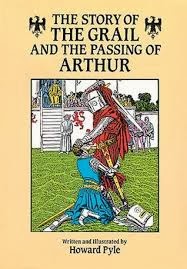
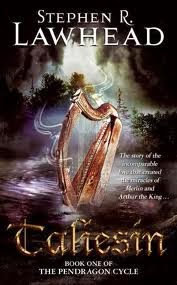
Some of my choices I will take from the following books:


I’m really looking forward to this challenge and learning more about King Arthur and his knights!

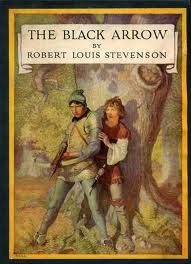
The Black Arrow by Robert Louis Stevenson

“On a certain afternoon, in the late springtime, the bell upon Tunstall Moat House was heard ringing at an unaccustomed hour.”

On my goodness, where do I start?

The Black Arrow is set during the War of the Roses and follows Dick (Richard) Shelton, a young man who discovers that his guardian, Sir Daniel Brackley, is actually responsible for his father’s death.  Dick sets out, not only to seek revenge, but to rescue the beautiful Joanna Sedley from his guardian’s clutches.  In his quest, he gets embroiled in “The War of the Roses,” the battle between the House of York and the House of Lancaster for the English throne and poor Dick must decide which side deserves his loyalty.  An interesting cast of characters assist or impede him on his journeys until he is able to overcome his struggles: win his bride, gain justice for his father and receive a knightship in the bargain.

On one hand, the novel is ripe with the promise of a wonderful adventure: a handsome young man, a romance, an historical battle, power struggles, revenge, trust, loyalty, and betrayal.  However, the manner in which Stevenson crafted this novel is rather bumbling.  There is little introduction to the setting; the characters are plunked into the story with a very brief background; perilous situation after perilous situation is fired rapidly at the reader with sketchy development; and the characters’ actions are contrived to move the plot along rather than with the intent to build strong, plausible characters.

For example, in one particular scene, on the drop of a coin, Dick decides to steal a ship (which no one really knows how to sail), attacks a well-fortified castle, with the result that he barely escapes with his life and ends up shipwrecked.  The skipper from whom he stole the ship is ruined, and it is only when Dick sees the culmination of his actions that he feels any remorse.  A matter of the ends justifying the means, which never sits well with me.

Stevenson himself disliked the book, describing it as “tushery” or the affected use of archaic language. The fact that he wrote it while in the grip of a debilitating case of influenza might act as an excuse for his sub-par creation:

The influenza has busted me a good deal; I have no spring, and am headachy. So, as my good Red Lion Counter begged me for another Butcher’s Boy-I turned me to-what thinkest ‘ou?-to Tushery, by the mass! Ay, friend, a whole tale of tushery. And every tusher tushes me so free, that may I be tushed if the whole thing is worth a tush. The Black Arrow: A Tale of Tunstall Forest is his name: tush! a poor thing!”

Personally I did not have a huge issue with his use of language, it was more the fact that Stevenson’s prose took the appearance of a run-away train and left the reader little time to breathe, as well as the lack of a guide for the readers by giving them merely the faint whiff of background for the story and the characters.  It is worth a read but read it with no expectations; if you anticipate another Treasure Island, this isn’t it.  Sorry, Robert!

The C.S. Lewis Project 2014

The above poster was created by The Moonlight Reader

Another project/challenge for 2014 is The C.S. Lewis Project.  This project was proposed by the wonderful moderators on my Goodreads book group, The Dead Writers Society .

C.S. Lewis is one of my favourite authors.  I began by reading some books from his Narnia Chronicles when I was young and later, as an adult, I read many of his theological books.  Not only is Lewis brilliant, but he is adept at communicating complex ideas and concepts in a way that is easily accessible to your average layperson …….. like me!  While he has definite opinions, which he supports using common sense and reason, he also is very gracious towards the people and groups with whom he disagrees.  The depth and variety of his subjects mean that each read through his books exposes layer upon layer of valuable insights that have just as much relevance today as when he wrote them.

The schedule for The C.S. Lewis Project 2014 will look like this:

Dec 29 – Jan 11: The Lion, the Witch, and the Wardrobe
Jan 12 – 25: Prince Caspian: The Return to Narnia
Jan 26 – Feb 8: The Voyage of the Dawn Treader
Feb 9 – 22: The Silver Chair
Feb 23 – Mar 8: The Horse and His Boy
Mar 9 – 22: The Magician’s Nephew
Mar 23 – Apr 5: The Last Battle


April: Mere Christianity
May: The Screwtape Letters
June: The Great Divorce
July: Surprised by Joy
August: A Grief Observed


September: Out of the Silent Planet
October: Perelandra
November: That Hideous Strength


December: God in the Dock: Essays on Theology and Ethics 

              A Preface to Paradis Lost
              Dante’s Similes (Essay)
              A Panegyric for Dorothy L. Sayers (Essay)
              Hamlet: The Prince or the Poem? (Essay)
              On Reading ‘The Faerie Queene (Essay)
              Spenser’s Images of Life
              Narnian Suite (Poetry)

Are you interested in participating?  Then come on over to The Dead Writers Society and join us!  We’d be glad to have you!


Update:  2015
I’ve enjoyed this project so much that I’ve decided to continue it indefinitely.  In 2015, I’ll try to read some of the Lewis books I missed in 2014, and then concentrate more on his scholarly work and essays.  Fun!


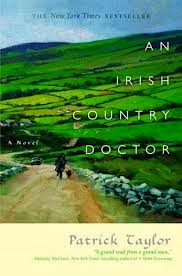
An Irish Country Doctor by Patrick Taylor

A nice read about a young Irish doctor, Barry Laverty, who travels to the small village of Ballybucklebo to apprentice under an old curmudgeon of a doctor, Dr. Fingal Flahertie O’Reilly.  O’Reilly’s brash manner and unorthodox medical treatments at first unsettle the young doctor, but as he realizes the care and the shrewd understanding that O’Reilly has for the villagers, he begins to see medicine not only as a science to treat the body, but as a philosophy to cure the soul.

While I enjoyed many of the situations in the novel, it didn’t completely enrapture me.  The characters were lively and interesting but somehow they never touched my heart.  At times, the author appeared to manhandle them in a certain way to enhance a laugh or situation, which took away from their natural development.  This book reminded me of the TV series, Doctor Finlay (based on the books by A.J. Cronin) which follows the life and cases of a doctor in post-WWII Scotland, although it lacks some of the warmth of the characters in the show.

All in all, this was a satisfactory light read and it was nice to escape from the city, and into the wild simplicity of Ballybucklebo.

Mount TBR Reading Challenge 2014

Straight from Howling Frog Books and originally from My Reader’s Block, it’s the 2014 Mount TBR Reading Challenge!

Challenge Levels:

Pike’s Peak: Read 12 books from your TBR pile/s

Mount Blanc: Read 24 books from your TBR pile/s
Mt. Vancouver: Read 36 books from your TBR pile/s
Mt. Ararat: Read 48 books from your TBR piles/s
Mt. Kilimanjaro: Read 60 books from your TBR pile/s
El Toro: Read 75 books from your TBR pile/s
Mt. Everest: Read 100 books from your TBR pile/s

Mount Olympus (Mars): Read 150+ books from your TBR pile/s

~  Once you choose your challenge level, you are locked in for at least that many books.  If you find that you’re on a mountain-climbing roll and want to tackle a taller mountain, then you are certainly welcome to upgrade.  All Books counted for lower mountains may carry over toward the new peak.

~  Challenge runs from January 1 to December 31, 2014

~  You may sign up anytime from now until November 30, 2014

~  Books must be owned by your prior to January 1, 2014.  No ARCs (none), no library books.  No rereads.  Audiobooks and E-books may count if they are yours and they are one of your primary sources of backlogged books.

~  You may count any “currently-reading” book that you begin prior to January 1st, provided that you had 50% or more of the book left to finish in 2014.

I am going to go for the Mount Blanc challenge.  I’ve read this many at least for the last couple of years and, if I’m fortunate, I might get to Mount Vancouver.  Wish me luck!

Book Corner #1 – What Are You Reading Today?

When it comes to my books, the question, “What Are You Reading?” is more than a loaded question ……. it’s a bomb!  But today I have decided to get very personal and share my “little” stash.  I can already hear the shocked gasps …….


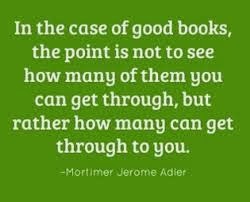
I admit, it’s embarrassing.  My enormous to-read list tends to push me to read more and more, not to mention my Goodreads groups, and recommendations that I find on various blogs.  Sigh!  To combat this voracious habit, my goal for the New Year (again) is to read less but deeper.  As Mortimer J. Adler says:

A quote to live by.


Classic Spin #4 – And the Winner Is …… (Drum Roll …..)

From my Classics Spin #4 post, the Spin number chosen was 10, so my classic to read is ……… BLEAK HOUSE!

The spin number worked in my favour as I am scheduled to read Bleak House after David Copperfield, so I won’t have to add any extra books to my ever-expanding pile.  This is good.

However, I must admit that I am not going to start this read until I’ve finished David Copperfield, which won’t be until mid-January so I won’t technically complete the Spin as specified (finish date January 1st).

Perhaps next time I will get one of the books which make me tremble, such as Ulysses, Moby Dick or The Communist Manifesto, but for now I’m happy with such a convenient read.

_____________________________________________________________
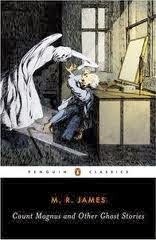
Count Magnus and Other Ghost Stories by M.R. James

“By what means the papers out of which I have made a connected story came into my hands is the last point which the reader will learn from these pages.”  (from Count Magnus)

I first must say that horror genre isn’t really my thing, even if the book is a classic.  So, despite the fact that I decided to read at least one scary story for the month of October, I was not approaching this read with much joy or interest.  How fortunate that I decided to choose M.R. James, who has perhaps changed my opinion of ghost stories forever.

The back of my Penguin Classic, “Count Magnus and Other Ghost Stories” says:  “M.R. James, referred to by H.P. Lovecraft as ‘one of the few really creative masters in his darksome province,’ was a pioneer in the history of the English ghost story, transforming the ghost from a wispy, ethereal figure into an aggressive, malevolent, and all too palpable force of evil ……”

My favourite story in this compilation was “Casting the Runes.”  Eerie and terrifying, it gave the main character some power over the dark force and, instead of becoming a victim, he emerges as triumphant over his spectral foe.  This story was apparently the basis for a classic horror film, “Curse of the Demon” (which I’ve never seen).

I also enjoyed, “Oh, Whistle and I’ll Come to You, My Lad,” where blowing a whistle has very unexpected repercussions, “Canon Alberic’s Scrap-book,” “The Ash Tree“, which, for me, was one of the scariest in the book, “Number 13,” a creepy tale about a haunted hotel room, and “Count Magnus,” where the reader learns to be careful what you ask for.

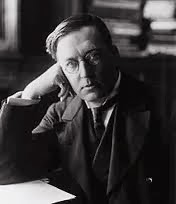
Montague Rhodes James specialized in medieval illuminated manuscripts and was the provost of both Kings College, Cambridge, and Eton College.  He is known for redefining the ghost story by “using contemporary settings and abandoning trite Gothic clichés.”  He was highly articulate, extroverted and sociable and, though he never married, was known for having a great number of treasured friendships.

His introduction to ghosts came at a young, and perhaps impressionable, age:  “What first interested me in ghosts? This I can tell you quite definitely. In my childhood I chanced to see a toy Punch and Judy set, with figures cut out in cardboard.One of these was The Ghost. It was a tall figure habited in white with an unnaturally long and narrow head, also surrounded with white, and a dismal visage.  Upon this my conceptions of a ghost were based, and for years it permeated my dreams.”

What was particularly refreshing about James’ stories was that his treatment of his subject was very subtle.  His stories were full of shadows and dark blots, old trees personified and deaths with no concrete explanation.  He gives the reader just enough for a rough outline, then leaves them to use their imagination to formulate even more terrifying surmises based on his carefully crafted descriptions. One feels that these malevolent spirits should never have been disturbed.  Brrr!

I have The Haunted Doll’s House and other Ghost Stories sitting on my bookshelf and I can’t wait to pick it up and fade into the supernatural world of James’ ghostly tales.