
So it’s time for another spin. After being late for the last one and then having a large book chosen for me, I wonder at the wisdom of joining another. But I have to get through my classics list, so I’ll throw caution to the winds!

So it’s time for another spin. After being late for the last one and then having a large book chosen for me, I wonder at the wisdom of joining another. But I have to get through my classics list, so I’ll throw caution to the winds!
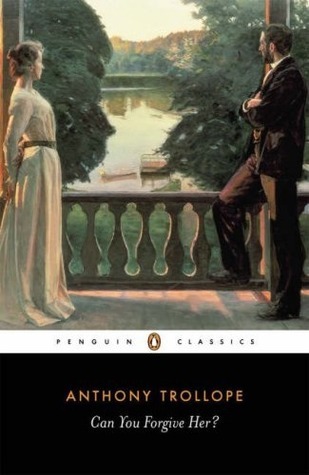 “Whether or no, she, whom you are to forgive, if you can, did or did not belong to the Upper Ten Thousand of this our English world, I am not prepared to say with any strength of affirmation.”
And so starts the first book of the Palliser series, Can You Forgiver Her? (1865), to be followed by:
Previously known as the Parliamentary novels, the novels encompass a number of literary genres but also seem to highlight the corruption of British parliamentary politicians. In his autobiography, Trollope said of this series:
“To carry out my scheme I have had to spread my picture over so wide a canvas that I cannot expect that any lover of such art should trouble himself to look at it as a whole. Who will read Can You Forgive Her?, Phineas Finn, Phineas Redux, and The Prime Minister consecutively, in order that they may understand the characters of the Duke of Omnium, of Plantagenet Palliser, and of Lady Glencora? Who will ever know that they should be so read?”
I plan to answer Trollope’s direction and read all of the books consecutively, so here I go ….

I’m not sure why I keep doing these Spins. I’m overloaded with book-commitments, but it at least reminds me of the lists of books I want to read. And I’m also late for the Classics Club Spin #45. But better late than never.
Using my Classics Club list, I’m going to hope for something not too taxing. At least I’ve finished The Grapes of Wrath and Tom Sawyer recently so my list is getting shorter.
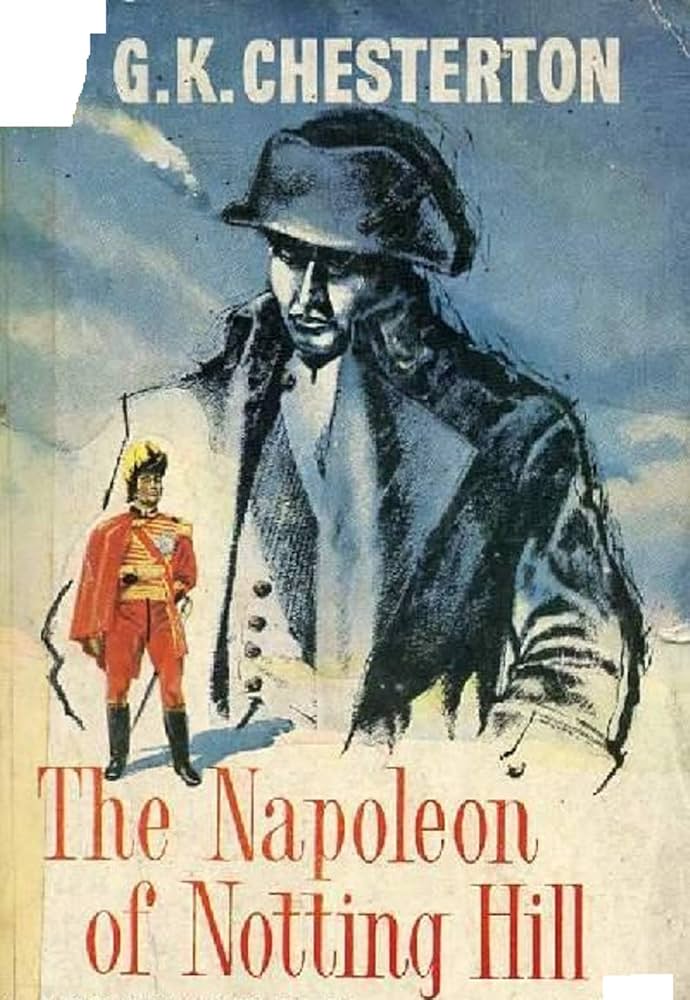 “The human race, to which so many of my readers belong, has been playing at children’s games from the beginning, and will probably do it till the end, which is a nuisance for the few people who grow up.”
First of all, G.K. Chesterton is the most under-rated author there is. Perhaps it’s because his intellect is just so far beyond your average person’s that it takes attention and a willingness to think to get the most out of his works. But on the other hand, his novels are just so full of romps and fun and zany behaviour that it’s hard not to love them. The Napoleon of Notting Hill was his first endeavour.
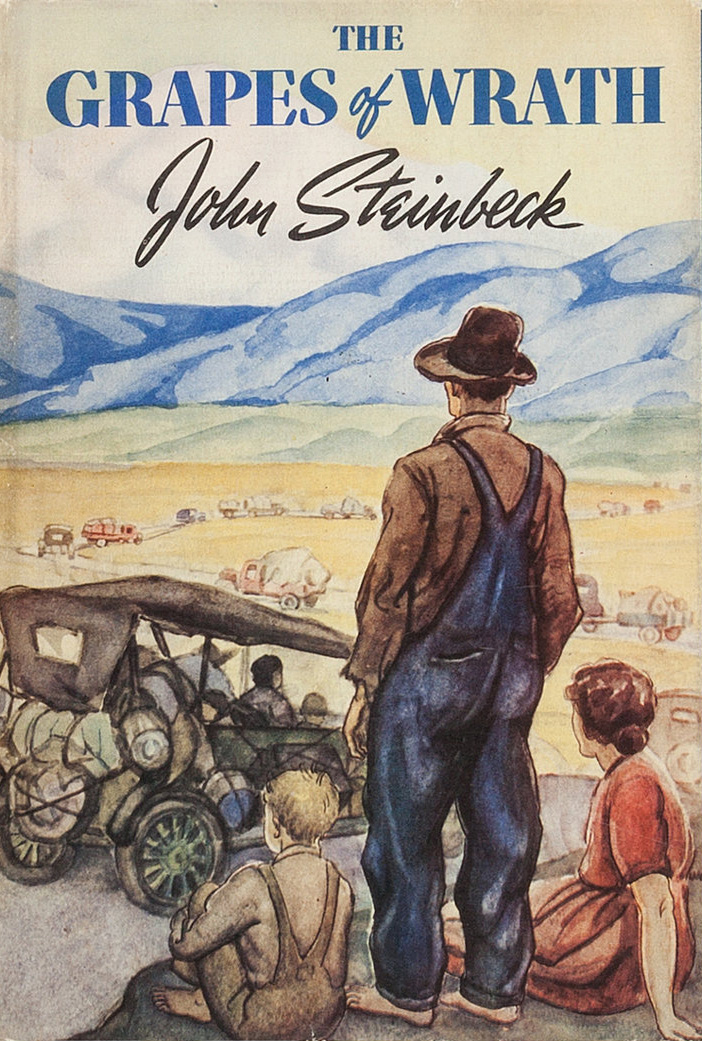 “To the red country and part of the gray country of Oklahoma, the last rains came gently, and they did not cut the scarred earth.”
Okay, I’m just going to come out and admit it. I simply could not stand this book. I didn’t have high hopes because East of Eden was sort of a “meh” for me, but it was much more compelling and realistic than this one. I don’t like books that exaggerate circumstances to further the author’s point of view, and I don’t like being emotionally manipulated. This work did both and the method was highly irritating and disingenuous.
 ‘”Tom!”
No answer.’
Mark Twain, born Samuel Clemens, is known for his piercing wit, but here in his first novel, The Adventures of Tom Sawyer, he recounts the adventures of a boy in St. Petersburg, a fictional town along the Mississippi River which is based on his own hometown of Hannibal, Missouri.
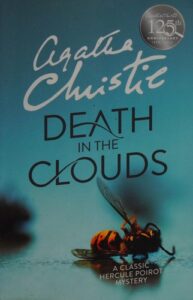 Death in the Clouds: “The September sun beat down hotly on Le Bourget aerodrome as the passengers crossed the ground and climbed into the air liner Prometheus, due to depart for Croydon in a few minutes’ time.”
Also Published as: Death in the Air
Detective: Hercule Poirot
Published: March 1935
Length: 253 pages
Setting: London, Paris
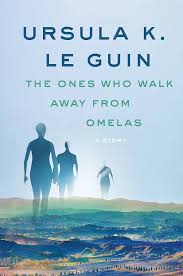 “With a clamor of bells that set the swallows soaring, the Festival of Summer came to the city of Omelas, bright towered by the sea.”
And so with The Ones Who Walk Away from Omelas, I continue with my duo short story read which also included The Lottery by Shirley Jackson. Both stories have a similar theme and they are wonderful to pair for a comparison. The Lottery was written in 1948 and The Ones Who Walk Away From Omelas was written in 1973.
 “When I was a girl …. I imagined that life was individual, one’s own affair; that the events happening in the world outside were important enought in their own way, but were personally quite irrelevant.”
 “When Louis Trevelyan was twenty-four years old, he had all the world before him where to choose; and, among other things, he chose to go to the Mandarin Islands, and there fell in love with Emily Rowley, the daughter of Sir Marmaduke, the governor.”
My, Anthony Trollope is delightful. I’m convinced that he could write a novel about an ant colony and make it thoroughly entertaining. And entertainment is what we get in this tome about a couple destined to be in a state of conflict, simply because of their own pride.