The C.S. Lewis Project 2014

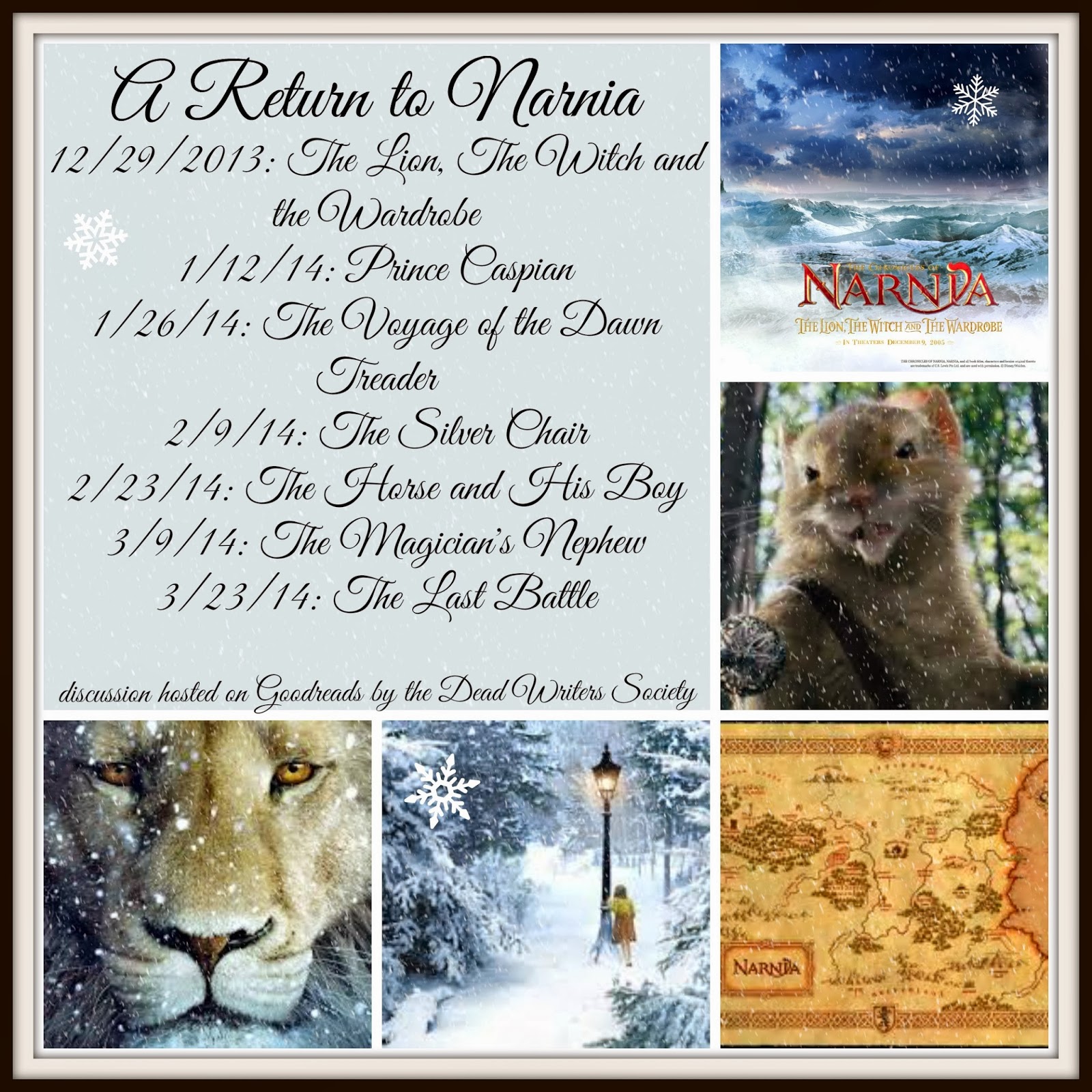
The above poster was created by The Moonlight Reader

Another project/challenge for 2014 is The C.S. Lewis Project.  This project was proposed by the wonderful moderators on my Goodreads book group, The Dead Writers Society .

C.S. Lewis is one of my favourite authors.  I began by reading some books from his Narnia Chronicles when I was young and later, as an adult, I read many of his theological books.  Not only is Lewis brilliant, but he is adept at communicating complex ideas and concepts in a way that is easily accessible to your average layperson …….. like me!  While he has definite opinions, which he supports using common sense and reason, he also is very gracious towards the people and groups with whom he disagrees.  The depth and variety of his subjects mean that each read through his books exposes layer upon layer of valuable insights that have just as much relevance today as when he wrote them.

The schedule for The C.S. Lewis Project 2014 will look like this:

Dec 29 – Jan 11: The Lion, the Witch, and the Wardrobe
Jan 12 – 25: Prince Caspian: The Return to Narnia
Jan 26 – Feb 8: The Voyage of the Dawn Treader
Feb 9 – 22: The Silver Chair
Feb 23 – Mar 8: The Horse and His Boy
Mar 9 – 22: The Magician’s Nephew
Mar 23 – Apr 5: The Last Battle


April: Mere Christianity
May: The Screwtape Letters
June: The Great Divorce
July: Surprised by Joy
August: A Grief Observed


September: Out of the Silent Planet
October: Perelandra
November: That Hideous Strength


December: God in the Dock: Essays on Theology and Ethics 

              A Preface to Paradis Lost
              Dante’s Similes (Essay)
              A Panegyric for Dorothy L. Sayers (Essay)
              Hamlet: The Prince or the Poem? (Essay)
              On Reading ‘The Faerie Queene (Essay)
              Spenser’s Images of Life
              Narnian Suite (Poetry)

Are you interested in participating?  Then come on over to The Dead Writers Society and join us!  We’d be glad to have you!


Update:  2015
I’ve enjoyed this project so much that I’ve decided to continue it indefinitely.  In 2015, I’ll try to read some of the Lewis books I missed in 2014, and then concentrate more on his scholarly work and essays.  Fun!


Mount TBR Reading Challenge 2014

Straight from Howling Frog Books and originally from My Reader’s Block, it’s the 2014 Mount TBR Reading Challenge!

Challenge Levels:

Pike’s Peak: Read 12 books from your TBR pile/s

Mount Blanc: Read 24 books from your TBR pile/s
Mt. Vancouver: Read 36 books from your TBR pile/s
Mt. Ararat: Read 48 books from your TBR piles/s
Mt. Kilimanjaro: Read 60 books from your TBR pile/s
El Toro: Read 75 books from your TBR pile/s
Mt. Everest: Read 100 books from your TBR pile/s

Mount Olympus (Mars): Read 150+ books from your TBR pile/s

~  Once you choose your challenge level, you are locked in for at least that many books.  If you find that you’re on a mountain-climbing roll and want to tackle a taller mountain, then you are certainly welcome to upgrade.  All Books counted for lower mountains may carry over toward the new peak.

~  Challenge runs from January 1 to December 31, 2014

~  You may sign up anytime from now until November 30, 2014

~  Books must be owned by your prior to January 1, 2014.  No ARCs (none), no library books.  No rereads.  Audiobooks and E-books may count if they are yours and they are one of your primary sources of backlogged books.

~  You may count any “currently-reading” book that you begin prior to January 1st, provided that you had 50% or more of the book left to finish in 2014.

I am going to go for the Mount Blanc challenge.  I’ve read this many at least for the last couple of years and, if I’m fortunate, I might get to Mount Vancouver.  Wish me luck!

Classics Club Spin #4

For this spin, the rules are the following:

1.  Go to your blog.
2.  Pick twenty books that you’ve got left to read from your Classics Club List.
3.  Try to challenge yourself: list five you are dreading/hesitant to read, five you
      can’t WAIT to read, five you are neutral about, and five free choice (favourite
      author, rereads, ancients — whatever you choose.)
4.  Post that list, numbered 1-20, on your blog by next Monday.
5.  Monday morning, we’ll announce a number from 1-20.  Go to the list of twenty
      books you posted, and select the book that corresponds to the number we 
      announce.
6.  The challenge is to read that book by January 1, even if it’s an icky one you
      dread reading!  (No fair not listing any scary ones!)

I used the random list organizer here to choose the 20 books from my master list.  After having to drop a few books for various reasons (out of series order, they are scheduled with a group at a certain time, etc.) my list looked like this:

  1. The Bucanneers (1938) – Edith Wharton
  2. Paradise Lost (1667) – John Milton
  3. The Mysteries of Udolpho (1794) – Ann Radcliffe
  4. Thus Spoke Zarathustra (1883 – 1885) – Freidrich Nietzsche
  5. The Cloister and the Hearth (1861) – Charles Reade
  6. Common Sense (1775 – 1776) – Thomas Paine
  7. Slaughterhouse Five (1969) – Kurt Vonnegut
  8. Travels with a Donkey in Cévennes (1879) – Robert Louis Stevenson
  9. The Mill on the Floss (1860) – George Eliot
  10. Bleak House (1852/53) – Charles Dickens
  11. The Moonstone (1868) – Wilkie Collins
  12. Tales of Ghosts and Men (1910) – Edith Wharton
  13. Antigone (441 B.C.) – Sophocles
  14. Tevye the Dairyman and Motl the Cantor’s Son (1894) – Sholem Aleichem
  15. The Warden (1855) – Anthony Trollope
  16. Murder in the Cathedral (1935) – T.S. Eliot
  17. Essays (1580) – Michel de Montaigne
  18. We (1921) – Yevgeny Zamyatin
  19. Utopia (1516) – Thomas More
  20. The Pilgrim’s Regress (1933) – C.S. Lewis

Then I broke them into the listed categories …….

5 Books I’m Hesitant to Read:

  1. Paradise Lost (1667) – John Milton
  2. Thus Spoke Zarathustra (1883 – 1885) – Freidrich Nietzsche
  3. Common Sense (1775 – 1776) – Thomas Paine
  4. Essays (1580) – Michel de Montaigne
  5. Utopia (1516) – Thomas More


5 Books I Can’t Wait to Read:

  1. Travels with a Donkey in Cévennes (1879) – Robert Louis Stevenson
  2. The Bucanneers (1938) – Edith Wharton
  3. The Pilgrim’s Regress (1933) – C.S. Lewis
  4. The Warden (1855) – Anthony Trollope
  5. The Cloister and the Hearth (1861) – Charles Reade

5 Books I Am Neutral About Reading:

  1. The Mill on the Floss (1860) – George Eliot
  2. Murder in the Cathedral (1935) – T.S. Eliot
  3. We (1921) – Yevgeny Zamyatin
  4. Slaughterhouse Five (1969) – Kurt Vonnegut
  5. The Mysteries of Udolpho (1794) – Ann Radcliffe

5 Free Choice:

  1. Tevye the Dairyman and Motl the Cantor’s Son (1894) – Sholem Aleichem
  2. Bleak House (1852/53) – Charles Dickens
  3. The Moonstone (1868) – Wilkie Collins
  4. Tales of Ghosts and Men (1910) – Edith Wharton
  5. Antigone (441 B.C.) – Sophocles

Please God, don’t let me get Montaigne’s Essays.  That will kill me, especially with the January 1st deadline.  I await the number to be chosen with trepidation and hope it is one of the books that I already have in progress (The Pilgrim’s Regress and Tales of Men and Ghosts), although I know that is not the purpose of the spin.  Normally I would be happy to be challenged, but with Christmas just around the corner I wonder if I will be able to accomplish it.

Strangely this is a little like gambling ………..  although, safe gambling with a purpose of higher education.  No wonder it’s so fun!

________________________________________________________


History Reading Challenge 2014

Each year I try to schedule in more non-fiction books into my reading lists.  Sometimes I succeed in my attempts but most times I fail miserably.  So what better way to force myself to read more non-fiction than by joining a challenge and being held accountable!  I came across this challenge on one of my favourite blogs and was immediately hooked.

History is one of my favourite non-fiction genres.  What particularly intrigued me about this challenge was the detailed requirements that I found to be eminently sensible.

1.  The history books must be written by an historian and pure non-fiction.  How many times have I been frustrated by books where the author is unable to understand the era which he is writing about, and the reader is left with much of the author’s opinions as well as modern ideas applied to historical issues?  This requirement should minimize this problem.

2.  It must be a work formed through investigation and research.  Another issue that horrifies me is the number of new non-fiction histories which list a bibliography that includes only modern or relatively recent books.  How on earth could the author get a reasonable perspective this way?  So I will make sure my choices have broad investigation and research.

3.  Biography can be chosen but not autobiography as it can lack historical objectivity.  I had never even thought of this but I can certainly see her point.  Another very sensible requirement.

4.  She provides wonderful analysis questions to answer after the book is finished.  An excellent way to get more meaning out of a read.

Now to try to narrow it down.  I was going to go for the “scholar” level of 4-6 books, but, in keeping with my resolution to read less but more deeply next year, I will choose the “student” level of 1-3 books.

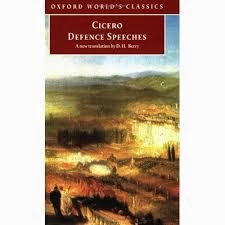
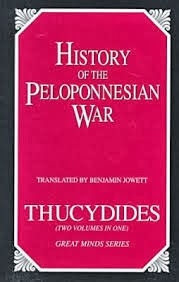
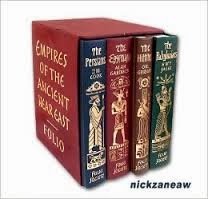
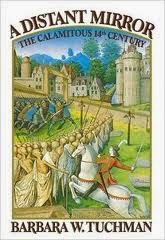
At the top of my list are the following:


I’ll have to check if they all qualify but these are what I could come up with off the top of my head.

Oooo, I can’t wait until the new year!

Books read:

1.  The Guns of August – Barbara Tuchman
2.  The Way of King Arthur – Christopher Hibbert
3.  Cicero’s Defence Speeches
4.  The Sayings of the Desert Fathers