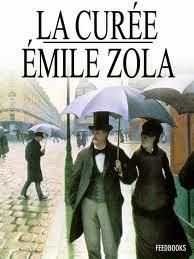
La Curée by Émile Zola

“On the drive home, the barouche was reduced to a crawl by the long line of carriages returning by the side of the lake.”

The title of Émile Zola’s third novel (in Zola’s recommended reading order) of the Rougon-Marquart series, La Curée, or The Kill, refers to the spoils of meat thrown to the dogs at the completion of a hunt, and so is a reflection of the wild and uncontrolled speculation in Paris of the 1850s and 1860s, where monetary greed runs rampant, spewing the biproducts of immorality, licentiousness, fraud and hypocrisy.

Aristide Rougon, has arrived in Paris from Plassans with his first wife, Angèle. Poor and provincial, Aristide dreams of wealth and a life of luxury and notoriety.  Ignited by his near fanatical desire for money, he manages through dishonest dealings to cheat and finagle his way into property speculation in this city, that is expanding at a near-combustible rate.

As usual, Zola grabs you and pulls you into the story with his lush and vibrant prose, and vivid descriptions:

“This was the time when the rush for spoils filled a corner of the forest with the yelping of hounds, the cracking of whips, the flaring of torches.  The appetites let loose were satisfied at last, shamelessly, amid the sound of crumbling neighbourhoods and fortunes made in six months.  The city had become an orgy of gold and women.  Vice, coming from on high, flowed through the gutters, spread out over the ornamental waters, shot up in the fountains of the public gardens, and fell on the roofs as fine rain.  At night, when people crossed the bridges, it seemed as if the Seine drew along with it, through the sleeping city, all the refuse of the streets, crumbs fallen from tables, bows of lace left on couches, false hair forgotten in cabs, banknotes that had slipped out of bodices, everything thrown out of the window by the brutality of desire and the immediate satisfaction of appetites.  Then, amid the troubled sleep of Paris, and even more clearly than during its feverish quest in broad daylight, one felt a growing sense of madness, the voluptuous nightmare of a city obsessed with gold and flesh.  The violins played until midnight; then the windows became dark and shadows descended over the city.  It was like a giant alcove in which the last candle had been blown out, the last remnant of shame extinguished.  There was nothing left in the darkness except a great rattle of furious and wearied lovemaking; while the Tuileries, by the riverside, stretched out its arms, as if for a huge embrace.”

Aristide changes his name to Saccard and, as his wealth grows, after the death of his wife he marries the young Renée Béraud du Châtel and later brings his son, Maxime, to live with them in Paris.  Renée, perpetually bored, is delighted at the thought of someone to pet and coddle and use as a tool to gain attention, and so becomes highly involved in Maxime’s moral development (or perhaps I should say, amoral development).  When we meet him in the novel as a twenty-year-old young man, he is happily aping his parents’ generation, as money flows through his fingers like water and unlimited pleasure is sought as nourishment, with little regard for the consequences.

As Saccard’s insatiable lust for money drives his every action, and he balances on the wire between wealth and ruin, Renée and Maxime fall into a comfortable and close relationship, which becomes the catalyst for a semi-incestuous affair driven by Renée’s boredom and lust for a new inventive perversion.  Yet instead of being entertained and satisfied by their liaison, through different circumstances, Renée finds herself debased and abandoned.  There are no loyalties in the new Paris, except with the reward of monetary gain, and true human feeling has all but been extinguished by obsessive desires for money and decadence.  Renée is a casualty of little importance.

Le Forhu à la fin de la curée
1746

Zola’s novels have an air of tragedy about them that is not necessarily brought on only by the actions of the characters or the plot of the story.  In Zola’s eyes, each character is trapped by their inherent nature in a cycle from which they cannot escape.  They are helpless and we get the sense of a drowning man who cannot be rescued, or a figure who cannot be pulled from in front of a speeding train.  This echoes the ideas of fate supported by the ancient Greeks, in that there is nothing you can do to change your destiny.  I’m not certain that I agree with his presentation.  We all have the ability to choose in each situation and, while each choice may entail a different degree of difficulty, our decisions do shape our fate to a greater or lesser degree.  Choice is what separates man from animal, and Zola’s portrayal of man trapped in an hereditary cycle exemplifies the destructive consequences when man follows only his instincts without an ethical or moral base.

This was the only Zola I was able to finish for Fanda Classiclit’s Zola Addiction, but I was happy to finish only one.  Zola is not an author I want to rush through; he makes you want to sink into his settings, try his prose out on your tongue and learn more about the historical content.  Money is the next Zola on my list and I’m looking forward to it!

Other Rougon-Macquart Series Reviews (Zola’s recommended order):

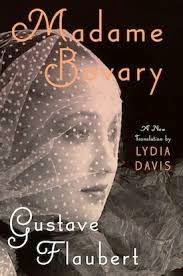
Madame Bovary by Gustave Flaubert


“We were in Study Hall, when the Headmaster entered, followed by a new boy dressed in regular clothes and a school servant carrying a large desk.”

Emma Roualt has been raised in a convent but during her formative years and religious education, she has somehow managed to get sentimental romance novels smuggled in to her.  When she leaves the convent, the sisters are relieved to see her go as there is some indication that Emma is not the pious, compliant young woman that they were hoping to produce.  Does Emma come by her stubborn and idealistic outlook naturally, or are the novels responsible for corrupting her character?

Soon after Emma returns to her father’s house, she meets the doctor, Charles Bovary, and imagines the feelings of emotion she experiences under his regard, love.  When the first wife of Charles passes away, Emma is happy to become his wife, yet almost immediately begins to wonder why the passionate, overwhelming feelings of a romantic love seem to elude her.  Quite soon she seeks admiration and passion outside her marital relationship, first with Leon Dupuis, a law clerk, and then with the sophisticated Rodolphe Boulanger. Drawn into a web of deceit by her need for a story-like romance, Emma begins an affair, first with Rodolphe and later with a more worldly Leon, who has now spent years in the city and knows how to conduct himself like a truly indulged and hardened man-about-town.  Neither man truly cares for her.  Each is attracted by her beauty and her passionate regard for him, yet soon these shallow emotions begin to unravel and the men tire of their paramour.  Emma, now heavily in debt and still lacking the love and desire that she equates with a meaningful life, decides to take poison and her death culminates in the tragic death of Charles and the sentencing of her daughter to a life of poverty and toil.

The Death of Bovary
Charles Léandre (1931)
source Wikimedia Commons

And so, what can we say about Emma?  She is certainly not a sympathetic character and it seems rather apparent that Flaubert didn’t mean to make her one.  How is responsible is she for her fate?  Does she perpetrate her own demise or is she an unwilling victim of circumstances?

One could certainly make excuses for Emma and say that she was trapped, not only in a simple, colourless and rigid society, but in a loveless marriage (on her part), and in a situation where she had little opportunity for following anything other than the status-quo.  However, Emma had been given an education of a type through the nuns, and though it might not have been wide in its scope, it certainly should have taught her the importance of honesty and virtue and goodness.  Emma chooses to sneak sentimental romances into the abbey to read, just as she chooses to believe what she reads should be the way of life, in spite of the evidence in front of her face against it, and she chooses to have adulterous affairs at the risk of the ruin of her reputation and that of her husband’s.  She also chooses to borrow money, placing her family heavily in debt and, the means of borrowing the money are brought about with deceit on her part to keep her actions hidden.  So I don’t really buy the “poor Emma Bovary, she is a victim of circumstance” excuse.  She keeps her illicit relationships secret, as well as the fact that she is borrowing money, and by the very fact that she does these things covertly, she MUST know that these actions are wrong.  Instead she chooses to do them anyway, for her own selfish emotional gratification and, as we see, she reaps consequences that were perhaps beyond her scope of imagining.

I didn’t dislike this book, but when I read I like to find something that stirs an emotional or an intellectual response, which is part of the conversation with the author.  With Flaubert, while there were certainly moments that sparkled, overall I was left a little flat.  The whole plot was built around a shallow, vain, deluded young girl who was supposedly corrupted early in life by her choice of reading.  No one noticed and, judging by the manner in which Flaubert portrays the setting and characters, even if they did, they perhaps would have done nothing to enlighten her.  While I wanted to pity Emma and make excuses for her, there was something fundamentally wrong with her thinking and the mechanisms she used to process life and the world around her.  Was it due to her reading material, or was she already a damaged person and the books only served to increase the self-serving, emotional fantasy-life that was already expanding within her?  I don’t think we can know.  For me it would have been infinitely more interesting if Flaubert chose to investigate this issue but instead we only see the effect of her delusions without being able to truly surmise the cause.  And that is a tragedy because Emma Bovary deserved a story that generated compassion for her and not distaste and impatience at her emotionally bankrupt behaviour and dramatic actions.  In spite of some spots of brilliance, I feel Flaubert missed a great opportunity and, once again, Emma seems to be the one that pays for it.

Translated by Lydia Davis

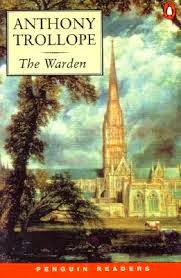
The Warden by Anthony Trollope

“The Revd Septimus Harding was, a few years since, a beneficed clergyman residing in the cathedral town of ______, let us call it Barchester.”

The Honest Gossip Newspaper


In many a town in England there are given charitable bequests to church dioceses, and the honest public assumes that the monies are distributed in a fair and equitable way, in a manner that benefits all who have need of them.  Yet this learned reporter has discovered that in a small holding in Barsetshire, there has been a shocking exploitation of this practice, resulting in twelve respectable old gentlemen being cheated out of their livelihood.  And who is the avaricious fiend to be so bold as to expropriate funds which are not solely meant for him?

The Revd Septimus Harding, the warden of Hiram’s Hospital in Barsetshire, it has been discovered, earns 800 pounds per annum for his position as warden and overseer of the legacy left by the philanthropic John Hiram, namesake of Hiram’s Hospital, yet the gentlemen who were meant to benefit from his legacy, receive housing and a paltry one shilling four pence per day to meet all their needs in their tender and uncertain later years of life.


Ask yourself, can you as a common man remain indifferent to the plight of others?   Can you remain indifferent to the misappropriation of funds by a man who not only takes bread out of the mouths of his brothers, but whose actions leaves a stain on the offices of the sacred and respected agents of mother Church?  Oh, for shame you vainglorious men who have no respect for what is sacred, yet greedily engorge yourselves with money to line your already comfortable existence!  Is it to be borne?  No!  Mr. Harding must be revealed as the avaricious culprit he is, and the money given to the rightful recipients, who deserve it far more than a warden who presently lives comfortably on this legacy while doing nothing to earn its bestowal.  Who will see that justice is served in such a uncomfortable yet critical situation?  This reporter knows just the man!


Our young and zealous reformer, Mr. John Bold, has been working industriously to illuminate this unfortunate circumstance and expose the corruption that has so carefully been concealed .  Can we trust this gentleman in his noble purpose?  Certainly!  Not only does his estimable reputation speak volumes, but in spite of his relationship to the aforementioned’s lovely daughter, Eleanor, he will not let possible future familial ties stand in the way of serving justice.  We have learned that he has wisely consulted a respectable and reputable law firm to deal with this perplexing and delicate matter and that, once begun, nothing will stand in his way.  The bishop and his pretentious son, the archdeacon Theophilus Grantly (also son-in-law to the accused), can puff and blow all they like, but we all know which side is valiantly trumpeting the truth.  It will be heard, and the Reverend Harding will be made to choke on it.


——————————————————-

Salisbury Cathedral from the Meadows
John Constable 1831
(Trollope said his first vision for The Warden came while walking in
the cathedral close of Salisbury Cathedral)
source Wikipedia

This is a sample of what poor Septimus Harding, warden of Hiram’s Hospital had to withstand: an unfair accusation, judgement, an attack on his character and the possible loss of his livelihood.  His son-in-law, the archdeacon, attempts to defend his father-in-law, yet in a worldly, materialistic, dictatorial manner, which his father-in-law cannot respect or accept.  Harding’s simple, gentle, sacrificial nature, while at first bends under the pressure of his contemporaries, eventually asserts itself in his determination to act in an honourable manner.  In a case where people’s good intentions do more harm than good, we realize that law and justice followed blindly, can have unexpected negative repercussions.  Love and friendship hold a human value that money can never equal, and the loss of the former can create an emotional deprivation that is felt long after the incident is over.

What others said:

Behold the Stars:  “I love it, though – it’s a gentle novel, with real, ‘whole’ characters (George Orwell described it as one of his best works), and Septimus Harding is one of my favourite characters of all time.”

Avid Reader’s Musings:  “Bold sees his purpose as noble and right even though he’s hurting the people he loves.  It makes the reader question his decision, is it truly motivated by his beliefs or by his pride?”

Fig and Thistle:  “Each character is vividly unique and the dialogue is engaging.  This book certainly has a heavy dose of wit and shrewd society skewering, but without cynicism.”

This first book in the Barsetshire Chronicles read-along, hosted by Avid Reader’s Musings and Fig & Thistle, proved to be an excellent introduction to Anthony Trollope and I have already cracked open the next book, Barchester Towers, to continue my visits with the characters and happenings of Barsetshire.

The Barsetshire Chronicles

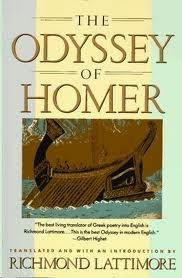
The Odyssey (an Oral Tradition) by Homer

The Odyssey

“Tell me, Muse, of the man of many ways, who was driven far journeys, after he had sacked Troy’s sacred citadel.”

It is nearly 20 years after the Trojan War and Ithaka is still without its king, Odysseus.  Anarchy reigns, as numerous suitors vie for the hand of his wife, Penelope, while ravaging his household goods and disrespecting his memory, and his son, Telemachos, is helpless to prevent them.  Has our hero perished in his quest to reach his homeland, or is he still alive somewhere, struggling to reach home?

The Odyssey begins in media res, or in the middle, where Odysseus is near the end of his journey, becoming shipwrecked on the land of the Phaiakians. These people, who we learn are very close to the gods, give Odysseus an audience for the retelling of his story and the various adventures he has experienced, while attempting to return home from the battlegrounds of Troy.

From a violent assault on the land of the Cicones, to narrowly escaping a drugged existence in the land of the Lotus-Eaters, Odysseus endangers his men by deciding to stay in the land of the Cyclops in hopes of gaining host-gifts, and they must set to perilous flight.  Poseidon, angered at the maiming of his Cyclops son, Polyphemus, plots their suffering and Odysseus and his men must endure captivity by Circe, an island goddess; a trip to the land of the Dead; a narrow escape from the Sirens, Scylla and Charybdis; and further imprisonment by the nymph, Calypso, lasting seven years, before he is released and lands on the island of the Phaiakians.  Yet, mainly because of the rage of Poseidon, but due also to Odysseus’ and his men’s misguided judgement, his whole crew is killed on the way home and he is left to continue the final part of his journey alone.

The Odyssey Homer

Fame and glory, or in Greek, kleos, are the most important values in this society. It appears that the suitors can disrespect and commandeer Odysseus’ household, only because there is no story attached to his fate.  If he had died fighting in Troy, and therefore receiving a generous helping of fame and glory, this inheritance would have passed down to Telemachus, which would have engendered a reverence and respect among the people. It might not have prevented a few of the more aggressive suitors attempting to utilize their power, but Telemachos certainly would have received more support and sympathy from other Ithakan families.   Gifts and spoils are another aspect of fame and glory.  The more one acquires, the more renown is added to their reputations.  This perhaps explains why Odysseus pours on the charm with the Phaiakians, who bestow on him more gifts than he could have won at Troy, then taxi him to Ithaka, unaware that they have angered Poseidon, who turns their ship to stone in the harbour on their journey back.

The guest-host relationship, or in Greek, xenia, is another aspect of Greek culture unfamiliar to modern readers.  If a guest visits your house, you are required by the tenets of hospitality to give him food and shelter.  These acts are even more important than discovering his name and peoples, as we often see this information offered after the initial formalities are served.  The concept of xenia is emphasized because one never knows if one is hosting a man or a god.  As a modern reader, it was amusing to see poor Telemachos attempt to extricate himself from Menelaos’ hospitality and avoid Nestor’s, in an effort to avoid wasting time in the search for his father.  I’m certain amusement wasn’t Homer’s intention but it wasn’t surprising as to the emphasis placed on this tradition.  Any deviation from this custom could result in dishonour and a possible feud with your potential host or guest.

The Odyssey Homer
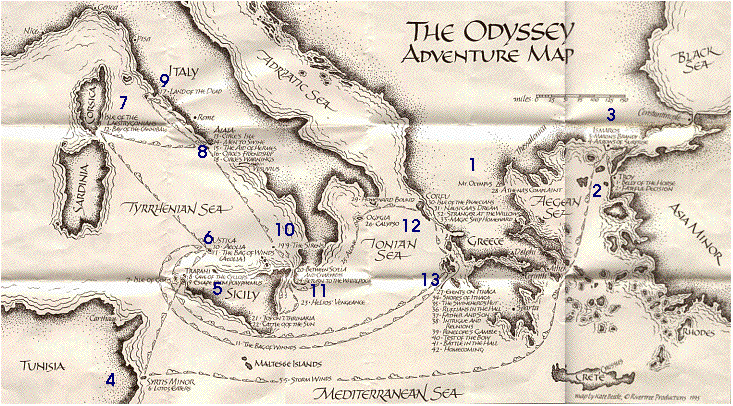
1. Mt. Olympus   2. Troy   3. Kikonians   4. Lotus-Eaters   5. Cyclops
6. Aeolia’s Island   7. Laestrygonians   8. Circe’s Kingdom  9. Land of the Dead
10. Sirens   11. Scylla & Charybdis   12. Kalypso   13. Ithaka
source Nada’s ESL Island

Greek literature has been a surprising passion of mine.  From my first read of The Iliad, I was hooked and I often wonder why?  The heroes are chiefly concerned with fame, glory, reputation, pillaging and the spoils of war; the gods are jealous, capricious, vindictive and possess far too many human traits for comfort.  Yet I think what draws me to these characters is that they are so real …….. fallible, vulnerable, imperfect, yet they exhibit these deficiencies through an heroic, courageous and larger-than-life persona. They have their customs and traditions, institutions designed to help their society flourish, and which are important enough to sacrifice happiness, comfort and, at times, even their lives, to preserve.

The Odyssey Read Along Posts:  Book I & II / Book III & IV /  Book V & VI /  Book VII & VIII /  Book IX & X /  Book XI & XII / Book XIII & XIV /  Book XV & XVI /  Book XVII & XVIII /  Book XIX & XX /  Book XXI & XXII /  Book XXIII & XXIV

A note on translations:  if you plan to read only one translation of The Odyssey, I would highly recommend Richard Lattimore’s translation, as it is supposed to be closest to the original Greek, while also conveying well the substance of the story.  Fitzgerald is adequate but likes to embellish, and the Fagles translation …….. well, as one learned reviewer put it, “they are so colloquial, so far from Homeric that they feel more like modern adaptations than translations.”  I would have to agree.

For people who are interested in introducing their children to the tales of Homer, there are a number of excellent books for children which I will list here:

This book counts as Plethora of Books Classic Club Spin, so I finished her book and my spin book, as well.  I’m going to give myself a pat on the back and less guilt for not finishing my previous spin book (yet). 🙂

Translated by Richard Lattimore


Classics Club


Candide by Voltaire

“In the castle of Baron Thunder-ten-tronckh in Westphalia, there once lived a youth endowed by nature with the gentlest of characters.”

Published when Voltaire was 66 years old, Candide was expressly written to satirize the philosophy of Optimism.  This optimism was not simply the positive hope of better circumstances, but the belief that everything that happened was for the best, no matter if good or bad, happy or tragic.  This philosophy disgusted Voltaire because he felt that it left no facility for bettering oneself or one’s surroundings and that it supported fatalism and complacency.  The tragic earthquake in Lisbon in 1755 seemed to precipitated the writing of this novel, causing the author to question justice in such a calamity, and reflected in his poem, “Poem on the Disaster of Lisbon,” written weeks afterward.  Candide was further emphasis of Voltaire’s rejection of the attitude that life was the “best of all possible worlds” and that everything that happened in it was for the best.

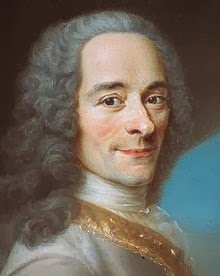
Voltaire
detailed portrait by Maurice Quenton de la Tour
source Wikipedia

Voltaire was an established writer and thinker by the time he wrote Candide, yet a controversial figure who by many was both admired and hated.  He  was continuously clashing with the government and the church, suffering two periods of incarceration, and most of his adult life was spent exiled from Paris, the city of his birth.  Much of his works were published under a pseudonym to avoid prosecution.  During a stint in exile, he spent three years in Great Britain and, impressed with the freedoms of England, particularly that of speech, his stay intensified his desire for reforms in his home country.  In 1758 he settled in Ferney in eastern France, spending his time farming, writing and supporting local business.  Candide was written there, not long after his move.

Satire:  the use of humour, irony, exaggeration, or ridicule to expose and criticize people’s stupidity or vices, particularly in the context of contemporary politics and other topical issues

Candide is a young man who has grown up living in a state of perfect happiness, guided by his tutor, Pangloss, who is entrenched in the doctrines of Leibnizian Optimism.  Leibnizian Optimism, a philosophy of Gottfried Wilhelm Leibniz, believed that this world is the best of all possible worlds because it was created by an omniscient God who would not create flaws if a better world could have been created, therefore, whatever we experience in this world, be it good or bad, must work towards good.  When Candide is thrown out of his paradise, he travels the world, at times escaping persecution, and at others, searching for his love, Cunégonde, experiencing many horrific trials and suffering that challenge the philosophy entrenched by his tutor, causing him to question over and over, if this really is “the best of all possible worlds.”

I really whiffle-waffled over how I felt about this book.  On one hand, Voltaire can write a fast-moving, engaging tale.  His storyline was amusing and it did contain deeper themes that, if the reader had a strong attention span, challenged him to think about his view of the world, his place in society and his response to injustice.  Yet Voltaire’s method was rushed and honestly, just too absurd to ellict introspection for long.  Candide flew from one adventure to the other, characters threw philosophical comments around, but there was no time or room for philosophy itself.  Voltaire never took a thought or comment from a character into deeper conversation; he simply told the reader what the characters did or thought, but we weren’t privy to the conversation.  As a reader, you were often left swimming in a murky haze of Voltaire-imposed ignorance ……. Yet perhaps this was Voltaire’s intention.  Perhaps at the end of the book, as Candide states, “we must cultivate our garden,” Voltaire meant that we should all mind our own business, not examine things too closely, and just work with what is at hand.  Okay, but it is self-introspection that causes a human being to better himself, it is dialogue and discussion that can often help a society, as well as having the possibility to harm it.  People need to have hope, and to cultivate hope it often means having dreams that reach outside our immediate circle of life.  Within the light-hearted narrative that almost masked the tragedy, I felt a fatalism with which I could not accept or sympathize.

That said, these were only my impressions of a book that touches on topics of which I have a limited understanding.  To give an informed opinion on Voltaire’s stance, you would really need to have more than a cursory knowledge of Leibnizian Optimism, as well as having at least summary knowledge of his contemporaries, with a dollop of the study of the Enlightenment on top.  So I will count this as the beginning of my inquiry into the Enlightenment and Voltaire, and hope that my journey fairs better than the journey of Candide.  And until my next foray into Voltaire, I will be cultivating my garden.

Translated by Lowell Blair

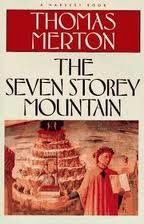
The Seven Storey Mountain by Thomas Merton (Classic Club Spin #5)

“On the last day of January 1915, under the sign of the Water Bearer, in a year of a great war, and down in the shadow of some French mountains on the borders of Spain, I came into the world.”

I had heard many stories about Thomas Merton, the “Buddhist Trappist monk” and I was interested in finding out the commonalities he discovered between Buddhism and Catholicism. However, as it turns out, The Seven Storey Mountain is an autobiography of Merton’s early life, before he converted to Catholicism, and covering a few of the years after he entered the Trappist monastery, so I’ll have to search further to read about the Buddhist-Catholic component.  Nevertheless, this book, which was featured in the National Review’s 100 Best Books of the Century, was charming, funny, heart-warming, spiritual, serious, emotional and intellectual.

Born in Prades, southern France on January 31, 1915, and during the First World War, Merton had a somewhat nomadic life as a child.  Perhaps gaining perspective and creativity from his artistic French father and a certain practicality from his American mother, he draws the reader into the book in the first chapter:

“On the last day of January 1915, under the sign of the Water Bearer, in a year of a great war, and down in the shadow of some French mountains on the borders of Spain, I came into the world.  Free by nature, in the image of God, I was nevertheless the prisoner of my own violence and my own selfishness, in the image of the world into which I was born.  That world was the picture of Hell, full of men like myself, loving God and yet hating Him; born to love Him, living instead in fear and hopeless self-contradictory hungers …… My father and mother were captives in that world, knowing they did not belong with it or in it, and yet unable to get away from it.  They were in the world and not of it —— not because they were saints, but in a different way: because they were artists.  The integrity of an artist lifts a man above the level of the world without delivering him from it ……… I inherited from my father his way of looking at things and some of his integrity and from my mother some of her dissatisfaction with the mess the world is in, and some of her versatility.  From both I got capacities for work and vision and enjoyment and expression that ought to have made me some kind of King, if the standards the world lives by were the real ones.  Not that we ever had any money; but any fool knows that you don’t need money to get enjoyment out of life.”  

From Merton’s early life in France, we move with him to America and then, after the death of his mother, his return to France with his father, while his brother, John Paul, is left behind with his grandparents.  When Merton is 13 years old, they move to England, but when his father dies of a brain tumour, he eventually moves to the U.S. again, and finds himself enrolled in Columbia University, on his way to a possible promising professorship.  Yet life intervenes and through various circumstances, Merton finds the church and from there, a personal relationship with God.

Merton was not a man who was searching for an escape from life. Fascinatingly, he did not find the monastery; the monastery found him. Initially, as a young man, his life consisted of university, friends, bars, girls and fun.  Calling himself a true child of the modern world, he was a mirror of its afflictions: selfishness, ambition, irreligion, materialism, etc.   His expectations were to graduate and find employment, as other young men in his situation.  Yet within the social activity and superficial amusements that he experienced as a typical American youth, he nevertheless felt an emptiness that came with an increasingly strong desire to be filled.  Perhaps Merton had tried it all and the only thing left was God.

Merton’s prose is delightful, both beautifully description and harmonious, yet he is also adept at injecting light humour into situations:

“‘France!’ I said, in astonishment.  Why should anybody want to go to France?  I thought: which shows that I was a very stupid and ignorant child.”

And an excerpt from a trip to Switzerland with his family when he was about 11 years old:

“The rest of the time was one long fight.  We fought on pleasure steamers, we fought on funicular railways, we fought on the tops of mountains and at the foot of mountains and by the shores of lakes and under the heavy branches of evergreens ……………. By the time we got to the Jungfrau koch, everybody was ready to fall down from nervous exhaustion, and the height made Bonnemaman faint, and Pop began to feel sick, and I had a big crisis of tears in the dining room, and then when Father and I and John Paul walked out into the blinding white-snow field without dark glasses we all got headaches; and so the day, as a whole, was completely horrible …………… John Paul humiliated the whole family by falling fully dressed into a pond full of gold-fish and running through the hotel dripping with water and green-weeds.”

Merton’s deep understanding of human nature is punctuated by intelligent comments throughout the book.

On school:  “But when a couple of hundred of these southern French boys were thrown together in the prison of that Lycée, a subtle change was operated in their spirit and mentality.  In fact, I noticed that when you were with them separately, outside of school, they were mild and peaceable and humane enough.  But when they were all together there seemed to be some diabolical spirit of cruelty and viciousness and obscenity and blasphemy and envy and hatred that banded them together against all goodness and against one another in mockery and fierce cruelty and in vociferous, uninhibited filthiness.”

On literature:  “A course in literature should never be a course in economics or philosophy or sociology or psychology …….. the material of literature and especially drama is chiefly human acts — that is, free acts, moral acts.  And, as a matter of fact, literature, drama, poetry, make certain statements about these acts that can be made in no other way.  That is precisely why you will miss all the deepest meaning of Shakespeare, Dante, and the rest if you reduce their vital and creative statements about life and men to the dry matter-of-fact terms of history, or ethics, or some other science.  They belong to a different order.”

On capitalism:  “It is true that the materialistic society, the so-called culture that has evolved under the tender mercies of capitalism, has produced what seems to be the ultimate limit of this worldliness.  And nowhere, except perhaps in the analogous society of pagan Rome has there ever been such a flowering of cheap and petty and disgusting lusts and vanities as in the world of capitalism, where there is no evil that is not fostered and encouraged for the sake of making money.  We live in a society whose whole policy is to excite every nerve in the human body and keep it at the highest pitch of artificial tension, to strain every human desire to the limit and to create as many new desires and synthetic passions as possible, in order to cater to them with the products of our factories and printing presses and movie studios and all the rest.”

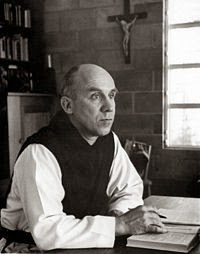
courtesy of The Thomas Merton Center at Bellarmine University   

Through his writing, Merton’s connection with the outside world was only enlivened and strengthened after he entered the Trappist monastery. Most of his most vibrant and inspirational work was produced while he was cloistered, as if being in the world made him understand it less, but by being removed from it, he gained a greater understanding.  While his post-monastery accomplishments were vast, he initially felt the vocation of a writer in conflict with his vows, but under the urging of his abbey superior, he became a prolific author, producing more than 70 books on spirituality, social justice and pacifism, and The Seven Storey Mountain gained him a world-wide reputation.  He became more interested in inter-faith dialogue and amassed a huge correspondence with a great number of influential people.  In 1968 he attended an inter-faith conference for Catholic and non-Christian monks in Thailand, and, after stepping out of the bathtub in his hotel room, Merton was accidentally electrocuted by touching an electrical fan. He was 53 years old.

Upon its publication, The Seven Storey Mountain won critical acclaim, appealing to a post World War II society looking for meaning and stability.  Grahame Greene had high praise for it, saying: “Is is a rare pleasure to read an autobiography with a pattern and meaning valid for us all.  The Seven Storey Mountain is a book one reads with a pencil so as to make it one’s own.”  By 1984 it had sold 3 million copies, and to-date is in continuous printing and is published in 15 different languages.

The value of a book such as this is that it takes you out of life as you see it from your own perspective.  Like it nor not, society influences our thoughts, our choices, our perceptions and our actions.  We often see situations from one vantage point and must struggle to get a different view.  Merton starts with the familiar, living the status quo, but then takes you out of the normal, the complacent, the mundane, and allows you to see life from a completely different aspect.  The door is open and you are free explore.

I’m looking forward to reading more of Merton’s work.  He examines so many fascinating ideas in so many different areas, and really gets me thinking.  And I actually finished my Classic Club Spin #5 so I’m going to celebrate!  Yay!

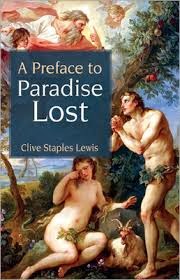
A Preface to Paradise Lost by C.S. Lewis

C.S. Lewis does it again.  Not only does he supply enlightening commentary to accompany a reading of Paradise Lost, but he touches on a number of other books and subjects, conveying fascinating information in an extremely accessible narrative.

A Preface to Paradise Lost is a compilation of Lewis’ Ballard Matthews Lectures, which he gave in 1941 to students at the University College of Northern Wales. Lewis’ expertise was Medieval and Renaissance literature, and while reading this book, it is apparent that he is in his element, as he covers not only Paradise Lost but also gives the reader an introduction to the genre of epic and insights into how to read it.

Lewis’ initial chapters — more than one-third of the book — cover epic poetry, both primary and secondary, and he provides numerous examples contrasting the two, from The Odyssey, The Iliad, Beowulf, The Aeneid and, of course, Paradise Lost, to further the readers’ understanding.  Next, in a lecture titled, The Unchanging Human Heart, he deals with how to read a poem (or book), which is perhaps my favourite lecture of all.  How do we deal with the gulf between our era and the author’s?  Do we read only for what is relevant to us, or do we attempt to engage with the author?  Lewis deals with both approaches:

“A method often recommended may be called the method of The Unchanging Human Heart.  According to this method the things which separate one age from another are superficial ……. if we stripped [off the superficialities] …… we should find beneath … an anatomy identical with our own ….. we shall find the Unchanging Human Heart, and on this we are to concentrate.   

I held this theory myself for many years, but I have now abandoned it.  I continue, of course, to admit that if you remove from people the things that make them different, what is left must be the same, and that the Human Heart will certainly appear as Unchanging if you ignore its changes ……. [thus] our whole study of the poem will then become a battle between us and the author in which we are trying to twist his work into a shape he never gave it, to make him use the loud pedal where he really used the soft, to force into false prominence what he took in his stride, and to slur over what he actually threw into prominence ……….. I do not say that even on these terms we shall not get some value out of our reading; but we must not imagine that we are appreciating the works the old writers actually wrote ……

Fortunately, there is a better way.  Instead of stripping the knight of his armour you can try to put his armour on yourself ………. I would much rather know what I should feel like if I adopted the beliefs of Lucretius than how Lucretius would have felt if he had never entertained them.  The possible Lucretius in myself interests me more than the possible C.S. Lewis in Lucretius …… 

To enjoy our full humanity we ought, so far as is possible, to contain within us potentially at all times, and on occasion to actualize, all the modes of feeling and thinking through which man has passed …….. Only thus will you be able to judge the work ‘in the same spirit that its author writ’ and to avoid chimerical criticism.  It is better to study the changes in which the being of the Human Heart largely consists than to amuse ourselves with fictions about its immutability ……….”


Finally Lewis delves into Paradise Lost, but instead of summarizing the chapters, Lewis concentrates on expounding on particular characters and certain themes.  He explores the poem’s theology, hierarchy, Satan, Satan’s followers, the angels, Adam and Eve, unfilled sexuality, and the Fall. Addressing some of the controversies over the poem, Lewis deals with the difficulties with his typical logical summations and a sprinkling of dry wit.  And while mostly praising Milton’s achievement, he does not hesitate to point out perceived flaws in the work, and while doing so, gives the reader a more profound comprehension of the challenges of Milton’s task.

While amazingly thorough, Lewis’ writing is simple, clear and understandable.  His lectures encourage the reader to read critically, and his explanation of Milton’s worldview is not only helpful, but necessary, to gain a good understanding of the poem.  While being very readable, this guide is the definitive “go-to” book for tackling Paradise Lost for readers who want to go in-depth with their study.

Paradise Lost Review

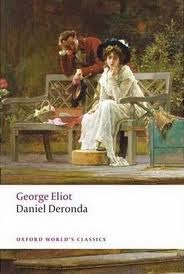
Daniel Deronda by George Eliot

“Was she beautiful or not beautiful?”

Gwendolyn Harleth is a “spoiled child”, a young woman with average prospects yet with high hopes of attaining respectable social standing and monetary comfort. While scorning the traditional avenues of marriage, she desperately wishes for a meaningful, vibrant life, even though she is unsure of how to attain it.  Gambling, parties and equestrian amusements, fill her time, with little thought of other peoples wants, needs or struggles.

Daniel Deronda is a respectable moral young man and the ward of Sir Hugo Mallinger.  When he first spies Gwendolyn, his disapproval of her gambling and later, the same quiet censure of some of her actions, leads her down a path of introspection and causes her to question the manner in which she is living her life.  Yet the changes in her character do not come soon enough and, due to her family’s sudden monetary troubles, she contracts a marriage to Henleigh Mallinger Grandcourt, the nephew and heir of Sir Hugo.  She views the marriage as an escape from poverty and a stepping stone to a life of leisure and a respectable position in society.  Instead she gets a husband with a twisted soul, bent on breaking her will as he would a horse or a wild animal.  He glories in her struggles, fear and his ability to control her actions.

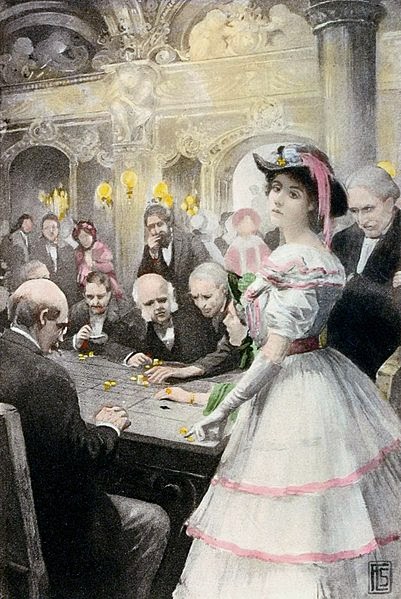
Gwendolyn at the Roulette Table
(1910)
Wikipedia

A second plot winds itself through Gwendolyn’s, as Deronda internally questions the manner of his birth and the identity of his parents.  Not wishing to bring up a subject that may be uncomfortable for Sir Hugo, he suppresses his curiosity, yet aches for familial connections and history.  Upon saving a Jewish singer from drowning, his relationship with her takes him down the path of finding his true heritage.

Eliot forces the reader to examine some of the social issues of that time.  Without money, young women could only hope to find work in low paying positions, such as governesses or companions, or perhaps choose less respectful avenues as singers or actresses.  Without an inheritance or a family who was financially able to support them, an advantageous marriage was really the only protection for women of this time period.

She also treats the subject of Jewish identity and culture with surprising dexterity and perception.  While they are portrayed with an obvious sympathy, Eliot makes each character real, from the philosophic and idealistic Mordecai, to the money-loving pawnbroker, Cohen. The struggle of a people against prejudice and pre-judgement is plainly explored with touching sincerity and insight.  Mordecai’s longing to see the Zionist hopes for a Jewish homeland established adds a deeper more complex examination of an issue that was of particular interest to the author.

The Fair Toxophilites (Archers)
by William Firth (1872)
Wikimedia Commons

I found that certain parts of the novel dragged, and the plot suffered numerous bumps, but again Eliot tackled such diverse issues, making the writing of the novel an epic task, so I can forgive some of the inconsistencies. Her obvious intellectual curiosity, and her enlightened opinions made the read informative as well as enjoyable.  Daniel Deronda is a book that prods you to think and ponder even after the last page is turned.

“In the chequered area of human experience the seasons are all mingled as in the golden age: fruit  and blossom hang together,; in the same moment the sickle is reaping and the seed is sprinkled; one tends the green cluster and another treads the wine-press.  Nay, in each of our lives harvest and spring-time are continually one, until Death himself gathers us and sows us anew in his invisible fields.”

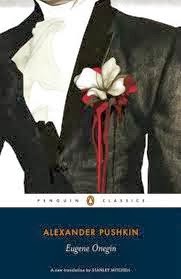
Eugene Onegin by Alexander Pushkin

“My uncle, man of firm convictions …
By falling gravely ill, he’s won
A due respect for his afflictions —
The only clever thing he’s done.

I was so happy to get the chance to participate in Marian at Tanglewood’s Read-Along for my second read of Eugene Onegin in six months.  My first time I read the translation by Charles Johnston and this time chose to read James A. Falen’s translation.  But more comparisons on the two later.

It was such a joy to read such a lively and often tongue-in-cheek poem, yet Pushkin weaves his jaunty remarks throughout a tale of serious love, serious death and serious coming-of-age, crafting a remarkable masterpiece.

Since I already reviewed Eugene Onegin the first time I read it,  I will simply cover a couple of areas that stood out for me from a second read, that were not initially apparent.

First Edition of the novel
(source Wikipedia)

Comparing the two translations, I must say I enjoyed Falen more than Johnston.  Johnston’s words have a loftier tone and are perhaps more beautiful, but I think Falen captures the spirit of the poem more accurately.  A couple of times, his choice of words appeared awkward, yet he communicated the grave situations in balance with the bouncy, cheekiness of the narrator, with flair and apparent ease.  I would recommend him for a first-time reader.

This second read I noticed numerous instances of juxtaposition ………. Tatyana reading books that lead her to form a romantic infatuation with a man she’s barely spoken to vs. Tatyana reading books that lead her to a more mature and formed view of Onegin’s character; Tatyana’s love of the country and woods vs. her marital residence being in the city; Tatyana’s letter vs. Onegin’s letter; Onegin’s rejection of Tatyana, and then Tatyana’s rejection of Onegin; Onegin’s volatile response to a friend’s challenge that leads to that friend’s death vs. Onegin’s wish to seduce a friend’s wife which could have led to a similar circumstance.  It really became apparent to me this time that Onegin hadn’t learned anything.  It was clear to Tatyana, too.  She asks him pointedly, why he is suddenly pursuing her, and her harsh words demonstrate her mistrust of his motives:

” Why mark me out for your attention?
Is it perhaps my new ascension
To circles that you find more swank;
Or that I now have wealth and rank;
Or that my husband, maimed in battle,
Is held in high esteem at Court?
Or would my fall perhaps be sport,
A cause for all the monde to tattle —
Which might in turn bring you some claim
To social scandal’s kind of fame?”

Until he saw Tatyana the second time, he was the same foppish young man, sinking in ennui.  She revived him briefly, yet even in the ardent fog of love, his actions are not the actions of a man who has gone through a self-examination from the tragedy that had come from his initial conduct (the duel).  If he had managed to convince Tatyana to begin a relationship with him, it would have ended in another duel and another possible death of a friend.  I think Tatyana was wise enough to ascertain the baseness of his behaviour and foresaw the consequences.  She loved him as a man, yet rejected his ignoble character.

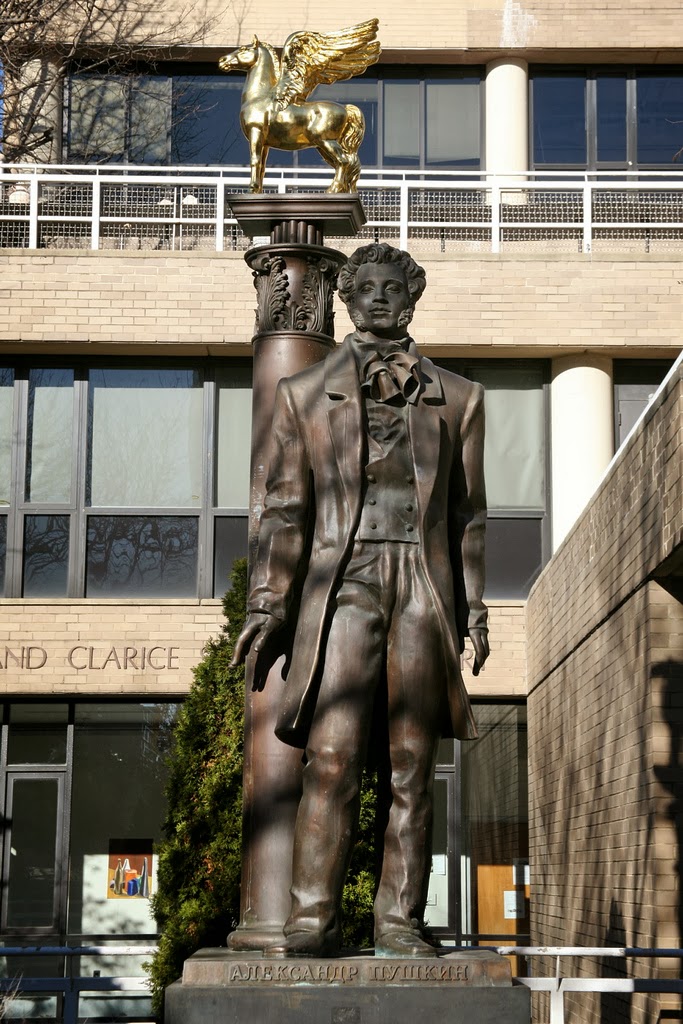
Statue of Alexander Pushkin
photo courtesy of Cliff (Flickr)
Creative Commons License

This quote by Onegin sums up his character throughout the poem:

“Yet I in futile dullness squander
These days allotted me by fate …..”

There is a pathos in his words and actions with which the reader can sympathize, hoping for a reversal in his chosen path, but at the end he is still walking the road of self-gratification and boredom, and we can only watch him disappear into the thickening mist …..

Son Excellence, Eugène Rougon by Émile Zola

“For a moment the President remained standing amidst the slight commotion which his entrance had caused.”

I had met Eugène Rougon in Zola’s first book of the Rougon-Macquart series, The Fortune of the Rougons.  The oldest son of  Pierre and Felicité Rougon, he had been stationed in Paris, working for the cause of Louis-Napoléon Buonaparte as Emperor Napoleon III.  In Son Excellence, Eugène Rougon, we encounter Rougon as a man in disgrace, a man who has offended the Emperor and who has decided to resign before he is formally removed from office.  As he packs up his documents, a myriad of characters flow in and out of his office, almost in the formation of a dance, and each individual is as colourful as the next.  Yet as the respective characters speak their piece, the dance turns into a circling of sharks, as they all wonder how their position will be affected by Rougon’s fall and how much he can still impact their various personal causes.

The book chronicles the political scene in Paris during the government of the Second Empire under Emperor Napoleon III.  Through Rougon, we see the political machinery grinding through the career of a politician; his fall from favour, his subsequent rise through the help of his sycophantic supporters, their fickle desertion, and so forth.  Behind the glamorous facade of the Second Empire, manipulation, betrayal, coercion, conspiracy and fraud seep from between its seams, and only the clever and opportunistic will survive.

Chameleon-like Rougon is a man who knows how to bend with the force of political volatility.  Initially, after giving his resignation, he is slow, methodical and patient, rather like a toad waiting in the mud for an insect to come buzzing around his head.  Yet when he regains his title as minister, he comes alive; robust, loud, and outspoken, he soaks in the approbation of those around him while ruling with a heart of iron.  Yet Zola does a marvellous job of retaining his provincial nature; his sometimes wild, untamed speeches and stubborn and shortsighted actions reveal a man who has not been able to completely shake off the country dust of his origins.

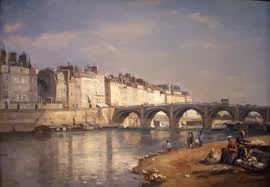
Pont de la Tournelle, Paris
by Stanilas Lépine
(source Wikipedia)

Zola’s prose is so exquisitely compact, yet with it he constructs such a wide scope for the reader.  I felt I was really present during the baptismal procession for the Imperial Prince; I sensed the barely suppressed excitement in the air, the feel of the crowds and people pressing against me, the impatience, the festivity.  Zola doesn’t just allow us to view the Second Empire with words; he takes us right into its grandeur, its character and the various intricacies that gnaw at its foundations.  

This novel is not amongst Zola’s most popular books of the Rougon-Macquart series, but I really, really enjoyed it for its dynamic appeal and attention to detail.  Can Zola write a poor novel?  Somehow I don’t think so.

(translation by Ernest A. Vizetelly)

Other Rougon-Macquart Series Reviews (Zola’s recommended order):