The Well-Educated Mind Biographies Project

Ruth of A Great Book Study has been making her way through the book, The Well-Educated Mind, a book that inspires and instructs readers on how to read and analyze novels, autobiographies, histories, plays and poetry.  At her invitation, I’ve decided to join her as she begins the biography section.
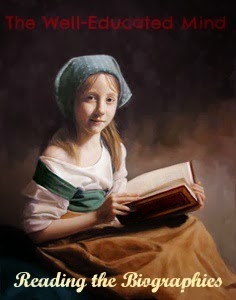
(the above image is used courtesy of Thomas Baker, Thomas Baker Oil Painting)

The biography section contains twenty-six autobiographies, listed in chronological order:

  1.  Augustine – The Confessions

  2.  Margery Kempe – The Book of Margery Kempe

  3.  Michel De Montaigne – Essays

  4.  Teresa of Àvila – The Life of Saint Teresa of Àvila by Herself 

  5.  René Descartes – Meditations

  6.  John Bunyan – Grace Abounding to the Chief of Sinners

  7.  Mary Rowlandson – The Narrative of the Captivity and
                                              Restoration

  8.  Jean-Jacques Rousseau – Confessions

  9.  Benjamin Franklin – The Autobiography of Benjamin Franklin

10.  Henry David Thoreau – Walden

11.  Harriet Jacobs – Incidents in the Life of a Slave Girl, Written 
                                    By Herself

12.  Frederick Douglass – Life and times of Frederick Douglass

13.  Booker T. Washington – Up from Slavery

14.  Friedrich Nietzsche – Ecce Homo

15.  Adolf Hitler – Mein Kampf

16.  Mohandas Gandhi – An Autobiography: The Story of My 
                                Experiments with Truth

17. Gertrude Stein – The Autobiography of Alice B. Toklas

18.  Thomas Merton – The Seven Storey Mountain

19.  C.S. Lewis – Surprised by Joy: The Shape of My Early Life

20.  Malcolm X – The Autobiography of Malcolm X

21.  May Sarton – Journal of a Solitude

22.  Aleksandr I. Solzhenitsyn – The Gulag Archipelago

23.  Charles W. Colson – Born Again

24.  Richard Rodriguez – Hunger of Memory: The Education of 
                                       Richard Rodriguez

25.  Jill Ker Conway – The Road from Coorain

26.  Elie Wiesel – All Rivers Run to the Sea: Memoirs


From the list I’ve already read, The Seven Storey Mountain, thanks to my Classics Club Spin, Augustine’s Confessions, and from my C.S. Lewis Project, I will have read Surprised by Joy, when we get to it.  As for what I’m looking forward to, probably Montaigne’s Essays, the Gulag Archipelago and Mein Kampf top the list, yet I must admit autobiographies are not a genre with which I’m widely familiar, so I’m a little hesitant as well.  Gertrude Stein and Malcolm X are perhaps the biographies I feel the most “meh” about, but with this list and my lack of exposure, I fully expect I will be pleasantly surprised with at least two books that I am less than enthusiastic about reading.  We’ll see when we complete the list.
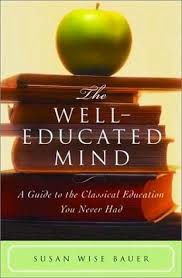
Ruth has listed some questions on A Great Book Study that will help us as we read, and I am going to post them here for easy access:

During the first stage of reading (find out what happened):
What are the central events in the writer’s life?

What historical events coincide-or merge-with these personal events?

Who is the most important person (or people) in the writer’s life?

What events form the outline of the story?

In the second stage of reading:
What is the theme that ties the narrative together?

What is the life’s turning point?  Is there a conversation?

For what does the writer apologize?  In apologizing, how does the writer justify?

What is the model-the ideal-for this person’s life?

What is the end of the life: the place where the writer has arrived, found closure, discovered rest?

Now revisit your first question: What is the theme of this writer’s life?

In the final stage of reading:
Is the writer writing for himself, or for a group?

What are the three moments, or time frames, of the autobiography?

Where does the writer’s judgment lie?

Do you reach a different conclusion from the writer about the pattern of his life?

Do you agree with what the writer has done?

What have you brought away from this story?

I was a little surprised at the last question in the second stage of reading: “What is the theme of the writer’s life.”  I’ve always been familiar with books having themes, but not lives.  Has anyone ever asked themselves, “What is the theme of my life?”  A fascinating question.  I wonder if we viewed our lives as having themes, would we choose to live them differently or live them “better”?  I wonder ……

In any case, I’m excited to start this project and I anticipate it will inspire me on to deeper and more thoughtful reading.  Please join us for the project, or even a book or two, if you feel so inclined.  We begin June 1st.

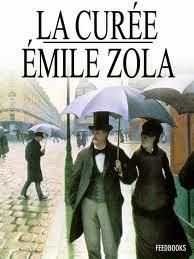
La Curée by Émile Zola

“On the drive home, the barouche was reduced to a crawl by the long line of carriages returning by the side of the lake.”

The title of Émile Zola’s third novel (in Zola’s recommended reading order) of the Rougon-Marquart series, La Curée, or The Kill, refers to the spoils of meat thrown to the dogs at the completion of a hunt, and so is a reflection of the wild and uncontrolled speculation in Paris of the 1850s and 1860s, where monetary greed runs rampant, spewing the biproducts of immorality, licentiousness, fraud and hypocrisy.

Aristide Rougon, has arrived in Paris from Plassans with his first wife, Angèle. Poor and provincial, Aristide dreams of wealth and a life of luxury and notoriety.  Ignited by his near fanatical desire for money, he manages through dishonest dealings to cheat and finagle his way into property speculation in this city, that is expanding at a near-combustible rate.

As usual, Zola grabs you and pulls you into the story with his lush and vibrant prose, and vivid descriptions:

“This was the time when the rush for spoils filled a corner of the forest with the yelping of hounds, the cracking of whips, the flaring of torches.  The appetites let loose were satisfied at last, shamelessly, amid the sound of crumbling neighbourhoods and fortunes made in six months.  The city had become an orgy of gold and women.  Vice, coming from on high, flowed through the gutters, spread out over the ornamental waters, shot up in the fountains of the public gardens, and fell on the roofs as fine rain.  At night, when people crossed the bridges, it seemed as if the Seine drew along with it, through the sleeping city, all the refuse of the streets, crumbs fallen from tables, bows of lace left on couches, false hair forgotten in cabs, banknotes that had slipped out of bodices, everything thrown out of the window by the brutality of desire and the immediate satisfaction of appetites.  Then, amid the troubled sleep of Paris, and even more clearly than during its feverish quest in broad daylight, one felt a growing sense of madness, the voluptuous nightmare of a city obsessed with gold and flesh.  The violins played until midnight; then the windows became dark and shadows descended over the city.  It was like a giant alcove in which the last candle had been blown out, the last remnant of shame extinguished.  There was nothing left in the darkness except a great rattle of furious and wearied lovemaking; while the Tuileries, by the riverside, stretched out its arms, as if for a huge embrace.”

Aristide changes his name to Saccard and, as his wealth grows, after the death of his wife he marries the young Renée Béraud du Châtel and later brings his son, Maxime, to live with them in Paris.  Renée, perpetually bored, is delighted at the thought of someone to pet and coddle and use as a tool to gain attention, and so becomes highly involved in Maxime’s moral development (or perhaps I should say, amoral development).  When we meet him in the novel as a twenty-year-old young man, he is happily aping his parents’ generation, as money flows through his fingers like water and unlimited pleasure is sought as nourishment, with little regard for the consequences.

As Saccard’s insatiable lust for money drives his every action, and he balances on the wire between wealth and ruin, Renée and Maxime fall into a comfortable and close relationship, which becomes the catalyst for a semi-incestuous affair driven by Renée’s boredom and lust for a new inventive perversion.  Yet instead of being entertained and satisfied by their liaison, through different circumstances, Renée finds herself debased and abandoned.  There are no loyalties in the new Paris, except with the reward of monetary gain, and true human feeling has all but been extinguished by obsessive desires for money and decadence.  Renée is a casualty of little importance.

Le Forhu à la fin de la curée
1746

Zola’s novels have an air of tragedy about them that is not necessarily brought on only by the actions of the characters or the plot of the story.  In Zola’s eyes, each character is trapped by their inherent nature in a cycle from which they cannot escape.  They are helpless and we get the sense of a drowning man who cannot be rescued, or a figure who cannot be pulled from in front of a speeding train.  This echoes the ideas of fate supported by the ancient Greeks, in that there is nothing you can do to change your destiny.  I’m not certain that I agree with his presentation.  We all have the ability to choose in each situation and, while each choice may entail a different degree of difficulty, our decisions do shape our fate to a greater or lesser degree.  Choice is what separates man from animal, and Zola’s portrayal of man trapped in an hereditary cycle exemplifies the destructive consequences when man follows only his instincts without an ethical or moral base.

This was the only Zola I was able to finish for Fanda Classiclit’s Zola Addiction, but I was happy to finish only one.  Zola is not an author I want to rush through; he makes you want to sink into his settings, try his prose out on your tongue and learn more about the historical content.  Money is the next Zola on my list and I’m looking forward to it!

Other Rougon-Macquart Series Reviews (Zola’s recommended order):

Classics Club Spin #6 ……. The Winner Is ………..

The Classic Club Spin number is #1, which means I get Oedipus at Colonus. This choice is both easy, and not as easy as I expected.  Oedipus at Colonus is the second of Sophocles Three Theban plays.  Well, how can I read the second play without the first?  So I’ve decided that I’m going to read Oedipus Rex, the first play, then Oedipus at Colonus followed by Antigone, the final play.

I am looking forward to it.  I spent some time yesterday micro-scheduling my reading (not that I’ll follow it, but at least I’ll know whether I’m ahead or behind, and by how much), so I think this spin will be quite manageable. And, of course, I get to dip into my beloved Greek literature, so for what more could I ask?

Photo courtesy of Olga Filonenko
source Flickr

What is your spin choice?

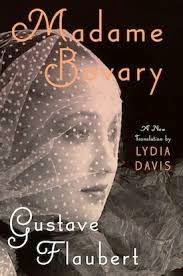
Madame Bovary by Gustave Flaubert


“We were in Study Hall, when the Headmaster entered, followed by a new boy dressed in regular clothes and a school servant carrying a large desk.”

Emma Roualt has been raised in a convent but during her formative years and religious education, she has somehow managed to get sentimental romance novels smuggled in to her.  When she leaves the convent, the sisters are relieved to see her go as there is some indication that Emma is not the pious, compliant young woman that they were hoping to produce.  Does Emma come by her stubborn and idealistic outlook naturally, or are the novels responsible for corrupting her character?

Soon after Emma returns to her father’s house, she meets the doctor, Charles Bovary, and imagines the feelings of emotion she experiences under his regard, love.  When the first wife of Charles passes away, Emma is happy to become his wife, yet almost immediately begins to wonder why the passionate, overwhelming feelings of a romantic love seem to elude her.  Quite soon she seeks admiration and passion outside her marital relationship, first with Leon Dupuis, a law clerk, and then with the sophisticated Rodolphe Boulanger. Drawn into a web of deceit by her need for a story-like romance, Emma begins an affair, first with Rodolphe and later with a more worldly Leon, who has now spent years in the city and knows how to conduct himself like a truly indulged and hardened man-about-town.  Neither man truly cares for her.  Each is attracted by her beauty and her passionate regard for him, yet soon these shallow emotions begin to unravel and the men tire of their paramour.  Emma, now heavily in debt and still lacking the love and desire that she equates with a meaningful life, decides to take poison and her death culminates in the tragic death of Charles and the sentencing of her daughter to a life of poverty and toil.

The Death of Bovary
Charles Léandre (1931)
source Wikimedia Commons

And so, what can we say about Emma?  She is certainly not a sympathetic character and it seems rather apparent that Flaubert didn’t mean to make her one.  How is responsible is she for her fate?  Does she perpetrate her own demise or is she an unwilling victim of circumstances?

One could certainly make excuses for Emma and say that she was trapped, not only in a simple, colourless and rigid society, but in a loveless marriage (on her part), and in a situation where she had little opportunity for following anything other than the status-quo.  However, Emma had been given an education of a type through the nuns, and though it might not have been wide in its scope, it certainly should have taught her the importance of honesty and virtue and goodness.  Emma chooses to sneak sentimental romances into the abbey to read, just as she chooses to believe what she reads should be the way of life, in spite of the evidence in front of her face against it, and she chooses to have adulterous affairs at the risk of the ruin of her reputation and that of her husband’s.  She also chooses to borrow money, placing her family heavily in debt and, the means of borrowing the money are brought about with deceit on her part to keep her actions hidden.  So I don’t really buy the “poor Emma Bovary, she is a victim of circumstance” excuse.  She keeps her illicit relationships secret, as well as the fact that she is borrowing money, and by the very fact that she does these things covertly, she MUST know that these actions are wrong.  Instead she chooses to do them anyway, for her own selfish emotional gratification and, as we see, she reaps consequences that were perhaps beyond her scope of imagining.

I didn’t dislike this book, but when I read I like to find something that stirs an emotional or an intellectual response, which is part of the conversation with the author.  With Flaubert, while there were certainly moments that sparkled, overall I was left a little flat.  The whole plot was built around a shallow, vain, deluded young girl who was supposedly corrupted early in life by her choice of reading.  No one noticed and, judging by the manner in which Flaubert portrays the setting and characters, even if they did, they perhaps would have done nothing to enlighten her.  While I wanted to pity Emma and make excuses for her, there was something fundamentally wrong with her thinking and the mechanisms she used to process life and the world around her.  Was it due to her reading material, or was she already a damaged person and the books only served to increase the self-serving, emotional fantasy-life that was already expanding within her?  I don’t think we can know.  For me it would have been infinitely more interesting if Flaubert chose to investigate this issue but instead we only see the effect of her delusions without being able to truly surmise the cause.  And that is a tragedy because Emma Bovary deserved a story that generated compassion for her and not distaste and impatience at her emotionally bankrupt behaviour and dramatic actions.  In spite of some spots of brilliance, I feel Flaubert missed a great opportunity and, once again, Emma seems to be the one that pays for it.

Translated by Lydia Davis

Classics Club Spin #6

Another Classics Club Spin is in the works.  I can go into this one holding my head a little higher; I finished not only my Spin #5, The Seven Storey Mountain, but I also finished Plethora’s Spin, The Odyssey.  I’ve also begun my Spin #4, Bleak House, so I will be soon caught up, provided I can finish this new Spin book.

And the rules:

  1. Go to your blog.
  2. Pick twenty books that you’ve got left to read from your Classics Club list.
  3. Post that list, numbered 1 – 20, on your blog by next Monday.
  4. Monday morning, we’ll announce a number from 1 – 20.  Go to the list of twenty books you posted and select the book that corresponds to the number we announce.
  5. The challenge is to read that book by July 7th.

I used the random list organizer here to choose the 20 books from my master list.  So my list ended up looking like this:

  1. Oedipus at Colonus (406 B.C.) – Sophocles
  2. Swann’s Way (1913) – Marcel Proust
  3. Tartuffe (1669) – Molière
  4. The Canterbury Tales (1390s??) – Geoffrey Chaucer
  5. Le Rêve (1888) – Emile Zola
  6. The Well at the World’s End (1896) – William Morris
  7. The Small House at Allington (1864) – Anthony Trollope
  8. O Pioneers! (1913) – Willa Cather
  9. Henry IV Part I (1597) – William Shakespeare
  10. The Man Who Was Thursday (1908) – G.K. Chesterton
  11. The Silver Chalice (1952) – Thomas Costain
  12. The Praise of Folly (1509) – Erasmus
  13. The Custom of the Country (1913) – Edith Wharton
  14. Pericles, Prince of Tyre (1607 – 1608) – William Shakespeare
  15. We (1921) – Yevgeny Zamyatin
  16. Persuasion (1818) – Jane Austen
  17. Lives (75) – Plutarch
  18. War and Peace (1869) – Leo Tolstoy
  19. Henry V (1599) – William Shakespeare
  20. The Pickwick Papers (1836 – 1837) – Charles Dickens

Five Books I’m Hesitant to Read

1.  Swann’s Way – Marcel Proust
2.  Lives – Plutarch
3.  The Cantebury Tales – Chaucer
4.  ———
5.  ———

Five Books I Can’t Wait to Read

1.  The Man Who Was Thursday – G.K. Chesterton
2.  Persuasion – Jane Austen
3.  Pericles, Prince of Tyre – Shakespeare
4.  The Custom of the Country – Edith Wharton
5.  War and Peace – Leo Tolstoy (to finish it!)


I’m quite happy with the choices.  I have a few Shakespeare on the list, which is wonderful because I haven’t even read one for my challenge.  The only problems I foresee are the Zola and Trollope choices, because I’m reading through both series in order, however if one of them is chosen, I’ll simply substitute the next book and read on.  I am extremely terrified of choice #2 though.  Can I get through Proust in time?  And Plutarch’s Lives is loooong, although I’d love to read it.  Next Monday will reveal the winner!  I can’t wait!

Madame Bovary Read-Along Part III

Madame Bovary Read-Along Hosted by ebookclassics &         Cedar Station

Madame Bovary by Gustave Flaubert
Part III

This is going to be a quick post to finish up my read-along comments before my review.  I’ve been left little time for reading lately, let alone posting, that I’m falling behind!

Honestly, the drama and copious introspection about how and why people commit adultery is getting rather wearying, especially given the limited aspects of Emma’s character.

Her reconnection with Leon Dupuis is telling, as he is no longer the simple, infatuated provincial law clerk but now a sophisticated man-about-town, after his three-year stint in the city.  They begin a passionate affair, yet meanwhile her debts are piling up as she is regularly cheated and manipulated by M. Heureux.  Although Emma still attempts to delude herself into believing she is living a fulfilling life, her spiral downward increases.  For me, the most tragic part in the novel is where Emma, feeling the screws of debt tighten around her, asks for help from a number of people who either try to use her in her desperation, or cruelly turn her aside.  Rodolphe, her former love, rejects her in her need and this final abandonment appears to extinguish any hope.

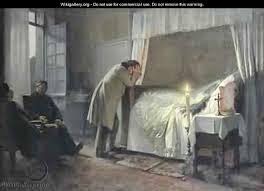
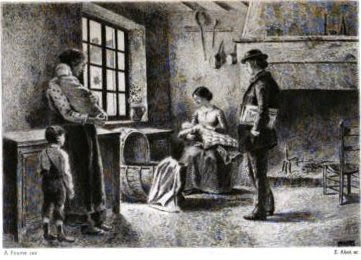
The Death of Madame Bovary
Albert-August Fourie
source Wikigallery

Finally, rejected by each man she hopes will save her yet neglecting to go to the one who will (Charles), Emma takes arsenic and her death brings further consequences.  Charles is immersed in a grief which finally brings about his death and poor Berthe, their daughter, is condemned to live in poverty and toil.

I must admit I was somewhat glad to see this book come to a close.  I’ll try to gather my scattered thoughts into a coherent review in the next few days.  Many thanks to C.J. at Ebookclassics and Juliana at Cedar Station for being wonderful hosts for this read-along!

History Reading Challenge 2014 Update

Well, it’s time for an update on my History Reading Challenge hosted by Fanda at Fanda Classiclit.  As much as I would rather plow along than muse over what I’ve read these past 4 months, I realize that a retrospective look at my reads is a valuable way to gauge if I’m on track or behind my goals.  As it stands, I haven’t finished anything yet, but I am making progress.

I am about 40% through Susan Wise Bauer’s The History of the Ancient World.  I had originally made it a buddy read AND created a schedule so I could finish it by the end of June.  As it stands I am behind in the schedule, so I would have to step it up to finish in time.  However, I am making notes with each chapter so that slows my progress.  I may drop this extra task for now so I can keep moving along.  Needless to say, my buddy, who will remain nameless, is even more behind than I am.

I’m interested in what methods other readers use to keep themselves on task with a book that, while it is not a chore, may not be as attractive as their other reads …..??  Scheduling, willpower, what ….?

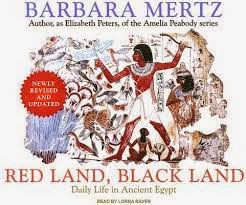
I’ve also begun Red Land, Black Land by the author of the famed Amelia Peabody Egyptian mystery series.  I’m only 5% into this one, but so far it’s quite interesting.  I’m building my knowledge on some on the information that I’ve gleaned from The History of the Ancient World so I’m not having to think as hard to place some of the historical characters.  I am finding the structure of Mertz’s writing somewhat disorganized, or perhaps I should say not as well organized as I would have expected.  It doesn’t take away from the joy of reading her history, but it does make it sometimes a little harder to follow her train of thought.

Cicero’s Defense Speeches is so far my favourite of all my history reads.  Cicero’s rhetoric is not only brilliant, but fascinating to read.  My favourite speech, as yet, is Pro Roscio Amerino (For Roscius of Ameria) which presents Cicero as a young 26 year old giving his first speech for the defense in a criminal court.  This speech definitely has a different flavour to the other speeches; he takes more risks and is even a little cheeky whereas the speeches from when he is a well-know orator are more carefully contrived.  I wish this book was required reading for all upper high schools students to expose them to some excellent rhetoric and logic.  It’s certainly impressive.  I’m 33% through this book and can’t wait to read more.

I don’t have any other history books “up next”; I’ll simply try to focus on these three so I will eventually be able to finally say that I’ve finished something!  

Madame Bovary Read-Along Part II

Madame Bovary Read-Along Hosted by ebookclassics &         Cedar Station

Madame Bovary by Gustave Flaubert
Part II

Well, the change of scenery has improved Emma’s spirits in one aspect, at least ……….. she has found someone to worship her.  Quickly disillusioned with her marriage, Charles is barely thought of as she seeks to satisfy her self-important ego by engaging a worshipful admirer.  Leon Dupuis, a law student, takes one look at Emma and falls in love.  Yet while soaking in his adoration initially, she tortures the young man by springing from flirting with him, to ignoring him, to a nervous ennui.

In spite of giving birth to a lovely little girl, Emma barely gives her a thought as she pursues her idea of  a fulfilling life.  I didn’t get the impression that she despised motherhood, only that she was ill-equipped for it; children must not have been a part of her sentimental novels, and she doesn’t quite seem to know what to do with them, therefore the easiest course is to ignore her daughter.

The operation on Hippolyte had tragic results but gives more insight into the character of Charles; he is entirely well-meaning but not the best judge of human character or circumstances.  He also does not like to face anything unpleasant, which leads us to believe that even if he had insight into Emma’s character, he would not have known what to do with her dalliances and would have retreated from the problem instead of facing it.

Albert Fourié (1885)
source Wikimedia Commons

The scene at the agricultural fair in chapter 8 was an attempt at brilliance by Flaubert.  What irony to have the illicit private seduction of Madame Bovary (by Rodolphe), occur in the middle of the festivities and raucousness of the townspeople during the speeches.   The personal nature of the act contrasted against the backdrop of the merry, yet public celebration added to the tension.  It brought to mind a symphony.

Again, Emma turns to books to justify her emotions.  Lacking a moral compass, she does the only thing she has learned to do, trust her emotions and support her desires with her reading material.  She is in a circular spiral to tragedy but Emma, because of her self-deception, is the least likely to see it.  She is rather a pitiful figure and I wonder if it was Flaubert’s intention to make her so.  Her mood swings, rather than being a psychological manifestation, appear designed to illicit the response that she requires from the person she is engaged with, and the expected response is based on bad plots from sentimental novels.  So far Emma doesn’t appear to be able to realize that, since her relationships do not appear to be going the way she wants or expects, perhaps there is something wrong with her expectations. Instead she attempts force and manipulate all behaviour and emotions to fit into her fantasy world.

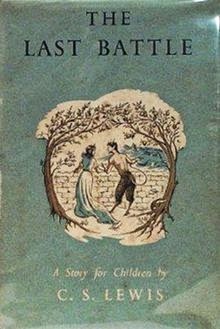
The Last Battle by C.S. Lewis

First Edition Dustjacket
source Wikipedia

“In the last days of Narnia, far up to the west beyond Lantern Waste and close beside the great waterfall, there lived an Ape.”

The Last Battle is the final book in the Narnia Chronicles. With the last three books Lewis seemed to be moving further from the realm of children’s novels and into a more intellectual adult world of surprising complexities.

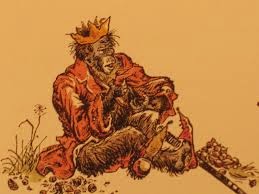
Esoteric in its make-up, The Last Battle begins with an ape named Shift, who, by dressing a donkey named Puzzle in a lion’s skin, tries to convince the Narnians that Aslan has returned to Narnia.  Prompted by Calormen treachery, they soon combine Aslan into Tashlan, a mixing of Aslan and the Calmoren god Tash, and force the Narnians to work, cutting down the Talking Trees of the forest for profit. Prince Tirian and his trusty unicorn, Jewel, discover the falsity of their enterprise, but are taken captive by the Calormens, only to be freed by Eustace and Jill  They discover the fraud of the false “Tashlan” while rescuing Jewel from the stables, but learn that Cair Paravel has fallen to the Calormens.  The Battle of the Stable is fought with the Calormens and their forces, whereupon Eustace, Jill and the one faithful dwarf, Poggin, find themselves inside the stable, followed by Tirian in his battle with Rishda Tarakan, the leader of the Calormens.  Instead of a stable, they find that they are in a beautiful and wondrous land, but then, to the surprised horror of all, Tash unexpectedly appears and snatches Rishda under his arm.  The Pevensie children appear (minus Susan) and Peter orders Tash to leave, whereupon Aslan comes and all the dead people and animals either file by on Aslan’s right and enter Aslan’s country or file by on his left and disappear. The old earthly “outside” Narnia begins to be devoured by dragons and giant lizards, and finally the sun is squeezed out by a giant, yet Aslan leads his people “further up and further in” to the real Narnia.  It may appear to be the end of the chronicles but, as Lewis says, “… it was only the beginning of the real story …… they were beginning Chapter One of the Great Story which no one on earth has read: which goes on forever: in which every chapter is better than the one before.”

Emeth, the Calmoren warrior who is allowed into Aslan’s country, is a curious insertion by Lewis.  Emeth has followed another god with a sincere belief all his life, yet when he meets Aslan, the lion tells him, “Child, all the service thou hast done to Tash, I account as service done to me …… if any man swear by Tash and keep his oath for the oath’s sake, it is by me that he is truly sworn, though he know it not, and it is I who reward him.  And if any man do a cruelty in my name, then, though he says the name Aslan, it is Tash whom he serves and by Tash his deed is accepted.”  Lewis is not advocating universal salvation, only that anyone who is truly and openly seeking the truth about God, will surely find him.  In contrast, the Narnian dwarves are true cynics; while they have been raised in Narnia and told about Aslan, they stubbornly refuse to acknowledge the truth and, though Aslan gives them a marvellous banquet, in their self-deception they are not able to even properly taste the good food set before them.  In spite of being raised in Narnia, their wilful refusal to entertain any ideas but their own will prevent them from seeing Aslan’s Country.

While this novel is written for children, Lewis has included concepts that would be beyond some adults.  Professor Digory’s comment near the end of the book, “It’s all in Plato, all in Plato ….” gives us a clue to one Platonic theme, although there are a few enmeshed in the chronicles.  In Plato’s famous Allegory of the Cave, cave-dwellers believe images on the wall in front of them are real, but find they are only flickering shadows cast by more original objects held up against a fire which is behind them.  One of the cave-dwellers turns around to see what is behind his back and why the objects on the wall appear as they do, then he ascends out of the cave into the world above where he sees that the artificial copies on the wall of the cave and the fire itself were only themselves inferior copies of a much more original reality. Plato believed that every evident appearance in the material world is a communion with a higher, perfect spiritual reality.  For example, anything that attempts to capture beauty, will never capture the reality of beauty perfectly. An overworld of self-subsisting ideas exists beyond the world of material things, and these ideas, or forms, themselves participate in the one single highest reality, Plato called “the Good.”  Thus, in The Last Battle, the earthly Narnia is only a copy or a shadow of the Heavenly Narnia which is the form of the perfect reality.

And lastly, it would be appropriate to touch on the fate of Susan Pevensie. All the Pevensies appear in the real Narnia because they have recently died in a train crash, all except Susan, who has grown vain and self-absorbed, and has moved away from their adventures and beliefs of Narnia.  I am a little perplexed as to what to make of this revelation.  On one hand, I am bothered that Lewis treated her fate in a rather short, curt manner, after she had been such an important character in the other stories.  On the other hand, I am glad that Lewis did not make a perfectly “happily ever after situation.”  Given that Susan had replaced her faith with material desires, it was providential that she did not perish in the crash that killed her family; there is still hope that she can find the real Narnia in the end.  As Lewis wrote in a letter to a child:

“The books don’t tell us what happened to Susan.  She is left alive in this world at the end, having by then turned into a rather silly, conceited young woman.  But there’s plenty of time for her to mend and perhaps she will get to Aslan’s country in the end ……. in her own way.”

Wow!  What a finale!  And now I can say that I’ve read all the Chronicles of Narnia and have a much better understanding of them.  I can hardly believe all the themes and ideas that Lewis wrote into them and though I know another reading will bring more enlightening details, there will always be more to discover!

C.S. Lewis Project 2014


Other Narnia Books


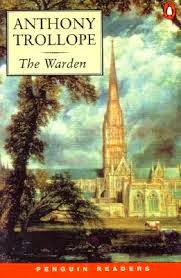
The Warden by Anthony Trollope

“The Revd Septimus Harding was, a few years since, a beneficed clergyman residing in the cathedral town of ______, let us call it Barchester.”

The Honest Gossip Newspaper


In many a town in England there are given charitable bequests to church dioceses, and the honest public assumes that the monies are distributed in a fair and equitable way, in a manner that benefits all who have need of them.  Yet this learned reporter has discovered that in a small holding in Barsetshire, there has been a shocking exploitation of this practice, resulting in twelve respectable old gentlemen being cheated out of their livelihood.  And who is the avaricious fiend to be so bold as to expropriate funds which are not solely meant for him?

The Revd Septimus Harding, the warden of Hiram’s Hospital in Barsetshire, it has been discovered, earns 800 pounds per annum for his position as warden and overseer of the legacy left by the philanthropic John Hiram, namesake of Hiram’s Hospital, yet the gentlemen who were meant to benefit from his legacy, receive housing and a paltry one shilling four pence per day to meet all their needs in their tender and uncertain later years of life.


Ask yourself, can you as a common man remain indifferent to the plight of others?   Can you remain indifferent to the misappropriation of funds by a man who not only takes bread out of the mouths of his brothers, but whose actions leaves a stain on the offices of the sacred and respected agents of mother Church?  Oh, for shame you vainglorious men who have no respect for what is sacred, yet greedily engorge yourselves with money to line your already comfortable existence!  Is it to be borne?  No!  Mr. Harding must be revealed as the avaricious culprit he is, and the money given to the rightful recipients, who deserve it far more than a warden who presently lives comfortably on this legacy while doing nothing to earn its bestowal.  Who will see that justice is served in such a uncomfortable yet critical situation?  This reporter knows just the man!


Our young and zealous reformer, Mr. John Bold, has been working industriously to illuminate this unfortunate circumstance and expose the corruption that has so carefully been concealed .  Can we trust this gentleman in his noble purpose?  Certainly!  Not only does his estimable reputation speak volumes, but in spite of his relationship to the aforementioned’s lovely daughter, Eleanor, he will not let possible future familial ties stand in the way of serving justice.  We have learned that he has wisely consulted a respectable and reputable law firm to deal with this perplexing and delicate matter and that, once begun, nothing will stand in his way.  The bishop and his pretentious son, the archdeacon Theophilus Grantly (also son-in-law to the accused), can puff and blow all they like, but we all know which side is valiantly trumpeting the truth.  It will be heard, and the Reverend Harding will be made to choke on it.


——————————————————-

Salisbury Cathedral from the Meadows
John Constable 1831
(Trollope said his first vision for The Warden came while walking in
the cathedral close of Salisbury Cathedral)
source Wikipedia

This is a sample of what poor Septimus Harding, warden of Hiram’s Hospital had to withstand: an unfair accusation, judgement, an attack on his character and the possible loss of his livelihood.  His son-in-law, the archdeacon, attempts to defend his father-in-law, yet in a worldly, materialistic, dictatorial manner, which his father-in-law cannot respect or accept.  Harding’s simple, gentle, sacrificial nature, while at first bends under the pressure of his contemporaries, eventually asserts itself in his determination to act in an honourable manner.  In a case where people’s good intentions do more harm than good, we realize that law and justice followed blindly, can have unexpected negative repercussions.  Love and friendship hold a human value that money can never equal, and the loss of the former can create an emotional deprivation that is felt long after the incident is over.

What others said:

Behold the Stars:  “I love it, though – it’s a gentle novel, with real, ‘whole’ characters (George Orwell described it as one of his best works), and Septimus Harding is one of my favourite characters of all time.”

Avid Reader’s Musings:  “Bold sees his purpose as noble and right even though he’s hurting the people he loves.  It makes the reader question his decision, is it truly motivated by his beliefs or by his pride?”

Fig and Thistle:  “Each character is vividly unique and the dialogue is engaging.  This book certainly has a heavy dose of wit and shrewd society skewering, but without cynicism.”

This first book in the Barsetshire Chronicles read-along, hosted by Avid Reader’s Musings and Fig & Thistle, proved to be an excellent introduction to Anthony Trollope and I have already cracked open the next book, Barchester Towers, to continue my visits with the characters and happenings of Barsetshire.

The Barsetshire Chronicles