Doctor Thorne by Anthony Trollope

“Before the reader is introduced to the modest country medical practitioner who is to be the chief personage of the following tale, it will be well that he should be made acquainted with some particulars as to the locality in which, and the neighbours among whom, our doctor followed his profession.”

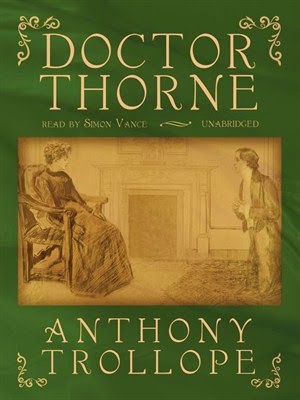
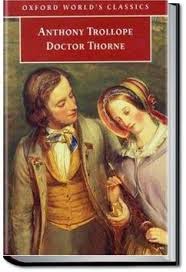
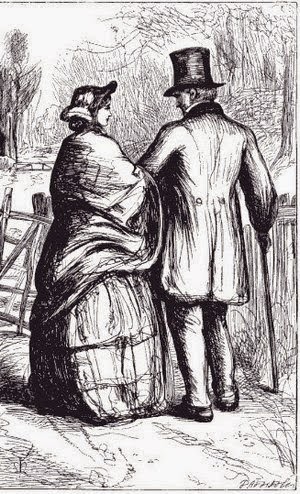
Good, dependable Doctor Thorne, our esteemed doctor of Greshambury, lives with his young niece named, Mary.  Yet there is a secret around Mary’s birth that few people know; she is the illegitimate daughter of Doctor Thorne’s older brother and the sister of Roger Scatcherd, a former poor stonemason and prison inmate, who has amassed a fortune that makes him the rich owner of a large estate.  The ruling family, the Greshams, accept Mary’s company and she is friends with some of the daughters, but when it is learned that Frank, the only son, is in love with her, she becomes persona non grata and is ostracized from their company.  A lively plot begins as Frank is determined to marry Mary, Roger Scatcherd is determined to drink himself to death, an inheritance is unclear, and society struggles to maintain its traditional structure.
As much as I enjoyed this book, there were a few disappointments, as well. Because this novel was serialized, I found the pacing somewhat inconsistent, which took away a little bit of the enjoyment. After building up slowly with the characters and their situations, Trollope suddenly had nearly a year pass by, a declaration, and then another year was gone, all in the space of a few dozen pages. My second disappointment dealt with the plot itself. One aspect that I enjoy about Jane Austen’s writing, for example, is her ability to take a traditional situation and explore possibilities just outside of that tradition. Trollope lulls the reader into expecting the same, yet at the end of the tale, tradition wins out: Scatcherd is shown as an example of what can happen to those who try to rise above their station, Mary becomes an heiress, she marries Frank, and everyone is happy only because convention is followed.  Well, I say, “bah!” to convention!  While I realize departing drastically from societal norms wouldn’t be believable, one would think that Trollope could have challenged convention in a plausible way that would have made the story more intriguing. But ultimately money remains the commodity that is worshiped, everyone is happily kept in their social positions, with the same perceptions and the same prejudices, and with nothing unusual or radical to stir them out of their complacency.  Bah!

Perhaps you are wondering why I have barely mentioned Doctor Thorne, who bears the prestigious title of the novel.  Well, curiously, the tale revolves around many characters other than Doctor Thorne.  But while the action circulates around these characters, his importance in this tale is inescapable. He is the respected thread that holds the neighbours together, the good sense in the quandry, the steadying force in the chaos.  He is like the eye of the hurricane, a calm centre while everything else blows in a whirlwind around him.  His tranquil, composed demeanor and sincere warmth and compassion never falter.  In this I can agree with Trollope; he was certainly the hero for me.

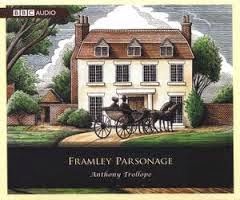
The next book up is Framley Parsonage.  So far my favourite is still The Warden but, with three more to go, a new favourite is not out of the question!
The Barsetshire Series

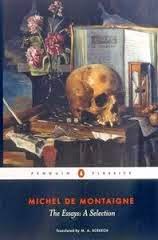
Montaigne’s Essays – Part One

Oh, Montaigne!  What a character!  I’m reading a series of recommended essays, and my plan is to split them into three posts.  So far my introduction to Montaigne has been pleasurable, but taxing to the brain.  His language and progression of ideas, examples and testimonies are not for the faint of heart.  In hindsight, it was wise to take him in measured doses.


On Sadness:  I felt that Montaigne was saying that the deepest sorrows often could not be expressed with outward emotions.  But then he ended by saying that he is little bothered by such violent passions;  I then wonder what gives him the authority to speak on sorrow if he knows nothing of it.  Hmmmm ……..

Our Fortune Must Not Be Judged Until After Death:  Well, this was not an uplifting little essay.  Montaigne believes, drawing from the tale of Croseus and Solon in the stories of Herodotus, that a man cannot be judged as fortunate until his death, because various calamities and suffering can plague him until the end.  Your final day tells all.  Nice.  Fortunately he appears to have amended his views on this subject later in life.

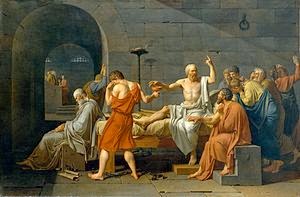
The Death of Socrates
Jacques-Louis David
source Wikipedia

To Think As A Philosopher Is To Learn To Die: Yikes!  Another death essay.  Montaigne emphasizes the need to learn to lose the fear of death.  Death is inescapable and it is a piteous error to try to avoid it by any means, as the hour is determined for everyone.  He tosses in Socrates rather wise and pithy remark:  to the man who said “The thirty tyrants have sentence you to death,” Socrates replied, “And Nature to them.”

Of The Powers of Imagination:  I’m somewhat perplexed as to where to begin with this one.  This essay is supposed to (I believe) explore the relationship of imagination to the mind and body, but Montaigne rather vividly gets into a discussion of the “male member” and “passing wind”.  I was laughing so hard I was crying at the end of the “passing wind” section.  I don’t think hilarity was intended by the author.  😉  Apparently though, people in Montaigne’s time wouldn’t have blinked an eye at these references, showing that they were much more mature and less sensitive than modern people. And since I was very surprised by his frankness given the era, it also demonstrates that our preconceived ideas can be less than accurate.

On Educating Children:  I have an interest in education, so this essay was perhaps the most interesting for me, if not the most amusing (see above).  Montaigne felt that an instructor of good moral character and sound understanding was much more valuable than one with founts of knowledge.  He emphasized the value of knowledge for its own sake, and was repelled by the thought that learning should be used to earn profit. The ancient Greeks would understand his dismay; only slaves were schooled to work, not free men.  Montaigne proceeds to say that he does not wish for an educational system that makes children parrot back what they have learned but rather that they are taught to make ideas their own.  He then expands his argument to suggest tossing out the classical education model in place of simply teaching children to philosophize.  He seems to forget that the classical model contains the building blocks that give the student the tools to be able to discuss topics philosophically, not to mention that young minds have to mature to be able to understand the abstract concepts which are required in philosophy.  He supports, as well, exercise and entertainment, but suggests training peculiarities and eccentricities out of people, as they are “a foe to intercourse and companionship of others”. Well, okay …….  I do understand Montaigne’s main point though.  He is advocating for the teaching of a virtuous character over that of intellectual learning.  In fact, this should be the goal of every teacher, however I believe that there should be a balance between the two, whereas Montaigne seems to want to throw the baby out with the bathwater.

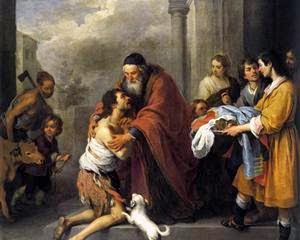
The Return of the Prodigal Son
Bartolome Esteban Murillo
source Wikiart

On the Affection of Fathers for Their Children:  In this case, Montaigne means male children but he does share some good advice. A man should not marry too early and responsible thought should be given to the purpose of having children, realizing that they will owe you much more than they can ever pay back.  Instead of forcing the son to be dependent on him when he comes of age, the father should share his wealth and guide him in the use of it, teaching the son to run the estate.  Now Montaigne claims if this is not done, the sons have no other recourse than to become thieves, a habit that will be nearly impossible to break.  I’m not sure I follow his rationale in this case, and cannot agree with it as an excuse, but hey, it’s Montaigne, right?  It just doesn’t feel normal if he doesn’t hit you with some sort of idiosyncratic reasoning.

In spite of some peculiarities, Montaigne has a charm that cannot be denied.  Perhaps Madame de Sévigné characterizes best what his readers experience:  “I have found entertainment in a volume of Montaigne that I did not think I had brought with me.  Ah, the charming man!  What good company he is!  He is an old friend of mine, but by dint of being old, he is new to me. …….. Mon Dieu!  how full this book is of good sense!”

Mount TBR Checkpoint # 3

Well, by gum, what happened to checkpoint #1?  I have no idea!  This is perhaps a clue that I have too many challenges to keep track of ….. ????

My original goal was Mount Blanc at 24 books, but I have already passed by that peak, and at 42 books it’s good-bye Mount Vancouver, I’m on my way to Mount Ararat (48 books)! I will definitely be able to make it but Mt. Kilamanjaro after that (60 books), is unlikely.  This will be my best TBR challenge to-date.

Bev @ My Reader’s Block would like us to answer some questions, so here goes:

1.  Who has been your favourite character so far?  And tell us why?

Ah, the impossible question!  Or at least impossible to pin-point just one character.  I was intrigued by Eugène Rougon in Son Excellence, Eugène Rougon, for his patience and subtle machinations during France’s Second Empire; I marvelled at Cicero’s lively rhetoric; Oedipus’ mastery of situations, even as a blind man, was stunning, and the loyalty and good sense of Antigone, his daughter,  elicited admiration.   Who could not join Odysseus in his ten-year struggle to reach his son and wife on Ithaka, and be impressed by Margery Kempe who had the courage (or the blind stubborness) to be different in a world that would often ostracize her for it?  While Satan was not a character I would say I enjoyed, per se, his characterization by Milton was one of the best I’ve ever experienced in prose or verse.  But if I would have to pick a favourite, I would choose the Reverend Septimus Harding for his solid, respectable, responsible character, a man who would not compromise his principles for any money or any influence, be it by his collegues or family.  A truly admirable man.
2.  Which book (read so far) has been on your TBR mountain the longest? Was it worth the wait? Or is it possible you should have tackled it back when you first put it on the pile? Or tossed it off the edge without reading it all?

Ah, definitely War and Peace and it was definitely worth the wait.  Now was the perfect time to read it, as I’ve finally been conditioned to view chunksters as simply another book and not as an unscalable mountain.  More importantly, I’d read a couple of other works by Tolstoy and had become used to his style of writing.  This book will definitely be a re-read.

The second book sitting the longest was Paradise Lost.  After I’d finished it my first thought was, “why did I wait so long to read this?!”

3.  Choose 1-4 titles from your stacks and using a word from the title, do an image search. 


FATHERS AND SONS

courtesy of Nokes
Creative Commons

THE SILVER CHAIR

courtesy of Seth Anderson
Creative Commons

THE ODYSSEY

It’s encouraging to have to post updates on challenges that are going well. Now I’m off to read Le Morte d’Arthur for my Arthurian Challenge that is not going well.  Wish me luck!


To Autumn by John Keats

John Keats (1795-1821)
                                 
TO AUTUMN
                                        
                                1.
Season of mists and mellow fruitfulness, 
       
    Close bosom-friend of the maturing sun; 
   
Conspiring with him how to load and bless 
       
   With fruit the vines that round the thatch-eves run;
To bend with apples the moss’d cottage-trees, 
       
   And fill all fruit with ripeness to the core; 
           
      To swell the gourd, and plump the hazel shells 
   
With a sweet kernel; to set budding more, 
       
   And still more, later flowers for the bees, 
       
   Until they think warm days will never cease, 
           
      For Summer has o’er-brimm’d their clammy cells.
Autumn Colors at Tofuku-ji Temple
courtesy of Sacha Fernandez
Creative Commons


                                 2.
Who hath not seen thee oft amid thy store? 
        
   Sometimes whoever seeks abroad may find 
   
Thee sitting careless on a granary floor, 
       
   Thy hair soft-lifted by the winnowing wind; 
   
Or on a half-reap’d furrow sound asleep, 
       
   Drows’d with the fume of poppies, while thy hook
      Spares the next swath and all its twined flowers:
And sometimes like a gleaner thou dost keep 
        
   Steady thy laden head across a brook; 
       
   Or by a cyder-press, with patient look, 
           
      Thou watchest the last oozings hours by hours.
                
Autumn Bokeh
courtesy of Torbus
Creative Commons

                                    3.
Where are the songs of Spring? Ay, where are they?
   Think not of them, thou hast thy music too,—  
While barred clouds bloom the soft-dying day, 
       
   And touch the stubble plains with rosy hue; 
   
Then in a wailful choir the small gnats mourn 
       
   Among the river sallows, borne aloft 
           
      Or sinking as the light wind lives or dies; 
   
And full-grown lambs loud bleat from hilly bourn; 
        
   Hedge-crickets sing; and now with treble soft 
       
   The red-breast whistles from a garden-croft; 
         
      And gathering swallows twitter in the skies.

Autumn Landscape
courtesy of Blmiers2
Creative Commons


Fall is here and so Keats reminds us in this lovely, dreamy lazy poem about this season.

In the first stanza, I love the imagery that is created by Keats filling the reader’s senses with the ripeness of the harvest.  Do you notice the sibilance that is conveyed with words like “mists”, “close blossom”, “bless”, “moss’d”, “swell”, “sweet”, “set”, “cease” and “cells”?  It gives a soft sound to the first stanza that lulls the reader into the dreamy shades of autumn.

The second stanza expresses autumn as a person, and the reader can almost see a goddess sitting on the granary floor while the teasing breezes caress her hair.  Here autumn rests from her harvest.  The personification makes “her” more real, more alive.

While autumn is a season of endings and we tend to start to look forward to spring, yet in the third stanza, Keats encourages the reader to revel in autumn’s glory and bask in its golden sunset, rather than look ahead to something that cannot yet be enjoyed.

I’ve had little exposure to Keats so far, but know this poem will be one of many to come.  I hope you’ve enjoyed it as much as I have and have a very happy autumn season!
The Top Ten Books on My Autumn TBR List

The Broke and the Bookish is asking us this Tuesday:  what are the top ten books on your fall TBR list?  Well, this is probably another list where I could exceed the number ten ……… but I won’t …… this time ……

Reading-wise, I anticipate that this autumn is going to be very busy.  I have books that I have to read for bookgroups, I’m beginning an online course on Shakespeare and one on Dante, and I have to try to focus to finish up my challenges.  So with that in mind, here begins my list:

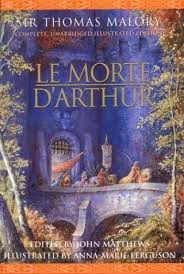
1.  Le Morte d’Arthur by Thomas Mallory

For Jean’s Read-Along coming up on October 1st at Howling Frog Books!

2.  Doctor Thorne by Anthony Trollope

3.  Framley Parsonage by Anthony Trollope

Both this book and #2 are for my Trollope project.

4.  The Iliad by Homer

I just love this book.  If I could, I’d read it once per year!

5.  King Lear by William Shakespeare

I’m not sure the reading order of the plays, but in the course we’ll be reading King Lear, A Midsummer Night’s Dream, Othello, The Winter’s Tale, Romeo and Juliet, and Much Ado About Nothing.

6.  The Essays of Michel Montaigne

Yikes!  I’m behind on this one and need to use the fall to catch up!

7.  The Life of Saint Teresa of Ávila by Herself

After Montaigne’s Essays, this is the next book for The Well-Educated Mind biographies project.

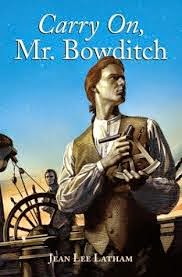
8.  Carry On, Mr. Bowditch by Jean Lee Latham

A children’s book about Nathaniel Bowditch, a sailor and mathematician, who published The American Practical Navigator, a comprehensive reference book for seamen.  I’ve read this book before and it’s excellent!

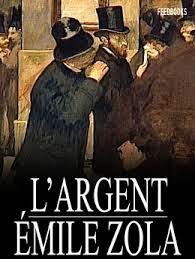
9.  L’Argent (Money) by Émile Zola

Ah yes, Zola again and it’s the fourth in his Rougon-Marquart series (in Zola’s recommended reading order).  I needed a break after La Curée (The Kill), but I’m glad to be back reading the master again!  Wonderfully developed characters and descriptions!

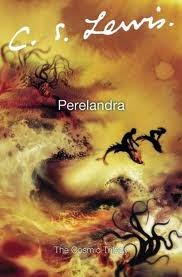
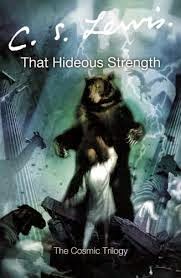
10.  Perelandra & That Hideous Strength by C.S. Lewis

For my C.S. Lewis Project.  I’ve already read the first in the series, Out of the Silent Planet.  This is a fantastic trilogy!

So there are my plans!  I neglected to list The Inferno, which I’ll be reading for the Dante course.  I’ve read it before but I’m quite excited to read it again. I have a brooding premonition that the time I’ll have to apply to these courses will mean that I won’t be able to finish all these books by the end of the fall, but I’m not going to think about it and keep ploughing ahead.  Wish me luck!

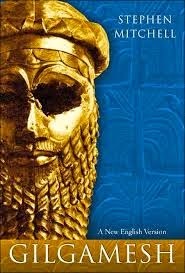
The Epic of Gilgamesh

“The one who saw the abyss I will make the land know;
of him who knew all, let me tell the whole story
 ………… in the same way …….
[as] the lord of wisdom, he who knew everything, Gilgamesh,
who saw things secret, opened the place hidden,
and carried back word of the time before the Flood —
he travelled the road, exhausted, in pain,
and cut his works into a stone tablet.”

Gilgamesh, king of Uruk.  Two-thirds god and one-third man, he built the walls of Uruk, the palace Eanna, and is powerful and commanding.  There is no king like him anywhere.  Yet in spite of having many of the qualities that could make him an honoured king, Gilgamesh oppresses his people and they cry out for relief.  The gods create a wild man, Enkidu is his name. They fight and become fast friends, relieving the people of Gilgamesh’s despotism. Many adventures they have together, and many discoveries they make. Together they behead Humbaba who lives in the cedar forest and they also manage to kill The Bull of Heaven.  Yet one of them must pay for this transgression and Enkidu falls ill, dying even as he laments.  A heart-torn Gilgamesh, determined to find Utnapishtim and find the secret of everlasting life, travels through a number of trials to his journey’s end.  “Surely, Gilgamesh,” Utnapishtim tells him, “you can stay awake for just a week, if you are expecting to have eternal life.”  But Gilgamesh fails the test.  In spite of his near godly status, our hero cannot escape the mortality common to all men.

“My friend Enkidu, whom I loved so dear, who with me went through every danger, the goom of mortals overtook him. 

Six days I wept for him and seven nights: I did not surrender his body for burial until a maggot dropped from his nostril.  Then I was afraid that I, too, would die.  I grew fearful of death, so I wandered the wild. 

…. How can I keep silent?  How can I stay quiet?  My friend, whom I loved, has turned to clay.  My friend Enkidu, whom I loved, has turned to clay.  Shall I not be like him and also lie down, never to rise again, through all eternity?”

Gilgamesh
from the Chaldean
account of Genesis
source Wikipedia

I found many paradoxes in this poem: Gilgamesh is a strong leader, yet he also abuses his power; Gilgamesh is two-thirds god, yet he is also doomed to die; Gilgamesh and Enkidu fight in order to bring peace to Uruk; women are portrayed as vehicles for pleasure, yet are also shown as being wise and having foresight; Enkidu is initially a wild-man, yet he is the one who “tames” Gilgamesh; and in spite of often not sleeping throughout most of the poem, Gilgamesh sleeps at the end, which prevents him from attaining immortality.

Yet in spite of the contradictions, the poet is clear that strength over reason is valueless. Gilgamesh learns that it is trust and integrity in the end that bring acclaim: valuing a friend’s life over his own, discovering the wisdom of accepting death as a part of life, and that being a true leader is about good character and responsibility to his subjects, rather than exercising tyranny, oppression and conquest over them.

And in spite of its ancient roots, the poem still resonates with us today.  Here is a video of Captain Picard from Star Trek the Next Generation giving a short summary of Gilgamesh, in the episode “Darmok” (my favourite episode, BTW!) 🙂

About the translation:  The Sîn-Leqi Unninni Gilgamesh story, found in the library of Ashurbanipal, is the most recent Akkadian version (circa 1200 BC), and is considered the “standard” version.  The editors used it as their fragment of choice and because it contained a number of books that had only a few recoverable words, they had to resort to notes and the Old Babylonian version, in order for the reader to get the gist of the story.  For my first read, in hindsight, I may have chosen a more fluid version, but this version was certainly adequate and scholarly enough that you got the full context of the poem.

Translated from the Sîn-Leqi Unninni version by John Gardiner and John Maier

Top Ten Tuesday – Authors I Need To Read More Of

Straight from The Broke and the Bookish is this Tuesdays Top Ten: Authors I Need To Read More Of.

This topic perfectly illustrates some of my frustrations.  There are a number of authors of whom I’ve read one or two of their books and are dying to read more, yet where is the time?  I just can’t seem to fit them in!

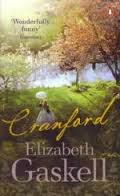
1.  Elizabeth Gaskell:  Okay, I admit that I’ve already read Cranford —- I just really liked this cover. However, I haven’t read Wives and Daughters, Mary Barton, Sylvia’s Lovers, or The Moorland Cottage.

2.  Walter Scott:  Who could resist the romance and chivalry of this author’s novels?  I did get through part of Ivanhoe as a teen, but I spent so much time looking up and writing down unknown words, that I exhausted myself and didn’t finish.  Should I perhaps try a Scott Project, or would I get sick of him before it was done?  Is he best read in doses?

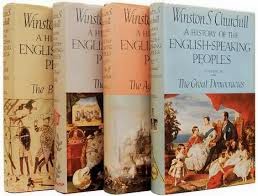
3.  Winston Churchill:  oh yes, non-fiction here I come! The small amount of Churchill’s writings that I’ve read, indicate to me that I’d really enjoy him as an author.  His A History of the English Speaking Peoples is daunting though.

4.  Alexander Dumas:  with a thirst for adventure, who could satisfy more than Dumas?  I’ve read his two “biggies” but there are tons of other works just waiting to be discovered by me.

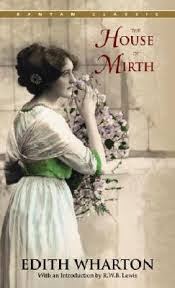
5.  Edith Wharton:  I just love Edith Wharton!  I love her so much that I’m completely perplexed as to why I never seem to be reading any of her novels …..???

6.  Georgette Heyer:  Everyone has such fun reading Heyer!  I’d like some fun too. But somehow I don’t seem to have time for fun. Sigh!

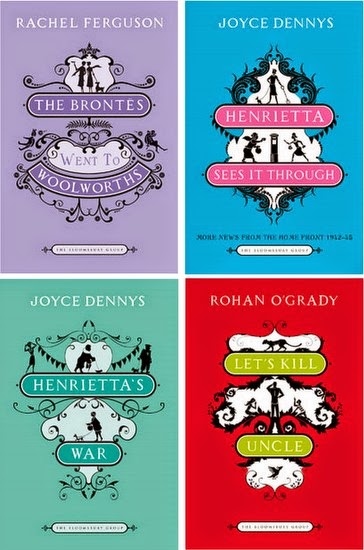
7.  The Bloomsbury Group Books:  I’ve read Henrietta’s War and it was a hoot.  The rest of the books look so entertaining; nice light, feel-good reading.

8.  Anthony Trollope:  Well, his Barsetshire Chronicles have been such delightful reading that I don’t think that I’ll have a problem carrying on to his The Pallisers series.  I know he’s been compared to Dickens but his writing is so much more lively and amusing.

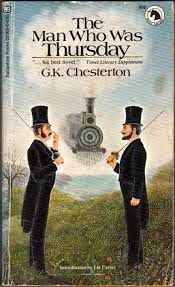
9.  G.K. Chesterton:  Okay, I’m convinced that this man is brilliant. I just read The Man Who Was Thursday and it blew me away.  I’m so looking forward to reading anything by him. And then reading it again.  There are so many layers to his books, it will take a lifetime to peel them off.

10.  Arthur Ransome:  one of my favourite children’s authors.  I’ve read the first four books of his Swallows and Amazons series and I’m determined to read the rest.  A truly great writer.

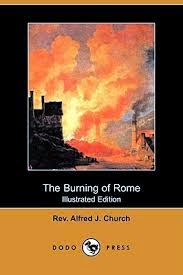
11.  Alfred John Church:  he’s written a ga-zillion books about Ancient Rome, Greece, and Medieval times for children.  They’re somewhat dated but very well-written.

12.  Christopher Hibbert:  one of my favourite writers of historical non-fiction.  I haven’t read one of his books for a loooong time ……

13.  Charles Dickens & Fyodor Dostoyevsky:  For some reason I don’t get a thrill when I think of reading either of their works but on the other hand, I do want to read them.  Strange ….

14.  William Shakespeare:  Oh, my poor Shakespeare Project!  Need I say more?

I know I was supposed to stop at 10 but, as you see, I was inspired.  I’m going to have to take a different tact for 2015 if I want to read even some of these.  This probably means a reduced amount of challenges and perhaps joining less reads in my Goodreads groups.  We’ll see what 2015 brings ….

The Man Who Was Thursday, A Nightmare by G.K. Chesterton

“The suburb of Saffron Park lay on the sunset side of London, as red and ragged as a cloud of sunset.”

Why, oh why, does Chesterton confuse me so?  At first this book appeared to start as a mystery.  Two poets meet in Saffron Park, one, Lucian Gregory, a creative anarchist, the other, Gabriel Syme, a conservative poet and undercover police detective.  By his wit and resources, Syme infiltrates the anarchist’s group called the Central Anarchist Council, getting himself named one of its seven members, christened “Thursday”.  Yet can he stop the assassination attempt the group is planning and expose this dastardly anarchical organization?

The book is much more than a mystery, which readily becomes apparent as the reader makes his way through the entertaining yet confusing prose. There was an initial discussion about anarchy and art, yet I soon realized that the two poets were comparing anarchy and law.  As I read my way through, various questions arose.  Why were the council members named after the days of the week?  Does this point towards some sort of creation story?  Why do all the members who appear evil are not as they seem? What are they really fighting against?  Why is the subtitle “A Nightmare”?  And what was the point of Syme’s promise to Gregory? It is mentioned numerous times so it should have some importance.

Yet the big question that hangs over the characters and the reader alike is: Who is the leader of the group, Sunday?  The Professor, named Friday, reveals:

“I confess that I should feel a bit afraid of asking Sunday who he really is.” 

“Why,” asked the Secretary, “for fear of bombs?” 

“No,” said the Professor, “for fear that he might tell me.”

In one review, the reviewer claimed that Sunday represents Nature.  Well, perhaps.  He is both benign and frightening, as this description shows:

“You would not know [his name] ……  That is his greatness.  Caesar and Napoleon put all their genius into being heard of, and they were heard of.  He puts all his genius into not being heard of, and his is not heard of.  But you cannot be for five minutes in the room with him without feeling that Caesar and Napoleon would have been children in his hands.”

Sunday’s words about himself are even more chilling:

“Since the beginning of the world all men have hunted me like a wolf —- kings and sages, and poets and law-givers, all the churches, and all the philosophers.  But I have never been caught yet, and the skies will fall in the time I turn to bay.  I have given them a good run for their money ……….  There’s one thing I’ll tell you though about who I am.  I am the man in the dark room, who made you all policemen.”

After its publication in 1908, The Man Who Was Thursday came under a storm of critical approval.  Frighteningly complex, it has been  hailed as “amazingly clever”,  “shamelessly beautiful prose”, “a remarkable acrobatic performance” and “a scurrying, door-slamming farce that ends like a chapter in the Apocalypse.”  One reader declared himself “dazed” at the end of it, which perfectly described my puzzled demeanor as I closed the last page.

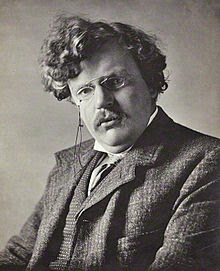
Gilbert Keith Chesterton (1909)
source Wikipedia

As you see, reading the book brought about more questions than answers, so instead I will leave you with a taste of what others have said about this novel:

“Roughly speaking, it’s about anarchists …… And roughly speaking, it’s a mystery story.  It can be guaranteed that you will never, never guess the solution until you get to the end —- it is even feared that you may not guess it then.  You may never guess what The Man Who Was Thursday is about.  But definitely, if you don’t, you’ll ask. “ 

                                                                     ~  Orson Welles  ~

“…… mystery and allegory take their turn in the scene.  Life, huge, shapeless, cruel and loving, killing and saving, full of antitheses, appearing to each one under a different aspect, measuring each man according to the strength of his soul, turns its strange face upon us.  Life, whose soul is law, nature, whose expression is law, confront the frantic lawlessness of struggling man —- and behold, those very struggles prove to be based on law again.  And when at the last you sit on the thrones with the Council of Days, you see the mad, miraculous world dance by, moving to a harmony none the less invincible because only half heard.”
                                                ~  Hildegarde Hawthorne  ~

I highly recommend this book to ……….. well, to anyone!  Read it as a mystery, read it as a commentary, read it as philosophy,  read it as a fantasy, read it as theology —- it has something for everyone. Perhaps it should be described as a mystery without end, a true symphony of brilliance by Chesterton, in which nothing is ever how it seems!

If you’ve read The Man Who Was Thursday, what do you think the story was about?

Further Reading:

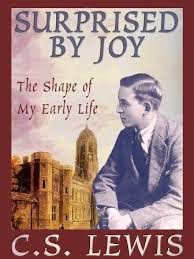
Surprised by Joy by C.S. Lewis

“I was born in the winter of 1898 at Belfast, the son of a solicitor and of a clergyman’s daughter.”

And so begins the autobiography of one of the most prolific writer’s of his time, C.S. Lewis.  While Lewis gives an engaging description of his life as a boy, first in Ireland, and then later in England, his main goal is to give the reader little windows into the experience that he called “Joy”, which one can equate with the German word, “Sehensucht” translated into English as an “intense longing”.  During his childhood, Lewis experienced brief yet keen feelings of this profound yearning.  If one tried to manufacture this emotion or hold onto it, it would simply remain illusive or slip away; it came of its own volition, which indicated to Lewis that this desire pointed to something beyond himself.

In the Garden (1885)
William Merritt Chase
source Wikiart

Lewis’ first glimpse of “Joy” was when his brother Warnie showed him a garden that he had built of moss and twigs on top of a biscuit tin. Lewis said, “As long as I live my imagination of Paradise will retain something of my brother’s toy garden.” Other experiences of joy appeared as he grew and Lewis felt that because our own natural world could not supply what our souls longed for, there must be something supernatural that could fulfill this Sehensucht.  Eventually Joy brought him face-to-face with God.

Magdalen College Oxford
source Wikipedia

What was especially refreshing about this biography was that Lewis didn’t treat his conversion as coming out of the darkness into the light, so much as presenting it as a recovery of the delights of childhood that he felt were pointing him in the direction of Christ.  In many ways, this is an Augustinian-type experience, yet while Augustine was definitely searching for a meaning to life, the “meaning” seemed to be pursuing Lewis, and he describes his conversion in startling terms, “You must picture me alone in that room in Magdalen, night after night, feeling, whenever my mind lifted even for a second from my work, the steady, unrelenting approach of Him whom I so earnestly desired not to meet.  That which I greatly feared had at last come upon me.  In the Trinity Term of 1929 I gave in, and admitted that God was God, and knelt and prayed: perhaps, that night, the most dejected and reluctant convert in all England.”  But he then goes on to say, “I did not then see what is now the most shining and obvious thing: the Divine humility which will accept a convert even on such terms …….  The hardness of God is kinder than the softness of men, and His compulsion is our liberation.”

Before I wrap up this review and somewhat off topic, Lewis made a curious reference to automobiles in this biography, which I found very insightful and profound.

“I number it among my blessings that my father had no car, while yet most of my friends had, and sometimes took me for a drive. This meant that all these distant objects could be visited just enough to clothe them with memories and not impossible desires, while yet they remained ordinarily as inaccessible as the Moon.  The deadly power of rushing about wherever I pleased had not been given me.  I measured distances by the standard of man, man walking on his two feet, not by the standard of the internal combustion engine.  I had not been allowed to deflower the very idea of distance; in return I possessed ‘infinite riches’ in what would have been to motorists ‘a little room’.  The truest and most horrible claim made for modern transport is that it ‘annihilates space.’  It does.  It annihilates one of the most glorious gifts we have been given.  It is a vile inflation which lowers the value of distance, so that a modern boy travels a hundred miles with less sense of liberation and pilgrimage and adventure than his grandfather got from traveling ten.  Of course if a man hates space and wants it to be annihilated, that is another matter.  Why not creep into his coffin at once?  There is little enough space there.”

A very biting commentary but for me it rang with truth and made me wonder how much “Joy” has been robbed by modern conveniences.  Hmmm …….

In any case, this was a wonderful, uplifting biography that I fortunately get to read again for my WEM Project at some point in the future!

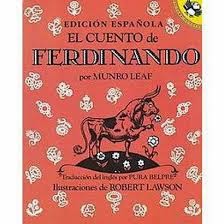
Ferdinandus Taurus – Munro Leaf

“Olim in Hispania erat taurulus nomine Ferdinandus.”

Well, right away I must confess that my Latin is not nearly good enough to read this book unaided.  I can read short paragraphs about Caesar fighting barbarians and Roman generals, but that’s about it.  However, the dictionary at the back of this book came to my aid as did other resources.  Honestly, I confess though, it took me ages to read this.

Almost everyone, I think, knows the Story of Ferdinand, the young bull who lives in Spain and would like nothing better than to sit in his meadow and to smell the flowers.  Yet when a bumblebee inopportunely stings him, just as some matadors are checking out bulls to take to Madrid to the fights, things go terribly wrong.  Ferdinand is mistaken for a magnificent fighter and is dragged off to the bullfights.  But our intrepid hero will not give in, no matter how many banderillos or picadores or matadores taunt him to fight. No, Ferdinand stays true to his placid nature and simply sits and smells the flowers. Finally he is sent back to his meadow and he is free.

And since this book is set in Spain, what better tribute than to read it in Spanish?  So that’s what I did after my foray into it in Latin.  “Había una vez en España un torito que se llamaba Ferdinando.”

This book was published in 1936, nine months before the civil war broke out in Spain, and was seen as a promotion of pacifism.  Francisco Franco, the Spanish dictator condemned it as propaganda, as did Hitler, who banned the book in Nazi Germany.  In contrast, the book was lauded by the political left; Gandhi claimed it was his favourite book, and it was the only non-communist book allowed in Poland by Joseph Stalin.

I did a comprehensive analysis of The Story of Ferdinand in English on my children’s book blog.  The depth of this book is astounding.  You can find my review here.

Okay, I squeaked in one more book (well, actually two if you count both the languages) for my Language Freak Summer Challenge.  Yippee!