The Princess by Anton Chekhov

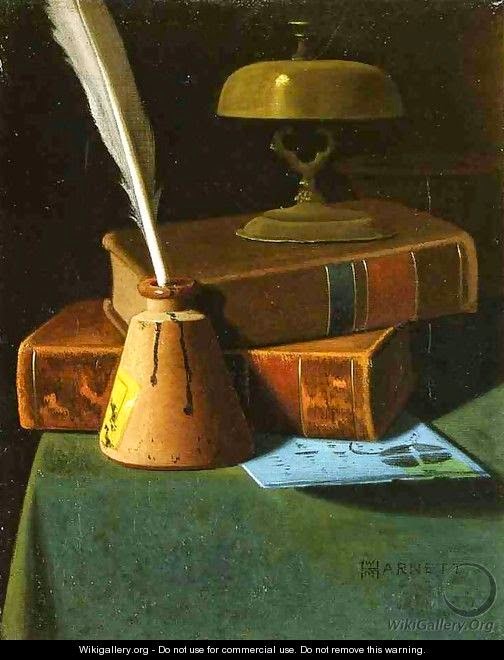
Portrait of Anton Chekhov (1886)
Isaac Levitan
source Wikiart

This short story is my fourth read for my Deal Me In Challenge 2015.

What happened to Narcissus when he looked at his own reflection in the pool? This beautiful hunter from Boeotia fell in love with himself, and in fact was so deeply infatuated, in his self-obsession he fell into the pool and drowned.  Not a very fitting end for one with so much promise.

Narcissus (1594-96)
Caravaggio
source Wikipedia

In Chekhov’s story we meet the Princess, a lovely young woman who arrives at an isolated monastery for a night’s stay.  She is so thrilled to be there, gushing effusively about the setting and the priests and brothers who have received her.  She wants to forget her life in the city and the monastery and its occupants give her the tools to do so.  But the reader soon realizes that her arrival, instead of being a moment of interest and delight, is instead looked upon with discomfort and even dread by the good brothers of the monastery, and one feels that the Princess, in spite of her outward joie-de-vivre and vivacious personality, is only noticing the benefits that she gets from her visit, without concern for anything or anyone around her.

Soon she meets Mikhail Ivanovitch there, a doctor whom she’d earlier employed in her service, but instead of a warm reception for her, the doctor’s replies drip icicles.  Our poor, puzzled Princess cannot understand ….. why the reserve, especially when she condoles with him upon the death of his wife, an event that is certainly sad, but of course, life must go on.  When she mentions the mistakes she’s made in life and the doctor agrees, she begs him to enlighten her.  Perhaps she should have been more careful in what she asked for.  Directly he begins to catalogue her offenses, taking her to task for her lack of sympathy, her greed, her complete disdain for the feelings of others ………. in fact, the whole system of life that she has built around her is false and cruel, breeding those traits, and choking out any love or caring.  She has replaced God with herself, and therefore is no longer able to understand the creation in which she lives.

Oh!  The Princess is hurt, she is distraught, she is devasted!  That cruel, uneducated, ill-bred man!  How could he speak so to her, to HER, a princess?!  She must use her only defence against these horrid accusations, and so she begins to cry.  The doctor is immediately contrite and leaves her.  When they meet the next day, the princess is once again herself, gay and blithe as she prepares to leave, expecting everyone to admire and entertain her even as she promises to come again soon.  The unpleasantness of the day before is blotted from memory as once more she strives to be the centre of the world.

The Unsmiling Tsarevna (1916-26)
Niktor Vasnetsov
source Wikiart

In spite of the inclination to laugh at the princess’ stupidity and complete self-absorption, this story is quite a tragic one.  Her character is certainly one of a narcissist, and anything that exists around her, merely exists for her alone.  She is devoid of the character traits that make one truly human and, therefore, is not much better than a beast.

On November 15, 1888, Chekhov wrote to his publisher, stating that he was writing a story about a “vile woman”.  Three days later Chekhov wrote, “I want to write protest stories this season ——  I must learn the knack, but it bores me because I’m not used to it,” which makes one wonder if the doctor’s social protest was supposed to be the hub of the story.  In any case, both character’s roles offered a ripe opportunity for social and psychological examination.  This was an excellent story that certainly makes me want to read more of Chekhov’s works.
Deal Me in Challenge (#4) – Six of Clubs


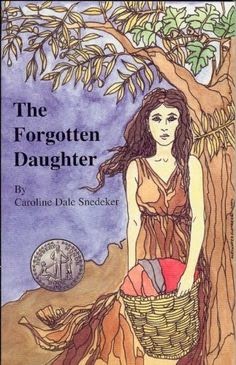
The Forgotten Daughter


Author:  Caroline Dale Snedecker

Illustrator:  Dorothy P. Lathrop

Era:  2nd century B.C. (around 113 B.C.)

Published:  1933 (Doubleday)

Award:  Newberry Honor (1934)

Age Range:  8 – 14 years old

Review:  ★★★★

Twelve year old Chloé lives with her companion, Melissa, in a shack in mountains of Samnium outside of Rome.  The daughter of a Greek slave and a Roman centurion, at her mother’s death she is abandoned by her father to her fate, which is that of a slave.  As Chloé grows to womanhood, she draws from the animals and nature around her as companions.  Her character is as lovely as the woods around her, yet still she nurses an abiding hatred for the man who should have loved, nurtured and raised her as his own.  When a young Roman nobleman arrives at a neighbouring villa and encounters the young girl, Chloé’s circumstances appear destined to change for the better, yet her past finally catches up with her and Chloe must decide whether she will hold on to the ghosts of the past or reach forward into a new future.

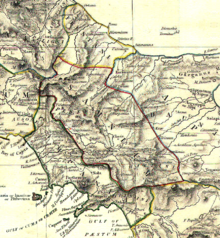
Map of Ancient Samnium
from the Historical Atlas William R. Shepherd (1911)
source Wikipedia

Snedecker was known for her extensive research using only primary or secondary sources, and The Forgotten Daughter sings with a melody of the past.  Snedecker’s writing brings Roman life to the reader in vibrant colours and poignant emotions.  The descriptions of the setting are beautiful and living, and as a reader you feel that you have stepped right into the story.

Chloé’s life as a child slave was perhaps the most troubling and effective portrait that I’ve every read in a book.

“Forever besetting mankind is this temptation — to make other men into machines.  Always in a new form it comes to every generation, and always as disastrous to master as to slave.”

 Snedecker delves into the emotions of the characters in such a visceral way and with an uncanny perception.

“Despair in the old is a grievous thing, but not so bad as despair in the young.  The young have no weapons, no remembrances of evils overcome, nor of evils endured.  They have no muscle-hardness from old battles.  They see only what is present, and they believe it to be forever.  And they are very sure.  Besides, joy and up-springing are the right of youth, and without it youth falls to the ground.”

The theme of slavery was obvious on the surface but also subtly explored through other occurences, weaving fine threads of insight through an already well-constructed story.  I absolutely loved this read and will be seeking out other books by Snedecker.

This book was read for Amanda at Simpler Pastimes Children’s Literature Event.

A more extensive review can be found at my children’s blog, Children’s Classic Book Carousel.

Deal Me In Challenge #3 – Ace of Hearts

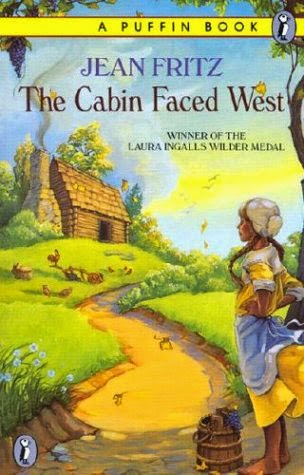
The Cabin Faced West

Author:  Jean Fritz
Illustrator:  Feodor Rojankovsky
Era:  1784
Published:  1958 (G.P. Puntam’s Sons)
Award:  none known 
Age Range:  3 – 12 years old
Review:  ★★★★★
Fritz relates the wonderfully poignant story of Ann Hamilton, a young girl who has moved west with her family, which include her parents, and two brothers. Her father, in his wisdom, emphasizes that the family must “look west” now, and that there should be no looking back.  Ann, however, finds this resolve difficult.  She misses her family, especially her cousin, Margaret, who was her best friend.  How will she be able to carve out a new identity for herself in this new unfamiliar land.  Who is this new Ann, who is now a pioneer girl?

Eventually, through various interactions with her family, other settlers, and George Washington himself, Ann learns the value of this new land and her place within it.

Set during the late 1700s, this story is based on a true one which happened to Fritz’s great-great-grandmother, Ann Hamilton.  George Washington did indeed stop at the Hamilton’s for dinner on September 18, 1784.  His diary reads:  “Set out with Doctr. Craik for my Land on Miller’s Run.  Crossed the Monongahela at Devore’s Ferry —- bated at one Hamilton’s about 4 miles from it, in Washington County, and lodged at Colo. Cannon’s”  And so the story passed down through generations to finally be shared with us all.

For a more extensive review, please see my Classical Children’s Carousel!

Oh yes, and the first book read for the January Classical Children’s Literature Event!

Deal Me in Challenge (#2) – Eight of Hearts


A Red, Red Rose by Robert Burns

A Red, Red Rose
courtesy of Scott Branson (Flickr)
Creative Commons

A Red, Red Rose
by Robert Burns 
(1794)
My love is like a red, red rose
   That’s newly sprung in June :
My love is like the melody
   That’s sweetly played in tune.
As fair art thou, my bonnie lass,
   So deep in love am I :
And I will love thee still, my dear,
   Till a’ the seas gang dry.
Till a’ the seas gang dry, my dear,
   And the rocks melt wi’ the sun :
And I will love thee still, my dear,
   While the sands o’ life shall run.
And fare thee weel, my only love,
   And fare thee weel a while !
And I will come again, my love,
   Thou’ it were ten thousand mile.

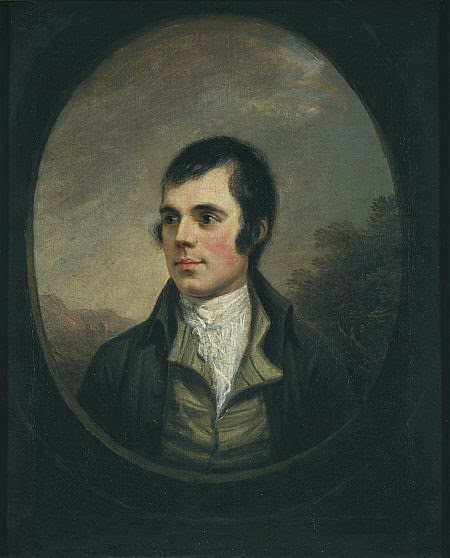
Robert Burns Portrait (1787)
by Alexander Naysmith
source Wikipedia

This is my first choice for the Deal Me In Challenge.  It is a poem put to song based on a familiar song that Burns had heard.  It’s structured in four quatrains (four-line stanzas).  Using similes and hyperbole, the writer expresses his great love for a fair, “bonnie lass” and the poem’s repetition enforces his feelings.  Initially he likens his love to a rose, a melody, and then declares the endurance of that love.  At the end of the poem it seems the writer has to go away for awhile, which is perhaps why he has written the poem. so that his sweetheart will know the strength of his feelings and of his constancy.

So far my favourite Burns poem is To A Mouse, but I really appreciate the straight-forward honesty of this one.  I’m so used to little teasings and wittiness from Burns, but this poem is quite delightful!

And for Marianne, here is the poem put to music (the poem begins at about 0:40, for those who don’t like long introductions):

Deal Me In Challenge – Queen of Diamonds #1

Deal Me In Challenge List 2015

Happy New Year all!  My first post for the year is a list of Short Stories, Essays, Poems and Children’s Books for my 2015 Deal Me In Challenge.

THE LIST:

Clubs – Short Stories
A –  Cabbages and Kings – O’Henry
2 – The Runaway – Chekhov
4 – Le Horla – de Maupassant
5 – The Tell-Tale Heart – Poe
8 – A Little Woman – Kafka
9 –  A Haunted House – Woolf
10 – The Birds – Chekhov
J –  The Yellow Wallpaper – Gilman
Q – The Eyes – Wharton
K –   Signs and Symbols – Nabakov
Spades – Essays
A – Milton – Williams
3 – A Midsummer Night’s Dream – Chesterton
6 – Hamlet : The Prince or the Poem – Lewis
7 –  Monsters and the Middle Ages – Chesterton
8 – The World of Tomorrow – E.B. White
9 – Discipline and Hope, Means as Ends – Berry
10 – Sense – Lewis
J – Sex, Economy, Freedom & Community – Berry
Q – Different Tastes in Literature – Lewis
K – Vulgarity – Chesterton
Diamonds – Poetry
2 –  Gesang Der Geister Über Den Wassern – Goethe
3 – The Morning of Life – Hugo
5 – A Lover’s Complaint – Shakespeare
6 – Resolution and Independence – Wordsworth
8 – Do Not Go Gentle Into That Good Night – Thomas
9 – Ode to a Grecian Urn – Keats
10 – Tears, Idle Tears – Tennyson
K – Phoenix and the Turtle – Shakespeare
Hearts – Children’s Classic
2 – Three Greek Children – Church
3 – The Mysterious Benedict Society – Stewart
5 – Journey from Peppermint Street – deJong
6 – The Tanglewood’s Secret – St. John
7 – The Wolves of Willoughy Chase – Aiken
9 – Sprig of Broom – Willard
10 – Teddy’s Button – LeFeuvre
J – The Book of Three – Alexander
Q – Tales from Chaucer – Farjeon
K – Beyond the Desert Gate – Ray (2)

Deal Me In Challenge 2015

Okay, only one more challenge ……. really ……….!  Jay at Bibliophilica is having his yearly Deal Me In challenge and it looks like such fun, I couldn’t resist.  I’ve been watching Dale @ Mirror With Clouds participate all last year, and Marianne gave me an idea with a twist for it that should work wonderfully!

The rules are:

What is the goal of the project?
To read 52 short stories in 2015 (that’s only one per week)
What do I need?
1) Access to at least fifty-two short stories (don’t own any short story collections or anthologies? See links to online resources below)
2) A deck of cards
3) An average of perhaps just thirty minutes of reading time each week
Where do I post* about my stories?
(*You don’t have to post about every single story, of course, but if you have something to say about the story you read any given week, your fellow participants would love to hear it.)
1) On your own blog or website if you have one (I will link to your post at the bottom of my weekly post. I currently plan to do my weekly post on Sundays)
2) if you don’t have a blog or website you may comment on my weekly post, sharing thoughts on your own story – or start one at WordPress or blogspot – it’s easy and free to create a basic blog.
How do I pick which stories to read?
(The 52 stories themselves are totally up to you.) Before you get start reading, come up with a roster of fifty-two stories (you can use any source) and assign each one to a playing card in a standard deck of cards. It can be fun to use different suits for different types of stories, but that is optional. Each “week,” (if you’re like me, you may occasionally fall a story or two behind) you draw a card at random from your deck and that is the story you will read. There are links to last year’s participants’ rosters hereif you want to see some examples.
What if I don’t have time to read a story every single week?
Try one of the challenge variations noted below, the Fortnight (or “payday” if you prefer) version is one story every two weeks or the “Full Moon Fever” version with just thirteen stories read or selected on seeing each full moon…
How do I sign up?
Leave a comment below with your URL and I will link you. My first wrap-up post of the year (I post weekly, usually Sunday night or Monday morning) will include links to any new Deal Me In posts and a list of the participants with links to their roster of stories.
What is the purpose?
To have FUN and to be exposed to new authors and stories and maybe get in the habit of reading a short story a week. Isn’t that enough? 🙂


Now I’ve decided to follow Marianne’s lead and adjust the challenge to work for my reading plans for the year.  Part of my plan for 2015 was to try to read more children’s classics, essays and poems for the year, so instead of reading all short stories, I’m going to split it into four categories:  Short Stories, Essays, Poems and Children’s Classics.  
I’m really looking forward to this challenge.  In the next day or so, I’ll post my list of titles corresponding to the playing card deck.  I’m not promising I’ll be able to read all 52 of them, but I’ll certainly do my best!