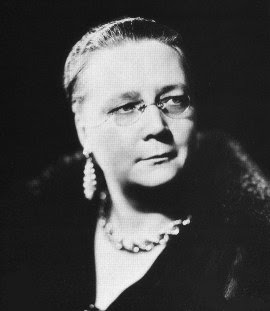
Dorothy L. Sayers is best known for her Peter Wimsey mysteries, but she was also a playwright, poet, essayist, and theologian, writing such books as The Man Born to Be King, Creed or Chaos?, The Mind of the Maker, and Are Women Human? In her own eyes, her finest work was her translation of The Divine Comedy.
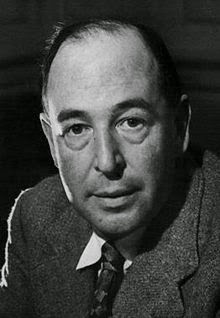
Both Lewis and Sayers completed their academic studies at Oxford University and their first meeting was through a fan letter that Sayers wrote to Lewis upon reading his The Screwtape Letters.
“She was the first person of importance who ever wrote me a fan letter …….. I liked her, originally, because she liked me; later for the extraordinary zest and as edge of her conversation —- as I like high wind. She was friend, not an ally.” (Lewis)
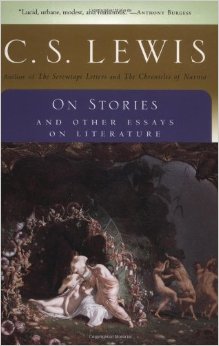
In this panegyric read at Sayers’ funeral, Lewis praises Sayers’ literary work. While he admits to not being a fan of detective fiction, he nevertheless respects their authors and explains that, contrary to rumours that Sayers was later ashamed of her “tekkies”, she had merely “felt she had done all that she could” with the genre. He claims there is no “cleavage” between her detective work and her later theological works, citing Pascal’s quote, “One shows one’s greatness not by being at an extremity but by being simultaneously at two extremities.” He discusses the writing of Christian works, the problems of the intrusion of self and the commonalities between detective fiction and religious writing.
With regard to the importance Sayers placed on the quality of writing, he quotes from her The Man Born to Be King, “Let me tell you, good Christian people, an honest writer would be ashamed to treat a nursery tale as you have treated the greatest drama in history: and this in virtue, not of his faith, but of his calling.” The intention to behave piously was no excuse for a job poorly done.
Finally, he praises her work of the translation of Dante’s The Divine Comedy and goes on to say of her independent character:
” For all she did and was, for delight and instruction, for her militant loyalty as a friend, for courage and honesty, for the richly feminine qualities which showed through a port and manner superficially masculine and even gleefully ogreish —- let us thank the Author who invented her.”
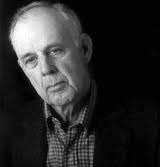
Wendell Berry is an American essayist, novelist, poet, fifth-generation farmer, and environmental activist. He has written copious numbers of short stories, essays, novels and poems during his rather interesting life. Berry argues that the breakdown of communities has been aggravated by large corporate farming and that living in harmony with nature is a necessity, as its destruction will lead to our own.
Berry essentially first gained recognition as a poet, but his hard-hitting essays have earned him notoriety and a wider audience. This essay was delivered as a lecture at the Southern Baptist Theological Seminary in Louisville, Kentucky. Berry hits hard right from the beginning of the essay, immediately punching home his topic:
“I want to begin with a problem: namely, that the culpability of Christianity in the destruction of the natural world and the uselessness of Christianity in any effort to correct that destruction are now established clichés of the conservation movement.”
He establishes on one hand, that the “indictment is just” in that Christian priests, missionaries, organizations, etc. have been “largely indifferent to the rape and plunder of the world and of its traditional cultures” and that Christians are often as complicit as anyone else “to join the military-industrial conspiracy to murder Creation,” yet there is a problem with the conservationists’ indictment; the anti-Christian conservationists dismiss the Bible, without having an understanding of it. In effect, they “have not mastered the first rule of the criticism of books: you have to read them before you criticize them.” The error is not that the Bible has not given Christians a tradition of respect, stewardship and love for the earth, they have simply chosen to ignore it.
Berry then examines Biblical tenants with regard to the earth, stating that the world is not owned by humans, but by God: “The earth is the Lord’s, and the fulness thereof: the world and they that dwell therein. (Ps. 24:1)” John 3:16 states that God loves the world, not as it might be but as it is, and He “continues to love it and find it worthy, despite its reduction and corruption by us …….. Creation is not in any sense independent of the Creator, the result of a primal creative act long over and done with, but is the continuous, constant participation of all creatures in the being of God ……. Creation is God’s presence in creatures.”
Not only does Berry use the Bible to support his thesis, but he draws from Dante, William Blake, Thoreau, and others to support his views on the importance of nature and our human interaction with it.
“The Bible leaves no doubt at all about the sanctity of the act of world-making, or of the world that was made, or of creaturely or bodily life in this world. We are holy creatures living among other holy creatures in a world that is holy. Some people know this, and some do not. Nobody, of course, knows it all the time. But what keeps it from being far better known than it is? Why is it apparently unknown to millions of professed students of the Bible? How can modern Christianity have so solemnly folded its hands while so much of the work of God was and is being destroyed?”
Berry urges us on to a re-thinking of our ideals. We think we can contain God within what we create, but God is much bigger. “He is not to be fenced in, under human control, like some domestic creature; He is the wildest being in existence. The presence of His spirit is us in our wildness, our oneness with the wilderness of Creation. That is why subduing the things of nature to human purposes is so dangerous and why it so often results in evil, in separation and desecration. It is why the poets of our tradition so often have given nature the role, not only of mother or grandmother, but of the highest early teacher and judge, a figure of mystery and great power.”
Outdoors we encounter the miraculous, indoors we meet the common.
Berry continues the thread of his argument through religious issues, through economy, or the ways humans live in relation to nature, then finally reaches the question of art in the context of what we, as humans, create.
“If we think of ourselves as livings souls, immortal creatures, living in the midst of a Creation that is mostly mysterious, and if we see that everything we make or do cannot help but have an everlasting significance for ourselves, for others, and for the world, then we see why some religious teachers have understood work as a form of prayer”
Berry offers some astute observations as to the traditions of art: “Traditionally, the arts have been ways of making that have placed a just value on their materials or subjects, on the uses and the users of the things made by art, and on the artists themselves. They have, that is, been ways of giving honor to the works of God. The great artistic traditions have had nothing to do with what we call ‘self-expression.’ They have not been destructive of privacy or exploitive of private life. Though they have certainly originated things and employed genius, they have no affinity with the modern cults of originality and genius.” The end of the essay is comparatively weak, contrasting the villainies of modern Christianity with the (probably more traditional), truly biblical focussed Christianity, where man is encouraged to root out and work on his weaknesses in the scope of a broader community base, and for the good of, not just oneself, but for all.
What I love about Berry is that he is not wholly on the side of any one group. He has developed his own personal thoughts and ideals through reading, discussion, experience, and observation and is quite adept at targeting strengths and weaknesses accordingly. Though I’ve been meaning to read Berry for ages, this is my first taste of his writing and it was quite delicious. I can’t wait to jump in for another bite!
Father Brown has plans to meet his niece in a picture gallery, but before he finds her, he encounters lawyer Granby who wants his opinion. Should he trust a certain Captain Musgrove enough to advance him money on his father’s estate? The estate is not entitled and it is not conclusive that Musgrove Jr. will be the heir. Upon the arrival of his niece, Father Brown learns that she is planning to marry the same Musgrove and meets the young man himself. Musgrove invites both Father Brown and Granby to his father’s castle, but then bows out of the trip at the last moment due to an arrival of a couple of shady characters in the background, but encourages the men to make the trip without him.
After they arrive at the castle (having to leap the moat due to a rusty, disabled drawbridge), they meet Old Musgrove, who assures them that his son will inherit, yet he will never speak to him again, due to the fact that he perpetrated the worst crime in the world. Granby returns to town, secure in his knowledge, but Father Brown remains in the village, determined to discover the details of this dastardly crime. Will he be able to discover the truth in time to save his niece from the clutches of a villain, or is the old man merely playing with him and there is nothing sinister about his son? You will only find out, if you read the full story which can be found here: The Worst Crime in the World – G.K. Chesterton
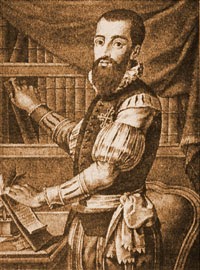
Born in Toledo in 1501, de la Vega was one of the first Spanish poets to introduce Italian verse forms and techniques to Spain. Mastering five languages as well as having a good aptitude for music, de la Vega eventually joined the Spanish military and died at 35 years old from a wound sustained in battle in Nice, France. His poetry has been fortunate to be consistently popular during his life and up until present times.
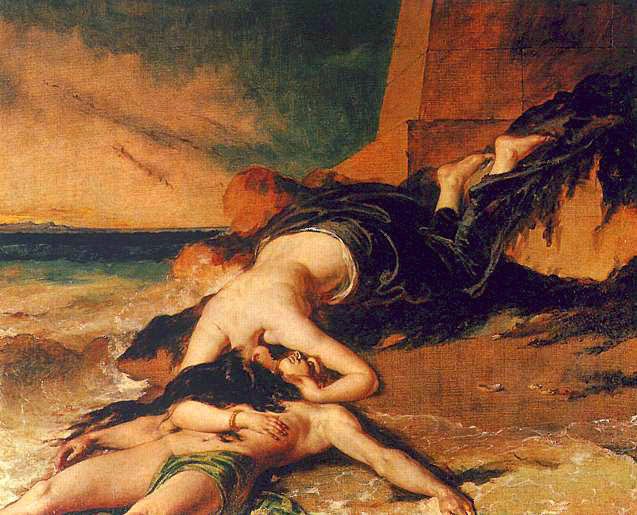
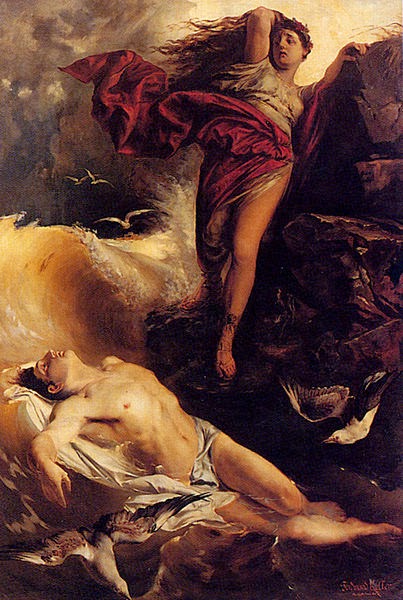
In Sonnet XXIX, de la Vega explores the Greek myth of Hero (Ὴρὠ) and Leander (Λὲανδρος). Each night Leander swam the Hellespont (the modern Dardanelles) to be with his lovely Hero, who lived in a tower in Sestos by the sea. She would hang a lamp for him in her high tower to guide his path, however, on a particularly stormy night, the waves buffeted Leander, the wind blew out Hero’s lamp, and brave Leander tragically drowned in the raging waters. Bereft, Hero threw herself from her tower into the pitiless sea, which joined them in death, as it had kept them apart in life.
If my memory serves me well, I believe this poem is a favourite of Jason at Literature Frenzy and it was his love of it that inspired me to include it in my Deal Me In Challenge. Without this inspiration, it would probably still be unread, as Keats, for some reason, intimidates my uneducated poetic sensibilities.
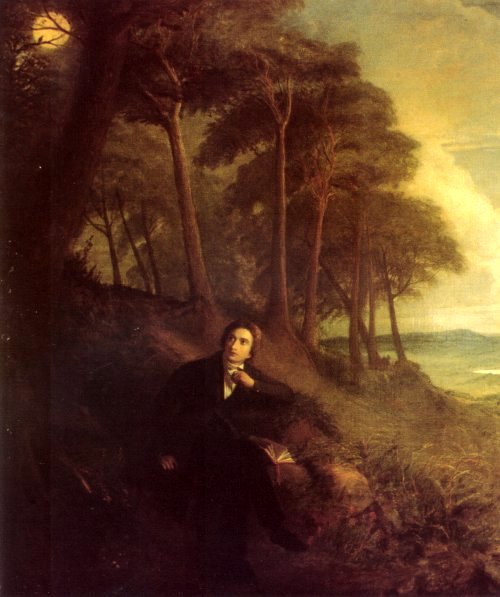
Keats initially uses extreme contrasts of his dulled, poisoned senses to the happy nightingale, its song urging him out of his despair; one wonders if it will completely succeed. In the second stanza the poet relates his desire for wine. Why? Because wine is made from grapes, will it allow him to meld more with nature, or does he simply want to get intoxicated to forget his troubles? He admits then that he wishes to escape the suffering of life and expresses regret at the transience of youth and life. Ah, now he claims that he won’t reach the nightingale through wine but poetry, and expresses almost a dualism in that his brain is dull perhaps still with care, yet he is already with the joyous nightingale. The fifth stanza is even more curious. Though he is in the forest with the nightingale, he cannot see the beauty there, as if he can only get glimpes as he is unable to liberate himself from life’s hardship. The poet admits to being “half in love with …. Death,” —- I had thought the poet was equating the nightingale’s song with joy, but now he appears to be marrying it with death. Is this part of his confusion or something deeper that I’m missing? Yet if he dies, he will cease to hear the song, so perhaps he realizes the dilemma. The poet then equates the nightingale with immortality and, as we’ve read, the bird almost transcends earthly constraints; its song has been a continuous joy in a temporal world. But alas, the poet is recalled to his sad state, the nightingale’s song abandons him and he is left to wonder if his whole experience was real or a dream.
Portrait of Keats listening to a nightingale (1845) Joseph Severn source Wikipedia
This was certainly a difficult poem for a rank amateur. The themes I could pick up were isolation, death, a transcendent joy that perhaps may be unreachable at least for the poet, abandonment, disconnection, transience of life, and a longing for something beyond this life.
As I was reading, I wondered if the poet was trying to match his creative expression with the nightingale’s song. It would seem impossible to create at the level of God, but I felt such inspiration in the poem, almost as if Keats was trying to create the poem as intensely as the poet of the poem was wishing to escape earthly adversity.
I’m no expert, but this poem seems to pair well with Percy Bysshe Shelley’s To A Skylark, which O reviewed recently on her blog Behold the Stars. Both poets put nature front and centre, but Shelley has a much more positive outlook, while Keats’ poem is filled with more nuanced emotions and contradictions. The similarities and contrasts between the two are intriguing.
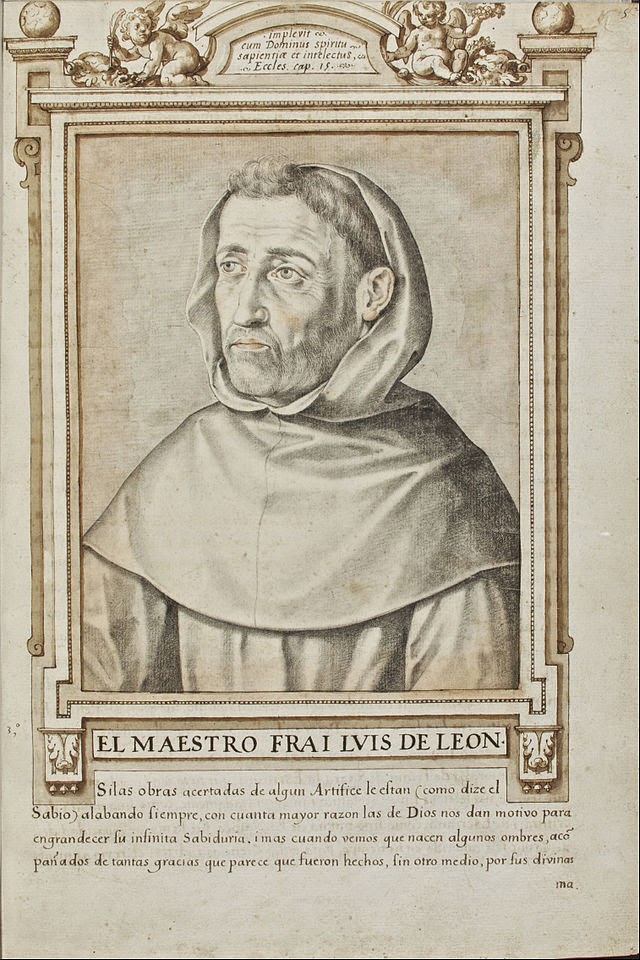
Fray Luis de León was a poet, an Augustinian friar, an academic and a theologian who lived during the Spanish Golden age. This poem was one of 23 original poems composed by him during his lifetime; he also translated the Book of Job and the Song of Songs into Spanish from the Latin Vulgate, a forbidden act which landed him in prison.
When I contemplate the heavens embellished and adorned with countless lights, then look down at the earth enveloped in dark night and buried deep in oblivion and sleep, the love and sorrow I feel awaken in my breast an ardent longing; my eyes, become like fountains, let flow abundant streams, and at last, in woeful tones, my voice does call: “Oh, home of so much grandeur, temple of light, of clarity, of beauty: my soul was born for your heights, yet what immense misfortune keeps it in this vile prison, in the dark? “What mortal misperception moves my senses so far away from truth that, leaving your sacred good, forgetting they wander, lost, following vain shadows, illusions of good? “Man is given over wholly to sleep, not caring for his fate, while heaven, with silent steps, keeps turning round, keeps turning, stealing from him the hours of his life. “Oh moral men, awake! Open your eyes and see the harm you do. Can your immortal souls, created for such great good, survive on shadows and on mere deceit?
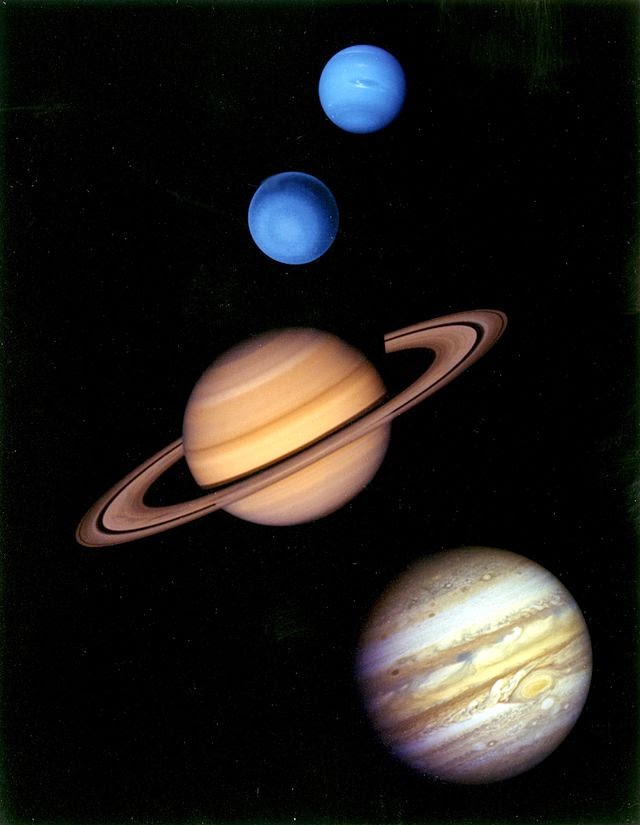
de Leon begins with the poet envisaging heaven from his place on earth, yet he quickly reverses the observation by viewing earth from the vantage point of heaven. From the first viewpoint, heaven looks grand and beautiful but when his perspective is reversed, the earth is seen as a place of devastation and turmoil, as man forgets the purpose of his creation and allows precious time to be stolen from him. The poet uses an apostrophe to awaken his fellow man the plight of his dying soul and encourages his amelioration. There is a wonderful weaving of the celestial planets into heaven’s fabric, personifying their glory and importance, while communicating divine beauty.
Such a lovely poem and as a bonus, an opportunity to practice my Spanish!
Senator Caius Pomponius Afer is murdered in his bed and the household slaves are taken into custody to face the sentence of death if even one has perpetrated this crime. Aulus, Pomponius’ valet and the first slave to happen upon his master after the assassination, is suspected, but when he dies in prison, who will prove his innocence? Yet the slave list has been neglected and so, no one is aware that two of the slaves are missing. Where is Assinius, the Senator’s steward, who had not been seen days before the murder? And Hylas, the Senator’s Greek secretary is not in the party.
Arch of Nero (completed 62 AD) Thomas Cole – 1846 source Wikiart
Hylas, as it turns out, escaped detection in the house and is working steadfastly to find out who committed the dastardly deed. He is certain that it was not one of the servants, but who could have had the opportunity and motive to commit such a vile execution. Enlisting the help of Pomponius’ son-in-law, Camillus Rufus, the nobleman and slave investigate, and unearth devious plots that could possibly rock the foundations of Rome’s political body and cost them their lives.
Ray included various historical characters in her narrative including Thrasea Paetus, a Senator and former consul, who lived during the times of three Roman emperors, Caligula, Claudius and Nero. We also have a glimpse of Seneca and Emperor Nero whom Ray portrays in a realistic fashion.
The Cascatelli (View of Rome from Tivoli) Thoma Cole source Wikiart
The real life of Publius Clodius Thraea Paetus is particularly compelling. By his actions in the Senate and in public life, he exemplified a man of honour and convictions, often going against the status quo in favour of principles. Upon Nero’s murder of his own mother and the Senate’s obsequious behaviour towards the Emperor, Paetus walked out of the Senate meeting, refusing to be part of it. His opposition to Nero continued and eventually his admirable ethics caught up with him. Nero contrived charges against him, accusing him of neglecting his senatorial duties and he was sentenced to death by his choice. At his suburban villa, he elected to have the veins in his arms opened and died with serene dignity.
While the mystery aspect of the story suffers from some contrived plot manipulation, this disappointment is balanced by the rich description of Rome and the historical detail painted within the pages of the book. It’s certainly a story by which any child would be captivated.
“I am Cheap Jack, and my own father’s name was Willum Marigold.”
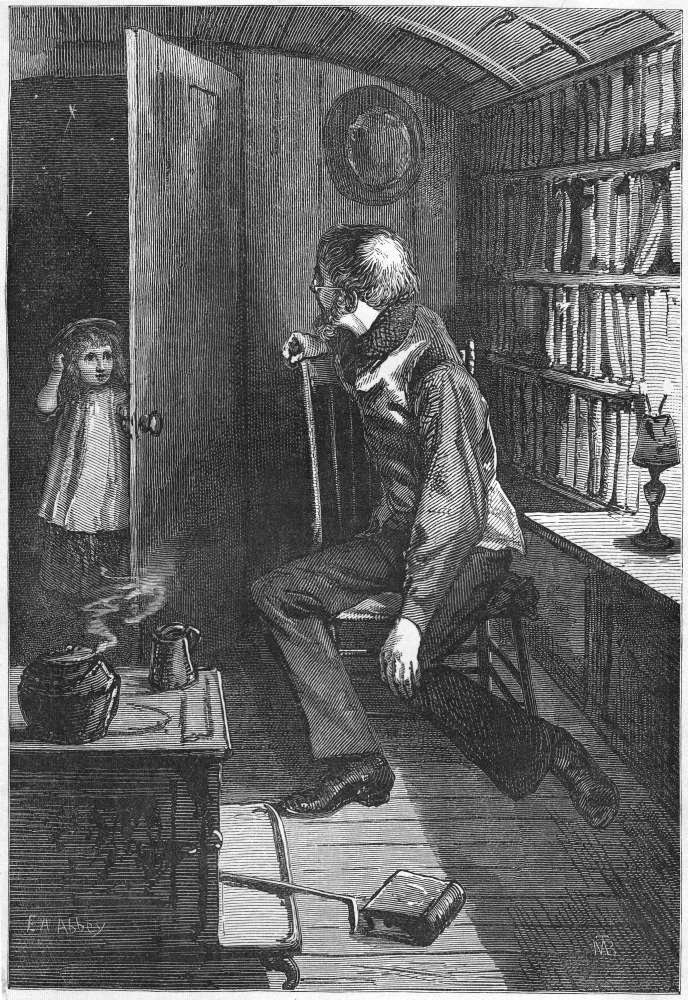
And so we are introduced to Doctor Marigold, bestowed with such an unusual first name for a Cheap Jack in honour of the doctor who delivered him. I did not imagine him in the appearance of the rather dandified peasant-gypsy looking gentleman on the cover to the left, but I suppose that’s beside the point. In any case, Doctor Marigold, as you know, is a Cheap Jack. For those who don’t know what a Cheap Jack is (I raise my hand), it’s a hawker who deals in bargain merchandise, anything from plates to frying pans to razors to watches to rolling pins and everything in between. Marigold has followed his father’s trade like a good son.
Doctor Marigold 1868 E.G. Dalziel source Victoria Web
Soon Marigold marries a woman who is not a bad wife by his estimation, but whoa, does she have a temper! She berates and torments her husband, and later beats their daughter, Sophy, while Marigold stands and watches. Why doesn’t he intervene? Because it causes more of a ruckus than observing, and then people suspect that he is beating his wife. Wimp.
Sophy grows up especially attached to her father and fearful of her mother — no kidding. Yet with their vagrant lifestyle, she becomes ill and passes away. One fateful day, the now childless couple come across a mother beating her tearfully pleading daughter, and with a shrill scream his wife tears away and drowns herself in the river. Good riddance.
Lonely Marigold now roams the country alone, until one day he comes across a deaf and dumb child whom he purchases and calls Sophy. They are devoted to each other for years, until, when she reaches sixteen, he decides to have her educated and puts her in an institution for two years. When he returns she is thrilled to see him, but as they resume their lives, he learns that she has acquired a suitor. Old generous Marigold decides he cannot stand in the way of their love —- although Sophy is willing to give it up to stay with her father —- and allows them to marry. The couple then move to China and five or so years later return with Marigold’s granddaughter for a reunion.
Again, Dickens is somewhat of a trial to read. On one hand, his stories engage you for being overly maudlin and nauseatingly sentimental but I can never shake the feeling that he seems to think that as long as he uses affected emotional scenes and obscurely clever sentences, he can win adherents with such contrived effort. I find it almost insulting. However, as much as the first part of the story really irritated me, I must admit, I somewhat fell for it in the end. Perhaps Dickens achieved his desired effect after all.
This short story, so far is my least favourite of my Deal Me In Challenges. We’ll see what next week brings.
Oh, what flowery and majestic rhetoric flows from the pen of Ralph Waldo Emerson in this essay on friendship! Emerson was a transcendentalist and his views colour nearly every sentence of this beautiful yet perhaps rather hyperbolic essay on friendship.
Wikipedia’s definition of transcendentalism states:
Transcendentalism is a religious and philosophical movement that developed during the late 1820s and ’30s[1] in the Eastern region of the United States as a protest against the general state of spirituality and, in particular, the state of intellectualism at Harvard University and the doctrine of the Unitarian church as taught at Harvard Divinity School.
Among the transcendentalists’ core beliefs was the inherent goodness of both people and nature. They believe that society and its institutions—particularly organized religion and political parties—ultimately corrupt the purity of the individual. They have faith that people are at their best when truly “self-reliant” and independent. It is only from such real individuals that true community could be formed.
I knew almost nothing about Emerson before I read this essay. I had the vague idea that he was a naturalist and perhaps a deist, and the only thing I knew for sure was that he was one of Pa Ingalls favourite authors. I had expected his writing to be rather sparse and serious, so l was rather amazed at the waxing lyrical prose to which I was treated!
Good Friends (1927)
Norman Rockwell
source Wikiart
This essay on friendship, I believe, was written by Emerson in honour of his dear friend, Henry David Thoreau. Emerson’s rhapsodic sentences impact the reader right from the start, as he elevates friendship to the platform of one of the greatest gifts of life. As soon as we’re drawn into the bonds of deep friendship, our soul is engaged and we function almost on a different plane.
“Delicious is a just and firm encounter of two, in a thought, in a feeling.How beautiful, on their approach to this beating heart, the steps and forms of the gifted and true!The moment we indulge our affections, the earth is metamorphosed: there is no winter, and no night: all tragedies, all ennuis vanish;— all duties even; nothing fills the proceeding eternity but the forms all radiant of beloved persons …”
While Emerson lauds the benefits of friends, he also is cognizant of the fluctuations in friendship, but rather than lamenting over the lows, we should see them as a natural rhythm of life.
“ …. Thou art not my soul, but a picture and effigy of that. Thou hast come to me lately, and already thou art seizing thy hat and cloak. Is it not that the soul puts forth friends, as the tree puts forth leaves, and presently, but the germination of new buds, extrudes the old leaf? The law of nature is alternation forevermore ….. The soul environs itself with friends, that it may enter into a grander self-acquaintance or solitude; and it goes alone, for a season, that it may exalt its conversation or society ……”
Portrait of Two Friends (1522)
Jacobo Pontormo
source Wikipedia
Yet while one must treasure friendships and elevate them, one must not force their progression, as it would be an assault on their natural course.
“Our friendships hurry to short and poor conclusions, because we have made them a texture of wine and dreams, instead of the trough of the human heart.”
We must be patient as friendship ripens or we may find the friendship brought to a sharp conclusion.Let nature have free-reign, and it will not disappoint.
While society pressures us to be social, true friendship is not cultivated in numbers but in a one-on-one companionship. The bud will not flower without the correct nurturing.
“But I find this law of one to one, peremptory of conversation, which is the practice and consummation of friendship. Do not mix waters too much. The best mix as ill as good and bad. You shall have very useful and cheering discourse at several times with two several men, but let all three of you come together, and you shall not have one new and hearty word. Two may talk and one may hear, but three cannot take part in a conversation of the most sincere and searching sort …….. Now this convention, which good sense demands, destroys the high freedom of great conversation, which requires an absolute running of two souls into one.”
Emerson rejects dissimulation and false pretences in an effort to appear prestigious or more worldly, claiming that truth and sincerity in friendship is utmost.You may look insane with this approach, but it will win you the friendship and respect that are your greatest desires.Go against society and show your face to your fellow man, instead of your backside!
Sorry, but I just couldn’t resist teasing Emerson a little in my review.His language is so flowery, occasionally trite and often exaggerated that I found myself struggling sometimes to take the essay seriously.Yet he does have some wonderful points and hits on the important qualities of friendship and its worth to mankind.
1. En una noche escura, con ansias, en amores inflamada,
¡o dichosa ventura!, salí sin ser notada, estando ya mi casa sosegada:
2. a escuras y segura por la secreta escala, disfrazada,
¡o dichosa ventura!, a escuras y en celada, estando ya mi casa sosegada;
3. en la noche dichosa, en secreto, que nadie me veía,
ni yo miraba cosa, sin otra luz y guía sino la que en el corazón ardía.
4. Aquésta me guïaba más cierto que la luz del mediodía,
a donde me esperaba quien yo bien me sabía, en parte donde nadie parecía.
5. ¡O noche que guiaste!, ¡o noche, amable más que el alborada!,
¡o noche que juntaste Amado con amada, amada en el amado transformada!
6. En mi pecho florido, que entero para él solo se guardaba,
allí quedó dormido, y yo le regalaba; y el ventalle de cedros aire daba.
7. El aire de la almena, quando yo sus cabellos esparcía,
con su mano serena en mi cuello hería, y todos mis sentidos suspendía.
8. Quedéme y olvidéme, el rostro recliné sobre el amado;
cesó todo y dejéme, dejando mi cuidado entre las azucenas olvidado.
Song II: The Dark Night
Songs
Of the soul that rejoices at having reached
The high state of perfection, which
Is the union with God, by means of the path
Of spiritual denial of self
1. On a dark night, deep and black,
When I, on fire with the passions of love
—- what great good fortune was mine! —
slipped out, hidden, unseen,
when my sleeping house was silent and still;
2. and protected in the dark,
concealed by the quiet, secret staircase
—- what great good fortune was mine! —
in the ebon dark, well-hidden
when my sleeping house was silent and still;
3. and on the fortunate night,
in secret, when no one’s eyes could see me,
I saw nothing around me
And had no light or guide
But the one that was blazing in my heart.
4. This was the fire that led me,
more clear and certain than the light of noon,
to where he waited for me
— I knew who he was, oh I knew —
there where no one was seen, no one appeared.
5. O dark night who guided me!
O night, kinder by far than any dawn!
O night, you who have joined
lover with beloved,
beloved into lover here transformed!
6. On my flowering bosom,
meant only for him, kept for him alone,
he rested his head to sleep,
and I with love caressed him,
and the swaying cedars sent a breeze for him.
7. The wind from the battlements
when I loosed his hair and smoothed it, unbound,
with serene and tranquil hand,
struck my neck, pierced and wounded it,
dimming and suspending all my senses.
8. I stayed there, self forgotten,
lowered my face, leaning over my lover,
all things ceased, self abandoned,
abandoning all care
that lies, forgotten, there among the lilies.
I found this poem in the book The Golden Age: Poems of the Spanish Renaissance to which Amanda of Simpler Pastimes kindly introduced me. It was a “close your eyes and point” choice, yet it has turned out to be quite a fascinating poem.
St. John of the Cross was a disciple of St. Teresa of Ávila, whose biography I had recently read. He fought to reform the Spanish Carmelites and spent a number of years in prison where he compposed the Cántico espiritual, or Spiritual Canticle, without any writing tools, having to rely solely on his memory.
Song II: The Dark Night is part of St. John’s greater work, The Dark Night of the Soul, chronicling the spiritual journey of the soul and the stages of love that it must pass through to become more like God. Taken out of context, this poem loses some meaning but the beauty of the words and the impact is spiritual by themselves. Based on the biblical book, Songs of Songs, the sensual imagery St. John uses for the union of the soul and God is a stepping outside of religious tradition. Mystic and beautiful, the poem marries the natural to the supernatural, to exemplify harmony with God.









-2.jpg)






-2.jpg)