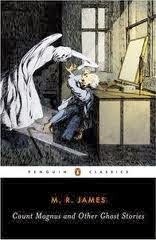
Count Magnus and Other Ghost Stories by M.R. James

“By what means the papers out of which I have made a connected story came into my hands is the last point which the reader will learn from these pages.”  (from Count Magnus)

I first must say that horror genre isn’t really my thing, even if the book is a classic.  So, despite the fact that I decided to read at least one scary story for the month of October, I was not approaching this read with much joy or interest.  How fortunate that I decided to choose M.R. James, who has perhaps changed my opinion of ghost stories forever.

The back of my Penguin Classic, “Count Magnus and Other Ghost Stories” says:  “M.R. James, referred to by H.P. Lovecraft as ‘one of the few really creative masters in his darksome province,’ was a pioneer in the history of the English ghost story, transforming the ghost from a wispy, ethereal figure into an aggressive, malevolent, and all too palpable force of evil ……”

My favourite story in this compilation was “Casting the Runes.”  Eerie and terrifying, it gave the main character some power over the dark force and, instead of becoming a victim, he emerges as triumphant over his spectral foe.  This story was apparently the basis for a classic horror film, “Curse of the Demon” (which I’ve never seen).

I also enjoyed, “Oh, Whistle and I’ll Come to You, My Lad,” where blowing a whistle has very unexpected repercussions, “Canon Alberic’s Scrap-book,” “The Ash Tree“, which, for me, was one of the scariest in the book, “Number 13,” a creepy tale about a haunted hotel room, and “Count Magnus,” where the reader learns to be careful what you ask for.
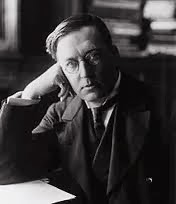
Montague Rhodes James specialized in medieval illuminated manuscripts and was the provost of both Kings College, Cambridge, and Eton College.  He is known for redefining the ghost story by “using contemporary settings and abandoning trite Gothic clichés.”  He was highly articulate, extroverted and sociable and, though he never married, was known for having a great number of treasured friendships.

His introduction to ghosts came at a young, and perhaps impressionable, age:  “What first interested me in ghosts? This I can tell you quite definitely. In my childhood I chanced to see a toy Punch and Judy set, with figures cut out in cardboard.One of these was The Ghost. It was a tall figure habited in white with an unnaturally long and narrow head, also surrounded with white, and a dismal visage.  Upon this my conceptions of a ghost were based, and for years it permeated my dreams.”

What was particularly refreshing about James’ stories was that his treatment of his subject was very subtle.  His stories were full of shadows and dark blots, old trees personified and deaths with no concrete explanation.  He gives the reader just enough for a rough outline, then leaves them to use their imagination to formulate even more terrifying surmises based on his carefully crafted descriptions. One feels that these malevolent spirits should never have been disturbed.  Brrr!
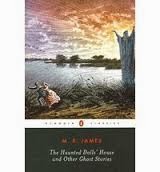
I have The Haunted Doll’s House and other Ghost Stories sitting on my bookshelf and I can’t wait to pick it up and fade into the supernatural world of James’ ghostly tales.
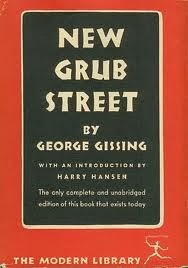
New Grub Street by George Gissing

“As the Milvains sat down to breakfast the clock of Wattleborough parish church struck eight; it was two miles away, but the strokes were borne very distinctly on the west wind this autumn morning.”

I wanted to like New Grub Street more than I actually did.  Gissing obviously wanted to show the struggle which writers faced where they were required to produce a product that would “sell” rather than write something they considered art.

Jasper Milvain is presented as a middle-class man who is rather lazy but has a talent for finding his place in the literary business because of his aptitude for targeting publishers with a product that the public wants.  He has no real standards and no true feeling and his only aim is to know the right people, make an advantageous marriage and grow richer.

Edwin Reardon is a writer who has had mild success with a novel and is attempting to write another, however his marriage to Amy Yule, a woman slightly higher in social status, puts pressure on him to perform and he suffers from writer’s block.  We experience his slow spiral into poverty, culminating in his death.

Other characters populate the novel, such as Marian Yule, who falls in love with Jasper, only to learn through his disloyalty, that he is a money-grasping swine.  Jasper’s two sisters play important roles and the lesser characters of Alfred Yule, Marian’s father, and the writers Whelpdale and Biffen (who sticks to writing for art) add depth to the story.

On one hand, the story was excellent but I had issues with Gissing’s handling of the characters.  Often I found they acted in ways particularly to get a point of Gissing’s across and not because they would naturally act in that manner.  This took away from the plot and diminished the issues the story was meant to bring to light.  In fact it bothered me so much, I really lost focus during a few points in the novel.  Overall it was a good read but I felt that the characters struggled to maintain integrity and plausibility.  I would give it 3.5 stars.


30 DAY CHALLENGE – Day 29

Day 29 – A Book You Liked But Everyone Else Hated

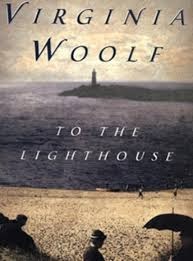
I was so looking forward to reading this book with my online reading group.  I had read it once already and, in spite of its “streams of consciousness” style, I was able to just let myself go and flow along with the character’s thoughts, almost as if you were lying in a stream and letting the water rush over you.  Well, as it turned out, most readers were put off by Woolf’s manner of writing and found the book to be confusing and not particularly cohesive.  

While I was surprised by the reactions, I could understand them.  Some novels speak to certain people and not to others and this was obviously one of them.  I gave it five stars, but I suspect I was the only one.

30 DAY CHALLENGE – Day 28

Day 28 – Favourite Title For a Book

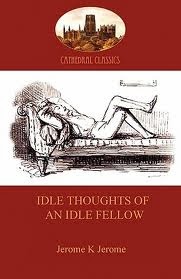
Jerome K. Jerome is a favourite of mine, especially for his more well-known work, Three Men in a Boat.  Idle Thoughts of an Idle Fellow is written in the same style but is a series of humorous essays on different topics.  Some quotes from this book:

It is impossible to enjoy idling thoroughly unless one has plenty of work to do. There is no fun in doing nothing when you have nothing to do. Wasting time is merely an occupation then, and a most exhausting one. Idleness, like kisses, to be sweet must be stolen.


Swearing relieves the feelings–that is what swearing does. I explained this to my aunt on one occasion, but it didn’t answer with her. She said I had no business to have such feelings.


That is just the way with Memory; nothing that she brings to us is complete. She is a willful child; all her toys are broken. I remember tumbling into a huge dust-hole when a very small boy, but I have not the faintest recollection of ever getting out again; and if memory were all we had to trust to, I should be compelled to believe I was there still.


There are various methods by which you may achieve ignominy and shame. By murdering a large and respected family in cold blood and afterward depositing their bodies in the water companies’ reservoir, you will gain much unpopularity in the neighborhood of your crime, and even robbing a church will get you cordially disliked, especially by the vicar. But if you desire to drain to the dregs the fullest cup of scorn and hatred that a fellow human creature can pour out for you, let a young mother hear you call dear baby ‘it.’

30 DAY CHALLENGE – Day 20

Day 20 – Favourite Romance Novel

Okay, I admit that I don’t read romance novels very much anymore.  So I’m going to change the challenge to “favourite romances in books”.  Now for an eclectic mix ….

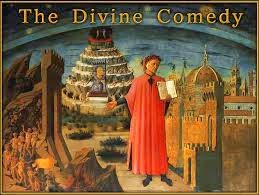
The romance of Dante and Beatrice!  He first saw her when she was eight years old and loved her until her death at 24, even though their lives did not intersect.  She was his muse and guides souls to heaven in The Divine Comedy.


Another Beatrice and her love Benedick feature in the Shakespearian drama, Much Ado About Nothing.  It is said that the course of true love never did run smooth and that is a perfect description of the relationship between these two characters.  A fun romance to read about!


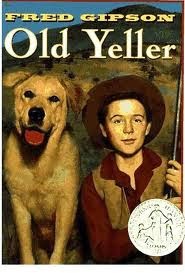
A beautiful story of a boy and his dog.  It made my cry!

The Fortune of the Rougons by Émile Zola

The Fortune of the Rougons Emile Zola“On quitting Plassans by the Rome Gate, on the southern side of the town, you will find, on the right side of the road to Nice, and a little way past the first suburban houses, a plot of land locally known as the Aire Saint-Mittre.”

The first book in Zola’s 20 volume Les Rougon-Macquart series, The Fortune of the Rougons introduces us to the half-brothers, Pierre Rougon and Antoine Marquart, their uneasy familial relationship and their two different paths of life, Rougon choosing to be a respectable oil merchant and Macquart, an unemployed, shiftless, irresponsible  man who takes after his father.

As Napoleon III prepares an uprising to return the Republic of France to an Empire, Plassans in the south and home of Pierre & Antoine, becomes an unsettled roiling of uprising and intrigue.  Silvere, their nephew, leaves with his love Miette to join the insurgents in favour of the Republic, Pierre canvases for Napoleon while scheming to improve his place in society, planning to make his fortune and rid himself of his troublesome half-brother.  Antoine longs only to get revenge on Pierre for stealing his inheritance and to satisfy his longing for money to feed his laziness.

The Battle of Solferino Napoleon III

The Battle of Solferino Napoleon III ~ source Wikimedia Commons Public Domain

After the dust settles, Pierre has won himself an important position in the town. Antoine is in exile for his ill-judged actions, but the reader cannot help but suspect that he will return for more money and perhaps sweet revenge.

Zola’s theories of heredity were meant to play out in these novels and we see the beginnings of their effect in the lives of his characters yet in a very unobtrusive manner. Tel père, tel fils!

I’m looking forward to the next novel!

(translated by Ernest Alfred Vizetelly)

Other Novels in the Rougon-Macquart Series (Zola’s recommended order):

PRIDE AND PREJUDICE by Jane Austen

Pride and Prejudice Jane AustenPride and Prejudice: “It is a truth universally acknowledged, that a singe man in possession of a good fortune, must be in want of a wife.”

And with those familiar opening lines, so begins Jane Austen’s popular and beloved novel, Pride and Prejudice.

In Austen’s England, a husband is chosen based on pedigree and wealth, but Elizabeth Bennet has other ideas.  She wants a husband she can love and respect, however, upon meeting Mr. Darcy, she is convinced he is the most prideful and smug man in the country, a man she could never marry.  Darcy’s pride stings Elizabeth’s quick temper, but through a number of circumstances she begins to realize that pride is a device he uses as befits his station, yet his true character is much more complex and meritorious than she had first realized.  After a number of enlightening meetings and finally, when he rescues the reputation of her youngest sister, Elizabeth realizes that love has blossomed among these circumstances and that she has found someone truly her equal in both understanding and temper.

The contrast between the unwise/unhappy marriages of the Bennets, the Collins and the Wickhams are contrasted with the happy marriages of the Darcys and the Bingleys, where mutual respect and independent thought flourishes.  Marriage is the main theme and Austen appears to be saying that while prestige and money are beneficial (Darcy has both of these in abundance), the character of a potential spouse is infinitely more important!

I have read this book a number of times and love it even more each read.  A true classic!

Other Austen novel reviews:

Emma

Sense and Sensibility

Northanger Abbey

Persuasion

BEOWULF – translated by Seamus Heaney

The first time I read this poem was for a university class and I was not looking forward to the gore, blood and general epic hero story.  In retrospect, how fortunate I was to be forced to read it because Beowulf immediately became one of my absolute favourites!

Hrothgar, king of the Danes, is being harassed and attacked by the monster, Grendel, a son of Cain, who trashes his precious hall and eats his warriors.  No one is able to combat such evil until Beowulf arrives, determined to repay an old debt.  He defeats the monster, and later Grendel’s mother who comes for revenge.

The story is quite riveting but it is the underlying behaviour of these pagan warriors living in a blood-feud society, which points to a different theme from the usual pagan story.  Beowulf is strong and brave, and is drawn by the lure of spoils, yet he shows moments of kindness, consideration and a propensity not to accept power or prestige if it goes against what he thinks is right.

Tolkien in his essay, The Monster and the Critics, tends to think this poem shows the advent of Christianity and the beginning effects which it had on a pagan culture.  I would tend to agree.  There is certainly a Christian theme, yet it does not appear the religion is being forced upon the culture (or upon the reader), just a gentle and slow changing of perception and behaviour.

A few of my favourite quotes from the book:

Perhaps the goriest:

” ….. struck suddenly and started in; he grabbed and mauled a man on his bench, bit into his bone-lappings, bolted down his blood and gorged on him in lumps, leaving the body utterly lifeless, eaten up hand and foot …”

the most poignant:

” …. And so the good and grey-haired Dane, that high-born king, kissed Beowulf and embraced his neck, then broke down in sudden tears. Two forebodings disturbed him in his wisdom, but one was stronger: nevermore would they meet each other face to face. And such was his affection that he could not help being overcome: his fondness for the man was so deep-founded, it warmed his heart and wound the heartstrings tight in his breast ……”  

and a good lesson for life:

” …… Whoever remains for long here in this earthly life will enjoy and endure more than enough ….” 

A wonderfully crafted poem and story that is a must-read for everyone!


Links to (Later) Read-Along: