Son Excellence, Eugène Rougon by Émile Zola

“For a moment the President remained standing amidst the slight commotion which his entrance had caused.”

I had met Eugène Rougon in Zola’s first book of the Rougon-Macquart series, The Fortune of the Rougons.  The oldest son of  Pierre and Felicité Rougon, he had been stationed in Paris, working for the cause of Louis-Napoléon Buonaparte as Emperor Napoleon III.  In Son Excellence, Eugène Rougon, we encounter Rougon as a man in disgrace, a man who has offended the Emperor and who has decided to resign before he is formally removed from office.  As he packs up his documents, a myriad of characters flow in and out of his office, almost in the formation of a dance, and each individual is as colourful as the next.  Yet as the respective characters speak their piece, the dance turns into a circling of sharks, as they all wonder how their position will be affected by Rougon’s fall and how much he can still impact their various personal causes.

The book chronicles the political scene in Paris during the government of the Second Empire under Emperor Napoleon III.  Through Rougon, we see the political machinery grinding through the career of a politician; his fall from favour, his subsequent rise through the help of his sycophantic supporters, their fickle desertion, and so forth.  Behind the glamorous facade of the Second Empire, manipulation, betrayal, coercion, conspiracy and fraud seep from between its seams, and only the clever and opportunistic will survive.

Chameleon-like Rougon is a man who knows how to bend with the force of political volatility.  Initially, after giving his resignation, he is slow, methodical and patient, rather like a toad waiting in the mud for an insect to come buzzing around his head.  Yet when he regains his title as minister, he comes alive; robust, loud, and outspoken, he soaks in the approbation of those around him while ruling with a heart of iron.  Yet Zola does a marvellous job of retaining his provincial nature; his sometimes wild, untamed speeches and stubborn and shortsighted actions reveal a man who has not been able to completely shake off the country dust of his origins.

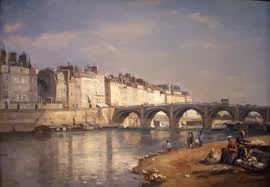
Pont de la Tournelle, Paris
by Stanilas Lépine
(source Wikipedia)

Zola’s prose is so exquisitely compact, yet with it he constructs such a wide scope for the reader.  I felt I was really present during the baptismal procession for the Imperial Prince; I sensed the barely suppressed excitement in the air, the feel of the crowds and people pressing against me, the impatience, the festivity.  Zola doesn’t just allow us to view the Second Empire with words; he takes us right into its grandeur, its character and the various intricacies that gnaw at its foundations.  

This novel is not amongst Zola’s most popular books of the Rougon-Macquart series, but I really, really enjoyed it for its dynamic appeal and attention to detail.  Can Zola write a poor novel?  Somehow I don’t think so.

(translation by Ernest A. Vizetelly)

Other Rougon-Macquart Series Reviews (Zola’s recommended order):

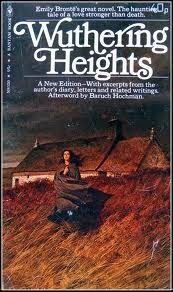
Wuthering Heights by Emily Brontë

“1801 – I have just returned from a visit to my landlord – the solitary neighbour that I shall be troubled with.”

Read-along posts:  Chapters 1-9 / Chapters 10-17 / Chapters 18-26 / Chapters 27-34

I didn’t expect to love this book.  I had been avoiding it for years with just a vague feeling that it wouldn’t live up to expectations.  Then Maggie came along with her January Read-Along and I knew it was the impetus I needed to read it.  Honestly, I am glad I did read it but it turned out pretty much as I expected.  It’s certainly not a terrible book, far from it …… it has high drama, passion, tension, shock and best of all, it is very well-written.  Yet on the other hand, it is romanticized and highly sentimental with dialogue such as:

“Oh!” he sobbed, “I cannot bear it!  Catherine, Catherine, I’m a traitor, too and I dare not tell you!  But leave me and I shall be killed!  Dear Catherine, my life is in your hands; and you have said you loved me — and if you did, it wouldn’t harm you.  You’ll not go, then?  kind, sweet, good Catherine!  And perhaps you will consent —- and he’ll let me die with you!”


Family Tree
(source Wikipedia)

The plot is highly suspect with coincidence after coincidence, happenings such as Nelly giving in to Catherine or Heathcliff’s whims, time after time, when there is really no reason to, and in spite of the fact she is often worried about losing her position if she does.  Yet I think its worst defect is the insufficient human depth in many of the characters, as they often acted as if they were automatons with emotional buttons that get pushed whenever the authoress needed that particular emotion to drive the plot along.  Catherine swings wildly from willfulness to thoughtfulness, from vicious teasing, to caring empathy, traits that do not meld together to form a believable character.  Many of the characters suffer the same fate.

Emily Brontë was one of the three Brontë sisters who wrote under the pseudonyms Currer, Ellis and Acton Bell.  Wuthering Heights was her only novel, published a year before her death of tuberculosis at the age of thirty.  She would never learn of its success.


Emily Brontë
by Bramwell Brontë
source Wikipedia

While Wuthering Heights is certainly compelling and captures the reader’s attention, it does so by using devices such as twisted emotion, shocking circumstances and profoundly dramatized situations, techniques not worthy of a well-composed classic.  The writing is excellent yet the content reflects an immaturity in construction, perhaps the innocence of a sheltered young girl relating what is imagined about life without actually having the experience of living it.  Relatively juvenile plot devices were employed with perhaps a charming innocence.  Heated emotions do not necessarily mean an increase in love; and claims of sentiment which lack corresponding action are meaningless.  Is it an exciting read?  Absolutely!  Do you want to know what happens next?  Of course.  But to compare this novel to Jane Eyre is like comparing a diamond to crudely cut glass.  They are not in the same sphere.


The climb to Top Withens, thought
to have inspired the Earnshaw home
in Wuthering Heights
(source Wikipedia)

Now before I am too hard on poor Emily, I think her sister had brilliant insight into her sibling and the novel’s birth.

“I am bound to avow that she had scarcely more practical knowledge of the peasantry amongst whom she lived, than a nun has of the country people who sometimes pass her convent gates.  My sister’s disposition  was not naturally gregarious; circumstances favoured and fostered her tendency to seclusion; except to go to church or take a walk on the hills, she rarely crossed the threshold of home.  Though her feeling for the people round was benevolent, intercourse with them she never sought; nor, with very few exceptions, ever experienced.  And yet she knew them; knew their ways, their language, their family histories; she could hear of them with interest and talk of them with detail, minute, graphic, and accurate; but with them she barely exchanged a word.  Hence it ensued that what her mind had gathered of the real concerning them, was too exclusively confined to those tragic and terrible traits of which, in listening to the secret annals of every rude vicinage, the memory is sometimes compelled to receive the impress.  Her imagination, which was a spirit more sombre than sunny, more powerful than sportive, found in such traits material whence it wrought creations like Heathcliff, like Earnshaw, like Catherine.  Having formed these beings, she did not know what she had done.  If the auditor of her work, when read in manuscript, shuddered under the grinding influence of natures so relentless and implacable, of spirits so lost and fallen; if it was complained that the mere hearing of certain vivid and fearful scenes banished sheep by night, and disturbed mental peace by day, Ellis Bell (Emily Brontë) would wonder what was meant, and suspect the complainant of affectation.  Had she but lived, her mind would of itself have grown like a strong tree; loftier, straighter, wider-spreading, and its matured fruit would have attained a mellower ripeness and sunnier bloom; but on that mind time and experience along could work: to the influence of other intellects, it was not amenable.”

Charlotte Brontë says it so well.  Wuthering Heights is a well-written novel, but the components are but mere twigs and undeveloped buds, showing promise of growth, but not yet ready to burst into the splendour of full form.  And sadly, they never would.


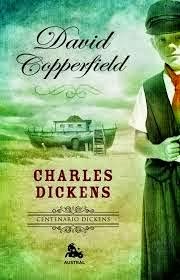
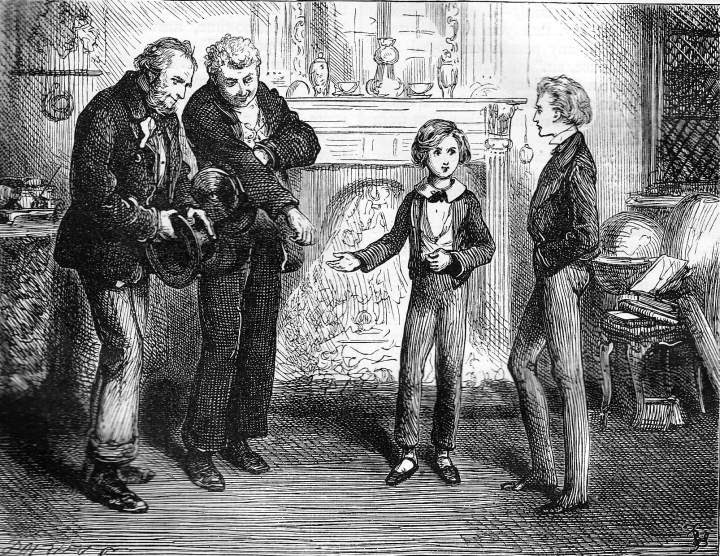
David Copperfield by Charles Dickens

“Whether I shall turn out to be the hero of my own life, or whether that station will be held by anybody else, these pages must show.”

Dickens was an author who had not appealed to me in my teens so, in an effort to expand my horizons, I began to follow a book group that was reading through his works chronologically.  Since joining them, I have been able to read Martin Chuzzlewit, Dombey and Son, and my most recent read, David Copperfield.

Fatherless, David Copperfield lives with his mother and their spunky and loveable servant, Peggotty, in quiet and amiable bliss.  When his mother decides to remarry to an irascible man named Murdstone, David’s life begins an upheaval that catapults him through a variety of circumstances, both beneficial and tragic, each of his decisions mirroring his persistence, bravery, suffering and loyalty, working together to build a quiet character of strength and reliability.

The story is so vast it is impossible to write a summary that would do it justice so let’s examine some of the wonderful characters that Dickens threads throughout the narrative:

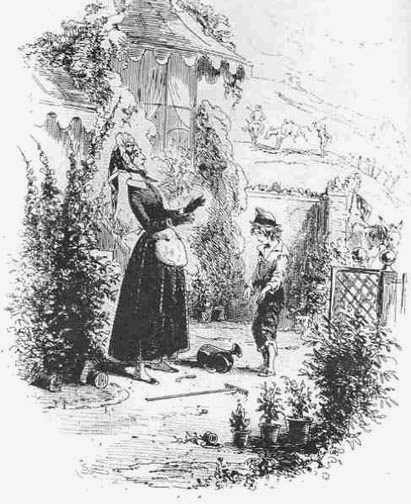
Betsey Trotwood
by Phiz
(source Wikipedia)

Betsy Trotwood, David’s aunt, appears to abandon him and his mother at the beginning of the story, yet when David needs her, she becomes a stabilizing force in his life and an excellent example with her dry wit and generous heart.

Peggotty & Barkis
by Sol Etyinge Jr. 1867
(source Victorian Web)

Peggotty, his nurse, sees David as her own and often assists him in his endeavours; a cherished substitute mother.

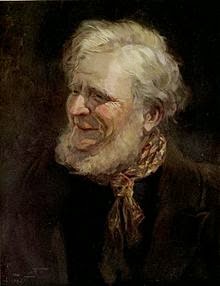
Daniel Peggotty
by Frank Reynolds 1910
(source Wikipedia)

Mr. Peggotty, her brother, shows unwavering devotion and heart-wrenching unconditional love to his niece, Emily, after her flight with David’s nefarious schoolfriend, Steerforth, and her obvious ruin.

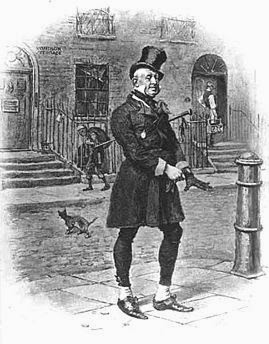
Wilkins Micawber
from 1912 edition
(source Wikipedia)

Mr. Micawber, a shady, bumbling fellow, appears like an odiferous fragrance throughout David’s life, and while good intentioned, only causes trouble whenever he appears; however he ends up helping to bring about a positive resolution to a quite dire circumstance at the end of the book.

David falls for Dora
by Frank Reynolds (1910)
(source Wikipedia)

Even Dickens’ other female characters were likeable.  In many of his novels he recurrently treats the feminine nature as sacchrine, helpless and perfect.  It can get very annoying.  Yet while Dora is all of these things, somehow Dickens makes her real; this time the characterization is for a purpose and works well within the story.  I loved Dora, as well.

Dickens appears to emphasis the idea of constancy and the value of tradition.  Copperfield’s childhood home is revisited at a few points in the novel, and his aunt Trotwood, while losing her home when her money is treacherously stolen, regains it again at the conclusion of the story.  Loyalty to his friends is paramount for David, and he ensures he maintains lasting relationships with most of them throughout his lifetime.  He sees good in everyone, from his child-wife who is clinging and rather dim, to his admired school chum who, while he plummets in David’s esteem after seducing Emily, is still regarded with compassion by David.  There is a lasting emphasis on family, familiar houses from his past and the desire to remain close to the people, place and things that have made him who he is.

The River by Phiz
(source Victorian Web)

David’s Aunt Trotwood wisely states: “We must meet reverses boldly, and not suffer them to frighten us, my dear.  We must learn to act the play out.  We must live misfortune down, Trot!” and throughout the book her words are played out in David’s actions as he perseveres through misfortune, scandal and tragedy to become a devoted husband, a friend of whom anyone would be proud, and a successful writer in his own right.

Claimed to be autobiographical in nature, the novel was clearly dear to Dickens, his words reflecting his affection for it:  ” …. like many fond parents, I have in my heart of hearts a favourite child.  And his name is David Copperfield.”  A truly wonderful read!

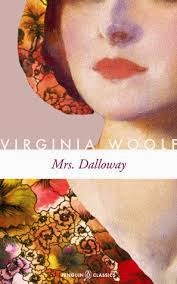
Mrs. Dalloway by Virginia Woolf

“Mrs. Dalloway said she would buy the flowers herself.”

After reading Woolf’s To The Lighthouse I was excited to dive into Mrs. Dalloway.  Following the lead of James Joyce’s Ulysses, Woolf used the same writing style, and, in a loose imitation of Joyce, chronicles a day in the life of a prestigious middle-aged woman in London. Woolf critiqued Joyce’s Ulysses, calling it “illiterate” and “under-bred,” finding the graphic sexual fantasies and the foul language base, and saying it reeked of a “queasy under-graduate scratching his pimples.”  Was Mrs. Dalloway Woolf’s attempt to get this style of writing right?

Using her signature “stream-of-consciousness” style, Woolf chronicles one day in the life of Mrs. Richard Dalloway, the wife of a respectable, wealthy gentleman.  Set in post-World War I London, on this particular day she is preparing for a party she will host that evening, an unusual party whose guests will span the ages of her life, past and present.  As she performs her tasks, her mind wanders back through days gone by, unearthing ghosts of earlier loves, regrets, irritations, ever-present worries and satisfaction.  The reader is also privy to the thoughts of many of her friends who will be present at this party, as they perform their daily business.

As a secondary plot, we meet Septimus Warren Smith, a surviving soldier of the war, yet a hollow shell of a man, his mind barely touching reality.  In spite of the persistent yet useless intervention of his wife and doctors, he gradually is sucked into a whirlpool of despair, seemingly of his own making, and suffers a very poignant and pathetic fate.  Or does he?

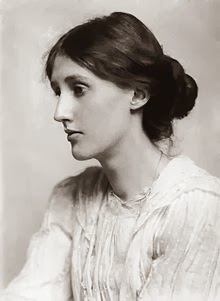
Julia Stephen
Virginia Woolf’s mother
source Wikipedia
Virginia Woolf, Age 20
source Wikipedia

I’m going to go out on a limb here and offer a very unusual interpretation of at least one theme in the novel.  Woolf’s treatment of Septimus, in contrast with Mrs. Dalloway and her social peers, was very intriguing.  If we examine the thoughts of Mrs. Dalloway and her friends and acquaintances, they touch upon parties, flower-shows, scholarships, the family business, Bartlett pears, gossip and cricket.  In comparison, Septimus’ musings revolve around human nature, the truth, Evans (his friend who was killed in the war), aloneness, meaning, and the beauty of words.  Septimus is presented on the surface as a character who is emotionally unbalanced, while Mrs. Dalloway’s circle is the respected rational group.  Has Woolf turned appearance on its head?  Is the perceived deranged person really the one who is sane, and are the ones who appear “normal” actually the group who is not?  It’s an irony that’s inescapable.

For Septimus, the only liberation from a world turned upside-down was death.  Is his escape from a materialistic world concerned with trivialities an heroic act?  Woolf makes it appear so:

“…… Death was defiance.  Death was an attempt to communicate, people feeling the impossibility of reaching the centre which, mystically, evaded them; closeness drew apart; rapture faded; one was alone.  There was an embrace in death.”

Ironically, sixteen years after the writing of Mrs. Dalloway, Woolf followed Septimus into the murky fog of depression and, placing stones in the pockets of her overcoat, walked into the River Ouse near her home, drowning herself, a sad fate for one of the most respected female literary writers of the time.

Virginia Woolf – Romanian Stamp
Source Wikipedia

I just loved Woolf’s To The Lighthouse and I really wanted to like Mrs. Dalloway.  There are certain aspects I do like about it, such as the character of Septimus Warren Smith, the relentless passage of time, the allusions to various literary works of different eras, the exploration of the lingering impact of the first World War and the diminishing influence of the British empire.   The prose is lovely, light and lyrical, each sentence a candy you can pop into your mouth and taste a burst of spring.  Yet I found the story meandering and disjointed.  In To The Lighthouse, the stream-of consciousness  flowed towards one main character, Mrs. Ramsey, wrapping her in a warm glow, even while each character retained their own lively identity.  In Mrs. Dalloway, the streams flow out from Mrs. Dalloway and a host of other characters, at times to alight on each other, but many times to float out into the atmosphere, leaving the reader confused or adrift.  The lack of cohesiveness was like an irritating burr in my britches and no matter how much I tried, it was hard to ignore.  Yet, in spite of the persistent irritation, I will probably re-read this book sometime in the future.  Woolf’s books are like a deceptively packed suitcase where you’re never quite certain if you have even removed half of what is contained.

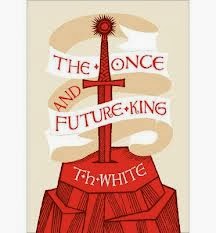
Once and Future King by T.H. White

“On Mondays, Wednesdays and Fridays it was Court Hand and Summulae Logicales, while the rest of the week it was the Organon, Repetition and Astrology.”

The Once and Future King encompasses five books written by author T.H. White about the legend of King Arthur.  In The Sword and the Stone, we meet Wart, a young boy who is the ward of Sir Ector and who lives with his guardian and his guardian’s son, Kay, near the Forest Sauvage.  By an unexpected set of circumstances, he encounters the wizard, Merlyn, who becomes his and Kay’s tutor, although we can see from the beginning that Merlyn favours Wart and there is obvious foreshadowing that we should expect something extraordinary from him later in the tale.  This book concludes with Wart unknowingly pulling the sword from the stone, a clear indication that he is England’s next king.  The book The Witch in the Wood (re-written as The Queen of Air and Darkness and apparently with little resemblance to the original) follows, chronicling the establishment of Arthur’s court under the political idea of right instead of might, and, of course, the love affair between Lancelot and Guinever receives the most attention.  The third book, The Ill-Made Knight, gives primary focus to Lancelot, his quests to purge his thoughts of Guinever, his relationship to Elaine who bears him a son, the development of a odd love-triangle, the quest for the Holy Grail, and Lancelot’s fight to defend Guinever’s honour.  A Candle in the Wind waxes philosophically about the metamorphosis of England into its present condition and the ideologies of war.  The height of tension appears in this book as Lancelot and Guinever’s relationship is revealed by a dastardly plot of Arthur’s Orkney clan, a war begins and the throne is seized by a usurper.  The death of Arthur and his son, Mordred are foreshadowed.   The Book of Merlyn, published posthumously, is added at the end and sets an aged Arthur amongst Merlyn and his animal friends from Book I, as they discuss the evils of war, why men want it, and how can it be avoided.

Photo courtesy of Moyan Brenn
(source Flickr)
Creative Commons License

I’m really stumped as to where to start with reviewing this book.  My idea of the Knights of the Round Table was woven with nobility, courage, daring, self-sacrifice, self-denial and chivalric actions.  While the Arthur of this tale professes to have started the Round Table with the idea that might does not equal right, White makes Arthur a rather weak character.  In his youth, he is quite simple; Merlyn plants the social and political ideas into his head and as a reader, I never got the feeling that Arthur intrinsically believed in them himself.  He knowingly allows Lancelot and Guinever to have an illicit relationship and is often paralyzed in moments when it is necessary for a king to show his strength and decisiveness.  He is a simple, loving old soul who calls everyone “my dear” but it is a hard task to imagine him as the legendary King Arthur.  Lancelot for a good part of the book is a brooding morass of insecurity and dark thoughts.

“The boy [Lancelot] thought that there was something wrong with him.  All throughout his life — even when he was a great man with the world at his feet — he was to feel this gap:  something at the bottom of his heart of which he was aware, and ashamed, but which he did not understand ….  We do not have to dabble in a place which he preferred to keep secret.”

 However after Lancelot’s quest for the Grail and his encounter with God, he at least develops into a man with a sense of what is important in life and an internal code of conduct that he believes is worth following.  Guinever is a moderately believable character, professing her loyalty and love to both men, but White puts her through a period of womanly jealously that is almost embarrassing to read and certainly not worthy of her.  With Arthur’s half-relatives from Orkney, the devious and twisted brothers who become not only knights of the Round Table but are the poison that festers inside Arthur’s kingdom, White does a satisfying job with crafting their personalities.  At times they can be quite appalling …… perfect villains to fit the story.  Also, King Pellinore and his Questing Beast should receive an appreciative nod, adding delightful humour to the first book.

Lancelot and Guinevere (1890s)
Herbert James Draper
source Wikimedia Commons

T.H. White was a rather tortured soul.  He was beset with fears of nearly everything, except, apparently, God.  After holding the position of head of the English Department at Stowe School, he retreated to a game-keeper’s cottage at Stowe Ridings on the Stowe Estate and, with hawks, owls and a setter bitch as his only companions, he began to write.  As war loomed over England in 1938, White’s fear almost choked him.  He declared himself a conscientious objector and in February 1939 found himself lodging in a farmhouse in Doolistown, Ireland, out of harm’s way.  He remained there for the next six and a half years.  In a December 1940 letter to L.J. Potts, a former tutor at Cambridge, he wrote: “….. [The Candle in the Wind] will end on the night before the last battle, with Arthur absolutely wretched.  I am going to add a new 5th volume in which Arthur rejoins Merlyn underground ….. and the animals come back again, mainly ants and wild geese.  Don’t squirm.  The inspiration is godsent.  You see, I have suddenly discovered that (1) the central theme of Morte d’Arthur is to find an antidote for war, (2) that the best way to examine the politics of man is to observe him, with Aristotle, as a political animal …….”

The above information perhaps explains White confusing re-crafting of the legend, and the plethora of social and political philosophical concepts that twist the characters into a means of furthering the development of these ideas.  Instead of White employing creativity to show the reader various themes in the novel, he simply tells us, which leaves a very weak effect.  As one of my reading buddies stated, instead of cleverly weaving his opinions into the story, White attempts to weave the story into his opinions.  The result is sloppy and, in effect, he actually strips these noble characters of the dignity they had been given by previous writers.

The Sword in the Stone, by itself is an appealing read, a nice story about the young Arthur and his upbringing.  By the second book, the story takes a turn for the worst.  I only have two words:  very disappointing.

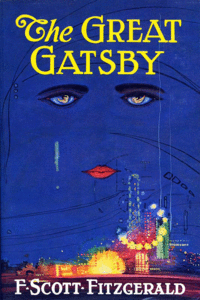
The Great Gatsby by F. Scott Fitzgerald

First edition 1925 (sourced Wikipedia)

“In my younger and more vulnerable years my father gave me some advice that I’ve been turning over in my mind ever since.”

Decadence, adultery, narcissism, vast wealth, idealistic love, betrayal, death, revenge, murder; a vast array of scope for a novel, and Fitzgerald delivers an impacting tale in The Great Gatsby.  Nick Carraway, a young man from the Midwest, begins to form a relationship with his neighbour, the wealthy Jay Gatsby and eventually learns of Gatsby’s connection to his cousin, Daisy.  Daisy, who is married to Tom Buchanan, while casually enduring her husband’s adulterous relationships, has led a very vapid and frivilous life amongst the society scene of the 1920s.  When Gatsby reappears in her life, their rekindled romance sets off a series of tragic events, the repercussions reverberating through the lives of all the characters.

Gatsby, the created man; Gatsby, the idealist, a man who is love with an image that formed five years earlier, and that he has nurtured through time.  Did I understand his infatuation with Daisy?  No, but I sympathized with it.  He had grown up isolated, broke relations with his parents reasonably early on and had no one in his life to set a good example that he could draw from.  Daisy was perhaps the only person whom he had loved, and so he loved her passionately, unrealistically and terminally.  And he realized, that he would need money to keep her love.  When Nick Carraway says to him, “She’s [Daisy’s] got an indiscreet voice …. It’s full of —-“, Gatsby answers, “Her voice is full of money.”  Even though he knows what she is like, and has known from the beginning, is he desperately trying to hold on to his fantasy of her —- this illusion of perfection — because he has nothing else?  Gatsby fails to examine any of the decisions he makes in his life ……… perhaps he truly believes that money can buy him happiness and cannot see the superficiality of the life and people with whom he surrounds himself.  His life is built on illusion and throughout the novel we hear the faint ticking of the bomb that will shatter his misperceptions.

The Plaza Hotel in the early 1920s
(source Wikipedia)

As for Nick Carraway, I felt uncomfortable with him as the narrator.  He went to unusual lengths at the beginning of the novel to establish his credibility with the reader, and if his observations are to be believed, he was the only one in the novel with any compassion, discernment or standards.  While the society he moves in is portrayed in a harsh, decadent, unforgiving light, he is the angel that hovers above it, the star that shines through it.  He is the only one who cares for Gatsby, the only one with a moral compass.  I had a difficult time buying into his golden-boy image.

The tragedy of this novel is a wasted life.  In spite of the grandeur, in spite of his fame and money, Gatsby left no real lasting effect on anyone, other than perhaps Nick Carraway.  He buried himself behind a persona, only emerging to be drawn towards the flame of Daisy and then perishing, as his wings brushed the heat of her consuming light.

“So we beat on, boats against the current, borne back ceaselessly into the past.”

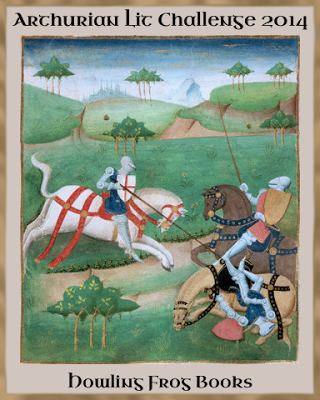
Back to the Classics Challenge 2014

Here it is!  The challenge I have been waiting for!  Back to the Classics Challenge 2014 is being hosted this year by Books and Chocolate.  She has taken over for Sarah at Sarah Reads Too Much and has already done a wonderful job organizing this challenge.

The rules for this year are as follows, including a few changes:

This year there are six required categories and five optional categories.

1.  20th Century Classic   The Man Who Was Thursday by G.K. Chesterton
2.  19th Century Classic   David Copperfield by Charles Dickens
3.  A Classic By A Woman Writer  Mrs. Dalloway by Virginia Woolf
4.  A Classic In Translation   Son Excellence, Eugène Rougon by Émile
                                                  Zola
5.  A Wartime Classic  War and Peace by Leo Tolstoy
6.  A Classic by an Author Who is New to You  The Warden by Anthony Trollope

Optional:

1.  An American Classic   The Old Man and the Sea by Ernest Hemingway
2.  A Classic Mystery/Suspense Thriller  The Big Sleep by Raymond Chandler
3.  A Classic Historical Fiction Book  The Once And Future King by E.B. White
4.  A Classic That Has Been Adapted into a T.V. or Movie Series  Othello by William Shakespeare
5.  Extra Fun Category – Write a Review of #4  Othello movie reviews

She also has made another rule:  All classics must be published 50 years ago or earlier, so nothing before 1964 will be considered a classic.

Please check out her blog for information on prizes and additional explanations.

Even without a blog, I participated in this challenge every year.  It is my easiest challenge and probably the most fun for me.  So if this challenge sounds like fun to you too, pop over to Books and Chocolate to check it out.  And good luck to everyone!

The Apology of Socrates by Plato

The time is 399 B.C. and Socrates has been charged with the corruption of youth and for believing in gods other than the gods of Athens.  His defence?  He was told by Chaerophon, a companion of his, that the gods at Delphi had declared that no one was wiser than Socrates, and Socrates, knowing that he was neither great nor wise, set out to find a wiser man than he.  But ….. surprise! …… with each man, or segment of society Socrates questioned, he discovered that, while most men had knowledge, they were lacking wisdom and, as of the date of the trial, it does not appear that he has found one wise man.

So what made these respectable men of Athens so enraged that they demanded Socrates’ death?  Perhaps the problem was that Socrates didn’t merely question men …… he grilled them, he roasted them, he flambéd them, he broiled them and he probably verbally flogged them, before going on his merry way.  Is it any wonder that a large segment of Greek society was out for his blood?  Yet Socrates was not ignorant of his unfortunate affect on people.  He was aware of the brooding animosity of the enemies he had left scattered in his wake, but he proclaimed that his duty to God, nay, his responsibility to God, was to answer the question that was set before him:  Is Socrates the wisest man?

“Strange, indeed, would be my conduct, O men of Athens, if I who, when I was ordered by the generals whom you chose to command me at Potidea and Amphipolis and Delium, remained where they placed me like any other man, facing death —- if, I say, now, when, as I conceive and imagine, God ordered me to fulfil the philosopher’s mission of searching into myself and other men, I were to desert my post through fear of death, or any other fear; that would indeed be strange, and I might justly be arraigned in court for denying the existence of the gods, if I disobeyed the oracle because I was afraid of death: then I should be fancying that I was wise when I was not wise.  For this fear of death is indeed the pretence of wisdom, and not real wisdom, being the appearance of knowing the unknown; since no one knows whether death, which they in their fear apprehend to be the greatest evil, may not be the greatest good.  Is there not here conceit of knowledge, which is a disgraceful sort of ignorance?”

And to the possibility of being freed on the condition that he agreed to no longer attempt to influence the people (or to tell the truth, as Socrates would term it), he responds:

” ……. if this was the condition on which you let me go, I should reply:  Men of Athens, I honour and love you; but I shall obey God rather than you, and while I have life and strength I shall never cease from the practice and teaching of philosophy, exhorting anyone whom I meet after my manner, and convincing him, saying: O my friend, why do you who are a citizen of the great and mighty and wise city of Athens, care so much about laying up the greatest amount of money and honor and reputation, and so little about wisdom and truth and the greatest improvement of the soul, which you never regard or heed at all?  Are you not ashamed of this? …….”

As far as Socrates was concerned, he had a duty to God and to truth to fulfill his purpose and nothing was going to sway him from this quest.  His rhetoric is brilliant but he really makes no effort to placate his accusers.  Though his life is important, which is evidenced by his attempt to refute the charges, there is something he places in much higher esteem:  the truth and his obligation to it.

“….. I cannot hold my tongue, you will not believe that I am serious; and if I say again that the greatest good of man is daily to converse about virtue, and all that concerning which you hear me examining myself and others, and that the life which is unexamined is not worth living …..”  

The Death of Socrates
by Jacques-Louis David

Sadly, the verdict was death for Socrates, his final words a moving epitaph:

“The hour of departure has arrived, and we go our ways — I to die, and you to live.  Which is better, God only knows.”

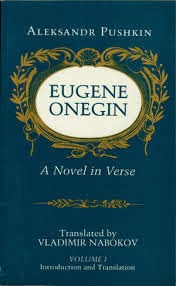
Eugene Onegin by Alexander Pushkin

“My uncle – high ideals inspire him;
but when past joking he fell sick,,
he really forced one to admire him –
and never played a shrewder trick.”

Eugene Onegin is a fun-loving, rakish young man who lives carelessly among fashionable society and cares nothing for any of the responsibilities of life.  Yet soon his wild living becomes stale and, desperately bored, he moves to an estate in the country inherited from his uncle, to recapture the zest in life.  Onegin’s lack of growth and a stable character causes him to return to his constant feelings of ennui and he passes his days in careless endeavours.  Enter, Tatyana, a sheltered girl who falls passionately in love with Onegin.  Finally, amid her torments of love, she composes a letter to Onegin, confessing her devotion.  Giving her a surprisingly gentlemanly refusal, he then, on a whim, proceeds to seduce his friend, Vladimir Lensky’s, future wife, Olga, who is the sister of Tatyana.  Lensky, in a fit of poetic rage, challenges Onegin to a duel, where Lensky is shot through the heart.  A number of years later, Onegin spies a married Tatyana at a party and is immediately drawn to her.  He pursues her to the point of exhaustion and finally writes her a letter acknowledging his love and eternal devotion.  Tatyana, in spite of still harbouring tender feelings for Onegin, spurns him from the outset, and eventually declares that she would never be unfaithful to her husband.  Because Onegin has never made any effort to develop into anything other than an empty man, he is left with a bleak future ahead of him.

I’ve hear it mentioned that Tatyana is the true hero of this novel, and her strength and effect is certainly evident.  While she shows a naivety and a juvenile infatuation with Eugene when she first meets him, years later when they meet again, she exhibits the poise and maturity of a sophisticated and experienced young woman.  In the magnificent finale, she admits her love for him but says, “… but I’ve become another’s wife — and I’ll be true to him for life.”   Onegin has spent his whole life blowing around like a leaf in the wind, consumed by ennui, driven by precipitate decisions and self-absorption, while Tatyana grows and blossoms into a strong woman with firm convictions.  She became a truly admirable character.

One wonders at the commonalities between this work and Pushkin’s life story.  Pushkin, himself, was no stranger to duelling.  He was involved in many contests before being killed in a duel while defending his wife’s honour, echoing his poet Lensky’s fate in an ironic prophesy. And, of course, there was the question of Pushkin’s wife being unfaithful, as Olga was untrue to Lensky, which one can also contrast with Tatyana remaining true to her vows of marriage at the end of the tale.

In one way, the poem is an eerie premonition of future events, while on the surface it takes many forms; playful, romantic, humorous, mocking, tragic.  It’s a tribute to Pushkin’s genius that he was able to artfully blend a myriad of themes and emotions into a introspective classic that examines the human condition and began a Russian literary tradition.

(translated by Sir Charles Johnston)


The Pilgrim’s Regress by C.S. Lewis

“I dreamed of a boy who was born in the land of Puritania and his name was John.”

In The Pilgrim’s Regress, John is a boy who lives in Puritania and is given a rather legalistic view of the Landlord of his country by the overseer or Steward.  When he sees a shimmering Island in a vision through a crack in a wall, he experiences such an intense longing that he leaves Puritania, setting out on a journey to discover its location.  With this incredible longing (Sehensucht) throbbing inside him, he tries to assuage it by a number of worldly means.  The basic gist of the story is that John starts out, running from something he doesn’t truly understand and running to something he doesn’t truly understand.  Through his numerous adventures, many with his friend Vertue, he discovers that he has run right back to where he had begun, Puritania, but thanks to the enlightenment he has received on his travels from Mr. Halfway & son, the Clevers, Mr. Mammon, the Giant, Reason, Mother Kirk, Three Pale Men, Mr. Savage, Mr. Broad, Wisdom, Contemplation, the Hermit, and Silkisteinsauga, he finds the answers to his questions and is able to pass over the brook and into the light.

One of the many strengths of this book lies in the fact that John didn’t simply learn from the “good” people he met along his journey.  Each of his encounters taught him something about life and his beliefs, which helped him to grow into the person he became at the end of the story.

This was one of the hardest reviews I have written so far.  You begin with what appears to be a simple allegory of C.S. Lewis’ own journey to faith, yet the reader is soon made aware that embedded in this simple story is a plethora of incredibly complex material and ideas.  Lewis incorporated numerous ideologies such as Romanticism, Neo-Romanticism, Communism, Freudianism, Facism, etc. along with imagery, metaphors, and a host of allusions and quotes that is mind-boggling.  The fact that he wrote this book while on vacation at his friend Arthur Greeves’ house in a mere two weeks, and was able to incorporate the wide-ranging scope of material that he did, is astounding!

In talking about his book years later, Lewis appeared almost embarrassed by it:  “On re-reading this book ten years after I wrote it, I find its chief faults to be those two which I myself least easily forgive in the books of other men: needless obscurity, and an uncharitable temper.”  He blames his youthful idealism on failing to give the reader the guidance to understand his personal journey.  I, for one, can forgive him this minor fault.  To mine The Pilgrim’s Regress of its treasures is a difficult task, but one that is well worth the effort.