Top Ten Tuesday: Favourite Books from the Last Three Years

Since I haven’t participated in a Top Ten Tuesday with The Broke and the Bookish for awhile, and I’ve been staring blankly at my reviews in draft for the last few days, I thought it might stir the literary juices to participate in this Tuesday’s topic.  My favourite books from the last three years were, surprisingly, not hard to choose.  Well, yes they were, because there were so many of them.  So without further ado ……

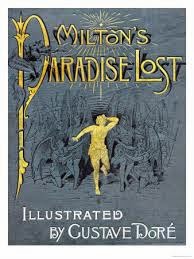
1.  Paradise Lost

2.  Homer’s The Iliad (translated by Richard Lattimore)

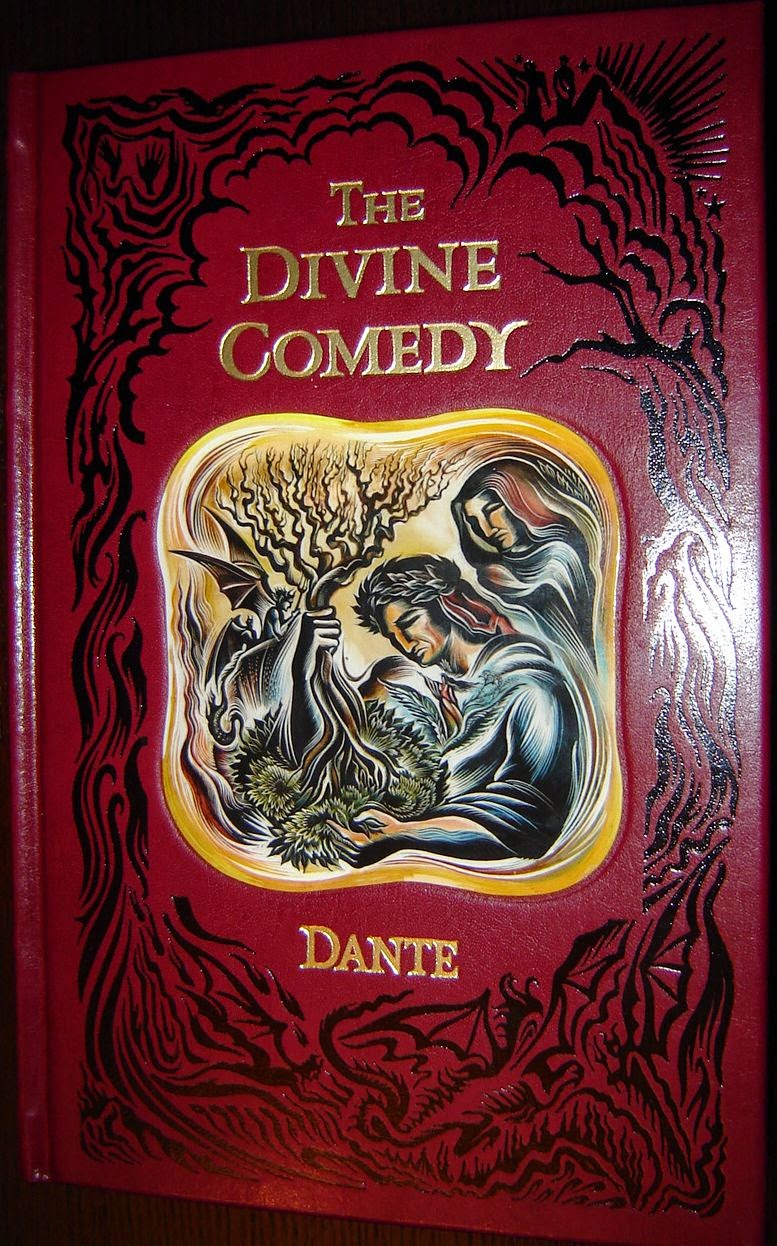
3.  The Divine Comedy – Dante Alighieri (translated by John Ciardi)

4.  War and Peace – Leo Tolstoy (translated by Louise and Aylmer Maude)

5.  Confessions – Saint Augustine (translated by Garry Wills)

6.  Beowulf (translated by Seamus Heaney)

7.  Pride and Prejudice – Jane Austen

8.  The Three Theban Plays (Oedipus Rex, Oedipus at Colonus & Antigone) – Sophocles (translated by David Green & Richard Lattimore)

9.  The House of Mirth – Edith Wharton

10.  To The Lighthouse – Virginia Woolf

Honorable Mentions:

The Odyssey – Homer (translated by Richard Lattimore)


The Song of Roland (translated by Dorothy Sayers)

I Capture the Castle – Dodie Smith


The Man Who Mistook His Wife for a Hat – Oliver Sacks

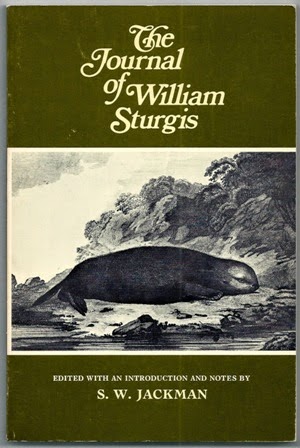
The Journal of William Sturgis

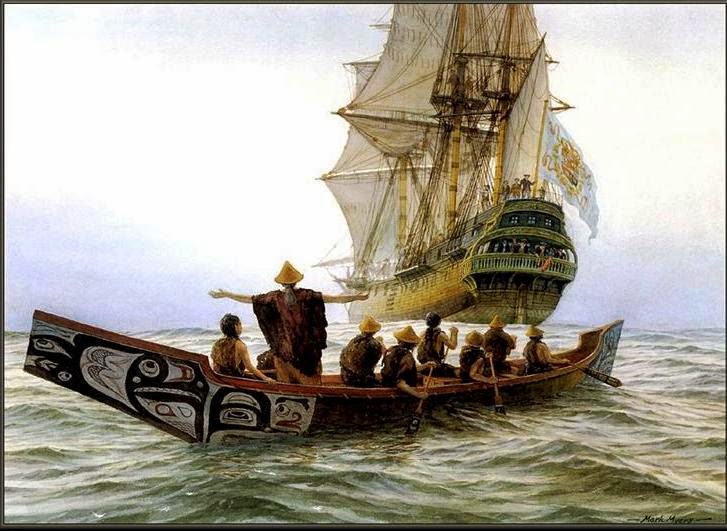
The Journal of William Sturgis: “1799 – On the 13th of February at 7 in the morning we saw the land ahead bearing about N East distant 2 leagues, which we soon found to be the high land about Port Banks, and a Cape to the Southward and Eastward of us distant 3 leagues, to be Cape Muzon.”

In 1798, William Sturgis found a berth on the Eliza, a ship set to leave Boston harbour in the summer on a voyage to the Pacific Northwest to trade in the lucrative business of animal pelts. Sturgis had finished schooling at fourteen, afterwards being employed as a junior clerk in a trading office. With the unexpected demise of his father, Sturgis, knowing that he had to support a mother and sisters, decided to turn to the sea to make his fortune. He was only 17 years old.

Fur traders in Canada 1777
source Wikipedia

Because Sturgis had had experience in business, the captain of the Eliza asked him to be his assistant, and his quick adeptness at learning the native languages soon saw his rise in stature.  The Americans generally coped well with the Indians while trading, and there were few altercations, but the precautions on board ship to assure safety were stringent and followed closely. Because of these safeguards, relations between the two were relatively harmonious and as Sturgis noted years later:

“I believe I am the only man living who has a personal knowledge of those early transactions and I can show that in each and every case where a vessel was attacked or a crew killed by them, [the Indians of the region] it was in direct retaliation for some life taken or for some gross outrage committed against that tribe.  This is the Indian law, which requires one life for another, as inflexibly as we civilized nations exact the life of a murderer.  The Indian did not forget, but silently waited his opportunity, and retaliated because his duty and his law required it of him.”

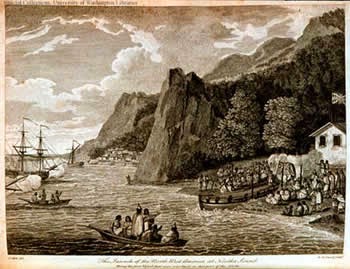
Launch of the North West America at Nootka Sound 1788
C. Mertz
source Centre of Study for Pacific Northwest

With his faculty for the languages, Sturgis’ dealings and contact with the Indians increased.  He ensured he acted with complete honesty and openness to his Indian counterparts and, in consequence, often acquired more goods than your average trader, as the Indians were more amenable to people whom they liked.  In fact, Sturgis became a great favourite with some of the Indians, sometimes to his detriment.  One old Indian woman, to whom he gave the appellation, Madame Connecor, claimed, “All white men are my children,” and insisted on hugging him and kissing him in public, much to the horror of Sturgis, who had to submit to this uncomfortable display of affection as “her tribe had many valuable furs to sell ……. (I) had no escape.”

Sturgis became quite familiar with a Indian chief named Keow (or Cow), whom he quite admired and they struck up a perhaps unusual friendship:

“Keow was upon the whole the most intelligent Indian I met with.  He was a shrewd observer of quick perceptions —– with comprehensive and discriminating mind, and insatiable curiosity.  He would occasionally pass several days at a time on board my ship, and I have often sat up half the night with him, answering questions, and listening to remarks.  …. his comments upon some features of our social system, and upon the discrepancies and inconsistencies in our professions and practice as Christians —- particularly in relation to war —- duelling —- capital punishment for depredations upon property, and other less important matters, were pertinent and forcible, and by no means flattering to us, or calculated to nourish our self conceit.”

Puget Sound on the Pacific Coast (1870)
Albert Bierstadt
source Wikiart

Yet, in spite of his good relations with the native people, Sturgis showed quite clearly that there was a careful balance that needed to be maintained in relations that often included lying, manipulation and trickery, a sort of dance practiced by both parties, accepted by both, and neither held in contempt or begrudged.  It was a meeting, or indeed a confrontation, between two different cultures and attitudes that required patience, skill, wisdom and ingenuity to lay a viable foundation.

Later in the voyage, when the Eliza came across two other ships the Despatch and the Ulysses, they found the Ulysses in a state of mutiny and the officers of the two other ships had to arbitrate the dispute. It was agreed that the captain (Lamb) should be reinstated, with Sturgis, only a few month’s previously an amateur sailor, as his second officer.  The appointment was an enormous boost for Sturgis’ career.  The Ulysses continued to trade in furs, but when it eventually met up with the Eliza in Macao, Sturgis was happy to rejoin his old ship as third mate.

Sturgis also shares some fascinating information on the Indian female and comparisons to his own class.

“The females have considerable voice in the sale of the Skins, indeed greater than the men; for if the wife disapproves of the husband’s bargain, he dares not sell, till he gains her consent, and if she chooses she will sell all his stock whether he likes it or not, or rather what she likes, he is obliged to approve of or afraid to disapprove of ………. In fact, the power of the fair sex seems to be as unlimited on this as on our side of the Continent …..”

Very intriguing that Sturgis sees his fellow women as having unlimited power ….. and this is 1799!

On his second voyage, this time on the ship Caroline, upon the death of its captain, all responsibility was turned over to Sturgis who returned the ship complete with profits from 3000 skins. When the ship return to Boston, he was officially made the master of it at twenty-two years old.

source GoHaidaGwaii

His third voyage was another success for Sturgis, and when he set out on the Atahualpa on his fourth voyage, it was not only as the commander of the fleet, but as a shareholder.  His status and wealth continued to increase and in 1810 he abandoned his nomadic life at sea to marry Elizabeth Davis and became a partner in a shipping business called Bryant and Sturgis.  From the years 1818 to 1840, their company directed more than half the business carried on from the United States to California.

Sturgis was seen as a laconic and somewhat stern man, but he was well-respected and lived life with a strong sense of duty and honesty.  He died at the age of eighty-one and his eulogies and obituaries speak to his character:

” ….. his cool judgement and his considerable action under difficulties, stamped him as an uncommon man; and his extensive knowledge and his judicious inferences from it, made him a useful one ….. Hi strong intellect and clear judgment made him a wise and safe counsellor.  Singularly independent and honest in the formation of his opinions; unswerving in fidelity to his convictions; of an impulsive temperment, guided by principle and made amenable to conscience, —- his character and career, honorable to himself and beneficial to others, leave his name to be held in remembrance as that of a wise, just, faithful and benevolent man …..”

In his final lecture, Sturgis expresses gratitude, that he had not caused any acrimony or bitterness in his dealings with the native population:

“I have cause for gratitude to a higher power —– not only for escape from danger, but for being spared all participation in the deadly conflicts and murderous scenes which surrounded me.  I may well be grateful that no blood of the red man ever stained my hands —- that no shades of murdered or slaughtered Indians disturb my repose —– on the reflection that neither myself, nor any one under my command, ever did, or suffered, violence or outrage, during years of intercourse with those reputed the most savage tribes, gives me a satisfaction in exhange for which wealth and honours would be dust in the balance.”

The integrity and honour Sturgis showed towards a native population, while being willing to alter his worldview to meet them on equal grounds, truly speaks to his character.  Sturgis is a man I would have certainly been proud to know.


The Ides of April

Author:  Mary Ray

Illustrator:  Gino d’Achille (cover)
Era:  62 A.D.
Published: 1974 (first publisher unknown)
Award:  None known
Age Range:  12 years old and up
Review:  ★★★★

Senator Caius Pomponius Afer is murdered in his bed and the household slaves are taken into custody to face the sentence of death if even one has perpetrated this crime.  Aulus, Pomponius’ valet and the first slave to happen upon his master after the assassination, is suspected, but when he dies in prison, who will prove his innocence?  Yet the slave list has been neglected and so, no one is aware that two of the slaves are missing. Where is Assinius, the Senator’s steward, who had not been seen days before the murder?  And Hylas, the Senator’s Greek secretary is not in the party.

Arch of Nero (completed 62 AD)
Thomas Cole – 1846
source Wikiart

Hylas, as it turns out, escaped detection in the house and is working steadfastly to find out who committed the dastardly deed.  He is certain that it was not one of the servants, but who could have had the opportunity and motive to commit such a vile execution.  Enlisting the help of Pomponius’ son-in-law, Camillus Rufus, the nobleman and slave investigate, and unearth devious plots that could possibly rock the foundations of Rome’s political body and cost them their lives.

Ray included various historical characters in her narrative including Thrasea Paetus, a Senator and former consul, who lived during the times of three Roman emperors, Caligula, Claudius and Nero.  We also have a glimpse of Seneca and Emperor Nero whom Ray portrays in a realistic fashion.

The Cascatelli (View of Rome from Tivoli)
Thoma Cole
source Wikiart

The real life of Publius Clodius Thraea Paetus is particularly compelling. By his actions in the Senate and in public life, he exemplified a man of honour and convictions, often going against the status quo in favour of principles.  Upon Nero’s murder of his own mother and the Senate’s obsequious behaviour towards the Emperor, Paetus walked out of the Senate meeting, refusing to be part of it.  His opposition to Nero continued and eventually his admirable ethics caught up with him.  Nero contrived charges against him, accusing him of neglecting his senatorial duties and he was sentenced to death by his choice.  At his suburban villa, he elected to have the veins in his arms opened and died with serene dignity.

While the mystery aspect of the story suffers from some contrived plot manipulation, this disappointment is balanced by the rich description of Rome and the historical detail painted within the pages of the book.  It’s certainly a story by which any child would be captivated.

An extended summary of the book can be found at my children’s blog, Children’s Classic Book Carousel.

Deal Me In Challenge #8 – Four of Hearts

The Narrative of the Captivity and Restoration of Mrs. Mary Rowlandson

“The sovereignty and goodness of GOD, together with the faithfulness of his promises displayed, being a narrative of the captivity and restoration of Mrs. Mary Rowlandson, commended by her, to all that desires to know the Lord’s doings to, and dealings with her.”

On February 10, 1675 in the Massachusetts Bay Colony, the Lancaster settlement was attacked by Indians and Mrs. Mary Rowlandson was taken captive along with a number of other settlers, including other members of her family.  This short book chronicles the events of her capture, her travels with her captors and finally her release after 11 weeks.

For almost 50 years, the colonists and Indians had lived in relative peace, but increasing settlement and demand for Native land caused tension that eventually exploded in attacks on American settlements by the Indians and resulting retaliations.  Indian raids were often violent and by the attack on Lancaster, the comfortable life that Mary had known with her husband and three children, was abruptly torn apart.

Mary turned to God in her fear and suffering and instead of lamenting her situation, she looked for lessons to learn from it.  Her Puritan faith was rather rigid and the narrative comes across as very unemotional at times, but the religious and historical weight of her experiences are a valuable tool in understanding the people of those times.  The book follows the traditional framework of the captive narrative, focusing on suffering, exile and redemption.

For more extensive information, Ruth at A Great Book Study has produced an excellent review of The Narrative of the Captivity and Restoration of Mary Rowlandson.    I had plans to write an extensive review but in the end, I just couldn’t.  Then I planned to answer the WEM questions as I did in my review of Saint Augustine’s Confessions …. but when I looked at them, I just couldn’t. I have only a basic knowledge of the Puritans and of conflicts between the Indians and colonists, so I hesitate to give even an uneducated judgement on Rowlandson’s narrative.  When I finished, I hadn’t really connected with Mary or her narrative.  Excepting what she communicated about her faith, there was an enormous gap in my understanding of her outlook and her judgements. This book left me feeling rather off-balance.  Normally I hate reading a book from a modern perspective and ALWAYS put myself, or attempt to put my mindset, into the times about which I’m reading.  For the first time, I had difficulty.

What I do know is that I need a “palate cleanser” with regard to Colonist-Indian relations, and so I’ve chosen to read The Journal of William Sturgis, a primary source document about a 17 year old boy who goes on his first voyage to trade furs with the Pacific Coast Indians.

Persuasion Read-Along Update #4

This read-along is hosted by Heidi at Literary Adventures Along the Brandywine.

Book II – Chapters 7 to 12


Wentworth arrives in Bath without any perceptible prodding and meets Anne. Later at a concert party, they are able to engage in deeper conversation, seemingly to the pleasure of both parties.  She tries to speak with him in depth again during the evening, yet Mr. Eliot, her cousin, interferes with her plans and Wentworth finally abruptly takes his leave.  Anne concludes that he is jealous of Mr. Eliot.

The next day Anne meets with Mrs. Smith who is curious as to her feelings towards Mr. Eliot, whereupon Anne reveals her complete disinterest in him. Mrs. Smith proceeds to label him a cad and a bounder and tells a damaging story of how he was instrumental in ruining her dear husband and driving him to his death.  Mr. Eliot had married only for money and had planned to sell Kellynch.  Yet upon hearing that Mrs. Clay has designs on Sir Walter, he rushed to the family’s bosom in hopes of preventing the match and a possible future heir from stealing his inheritance.

Charles, Mary, Mrs. Musgrove, Henrietta and Captain Harville arrive in Bath and Anne spots Mr. Eliot, who should be out of town, speaking with Mrs. Clay. A mystery!  While visiting with the crowd of friends and relatives, including Captain Wentworth and Mrs. Croft, Anne spots Wentworth writing a letter. Imagine her shocked surprise when she is given the letter, a love letter to her confessing his enduring love in spite of the obstacles between them.  When she meets him in the street and he accompanies her home, he expresses all his passionate feelings which he has been keeping pent up.

They marry and everyone is either happy or resigned, except Mr. Eliot who runs off with Mrs. Clay and sets her up as his mistress, proving himself a despicable character.  Which, of course, we all knew, whether he be called Eliot, or Wickham, or Willoughby, or Mr. Elton, or ……..?

Lady Dalrymple & Sir Walter Eliot
source Wikimedia Commons

Thoughts:  Hmm …….   Honestly, the way Austen writes, it’s hard to find fault with her, but I think this novel was certainly one of her weaker ones.  I was left a little puzzled by Anne and Wentworth’s romance.  Okay, so they haven’t seen each other in eight years …….. shouldn’t one at least have changed? Shouldn’t they both have changed?  Does it seem wise then to brood at each other from a distance, throw out pointed comments on occasion, slyly observe and then, right at the end, have a gushing profession of undying, unchangeable love?  How will they know in which ways each other has changed if they don’t talk, if they don’t spend some time together in circumstances that aren’t constrained and uncomfortable?  I realize that their observation of each other told something of their present characters and I realize the emphasis was that their love for each other hasn’t changed but, honestly, is that realistic?

Mrs. Smith’s sharing of her information about Mr. Eliot also made me uncomfortable.  Initially she seemed to be teasing or almost encouraging Anne to confess her favourable feelings towards him, but when Anne confesses her indifference, she lets loose with a torrent of accusations against him.  I would have expected her friend to be cautionary at the beginning, if she knew so much to hold against him, but instead she appeared coy.  I found Mrs. Smith’s behaviour somewhat distasteful.

Now Austen had sickened with the disease that would eventually kill her when she was writing this novel, so one doesn’t want to be too hard on her, but compared to her other novels, this one certainly didn’t measure up, but understandably, I think.

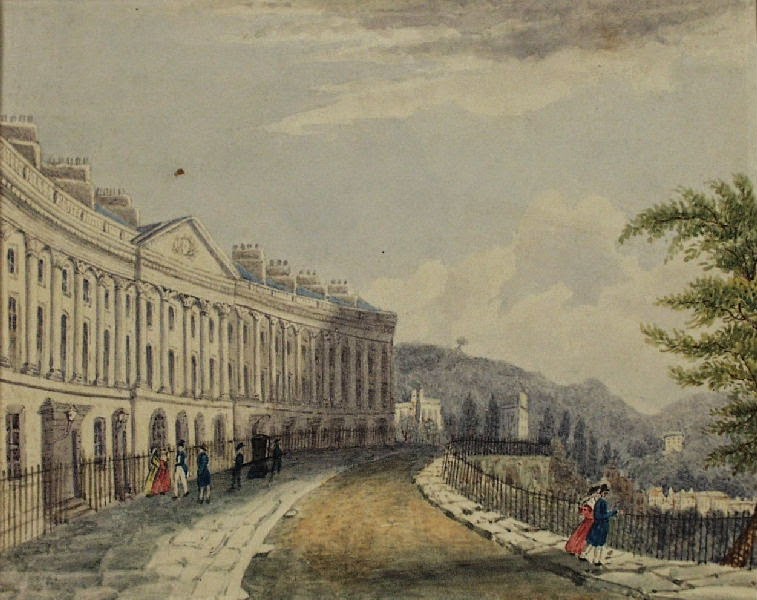
The Royal Crescent in Bath
source Wikipedia

Doctor Marigold by Charles Dickens

“I am Cheap Jack, and my own father’s name was Willum Marigold.”

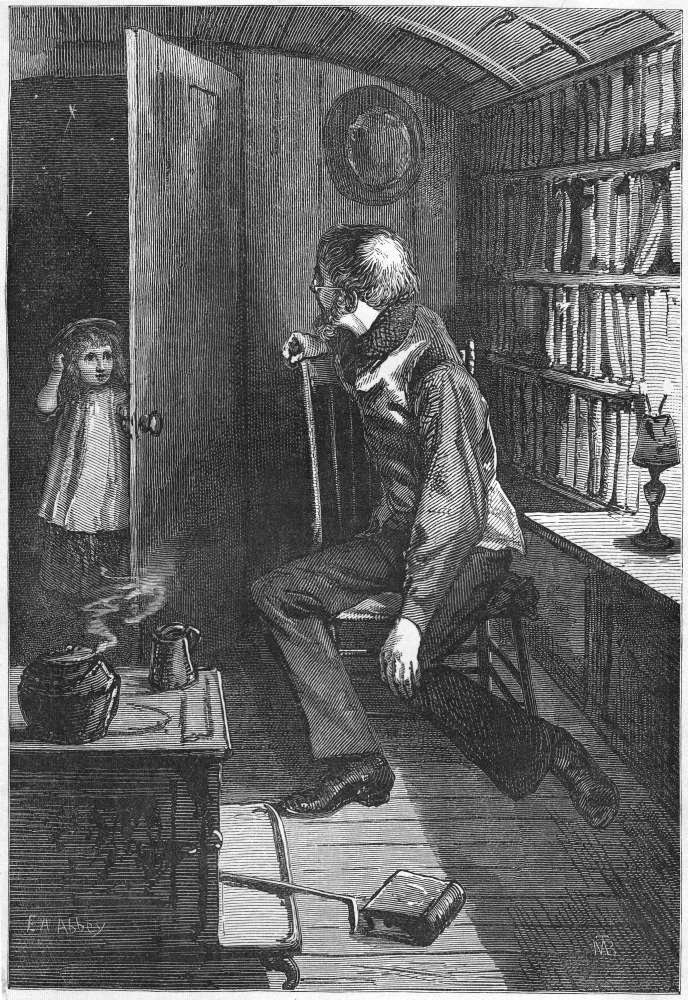
And so we are introduced to Doctor Marigold, bestowed with such an unusual first name for a Cheap Jack in honour of the doctor who delivered him.  I did not imagine him in the appearance of the rather dandified peasant-gypsy looking gentleman on the cover to the left, but I suppose that’s beside the point.  In any case, Doctor Marigold, as you know, is a Cheap Jack. For those who don’t know what a Cheap Jack is (I raise my hand), it’s a hawker who deals in bargain merchandise, anything from plates to frying pans to razors to watches to rolling pins and everything in between.  Marigold has followed his father’s trade like a good son.

Doctor Marigold 1868
E.G. Dalziel
source Victoria Web

Soon Marigold marries a woman who is not a bad wife by his estimation, but whoa, does she have a temper!  She berates and torments her husband, and later beats their daughter, Sophy, while Marigold stands and watches.  Why doesn’t he intervene?  Because it causes more of a ruckus than observing, and then people suspect that he is beating his wife.  Wimp.

Sophy grows up especially attached to her father and fearful of her mother — no kidding.  Yet with their vagrant lifestyle, she becomes ill and passes away.  One fateful day, the now childless couple come across a mother beating her tearfully pleading daughter, and with a shrill scream his wife tears away and drowns herself in the river.  Good riddance.

Lonely Marigold now roams the country alone, until one day he comes across a deaf and dumb child whom he purchases and calls Sophy.  They are devoted to each other for years, until, when she reaches sixteen, he decides to have her educated and puts her in an institution for two years.  When he returns she is thrilled to see him, but as they resume their lives, he learns that she has acquired a suitor.  Old generous Marigold decides he cannot stand in the way of their love —- although Sophy is willing to give it up to stay with her father —- and allows them to marry.  The couple then move to China and five or so years later return with Marigold’s granddaughter for a reunion.

Grandfather
E.A. Abbey
source Victoria Web

Again, Dickens is somewhat of a trial to read.  On one hand, his stories engage you for being overly maudlin and nauseatingly sentimental but I can never shake the feeling that he seems to think that as long as he uses affected emotional scenes and obscurely clever sentences, he can win adherents with such contrived effort.  I find it almost insulting. However, as much as the first part of the story really irritated me, I must admit, I somewhat fell for it in the end. Perhaps Dickens achieved his desired effect after all.

This short story, so far is my least favourite of my Deal Me In Challenges.  We’ll see what next week brings.

Deal Me In Challenge #7 – Three of Clubs

East of Eden by John Steinbeck

“The Salinas Valley is in Northern California.”

I usually don’t worry about giving warning about spoilers but I’ve discovered that’s because I normally read pre-1850-ish books and, while plot is important, there is much more from the book to be gained.  However, 20th century literature, seems to rely a great deal on the story, and so I’m issuing a warning that his review does contain a few spoilers, therefore, continue at your own risk.

Written in 1952, Steinbeck considered East of Eden his magnum opus.  At the time, Steinbeck was separated from his two young sons by divorce and he felt a need, not only to communicate with them through his creative medium, but to share family history in a manner that would make it a permanent record. Yet Steinbeck was also sensitive to his readers, aware that he would have to paint the well-known Salinas Valley of his youth with a vibrant brush of memories, in order to endow the people and the place with dynamic yet corporeal life. Writing in his journal on his first day of work on the novel, Steinbeck described his process: “But [I] try to relate the reader to the book, so while I am talking to the boys actually, I am relating every reader to the story as though he were reading about his own background …….. Everyone wants to have a family. Maybe I can create a universal family living next to a universal neighbor.” 

Rural Youth, Monterey California 1940
source Wikimedia Commons

As in any good history, the historian wishes to imbue the characters with personality and, in this case, the Valley itself is a character, merging with the people to form a unique examination of this time in history. Steinbeck uses the Salinas Valley as a microcosm to examine human nature, both its strengths and its frailties, its goodness and its evil.  As you read through the novel, you almost feel as if all the characters have a little of Steinbeck in their make-up.  It’s as if, through them, he was exploring not only family history, but also the history of man, the mutations caused by evil and the healing caused by goodness, set against the background of free will and choice.

With the use of the title East of Eden, Steinbeck brings in the biblical story of Cain and Abel, infusing both the relationship of the brothers, Adam and Charles Trask, and then Adam’s two twin sons, Aron and Caleb, with the jealousy, impulses and sinful passions of the former.  Both sets of brothers contend against each other, while still being bound by their ties of family and a rather strange type of love.  The story of Steinbeck’s own maternal family, the Hamiltons, parallels that of the Trask’s, beginning with his grandfather, Samuel Hamilton, whom one could describe almost as a philosopher-farmer, down to the brief appearance of Steinbeck himself in the work.  On the Trask side, Adam is the main focus, as are his two sons and their Chinese servant, Lee, who is himself a philosopher.

Salinas Valley 1940
source Wikimedia Commons

For me, much of the embodiment of the novel was contained in the grave prophecy of Samuel Hamilton, just before Adam Trask purchases his land in the Salinas Valley: “There’s a blackness on this valley.  I don’t know what it is, but I can feel it.  Sometimes on a white blinding day I can feel it cutting off the sun and squeezing the light out of it like a sponge …….  There’s a black violence on this valley.  I don’t know —- I don’t know.  It’s as though some old ghost haunted it with unhappiness.  It’s as secret as hidden sorrow.  I don’t know what it is, but I see it and feel it in the people here.”  This  “black violence” hovers over the story like a pall, and the characters are perpetually struggling to rise above it.  Charles Trask battles against an inner hatred that nearly makes him murder his brother, Adam Trask contends against guilt and indifference, Caleb against a perceived inner badness which warps his actions and mars his character, Aron, the good and favoured son, becomes tormented by thoughts and events that are too evil to be conceived by his goodness, and Cathy, the mother of the twins, is pure evil, a psychopathic sociopath whose pathological desire for revenge drives her every action.  There is an echoing of sins passed down through generations, and behaviours that resist change. While Lee and Adam discuss the story of Cain and Abel, they decide, quite wisely, that even though sins may be persistent, there is always choice:

“Don’t you see?” he cried.  “The American Standard translation orders men to triumph over sin, and you can call sin ignorance.  The King James translation makes a promise in ‘Thou shalt,’ meaning that men will surely triumph over sin.  But the Hebrew word, the word timshel — ‘Thou mayest’ — that gives a choice.  It might be the most important word in the world.  That says the way is open.  That throws it right back on a man.  For if ‘Thou mayest’ —– it is also true that ‘Thous mayest not.’  Don’t you see?”

“Choice” is unarguably one of the most important words, yet healthy choice does not seem attainable by these characters, and the black violence of Hamilton’s perception clouds out the sun.  Throughout the novel, nearly every person, while occasionally getting a breath of fresh air, still appears to be drowning in it.

There were many parts of the book that were implausible.  A Chinese servant who can not only speak English and philosophize better than a university professor, can also turn into a Hebrew scholar when need be, and then later gain as much knowledge as a doctor specializing in diseases of the brain. The reader is introduced to the token crazy religious person, yet this person had appeared the most balance and grounded character of them all, up until his conversion.  And one of the main characters, while recognizing his sinful impulses, has absolutely no control over them, yet he is the hereditary son who remains to carry on the family name.  Lee’s discovery of timshel, or “Thou mayst”, at the end of the book perhaps has an affect on the father, yet the son is changeless throughout, merely experiencing a rollercoaster of undisciplined actions and regrets.

Watsonville, Salina Valley
source Wikimedia Commons

Yet in spite of the difficulties, Steinbeck attempted quite a feat with this novel and I can certainly appreciate his dream and his attempt to bring that dream to fruition.  Writing the novel was more of an outpouring of creative spirit for Steinbeck:  “I stay fascinated with East of Eden …. never has a book so intrigued me.  I only hope other people enjoy reading it as much as I am enjoying writing it.”  Yet he did not exhibit any naiveté toward the reaction that his work was destined to elicit.  Writing to his editor, he admitted:  “You know as well as I do that this book is going to catch the same type of hell that all the others did and for the same reasons.  It will not be what anyone expects and so the expectors will not like it.”   After publication, the critics remained curiously divided, the book being described as “one of Steinbeck’s best novels” on one hand, and on the other drawing disparaging comments such as, “a huge grab bag in which pointlessness and preposterous melodrama pop up frequently as good storytelling and plausible conduct.”  Yet in spite of sometimes vicious criticisms, many readers enjoyed what the critics discredited and the book has become an enduring classic in its own right.  As for me, I respect Steinbeck’s effort and love for his work, and perhaps that is good enough.

Notable quotes:

“And this I believe:  that the free, exploring mind of the individual human is the most valuable thing in the world.  And this I would fight for: the freedom of the mind to take any direciton it wishes, undirected.  And this I must fight against: any idea, religion, or government which limits or destroys the individual.  This is what I am and what I am about.  I can understand why a system built on a pattern must try to destroy the free mind, for that is one thing which can by inspection destroy such a system.  Surely I can understand this, and I hate it and I will fight against it to preserve the one thing that separates us from the uncreative beasts.  If the glory can be killed, we are lost.”

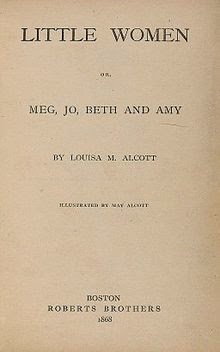
Little Women Read-Along

Well, I think that Hamlette from The Edge of the Precipice is planning a Little Women read-along for the beginning of March and if so, I am so in!  I thought I would post now, so for those of you who’d like to join us, you’ll have a little bit of a heads up.

If you know Hamlette’s read-along history, she sets such a nice pace and really delves into the reads, so I am very excited to be joining.  The last time I read this book was perhaps 10 years ago, so I’m certainly ready for a re-read. The March girls have kept a special place in my heart and I’m looking forward to visiting again and becoming part of their close-knit family.  

Persuasion Read-Along Update #3

This read-along is hosted by Heidi at Literary Adventures Along the Brandywine.

Book II – Chapters 1 to 6

Well, well, well.  Wentworth appears frantic about Louisa’s condition and will barely leave Lyme, where she is convalescing.  Anne, however, has returned home to meet Lady Russell who has arrived from Bath.  Charles and Mary finally return from Lyme and Charles announces that he believe Captain Benwick has a fondness for Anne and hints at the possibility of a visit, yet it does not materialize.  Lady Russell and Anne travel to Bath, though Anne’s enthusiasm for the trip and new lodging is tepid.  A warm welcome from her father and sister, surprises her, and she learns that their cousin, Mr. Eliot has been introduced and is a frequent visitor to the house in Camden-place.  Mrs. Clay, daughter of the solicitor and Elizabeth’s companion, worries Anne, in case her father is considering a new wife, yet she is pleased with the manners of Mr. Eliot, though eventually decides that he appears too proper and passionless for her tastes.  A renewed acquaintance with her old governess, once made wealthy by marriage and now poor by widowhood, is a pleasure to Anne but a horror to her family, though Lady Russell supports her visits.  An unexpected and astonishing letter arrives from Mary declaring that Louisa is engaged to Captain Benwick and Anne is pleased, although she muses as to their attraction to each other.  Mr. Croft declares that Captain Wentworth has been visiting friends too long and must come to Bath.  Will he?  And what delights or sorrows will his arrival bring?

Camden-place, Bath


Thoughts:  Okay, there are a number of loose ends in the narrative so far.  Louisa’s impending marriage to Captain Benwick for one; what does it do, other than give us a possible suitor for Anne for a period of time, and allow musings on how suffering can improve one’s character?  Interesting musings, but not particularly tied to the plot, or at least not obviously.  And what about her governess?  Again where are the threads joined to the plot?  It shows Anne’s goodness, but as yet, nothing else.  And something must happen that involves Mrs. Clay or I’ll be astonished.  So far she has hovered outside the action, yet Anne has suspicions towards her designs on her father.  Will Anne have to step in with some clever strategy to save her father from this devious woman?

I’m quite enjoying the examination of the different aspects of society, from the haves to the have-nots.  The perceptions of people and their treatment of others, depending on their social class, is particularly illuminating.

And I’m still fascinated by the way Austen handles Anne Elliot.  We continually see her, not necessarily through self-examination and personal actions, but through the perceptions of others and her actions towards them.  I’m still mulling over whether this unusual characterization is purposeful or not.  Does it add to her personality of retiring shyness and quiet nobility?  Or is it employed to make a commentary on the society of the time?  As English society grew and metamorphosed, were people seen less as individuals and more as a collective, almost wholly viewed and constructed through the eyes of others?

British Lighthouse – Chartmouth
source

Friendship by Ralph Waldo Emerson

This essay is my sixth read for my Deal Me In Challenge 2015.

Oh, what flowery and majestic rhetoric flows from the pen of Ralph Waldo Emerson in this essay on friendship!  Emerson was a transcendentalist and his views colour nearly every sentence of this beautiful yet perhaps rather hyperbolic essay on friendship.

Wikipedia’s definition of transcendentalism states:

Transcendentalism is a religious and philosophical movement that developed during the late 1820s and ’30s[1] in the Eastern region of the United States as a protest against the general state of spirituality and, in particular, the state of intellectualism at Harvard University and the doctrine of the Unitarian church as taught at Harvard Divinity School. 

Among the transcendentalists’ core beliefs was the inherent goodness of both people and nature. They believe that society and its institutions—particularly organized religion and political parties—ultimately corrupt the purity of the individual. They have faith that people are at their best when truly “self-reliant” and independent. It is only from such real individuals that true community could be formed.

I knew almost nothing about Emerson before I read this essay.  I had the vague idea that he was a naturalist and perhaps a deist, and the only thing I knew for sure was that he was one of Pa Ingalls favourite authors.  I had expected his writing to be rather sparse and serious, so l was rather amazed at the waxing lyrical prose to which I was treated!

Good Friends (1927)
Norman Rockwell
source Wikiart

This essay on friendship, I believe, was written by Emerson in honour of his dear friend, Henry David Thoreau.  Emerson’s rhapsodic sentences impact the reader right from the start, as he elevates friendship to the platform of one of the greatest gifts of life.   As soon as we’re drawn into the bonds of deep friendship, our soul is engaged and we function almost on a different plane.

“Delicious is a just and firm encounter of two, in a thought, in a feeling.  How beautiful, on their approach to this beating heart, the steps and forms of the gifted and true!  The moment we indulge our affections, the earth is metamorphosed: there is no winter, and no night: all tragedies, all ennuis vanish;  — all duties even; nothing fills the proceeding eternity but the forms all radiant of beloved persons …”

While Emerson lauds the benefits of friends, he also is cognizant of the fluctuations in friendship, but rather than lamenting over the lows, we should see them as a natural rhythm of life.

“ …. Thou art not my soul, but a picture and effigy of that.  Thou hast come to me lately, and already thou art seizing thy hat and cloak.  Is it not that the soul puts forth friends, as the tree puts forth leaves, and presently, but the germination of new buds, extrudes the old leaf?  The law of nature is alternation forevermore …..  The soul environs itself with friends, that it may enter into a grander self-acquaintance or solitude; and it goes alone, for a season, that it may exalt its conversation or society ……”


Portrait of Two Friends (1522)
Jacobo Pontormo
source Wikipedia
Yet while one must treasure friendships and elevate them, one must not force their progression, as it would be an assault on their natural course.

“Our friendships hurry to short and poor conclusions, because we have made them a texture of wine and dreams, instead of the trough of the human heart.”

We must be patient as friendship ripens or we may find the friendship brought to a sharp conclusion.  Let nature have free-reign, and it will not disappoint. 
 
While society pressures us to be social, true friendship is not cultivated in numbers but in a one-on-one companionship.  The bud will not flower without the correct nurturing.

“But I find this law of one to one, peremptory of conversation, which is the practice and consummation of friendship.  Do not mix waters too much.  The best mix as ill as good and bad.  You shall have very useful and cheering discourse at several times with two several men, but let all three of you come together, and you shall not have one new and hearty word.  Two may talk and one may hear, but three cannot take part in a conversation of the most sincere and searching sort …….. Now this convention, which good sense demands, destroys the high freedom of great conversation, which requires an absolute running of two souls into one.” 

Emerson rejects dissimulation and false pretences in an effort to appear prestigious or more worldly, claiming that truth and sincerity in friendship is utmost.  You may look insane with this approach, but it will win you the friendship and respect that are your greatest desires.  Go against society and show your face to your fellow man, instead of your backside! 
 
Sorry, but I just couldn’t resist teasing Emerson a little in my review.  His language is so flowery, occasionally trite and often exaggerated that I found myself struggling sometimes to take the essay seriously.  Yet he does have some wonderful points and hits on the important qualities of friendship and its worth to mankind.  

 
Deal Me In Challenge #6 – Two of Spades