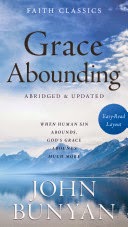
Grace Abounding to the Chief of Sinners by John Bunyan

“In this my relation of the merciful working of God upon my soul, it will not be amiss, if, in the first place, I do, in a few words, give you a hint of my pedigree, and manner or bringing up; that thereby the goodness and bounty of God towards me, may be the more advanced and magnified before the sons of men.”

John Bunyan was born in Elstow, a village near Bedford in Bedfordshire, and was baptized on November 28, 1628, the first son of Thomas Bunyan and his second wife.  In 1644, he joined the Parliamentary army as a soldier and was active until 1647.  The year 1655 saw him joining the congregational church at Bedford and the following year he was actively disputing with the Quakers, out of which was born his first book, Some Gospel Truths Opened.  With the death of Oliver Cromwell in 1658 and the restoration of the monarchy, the persecution of Non-Conformists began. Bunyan was given every opportunity to conform by the surprisingly tolerant Royalists, but he was staunchly resistant to a compromise of principles that could weaken the faith of his followers.  Prevented from preaching by various imprisonments, Bunyan turned to writing.  Grace Abounding is a record of his spiritual experiences from his first meaningful encounter with God to his life of preaching.

Bunyan admits to having a lack of religion in his upbringing and it was only later, with some the influence from his wife, that he came to entertain thoughts of spirituality:

“But I observe, though I was such a great sinner before conversion, yet God never much charged the guilt of the sins of my ignorance upon me; only he showed me I was lost if I had not Christ, because I had been a sinner; I saw that I wanted a perfect righteousness to present me without fault before God, and this righteousness was nowhere to be found, but in the person of Jesus Christ.”

After hearing a sermon preached from the Song of Songs, Bunyan was struck by the love of God and came to the following conclusions:

That the church and so every saved soul, is:

  1. Christ’s love, when loveless
  2. Christ’s love without a cause
  3. Christ’s love when hated to the world
  4. Christ’s love when under temptation, and under desertion
  5. Christ’s love from first to last

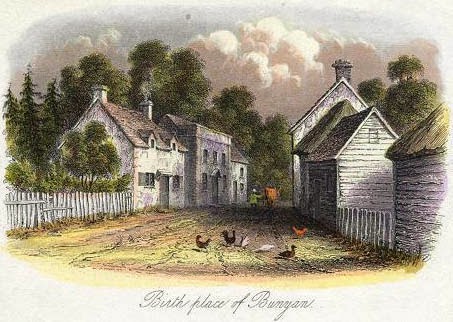
Birthplace of John Bunyan
source Wikipedia

Though Bunyan had moments of euphoric revelation and joyful epiphanies, his conversion was still fraught with doubts and fears.  Had he abused God too much for forgiveness?  Was forgiveness given to others but not to him?  Like Esau, had he sold his birthright and would never be able to regain it?  His agonies leapt off the page with a startling clarity:

“Yet I saw my sin most barbarous, and a filthy crime, and could not but conclude, and that with great shame and astonishment, that I had horribly abused the holy Son of God; wherefore, I felt my soul greatly to love and pity him, and my bowels to yearn toward him; for I saw he was still my Friend, and did reward me good for evil; yea, the love and affection that then did burn within to my Lord and Saviour Jesus Christ did work, at this time, such a strong and hot desire for revengement upon myself for the abuse I had done unto him, that, to speak as then I thought, had I a thousand gallons of blood within my veins, I could freely then have split it all at the command and feet of this my Lord and Saviour.”

Bunyan eventually is able to reason his way through his doubts and come to peace with his faith.  He realizes that while he prayed fervently when he was in the midst of troubles, he neglected to pray for himself to avoid the pitfalls and temptations.  The sense of being a sinner did not ever leave him completely, but as he grew, so did his understanding of the depth and breadth of the grace of God, and he was finally at peace.

Stained glass of Bunyan in prison
source Wikimedia Commons

At the end of the book, Bunyan explains the cause of his imprisonment, which appears to be directly related to his refusal to use the Book of Common Prayer.  When questioned by the justices, Bunyan stated that he would be pleased to use the Book, if the justices could so kindly point to him in Scripture where the particular book was referenced.  The justices, however, viewed the Book of Common Prayer as second only to the Bible.  Bunyan was stubborn, the justices unyielding, and so began Bunyan’s time in the gaol. When released from prison in 1672, on a declaration of indulgence issued by the king under a new wave of religious tolerance, Bunyan returned to preaching, this time legally, and continue as the pastor of the Bedford Meeting, a position he had been given while languishing in prison a year before.  In 1688, while visiting London, he contracted a fever and passed away on August 31st.

The title Grace Abounding to the Chief of Sinners comes from two Biblical scripture references:

“Moreover the law entered that the offence might abound.  But where sin abounded, grace abounded much more, so that as sin reigned in death, even so grace might reign through righteousness to eternal life through Jesus Christ our Lord”  Romans 5: 20-21

“This is a faithful saying and worthy of all acceptance, that Christ Jesus came into the world to save sinners, of whom I am chief.”  1 Timothy 1: 15

My absolute favourite part of this book was when Bunyan realized the impact of conversion.  His fellow men and women were suddenly lovely to his eyes and he viewed them “like a people that carried the broad seal of heaven about them.”  What a transformative experience!  Instead of being irked, or disdainful, or petty, or indifferent toward our fellow man, if we could see them as beloved children of God, how differently we might treat them!

John Bunyan at the Gates of Heaven
William Blake
source Wikimedia Commons

I must say that while I liked this read, so far I’m finding the biography list rather quirky.  Taken separately, the books have been enjoyable, but when taken together, they don’t strike me as a concise, chronological order of biographies that perhaps expand ideas or give insight into changes in societies or thought.  Ruth, I’d love to know what you thought of the novel list as a whole.  The other remaining lists (plays, history and poetry) look much better, but I’m not that impressed with this one.

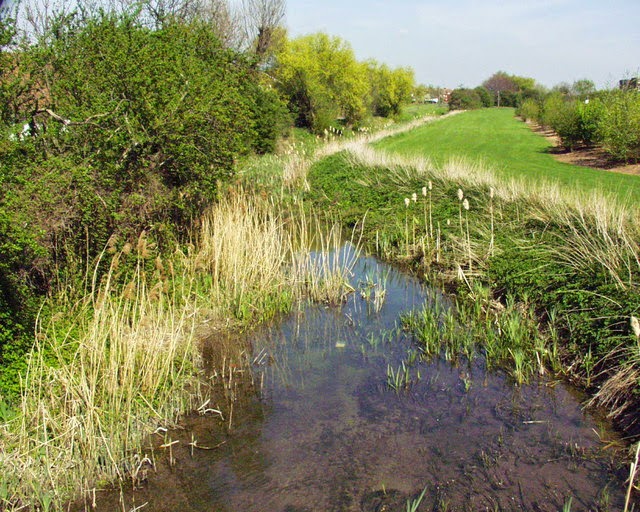
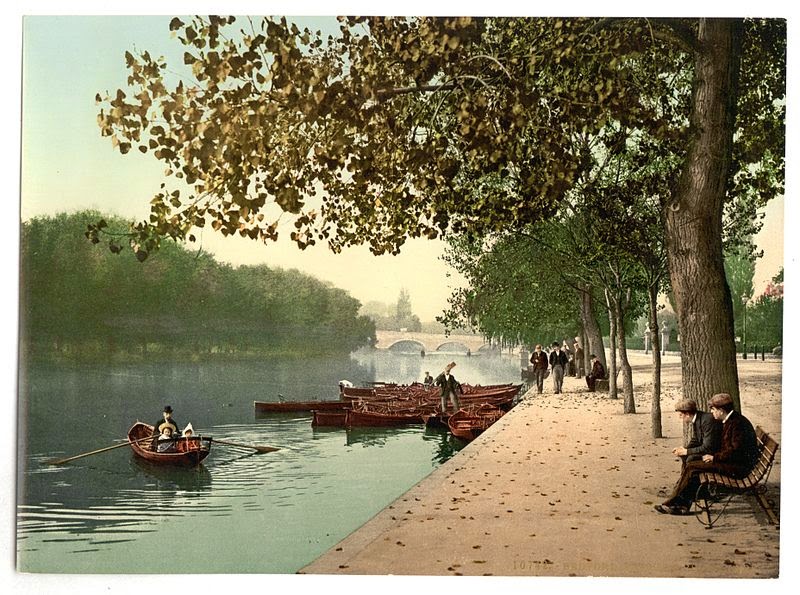
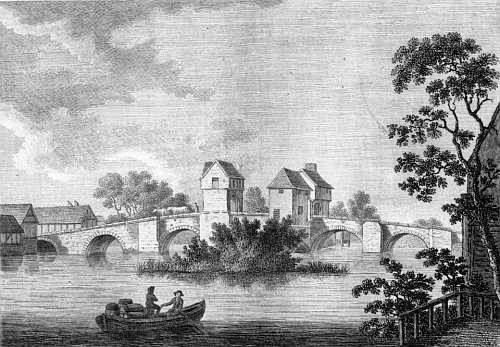
This book counts towards my Reading England Challenge and since Cat at Tell Me A Story has been doing such a wonderful job with educating us as to the English counties along with her novels, I thought that I should add at least a few photos of Bedfordshire, where the narrative takes place.


Elstow

Elstow Stream

Bridge and Promenade

Bedford Bridge

Persuasion Read-Along Update #2

This read-along is hosted by Heidi at Literary Adventures Along the Brandywine.

Book I – Chapters 6 – 12

Anne settles into living with Charles and her sister, Mary, and the Crofts settle into housekeeping at Kellynch-Hall.  At Captain Wentworth’s arrival, Anne is nervous to confront him again, but their meeting is delayed by an accident that incapacites her nephew, and Mary, content to abandon her motherly duties, leaves him in Anne’s care.  Charles’ sisters, the Miss Musgroves named Henrietta and Louisa, vie for Wentworth’s attentions, and the other young ladies of the area are taken with his soldierly bearing and, no doubt, his fortune made during the Napoleonic Wars.  When he and Anne finally meet, the exchange is cool and there appears to be no hope of a rekindled romance. The re-appearance of Henrietta’s beau, Charles Hayter, appears to complicate matters, as Henrietta’s interest has cooled towards him and warmed to Wentworth.  Yet with a visit to the Hayters, the tides turn again and Louisa is the favourite for winning Wentworth’s hand in marriage.  There are glimmers of a returning regard in Wentworth’s manner towards Anne, and as the party travels to Lyme for an outing, we are introduced to the characters of Captain and Mrs. Harville, and Captain Benwick, a man engaged to Mrs. Harville’s sister, but with the death of the unfortunate young lady, he is left in mourning.  Yet a tragic accident on the waterfront of Lyme focuses Wentworth’s attention on Louisa, who remains in a type of coma, while the drama swirls around her.  Once again, Anne is a strong nurturing force within the tumult and her strength of character shows her worth.

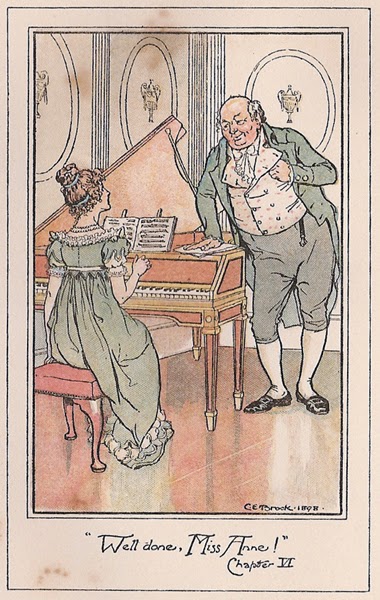
Well done, Miss Anne!
Chapter 6
source Wikimedia Commons

Thoughts:  Austen treats us to lively accounts of the characters.  She really gives equal attention to them all, and in keeping with Anne’s retiring character, (in the first three chapters of this section at least) it sometimes felt that Anne was confined to the periphery of the story.  Yet as these final chapters wrap up, she is shown as having an ability at lively conversation and empathy, as evidenced by her chats with Captain Benwick and her sympathy towards him at the loss of his affianced.

I did find the situation of Louisa’s tragic fall and the subsequent confusion of the men surprisingly obvious for plot development and somewhat forced, lacking the pacing and the insightful subtleties that I’m so used to experiencing with Austen’s novels.  I could understand Charles being paralyzed by the situation, as he tends to avoid conflict in any case, but the fact that Captain Wentworth was in a dither rather diminished his character for me.  He is a captain, used to being in charge and commanding during critical situations. For him to need lean on Anne was rather implausible, unless he is head over heels in love with Louisa, which then could logically make his good sense fly out the window.  But we know that he’s not, which makes the scene very un-Austenesque.

Otherwise, there is a mystery that crops up during the end of the last chapter ……. a vaguely familiar person passes them in Lyme and they determine that it is Mr. Eliot, their cousin and heir to Kellynch Hall.  Just what is he doing there and how will his presence affect further outcomes in the novel?

Anne & Wentworth
“Here is a nut,” he said, to exemplify.
source Wikimedia Commons

Song II: The Dark Night by San Juan de la Cruz

St. John of the Cross (1656)
Francisco de Zurbarán
source Wikipedia

This poem is my fifth read for my Deal Me In Challenge 2015.

Canción II: La Noche Oscura

     Canciones
      De el alma que se goza de haber llegado
          Al alto estado de la perfección, que
          Es la union con Dios, por el camino
          De la negación espiritual.
1. En una noche escura,
con ansias, en amores inflamada,
¡o dichosa ventura!,
salí sin ser notada,
estando ya mi casa sosegada:
2. a escuras y segura
por la secreta escala, disfrazada,
 ¡o dichosa ventura!,
a escuras y en celada,
estando ya mi casa sosegada;
3. en la noche dichosa,
en secreto, que nadie me veía,
 ni yo miraba cosa,
sin otra luz y guía
sino la que en el corazón ardía.
4. Aquésta me guïaba
más cierto que la luz del mediodía,
a donde me esperaba
quien yo bien me sabía,
en parte donde nadie parecía.
5. ¡O noche que guiaste!,
¡o noche, amable más que el alborada!,
 ¡o noche que juntaste
Amado con amada,
amada en el amado transformada!
6. En mi pecho florido,
que entero para él solo se guardaba,
allí quedó dormido,
y yo le regalaba;
y el ventalle de cedros aire daba.
7. El aire de la almena,
quando yo sus cabellos esparcía,
con su mano serena
en mi cuello hería,
y todos mis sentidos suspendía.
8. Quedéme y olvidéme,
el rostro recliné sobre el amado;
cesó todo y dejéme,
dejando mi cuidado
entre las azucenas olvidado.


Song II: The Dark Night
     Songs
      Of the soul that rejoices at having reached
         The high state of perfection, which
          Is the union with God, by means of the path
          Of spiritual denial of self
1.  On a dark night, deep and black,
When I, on fire with the passions of love
—- what great good fortune was mine! —
slipped out, hidden, unseen,
when my sleeping house was silent and still;
2. and protected in the dark,
concealed by the quiet, secret staircase
—- what great good fortune was mine! —
in the ebon dark, well-hidden
when my sleeping house was silent and still;
3. and on the fortunate night,
in secret, when no one’s eyes could see me,
I saw nothing around me
And had no light or guide
But the one that was blazing in my heart.
4. This was the fire that led me,
more clear and certain than the light of noon,
to where he waited for me
— I knew who he was, oh I knew —
there where no one was seen, no one appeared.
5. O dark night who guided me!
O night, kinder by far than any dawn!
O night, you who have joined
lover with beloved,
beloved into lover here transformed!
6. On my flowering bosom,
meant only for him, kept for him alone,
he rested his head to sleep,
and I with love caressed him,
and the swaying cedars sent a breeze for him.
7. The wind from the battlements
when I loosed his hair and smoothed it, unbound,
with serene and tranquil hand,
struck my neck, pierced and wounded it,
dimming and suspending all my senses.
8. I stayed there, self forgotten,
lowered my face, leaning over my lover,
all things ceased, self abandoned,
abandoning all care
that lies, forgotten, there among the lilies.

I found this poem in the book The Golden Age: Poems of the Spanish Renaissance to which Amanda of Simpler Pastimes kindly introduced me.  It was a “close your eyes and point” choice, yet it has turned out to be quite a fascinating poem.

St. John of the Cross was a disciple of St. Teresa of Ávila, whose biography I had recently read.  He fought to reform the Spanish Carmelites and spent a number of years in prison where he compposed the Cántico espiritual, or Spiritual Canticle, without any writing tools, having to rely solely on his memory.  
Song II: The Dark Night is part of St. John’s greater work, The Dark Night of the Soul, chronicling the spiritual journey of the soul and the stages of love that it must pass through to become more like God.  Taken out of context, this poem loses some meaning but the beauty of the words and the impact is spiritual by themselves.  Based on the biblical book, Songs of Songs, the sensual imagery St. John uses for the union of the soul and God is a stepping outside of religious tradition.  Mystic and beautiful, the poem marries the natural to the supernatural, to exemplify harmony with God.
Deal Me In Challenge #5 – Jack of Diamonds

The Plague by Albert Camus

“The unusual events described in this chronicle occurred in 194-, at Oran.”

Albert Camus was born in 1913 in Algeria.  His father was killed at the Battle of the Marne in World War I and he and his brother were raised by their mother in a state of poverty.  He became a journalist, and during World War II, moved to Paris where he worked for an underground newspaper, and it was then that he began to craft his “philosophy of the absurd.”  The Stranger, published in 1942, was followed by The Plague in 1947, and in 1957 Camus won the Nobel Prize for Literature.  Tragically he died in a car accident in the south of France at only 46 years old.

Often Camus is lumped in with the existential philosophy, but he rejected that appellation, claiming himself an absurdist.  What is an absurdist?  Well, I like to think of them as existentialists with hope.  Absurdism is an idea that man is longing for meaning and clarity in a world that contains neither.  The conflict between the search for a purpose and the lack of one, creates absurdism.  Yet while Camus felt a meaninglessness in life, he wondered if man could create his own morality and follow it, even though his achievements would be fruitless.

St. Macarius of Ghent giving aid
to the plague victims (1672)
Jacob van Oost
source Wikimedia Commons

The Plague is set in the town of Oran in Algeria, a town perhaps like any other, yet the citizens are so ingrained in their day-to-day activities, there is no real life or passion within its walls.  When the plague arrives, their lethargic outlook and self-centred actions initially prevent them from seeing the danger that is so obviously present, as evidenced by the number of rats dying throughout the town.  As the plague is finally realized and claims its victims, Camus employs a scientific and philosophical examination of how the people react to the pestilence, what emotions and actions are brought to the forefront and the significance of their struggle to survive, not only the plague but the day-to-day trials that they must face.

The Plague (1898)
Arnold Böcklin
source Wikimedia Commons

Camus shows the futility of attempted comprehension of the events, when the priest, Father Paneloux, declares the plague a judgement from God on the sins on the people.  In reality, the plague is not a moral judgement, nor anything that can be explained rationally, and therefore it is futile to try to rationalize it; one must simply accept the circumstances.  The plague means death, no more nor less than any other death, and the only reaction should be to battle against it.  Another character, Grand, decides to write a story perfect in its execution, but finally realizes his hopes are impossible.  As we meet more and more characters in Oran, we see its paralysis in the life of these men and women who choose actions that are meaningless and therefore self-isolating.  Because perfection cannot be obtained, a type of helplessness is portrayed, yet in a few characters we see another option.  While some victims have quietly succumbed to the inescapable death, others choose to fight, which gives their struggle significance within the inevitable.

Each character plays an important part in Camus’ philosophy, almost like a symphony, as Camus presses the loud pedal with one, and the soft with another. I’m still not sure how I feel about this tactic.  On one hand, it really gives the reader the ability to scrutinize each person’s part in the plague and, of course, Camus’ philosophy, but on the other, the story perhaps suffers. With such close dissection, the humanness fades into the background as the emphasis is given to worldview over plot, and in some cases the plausibility of the character and his/her actions is sacrificed to communicate Camus’ pet beliefs.


Plague in Ashod (1629)
Nicolas Poussin
source Wikimedia Commons

With the existentialist worldview, the novel would have signified defeat in the face of a world devoid of hope and purpose, but Camus spurs us to vigilance and action. He may not believe in truth or God, but one gets the feeling that he wants to believe.  It is as if he is waiting …… waiting for a sunbeam in a storm or a flower in the desert, and while he waits, he fights for the right to hope in what he tells himself is impossible.

Ultimately Camus struggled against his own belief system.  When the Nazi’s invaded France, he actively worked against them.  He made a judgement that their actions were wrong and attempted to stop them, showing that he did indeed believe there was something worth fighting for in the world.  Unlike the existentialists that I’ve encountered, Camus confronted the implications of his unbelief — and ultimately offered a solution, or at least a compromise with regard to his dilemma: while he still held to the absence of meaning within life, that did not mean that the search could not be rewarding.  At the end of his book, The Myth of Sisyphus, Camus concludes, “The struggle itself toward the heights is enough to fill a man’s heart.  One must imagine Sisyphus happy.”


A Read-Along with Bookstooge – January 2015


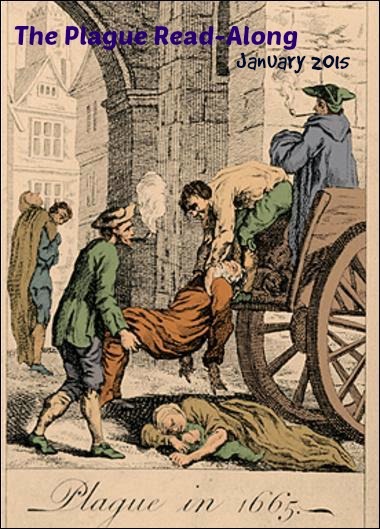
The Plague Read-Along Update #4

I’m reading The Plague by Albert Camus as part of a read-along with Bookstooge.

Part V

The outbreak of the plague definitely appears to be slowing down, yet people are hesitant to accept it after living so long under its shadow.  Yet gradually people show hope and there are more escapes than ever as people are terrified of succumbing to the pestilence just as an end is in sight.  M. Othon does catch the plague and dies as does Tarrou, yet Tarrou struggles and fights until the disease takes him in the end.  Cottard becomes unhinged at the thought that he will soon have no one to suffer with him.  He begins a gun fight in town and soon his taken into custody by the police.  And finally Dr. Rieux is revealed as the narrator of the story.  After the plague it is suspected that the people will forget about it and continue to live their lives as before, therefore Rieux wished to write a chronicle of the pestilence in honour of its victims so they will not be forgotten.  The chilling end is not really an end; the plague, we’re told, can live dormant for years, just sleeping and waiting for a new emergence.

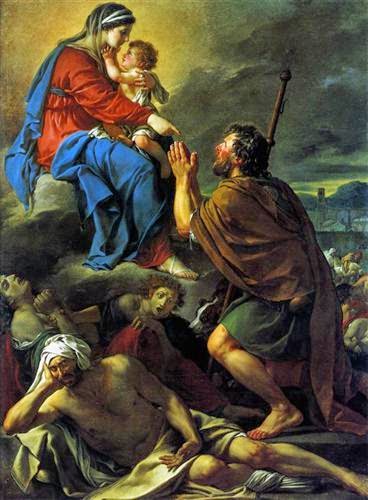
St. Roch praying to the Virgin for
and end to the Plague (1780)
Jacques-Louis David
source Wikiart

Thoughts:  This part seemed a little rushed but with the cases of the plague decreasing, perhaps it was a natural wind-up of the outbreak and the story.  Again Camus explores the psychological effect of the town returning to “normal” after a crisis and his psychology is rather heavy-handed, sacrificing story for pet philosophy.  The characters are still rather drab and lifeless, which could have been intentional.  He makes sure he kills the one spark of love throughout the story:  Rambert who had been wild to escape to be reunited with the love of his life, at the end meets her but it’s a rather low and uninspiring reunion; the plague has changed him and snuffed out the flame of his love.

Review to come …..

The Princess by Anton Chekhov

Portrait of Anton Chekhov (1886)
Isaac Levitan
source Wikiart

This short story is my fourth read for my Deal Me In Challenge 2015.

What happened to Narcissus when he looked at his own reflection in the pool? This beautiful hunter from Boeotia fell in love with himself, and in fact was so deeply infatuated, in his self-obsession he fell into the pool and drowned.  Not a very fitting end for one with so much promise.

Narcissus (1594-96)
Caravaggio
source Wikipedia

In Chekhov’s story we meet the Princess, a lovely young woman who arrives at an isolated monastery for a night’s stay.  She is so thrilled to be there, gushing effusively about the setting and the priests and brothers who have received her.  She wants to forget her life in the city and the monastery and its occupants give her the tools to do so.  But the reader soon realizes that her arrival, instead of being a moment of interest and delight, is instead looked upon with discomfort and even dread by the good brothers of the monastery, and one feels that the Princess, in spite of her outward joie-de-vivre and vivacious personality, is only noticing the benefits that she gets from her visit, without concern for anything or anyone around her.

Soon she meets Mikhail Ivanovitch there, a doctor whom she’d earlier employed in her service, but instead of a warm reception for her, the doctor’s replies drip icicles.  Our poor, puzzled Princess cannot understand ….. why the reserve, especially when she condoles with him upon the death of his wife, an event that is certainly sad, but of course, life must go on.  When she mentions the mistakes she’s made in life and the doctor agrees, she begs him to enlighten her.  Perhaps she should have been more careful in what she asked for.  Directly he begins to catalogue her offenses, taking her to task for her lack of sympathy, her greed, her complete disdain for the feelings of others ………. in fact, the whole system of life that she has built around her is false and cruel, breeding those traits, and choking out any love or caring.  She has replaced God with herself, and therefore is no longer able to understand the creation in which she lives.

Oh!  The Princess is hurt, she is distraught, she is devasted!  That cruel, uneducated, ill-bred man!  How could he speak so to her, to HER, a princess?!  She must use her only defence against these horrid accusations, and so she begins to cry.  The doctor is immediately contrite and leaves her.  When they meet the next day, the princess is once again herself, gay and blithe as she prepares to leave, expecting everyone to admire and entertain her even as she promises to come again soon.  The unpleasantness of the day before is blotted from memory as once more she strives to be the centre of the world.

The Unsmiling Tsarevna (1916-26)
Niktor Vasnetsov
source Wikiart

In spite of the inclination to laugh at the princess’ stupidity and complete self-absorption, this story is quite a tragic one.  Her character is certainly one of a narcissist, and anything that exists around her, merely exists for her alone.  She is devoid of the character traits that make one truly human and, therefore, is not much better than a beast.

On November 15, 1888, Chekhov wrote to his publisher, stating that he was writing a story about a “vile woman”.  Three days later Chekhov wrote, “I want to write protest stories this season ——  I must learn the knack, but it bores me because I’m not used to it,” which makes one wonder if the doctor’s social protest was supposed to be the hub of the story.  In any case, both character’s roles offered a ripe opportunity for social and psychological examination.  This was an excellent story that certainly makes me want to read more of Chekhov’s works.

Deal Me in Challenge (#4) – Six of Clubs


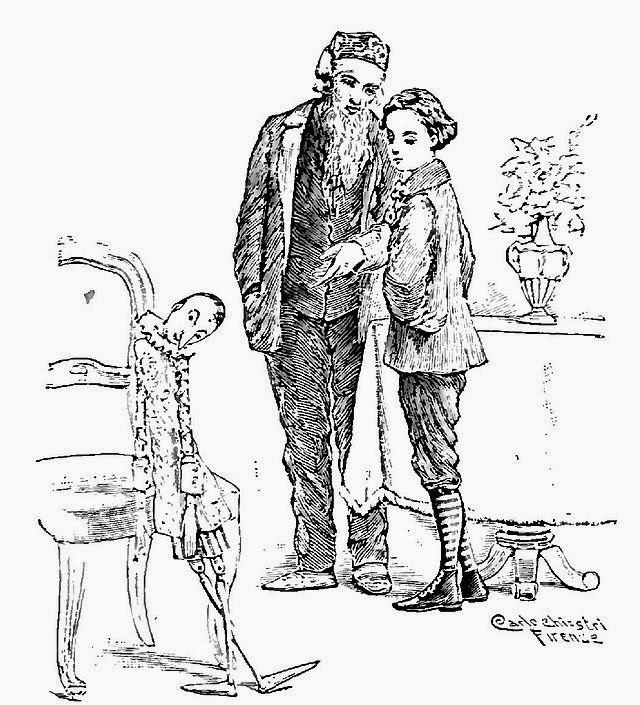
The Adventures of Pinocchio by Carlo Collodi

“There was, once upon a time …….”

The Adventures of Pinocchio was originally serialized in the two years prior to its publication in 1883, and was written by the Italian children’s writer Carlo Collodi.  Initially Collodi had Pinocchio die a rather gruesome death at the end of chapter 15 (which is rather reminiscent of Hilaire Belloc’s instructional children’s poetry), but his editor urged another ending, so the reader was finally treated to an extra 21 chapters and a wise addition it was!  The book has been translated into 240 languages and remains an icon in children’s literature.

Pinocchio begins as a talking block of wood that is given to a woodcarver named Gepetto, who carves him into a puppet and tries to teach him sense, responsibility and moderation.  Yet instead of being grateful to his creator, Pinocchio follows his own selfish inclinations and calamitous adventures are the result of his self-indulgent, thoughtless decisions.

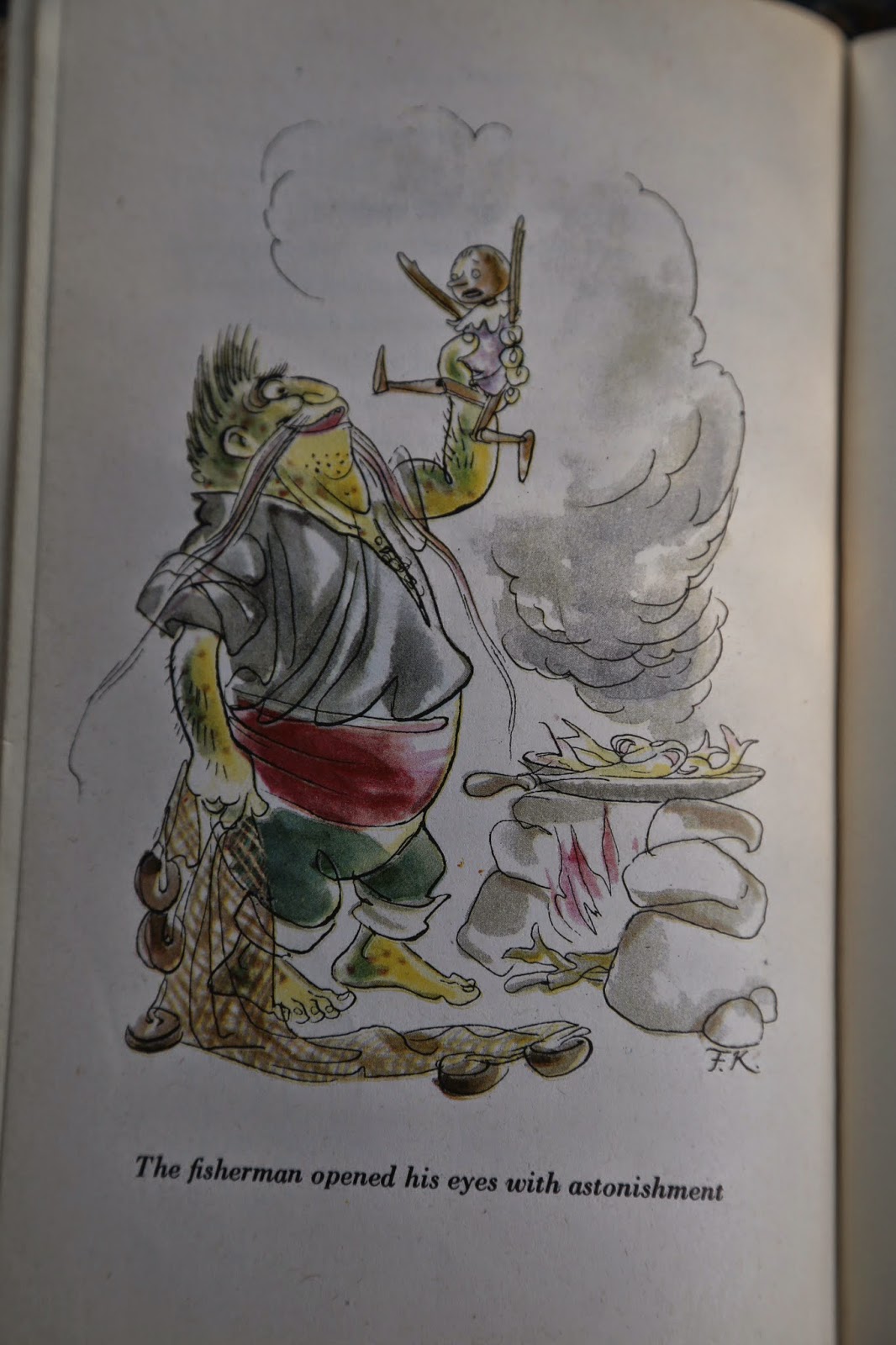
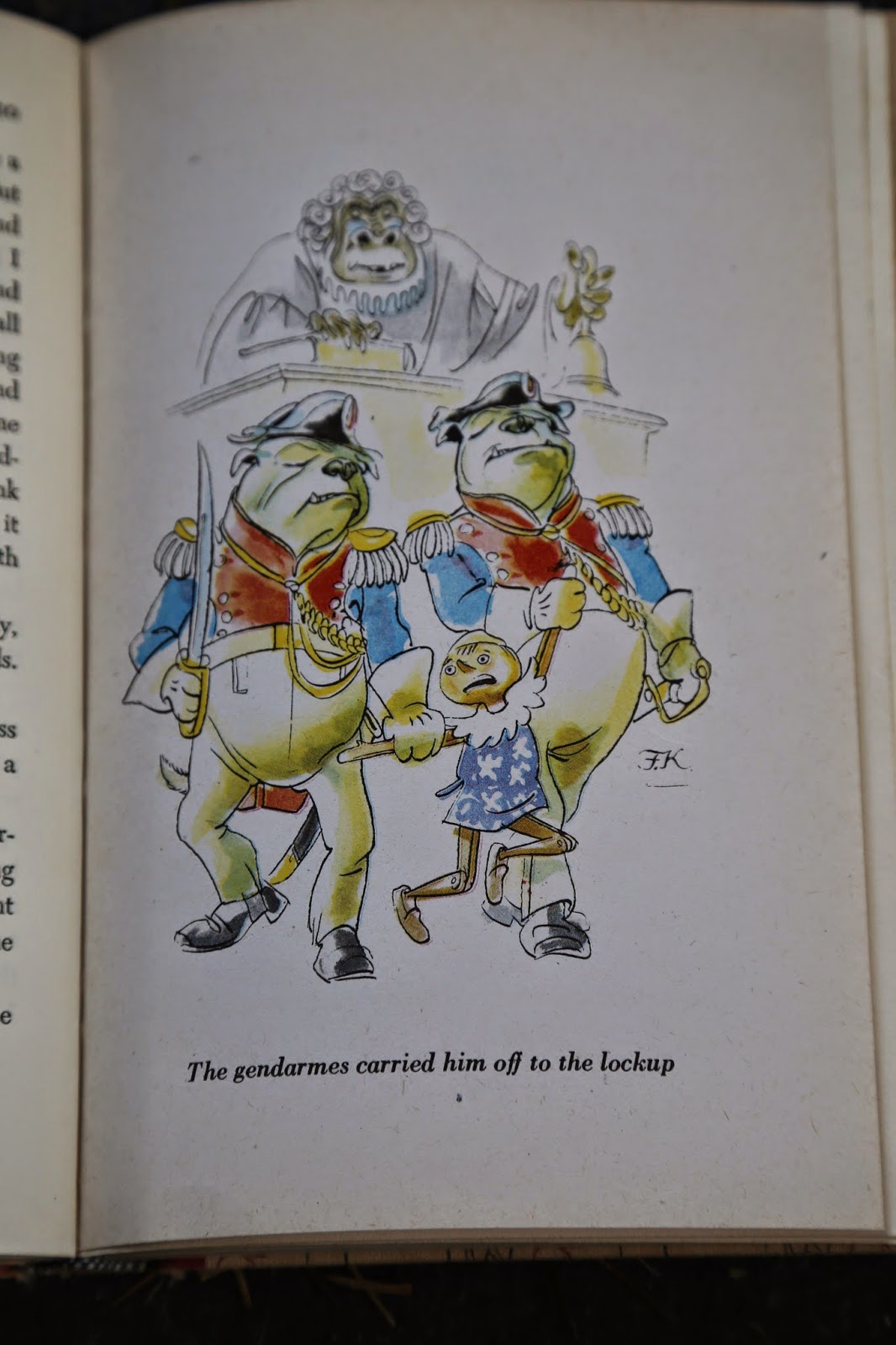
From being defrauded of his money by a Cat and a Fox, nearly roasted in a fire, hung by his neck on a tree, arrested and thrown in jail, turned into a donkey, and eaten by a fish, one wonders why Pinocchio doesn’t learn his lesson and become a good boy. But through these disastrous adventures, we see changes in Pinocchio that are like small flickering lights in the inky darkness of his character.  Initially his zest for fun is nearly uncontrollable but, while it can seem doubtful on the surface, he steadily learns from each adventure, and at each temptation, he is able to put up more resistance.  Pinocchio wants to be good, but his conscience is at continual war with his boyish enthusiasm and his childish lack of forethought and discipline.  The blue fairy, who is like a mother to him and attempts to aid in his moral development, is harsh in her instruction, but Pinocchio benefits from this treatment, knowing she is looking out for his best interests.  And in spite of her firmness, love is always in her actions:

“I saw from the sincerity of your grief that you had a good heart; and when boys have good hearts, even if they are scamps and have bad habits, there is always something to hope for: that is, there is always hope that they will turn to better ways …”

Eventually Pinocchio learns how dangerous it can be to follow your impulses of the moment, and that responsibility and hard work bring a maturity that is rewarded in a way, that fun and pleasure can never match.


Was I imagining it, or were there a number of Biblical allusions in the story? When Pinocchio buried his money, it reminded me of the parable of the talents, where the servant chooses selfishly to bury his money instead of making good use of it.  With the large fish swallowing Gepetto, of course, this alluded to Jonah and the whale.  And finally, all Pinocchio’s catastrophic adventures that come about by his poor life choices and his eventual change of heart, are on parallel with the story of the prodigal son, who finally returns home to the one who truly loves him and has his best interests at heart.

The Return of the Prodigal Son (1773)
Pompeo Batoni
source Wikipedia

In spite of some of the more bloodthirsty episodes, this was truly a heart-warming story.  That sentence sounds odd, I know, but I really appreciated the reality of Collodi’s message.  The company we keep has an enormous influence on the character that we will develop, and each of our decisions in life carry an import, sometimes with consequences that are not easily realized. For me, the most shocking part of the story was the episode where the Cat and Fox hung Pinocchio in a tree expecting him to die, but honestly in some bad decisions the outcome could be death, and it’s important to realize that.

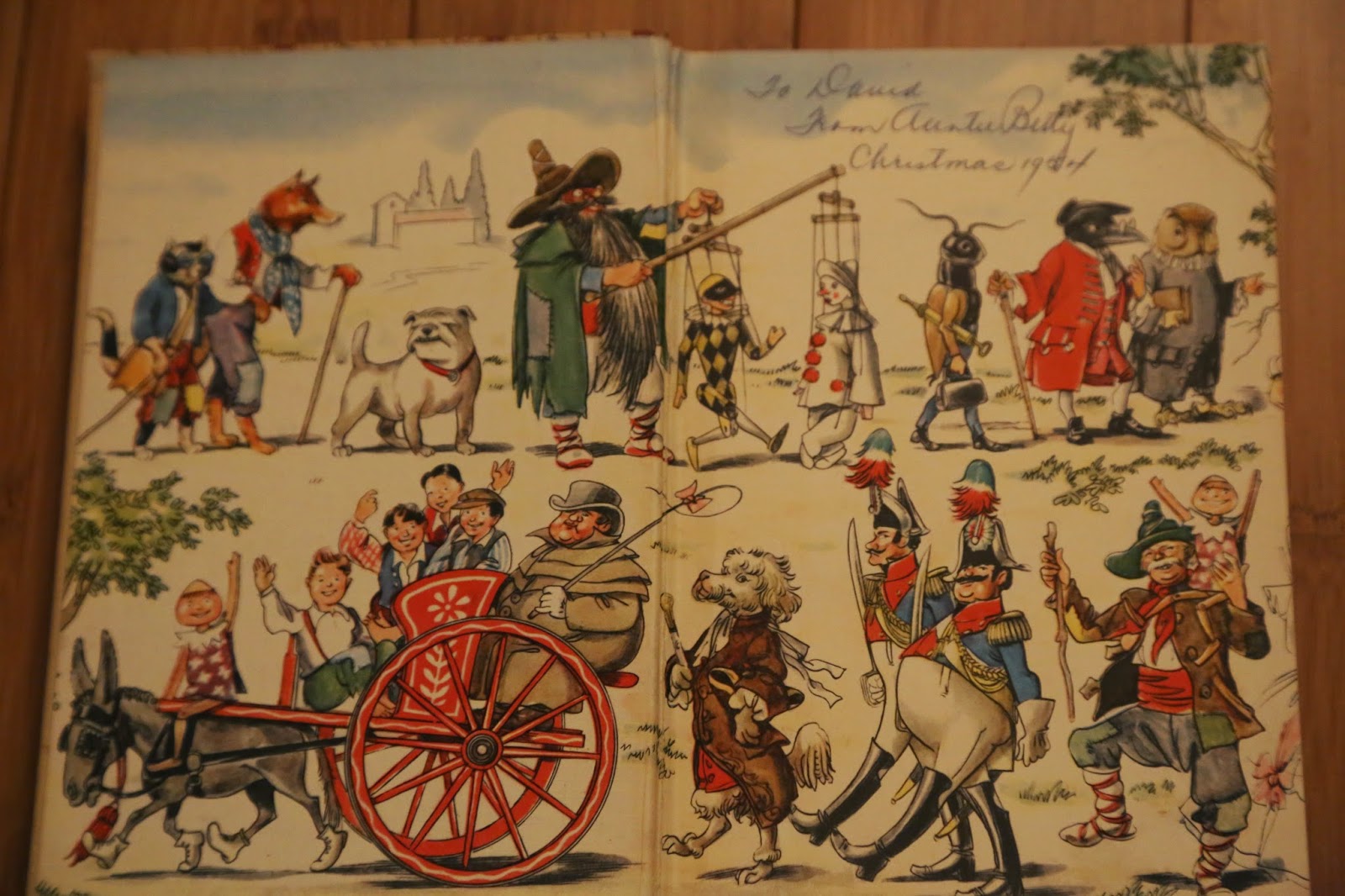
Finally, I’ll share a few pictures by illustrator Fritz Kredel from my 1946 edition that are rather fun:

Orlando: A Biography by Virginia Woolf

“He — for there could be no doubt of his sex, though the fasion of the time did something to disguise it — was in the act of slicing at the head of a Moor which swung from the rafters.”

My experience with Woolf’s writing is limited yet expanding.  I loved reading To The Lighthouse for its somewhat dream-like qualities and was rather pleasantly lulled by its stream-of-consciousness style.  Mrs. Dalloway I enjoyed, but I didn’t connect with it as much as I’d hoped and was left in a somewhat puzzled frame of mind at the end.  After reading Orlando, I was left with this same feeling.  What exactly did I just read and who was this Orlando?

Orlando is a young man born in the reign of Elizabeth I, and the novel follows him through his youth, as he has an affair with a Russian princess, cares for his ancestral estate, travels on diplomatic missions, etc.  The theme of writing is also explored, in his rejection by a famous poet and various other allusions. Finally he falls into a trace and, lo, awakes a woman.  This transformation does not seem  to surprise him, and she carries on her life as if nothing remise has occurred, yet upon returning to England she finds her estate embroiled in financial turmoil.  While remaining a woman, she fashionably switches between genders, eventually marries a sea captain, wins the lawsuit with regard to her property and that’s about it.  Woolf herself acts as an historical biographer and with her comic and satirical descriptions of certain people, I wasn’t sure if she was parodying herself as narrator, or taking a poke at a particular figure of her time and society.

Honestly I don’t have much to say about the book.  Twentieth century literature always does this to me.  I expect to be “informed and amused,” as books attempted to do historically (see my Gulliver’s Travels post for some extra information on writers’ intent) and end up somewhat disappointed when I’m only amused.  While I enjoyed the book, it would probably get only 3.5 stars from me.  In spite of my resolution to love it, 20th century literature always falls short.  Certainly the stream of consciousness writing is an interesting experiment, the disjointed prose perhaps a comment on the human psyche and the other artistic experiments are worth examining, but I’m always left with an empty feeling at the end.  What was the author really trying to say?  What did I learn?  What could I take away from the book that would change me in some fundamental way?

Yet, it turns out Woolf herself perhaps was not as satisfied with Orlando as she’d hoped.  Woolf wrote in her diary:

“I have written this book quicker than any; and it is all a joke; and yet gay and quick reading, I think; a writer’s holiday.”

“……… begun ….. as a joke: and now rather too long for my liking.  It may fall between stools; being too long for a joke, and too frivolous for a serious book.”

“Orlando taught me how to write a direct sentence; taught me continuity and narrative and how to keep the realities at bay.  But I purposely avoided, of course, any other difficulty.  I never got down to my depths and made shapes square up, as I did in the Lighthouse …… I want fun.  I want fantasy.”

And yes, Woolf wasn’t meaning this book to be serious at all:

“My notion is that there are offices to be discharged by talent for the relief of genius: meaning that one has the play side; the gift when it is mere gift, unapplied gift; and the gift when it is serious, going to business.  And one relieves the other.”

And so Orlando was a playful, frivolous fantasy that enraptures the reader, as Woolf captures your imagination with her wonderfully vibrant prose and light-hearted fanciful tone.  And I can enjoy it on that level.  Yet it is still only a wonderfully decorative cake, and I feel like I’ve missed the main meal.

O at Behold the Stars has an excellent review of Orlando, and with her comprehensive knowledge of Woolf, will be able to give you much more insight into the book than I have.

The Plague Read-Along Update #3

I’m reading The Plague by Albert Camus as part of a read-along with Bookstooge.


Part III & Part IV

As the deaths from the plague mount, the town runs out of coffins and room in the cemetary.  Eventually the victims are disposed of in much the same way as the rats early in the story.  Yuck!  Reality appears to set in on the collective group and the citizens of Oran feel united in their plight.  Cottard continues to make money amid the suffering, Rambert decides to stay in Oran, in spite of being given a new plague serum M. Othon’s young son dies in agony, Father Panaloux delivers a fiery sermon and then succumbs to a sickness which does not resemble the plague, Tarrou confesses his history and we find he is in rebellion against societal systems which are “plagues” themselves, and Grand is found wandering the streets ill and somewhat disoriented.  He is expected to die but he recovers and soon 4 other patients follow suit.  Has the plague finally run its course?

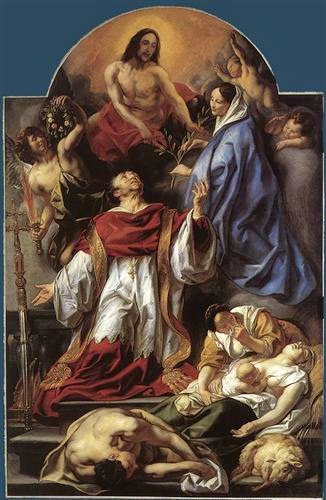
St. Charles cares for the
plague victims of Milan (1655)
Jacob Jordaens
source Wikiart

Thoughts:  In these two parts Camus deals in depth with the psychological effects of the plague, but not only this particular plague.  Tarrou recounts how horrified he was at his father’s behaviour in his vocation as a lawyer; how he advocated for the death of defendents without any compassion or thought. Tarrou directly left this kind of life, joining societies that would fight against it, only to find that the very people who condemned these actions, would commit them themselves, if they thought the ends justified the means.  Disgusted by people in general and referring to their actions as a type of a “plague”, Tarrou has placed himself in voluntary exile, removing himself and trying to live by “sympathy.”

Alienation appears to be a central theme.  Rieux must alienate himself from his feelings to continue to work, Cottard feels more in tune with group suffering but in reality he is still alienated, of course as mentioned above, Tarrou is alienated, the citizens of Oran are alienated from the rest of the world as they are in quarantine, and each person, to an extent, is alienated from another in fear of catching the plague.

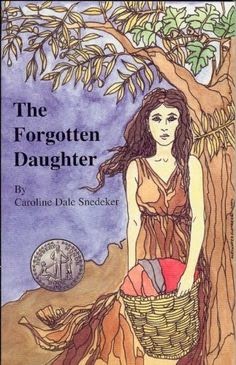
The Forgotten Daughter


Author:  Caroline Dale Snedecker

Illustrator:  Dorothy P. Lathrop

Era:  2nd century B.C. (around 113 B.C.)

Published:  1933 (Doubleday)

Award:  Newberry Honor (1934)

Age Range:  8 – 14 years old

Review:  ★★★★

Twelve year old Chloé lives with her companion, Melissa, in a shack in mountains of Samnium outside of Rome.  The daughter of a Greek slave and a Roman centurion, at her mother’s death she is abandoned by her father to her fate, which is that of a slave.  As Chloé grows to womanhood, she draws from the animals and nature around her as companions.  Her character is as lovely as the woods around her, yet still she nurses an abiding hatred for the man who should have loved, nurtured and raised her as his own.  When a young Roman nobleman arrives at a neighbouring villa and encounters the young girl, Chloé’s circumstances appear destined to change for the better, yet her past finally catches up with her and Chloe must decide whether she will hold on to the ghosts of the past or reach forward into a new future.

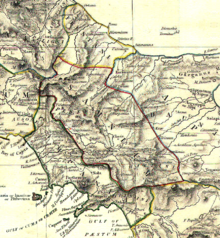
Map of Ancient Samnium
from the Historical Atlas William R. Shepherd (1911)
source Wikipedia

Snedecker was known for her extensive research using only primary or secondary sources, and The Forgotten Daughter sings with a melody of the past.  Snedecker’s writing brings Roman life to the reader in vibrant colours and poignant emotions.  The descriptions of the setting are beautiful and living, and as a reader you feel that you have stepped right into the story.

Chloé’s life as a child slave was perhaps the most troubling and effective portrait that I’ve every read in a book.

“Forever besetting mankind is this temptation — to make other men into machines.  Always in a new form it comes to every generation, and always as disastrous to master as to slave.”

 Snedecker delves into the emotions of the characters in such a visceral way and with an uncanny perception.

“Despair in the old is a grievous thing, but not so bad as despair in the young.  The young have no weapons, no remembrances of evils overcome, nor of evils endured.  They have no muscle-hardness from old battles.  They see only what is present, and they believe it to be forever.  And they are very sure.  Besides, joy and up-springing are the right of youth, and without it youth falls to the ground.”

The theme of slavery was obvious on the surface but also subtly explored through other occurences, weaving fine threads of insight through an already well-constructed story.  I absolutely loved this read and will be seeking out other books by Snedecker.

This book was read for Amanda at Simpler Pastimes Children’s Literature Event.

A more extensive review can be found at my children’s blog, Children’s Classic Book Carousel.

Deal Me In Challenge #3 – Ace of Hearts