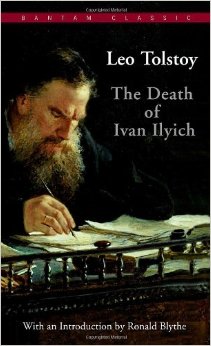
The Death of Ivan Ilyich by Leo Tolstoy

“Inside the great building of the Law Courts, during the interval in the hearing of the Melvinsky case, the members of the judicial council and the public prosecutor were gathered together in the private room of Ivan Yegorovitch Shebek, and the conversation turned upon the celebrated Krasovsky case.”

Wow!  My last Tolstoy novel read was War and Peace over two years ago and I’d forgotten the depth that Tolstoy could create within his stories with a clear, straight-forward narrative.  The Death of Ivan Ilyich appears to be merely a tale of the last days of a Russian court judge, yet Tolstoy brings the human condition into vivid and startling colours.
Continue reading

Metamorphoses by Ovid

“My soul would sing of metamorphoses.
but since, o gods, you were the source of these
bodies becoming other bodies, breathe
your breath into my book of changes: may
the song I sing be seamless as its way
weaves from the world’s beginning to our day.”

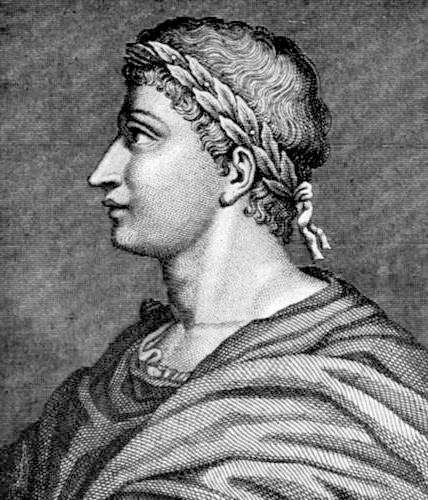
Publius Ovidius Naso was born in Sulmo, east of Rome in the year 43 B.C.  As a son of an upper middle class family, his father sent him to be educated in Rome to distinguish himself in a career in law or government.  Ovid was known as an exemplary rhetorician and worked at minor magisterial posts before quitting his public career to pursue poetry. Immediate success followed his first published elegy and by 8 A.D., the year in which Metamorphoses was published, he was one of the foremost poets of Rome.

Continue reading

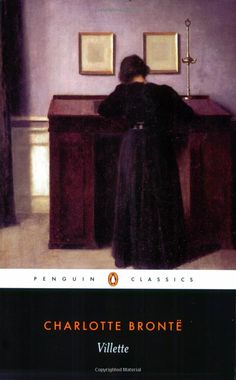
Villette by Charlotte Brönte

“My godmother lived in a handsome house in the clean and ancient town of Bretton.”

What on earth have I just read?  This book simply cannot be written by the same author who wrote Jane Eyre!  The mind rebels!  The heart rebels!  It cannot be!  Am I sounding very dramatic and flourishing and vocal?  That’s because I’ve spent 572 pages being lulled catatonic.  What happened …..??

Continue reading

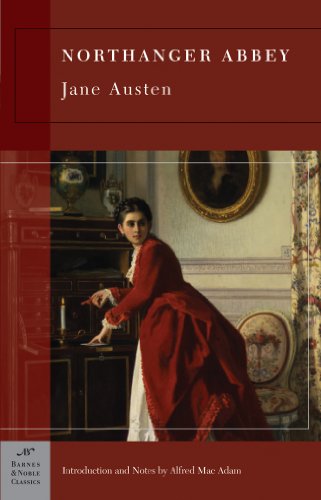
Northanger Abbey by Jane Austen

“No one who had ever seen Catherine Morland in her infancy would have supposed her born to be an heroine.”

While Northanger Abbey was the first novel written by Jane Austen and sold to a publisher by her brother, Henry, in fact it was repurchased by the author and not published until six months after her death in December 1817.  Austen’s parody of 17th century Gothic novels is told with a good-natured humour, but a valuable lesson lies beneath the surface of its narrative.

Continue reading

Spenser’s Images of Life by C.S. Lewis

Normally, I don’t read introductions or commentaries on books or poetry that I plan to read, until after I’ve finished the work.  I prefer to experience the art from a point of innocence (or perhaps, ignorance is a better word!), forming my own opinions without influence, even if I struggle with my first read through. However, this time I threw all my ideals to the winds and called for help.

In April I’m reading The Faerie Queene with OCirtnecce, JeanRuth, and Consoled Reader, and considering the length and complexity of this poem, I confess that it was wiser to admit my complete ineptitude and look for someone who was very familiar with this type of poem and era to give me a little boost.  Since C.S. Lewis’ expertise was in Medieval and Renaissance literature, I suspected that he would be a good place to start.  His book, Spenser’s Images of Life is a compilation of lectures notes, put together by Alastair Fowler, to give students a deeper insight into The Faerie Queene.

Continue reading

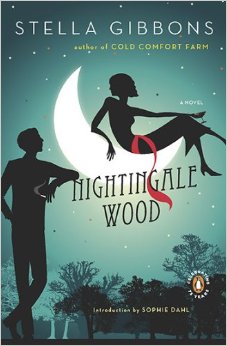
Nightingale Wood by Stella Gibbons

“It is difficult to make a dull garden, but old Mr. Wither had succeeded.”

Stella Gibbons writes rather odd books.  Cold Comfort Farm, her best known and highly acclaimed novel, follows an orphaned, pert young woman to a mucky, rural farm and observes while she neatens and tidies all the morose, lurking, and deranged occupants into their proper places, finding love in the process.  Gibbons has a knack for depicting rather unusual and sometimes bizarre characters, and this flair for the unique has continued in her writing of Nightingale Wood. The introduction to the story labels it as a “fairy tale” and it is, although not along the usual lines one would expect from such a tale.  Gibbons’ evil creatures often have angelic faces, and her happily-ever-afters can leave the reader uncertain of reality.  In playing with her characters, Gibbons appears to play with society and even the reader himself.  Her writing is not easily defined.

Continue reading

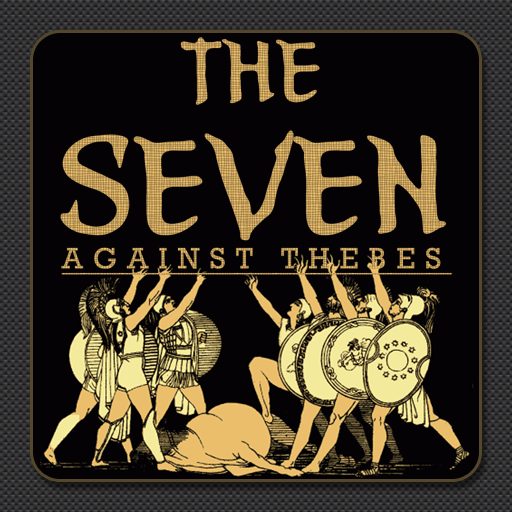
Seven Against Thebes by Aeschylus

“You citizens of Cadmus, he must speak home
that in the ship’s prow, watches the event
and guides the rudder, his eyes not drooped in sleep.”

Produced in 467 B.C. and winning first prize in the City Dionysia drama competition, The Seven Against Thebes is assumed to be the last of a trilogy of plays which dealt with the Oedipus cycle, the other two being called Laius, and Oedipus, both lost, as was the concluding satyr play, The Sphinx.  Driven mostly by dialogue, this play requires some background history to add some further insight.

Continue reading

The Time Machine by H.G. Wells

“The Time Traveller (for so it will be convenient to speak of him) was expounding a recondite matter to us.”

I read this book for the Classics Club Spin #11.  Was it my spin book?  No, it was Mockingbirds, Looking Glasses, and Prejudices spin book but I decided to read along with her.  Why?  Well, her book was much shorter than my Spin book, and I couldn’t imagine getting through God in the Dock in the allotted time frame.  Yes, I’m breaking the rules, but it’s on my Classics Club list, AND at least I read something!

Continue reading

The Suppliant Maidens by Aeschylus

“Zeus Protector, protect us with care,
From the subtle sand of the Nile delta
Our ship set sail …….”

Originally thought to be the earliest extant Greek tragedy, having been produced in 490 B.C., more recent evidence places it with a trilogy produced in 470 B.C., making it one of Aeschylus’ later plays. More primitive in style than The Persians, and using the archaic practice of having the protagonist as the chorus, it’s possible that Aeschylus kept it unseen for 20 years, but his motivation for this concealment would certainly be inexplicable.

Continue reading

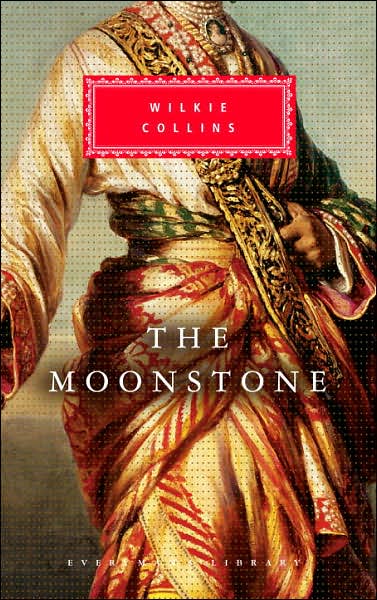
The Moonstone by Wilkie Collins

“I address these lines — written in India — to my relatives in England.”

The Moonstone …….. a yellow diamond, sacred to the Indian people, guarded over by an ancient curse and three Brahmins devoted to its preservation. Yet the revered diamond is stolen.  Time passes, and the Moonstone ends up in the hands of Colonel Hearncastle who returns to England with the ill-fated gem. Angry at the relatives who shun his advances, he leaves the Moonstone in his will to his niece, Rachel Verinder.  Did the Colonel leave the stone as a profitable legacy, or was it intended to wreak destruction on those who had earlier rejected his gruff overtures?

Continue reading