The Monster Read-a-Thon – Update

My Monster Read-a-thon is now complete.  I knew that this week would be a little disjointed as I had a small diversion from my vacation to attend a softball tournament.  So let’s see how I did compared to my personal read-a-thon of last week:

The Guns of August by Barbara W. Tuchman
~~  p. 368-end (143 pgs)

Surprised by Joy by C.S. Lewis

~~ p. 117-end (68 pgs.)
The Sayings of the Desert Fathers
~~  p. 45-67  (22 pgs)
The Way of King Arthur by Christopher Hibbert
~~  Chapter 1, p. 1-27 (27 pgs)

A Grief Observed by C.S. Lewis

~~  Chapter 1-2, p. 1-46 (46 pgs)
The Witch of Blackbird Pond by Elizabeth George Speare
~~  Chapter 2 – 7  p. 21-80 (59 pgs)

Barchester Towers
~~ p. 292 – end  (126 pgs)

Gilgamesh

~~ p. 1-166  (166 pgs)

Books completed:

Barchester Towers
The Guns of August

Total pages read:  657 pages


The read-a-thon was a little under my page count compared to my first week’s Personal Read-a-thon, but considering the distractions, it’s not half bad.  We’ll have guests for a couple of days this coming week, but I’m planning to ignore them to read  ………….. ha, ha, I’m kidding (I hope you all knew that!).  I’ll have to really concentrate on my reading on the days that I’m free.  For the next read-a-thon, which is the 2nd Annual Beat-the-Heat Read-a-thon, I’m hoping to complete a few more pages and a few more books.  We’ll see how it goes ………..

Classics Club Spin #7 …………. And The Winner Is ………..

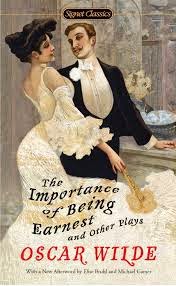
The winning number for the Classics Club Spin #7 is number 17!  I’m completely happy with this choice because it means that I’ll be able to read Oscar Wilde’s, The Importance of Being Earnest!

It will be fun to read a comedic play and to experience some light-hearted humour after some of the more serious reads I have taken on lately.

A Burrowing Owl
source Wikimedia Commons

Now I’m off to see what books the rest of my blogger friends will be reading!

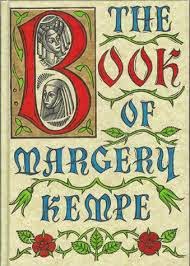
The Book of Margery Kempe

“When this creature was twenty years of age, or somewhat more, she was married to a worshipful burgess [of Lynn] and was with child within a short time, as nature would have it.”

The second book of my Well-Educated Mind Biographies Project took me to the turn of the fifteenth century when the Late Middle Ages was morphing into the Early Renaissance.  Margery Kempe, a married women with 14 children decides that her devotion to God eclipses everything else in her life, and embarks on a mystical journey to get as close as she can to His Love and Grace, and to conform her life to His will.  While the narrative is somewhat disjointed, springing back and forth between different episodes in Margery’s life, the reader must decide:  does Margery have a special relationship with God and are her actions spiritually beneficial, or is she somewhat unbalanced emotionally and do her actions have a negative impact on those around her?

While Margery speaks of her devotion to God and of the special protection and attention he sends her way, a repeated theme runs through this book of her unusually shocking weeping and crying, and how her behaviour alienates the people around her.  In story after story, Margery weeps and wails in loud outbursts, a person or the people get irritated with her and, at the least, want her to stop and, at the most, want her imprisoned.  Margery does show a comprehension that her behaviour sows discord with those around her, and does try to moderate her reactions, but is unable to because of the force of feeling for God in her heart; she simply cannot control her response.

At first, like many people Margery met, her weeping and sobbing drove me crazy.  I think in this book she described every incident that she wailed and moaned, and I was soon in complete sympathy with the people who wanted her either run out of town or put in prison.  Yet about mid-way through the book I began to think ………..  How did Margery conduct herself as a person?  What were her traits and how did she interact with other people whom she met in life?  Yes, her life was completely given to God and he was her primary source of love and care and motivation, but the result of that love was her willingness to help and care for people, her desire to see people saved and experience God’s grace like she had, and, surprisingly, her meek yet powerful words that she used against her accusers. Rarely did she respond in kind to their recriminations, intimidation or threats, but with an honest and sincere demeanour, that often would disarm them.  Did she ever hurt anyone with her behaviour?  No, she was simply annoying and, therefore, was it right to ostracize her, berate her and throw her in prison for being bothersome?

Ultimately I felt that this book said as much about the society around Margery, as Margery herself.  Their intolerance for anyone different than themselves, their impatience at her benign behaviour and their lust for vengeance was quite startling, yet when I compared it to our society today, how different was it really?  Don’t we display the same intolerance, the same prejudice and the same narrow-mindedness as the people of Margery’s time?   Are we exasperated or offended by people with different ideas or bothered when people behave differently than we expect?  I think, if we’re honest, we’d be compelled to answer “yes”.

The book also gives fascinating details of medieval life.  While we, as moderns, always tend to think women were oppressed and had no say in how they lived their lives, Margery chose to live apart from her husband, traveled around Europe often in the company of men, and quite forcefully made her own choices about the path her life would take.  Certainly she was occasionally reprimanded by priests or given advice by townspeople that she should behave like a “normal” woman, but the vast majority of people appeared to accept her lifestyle without comment and are much more concerned or annoyed with the quantity of her weeping and emotional distress.

Margery’s amazing perseverance in her beliefs, and her ability to remaining faithful when she is imprisoned, ostracized, mocked and threatened, are what impacted me while reading this biography.  Her lack of anger and her tolerance towards her persecutors is truly heroic.  While I wouldn’t want to be Margery Kempe, and I didn’t agree with all her decisions, I can certainly see traits within her that would be beneficial in my own life, and for that, I have a reluctant admiration for her single-minded faithfulness and unquenchable spirit.

Classics Club Spin #7

It’s time for another spin!  I still have my first spin book (from spin #4) to finish, Bleak House, but other than that I’ve completed spins for Oedipus at Colonus, The Seven Storey Mountain, and even someone else’s spin book, The Odyssey.  So I’m not doing too badly.

The usual rules state:

  1. Go to your blog.
  2. Pick twenty books that you’ve got left to read from your Classics Club list.
  3. Post that list, numbered 1 – 20, on your blog by next Monday.
  4. Monday morning, we’ll announce a number from 1 – 20.  Go to the list of twenty books you posted and select the book that corresponds to the number we announce.
  5. The challenge is to read that book by October 6th.

I used the random list organizer here to choose the 20 books from my master list.  So my list ended up looking like this:

  1. O Pioneers! (1913) – Willa Cather
  2. The Rule of Saint Benedict (529)? – Saint Benedict
  3. Ethan Fromme (1911) – Edith Wharton
  4. She Stoops to Conquer (1773) – Oliver Goldsmith
  5. Animal Farm (1945) – George Orwell
  6. Atlas Shrugged (1957) – Ayn Rand
  7. Defense Speeches (80 – 63 B.C.) – Marcus Tullius Cicero
  8. We (1921) – Yevgeny Zamyatin
  9. A Distant Mirror: The Calamitous Fourteenth Century (1978) – Barbara Tuchman
  10. Erewhon (1872) – Samuel Butler
  11. 1984 (1949) – George Orwell
  12. Tartuffe (1669) – Molière
  13. Doctor Thorne (1858) – Anthony Trollope
  14. On the Social Contract (1762) – Jean-Jacques Rousseau
  15. Hamlet (1603 – 1604) – William Shakespeare
  16. Swann’s Way (1913) – Marcel Proust
  17. The Importance of Being Earnest (1895) – Oscar Wilde
  18. The Prince (1513) – Niccolo Machiavelli
  19. The Stranger (1942) – Albert Camus
  20. A Connecticut Yankee in King Arthur’s Court (1889) – Mark Twain

Five Books I’m Hesitant to Read
1.  Swann’s Way – Marcel Proust
2.  Atlas Shrugged – Ayn Rand
3.  A Distant Mirror – Barbara Tuchman
4.  On the Social Contract – Jean-Jacques Rousseau
5.  A Connecticut Yankee in King Arthur’s Court – Mark Twain
Five Books I Can’t Wait to Read
1.  Defence Speeches – Cicero
2.  We – Yevgeny Zamyatin
3.  The Stranger – Albert Camus
4.  She Stoops to Conquer – Oliver Goldsmith
5.  Hamlet – William Shakespeare

With regard to Swann’s Way, I’m only hesitant because of the length; I really have no desire to read Ayn Rand;  A Distant Mirror I’d love to read but I’m just finishing up her The Guns of August and I’d like a breather in between.

Cicero, of course, is awesome; We is supposed to be weird and I’d love a weird book to read; I am so excited to start reading some Camus —- he sounds like an interesting fellow; and I loved Goldsmith’s novel, The Vicar of Wakefield, so I’d like to read something else by him.

How did you spin list go?  Any thrills or any books that you’re dreading?

Personal Read-a-Thon – Update

Well, I’ve come to the end of my personal read-a-thon and the Monster Read-a-thon starts tomorrow, so it’s time for an update of my accomplishments.

I’ve realized that in addition to the many other reasons why it’s not good to have so many books in your currently-reading pile, the fact that I have read from many of them during this time, makes listing them and calculating the page count quite a time-consuming chore.  But here is what I’ve managed to read:

The Terror by Dan Simmons
~~  Chapter 3-21  p. 30-280 (250 pgs.)
The Book of Margery Kempe
~~  Chapter 52-end p. 161-332 (171 pgs.)
War and Peace by Leo Tolstoy
~~  p 1253 – 1392 [end] (139 pgs.)
The Guns of August by Barbara W. Tuchman
~~  p. 277-367 (90 pgs)
The History of the Ancient World by Susan Wise Bauer
~~ Chapter 47-48 p. 335-354 (19 pgs.)
The Sayings of the Desert Fathers
~~  p. 31-44  (13 pgs)
The Essays of Montaigne
~~  Introduction and some letters
      reading an e-book Vol 1 & 2 so hard to say
      let’s log it in as (17 pgs)
The Witch of Blackbird Pond by Elizabeth George Speare
~~  Introduction & Chapter 1  p. 1-20 (20 pgs)

Books completed:

The Book of Margery Kempe
War and Peace

Total pages read:  719 pages


I’m happy that I’ve completed two books, but I was hoping to get through more.  I’m going to have to be especially diligent this next week because I’ll have an interruption in my vacation plans that will make it more difficult to read.  Yet after that, I’ll be back on track and looking forward to picking up my reading pace.

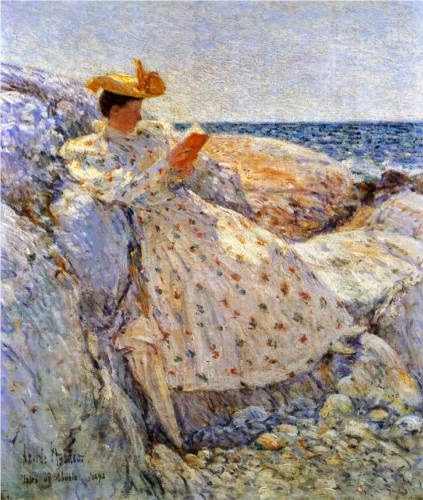
Isle of Shoals
Childe Hassam
source Wikiart

The Essays of Montaigne – Introduction

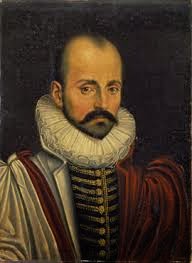
My third book of my Well-Educated Mind Biographies Project is Essays by Michel de Montaigne.  He wrote these essays over the period of 1570 – 1592.  Why?  Well, the man himself tells us:  “I have dedicated this book to the private benefit of my friends and kinsmen, so that, having lost me (as they must do soon) they can find here again some traits of my character and of my humours.”  His writing is honest and unpretentious, as he only sought to dissect his mind for a greater understanding of human nature.

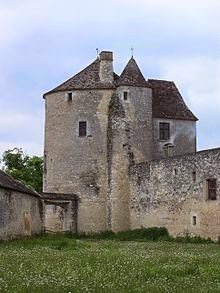
Born on the last day of February 1533 at the Chateau de Montaigne, his families’ wealth did not breed arrogance or vanity; for the first three years of his life Montaigne was sent to live with a peasant family, in order to, as his father said, “draw the boy close to the people, and to the life conditions of the people, who need our help.”  While his father ensured that he associated with people of lower social status, he also provided him a rigorous education for the purpose of cultivating his mind.  He studied all the classic languages and at fourteen, was destined for law school.  In 1554 he was appointed councillor in the Parliament of Bourdeaux and later married.  Yet in his thirty-eighth year, tired of court life he retired, intending to spend the remainder of his life in tranquil seclusion.  Sequestering himself in a tower on the grounds of Chateau de Montaigne, he began to write his Essays.

La tour de Montaigne
source Wikipedia

Interesting tidbits:

Upon his retirement he commissioned a medal that read, “Que scay-je?”, which means “What do I know?”, echoing Pliny’s reminder that “In these matters, the only certainty is that nothing is certain.”

The profundity of his thoughts introduces his readers to ideas, presented in a way that is unique and innovative. “He who had never actually seen a river, the first time he did, so took it for the ocean, since we think that the biggest things that we know represent the limits of what Nature can reproduce in that species.”

His humility, charm, and uncomplicated spirit echoes through much of his writing:  “When I play with my cat, how do I know that she is not passing time with me rather than I with her?”

Notable Quotes:

  • “I prefer the company of peasants because they have not been educated sufficiently to reason incorrectly.”
  • “I am afraid that our eyes are bigger than our stomachs, and that we have more curiosity than understanding. We grasp at everything, but catch nothing except wind.”
  • “When I am attacked by gloomy thoughts, nothing helps me so much as running to my books. They quickly absorb me and banish the clouds from my mind.”
  • “On the highest throne in the world, we still sit only on our own bottom.”
  • “To compose our character is our duty, not to compose books, and to win, not battles and provinces, but order and tranquility in our conduct. Our great and glorious masterpiece is to live appropriately. All other things, ruling, hoarding, building, are only little appendages and props, at most.”
  • “To begin depriving death of its greatest advantage over us, let us adopt a way clean contrary to that common one; let us deprive death of its strangeness, let us frequent it, let us get used to it; let us have nothing more often in mind than death… We do not know where death awaits us: so let us wait for it everywhere.” 
  • “To practice death is to practice freedom. A man who has learned how to die has unlearned how to be a slave.”

With regard to translations of this work, I came across this quote by William Hazlitt:

“The besetting sin of both Montaigne’s translators seems to have been a propensity for reducing his language and phraseology to the language and phraseology of the age and country to which they belonged, and, moreover, inserting paragraphs and words, not her and there only, but constantly and habitually, from an evident desire and view to elucidate or strengthen their author’s meaning.  The result has generally been unfortunate; and I have, in case of all these interpolations on Cotton’s part, felt bound, where I did not cancel them, to throw them down into the notes, not thinking it right that Montaigne should be allowed any longer to stand sponsor for what he never wrote; and reluctant, on the other hand, to suppress the intruding matter entirely, where it appeared to possess a value of its own.”

In any case, forward on to The Essays of Montaigne!

Further reading:

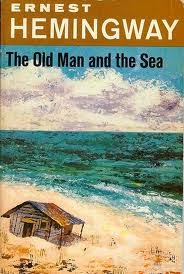
The Old Man and the Sea by Ernest Hemingway

“He was an old man who fished alone in a skiff in the Gulf Stream and he had gone eighty-four days now without taking a fish.”

I had disliked Hemingway ever since I attempted to read The Sun Also Rises as a teenager, but when Hamlettte from The Edge of the Precipice  announced her read-along of The Old Man and the Sea, I decided to give him another try.  Perhaps we would get along better this time.

This novella was an unexpected surprise and delight that has, well, perhaps not made me a Hemingway fan, but at least has made me very open to reading more of this works.

Imagine that you live in a small town in a simple hut and your life consists daily of fishing for a catch that will bring you your wages when you sell it in the market.  Now imagine going 30 days without a fish, then 40 days.  You lose your only helper, a boy, because you are now viewed as unlucky, and he is sent to work with more successful fishermen.  Day 60 passes but still you sail out as every other day, confident you will catch something.  By the time our story begins, most men would be worn with worry and care, but not the fisherman of this story, Santiago, who prepares his boat and sets sail as he has the previous 84 days that he did not return with a catch.  On this particular day, Santiago ventures into the Gulf Stream north of Cuba to set his lines and wait for his luck to change.  And does it change!  Hooking an enormous fish, Santiago begins his battle which lasts three days and pulls him out into the depths of the ocean, perhaps without the possibility of return. Yet return he does, but tragically his magnificent catch has been worried by sharks, and resembles nothing but a bony carcass.  Does this worry the old man?  Not one bit.  He makes the same climb to his shack that he has made the last 84 days, yet this time he is a different man.  Falling onto his bed, he dreams of lions and his youth.

While Santiago is fighting against defeat in the novella, at the end of the novel, instead of being defeated by the fact his catch returned only as a ragged skeleton, he returns a hero and his dreams of youth indicate the experience has given him life and vigor that had been missing before that day.  It was not the result of his struggle that mattered; it was the struggle itself and its purpose, that brought meaning back into the old fisherman’s life.

Ernest Hemingway and Henry (“Mike”) Strater
with the remaining 500 lbs of an estimated 1000 lb marlin
 that was half-eaten by sharks before it could be landed
 in the Bahamas in 1935.
source Wikipedia

Hamlette @ The Edge of the Precipice has given us some excellent questions that we can choose to answer for the read-along:

Some people say this story is full of symbolism, maybe even an allegory.  What do you think things like the old man, the fish, and the sharks could symbolize?

The book How To Read Literature Like a Professor states that The Old Man and the Sea is a “nearly perfect literary parable”, full of Christian imagery.  We encounter images of Christ in the story when, after grasping the line all night to hold the fish, Santiago made an exclamation that, as Hemingway tells us, is reminiscent of an exclamation “someone would have while having a nail passed through their hand into a piece of wood”.  After the completion of his voyage, Santiago stumbles up the hill, carrying his mast on his back, bringing the image of Christ carrying the cross to Golgotha, and when Santiago falls asleep in his house on his bed, are arms are spread wide, as if in the shape of a crucified Christ-figure.

source Wikipedia

Were these symbols intentionally put into the story?  Who can know for sure.  Hemingway, himself, when questioned, said:  “There isn’t any symbolism.  The sea is the sea.  The old man is an old man.  The boy is a boy and the fish is a fish.  The sharks are all sharks, no better or no worse.  All the symbolism that people say is sh*t.  What goes beyond is what you see beyond when you know.”  Personally I think that Hemingway used these images to convey meaning.  He didn’t intend to make Santiago, Christ or a Christ-type figure, he simply used images that all readers would be familiar with, to help us feel the old man’s struggle, pain, and sacrifice, and to share his triumph when he returned with the experience of the catch of his life.

Thanks for this excellent read-along, Hamlette.  Here are some other participant reviews:

Read-a-thon, Read-a-thon, How Many Read-a-thons?

I’m finally on holidays, and this, of course, means that I’ll have a large amount of time to devote to reading.  This is a very good thing, because my currently reading pile is embarrassingly large.  I was looking for a read-a-thon starting now and running throughout my holidays, but I couldn’t find anything that quite fit.  So I’ll be doing the following, tailoring each to fit my available reading schedule:

From July 29th to August 3rd, I’ll be doing my own personal read-a-thon.

From August 4th to 10th, I will participate in The Book Monsters, Monster Read-a-thon.

The Monster Read and Review-a-thons are a great chance for us all to get together, read some fabulous reads, and get to those reviews that we know have been sitting there waiting to be done for a little too long. You can read as much as you want. Review till you cannot review anymore. Whatever works best for you! In addition to the Thons, we will be hosting some fun related challenges, great prizes, and a Twitter party

From August 11th to 17th, I’ll be participating in the second annual Beat the Heat Read-a-thon

The Beat the Heat Readathon runs from August 11th to September 1st. What does this readathon entail, you ask? Well, read as much or as little as you want – the main point is to READ! You set your own goal, and for three weeks you read as many books as you can/want to reach your goal!

There will be mini-challenges throughout the Readathon for participants, along with a grand prize giveaway at the end!

Sign up here at Novel Heartbeat or over at Phantasmic Reads. You may join whenever you like, but to be eligible for our grand prize giveaway, you must sign up by August 24th.

To join, all you have to do is make a sign-up post – even if it’s just a “Let’s do this!” thing – and add your post URL to the linky below! You can put your goals and progress (will be required for the final giveaway) in your sign-up post, or you can make it separate. Totally up to you! (You are welcome to use the template we provide as well.)

In order to enter for the grand prize, you must have a post to keep track of your progress so we can see that you participated.

then, from August 18th to 24th, I’ll participate in the 11th Bout of Book Read-a-thon.

The Bout of Books read-a-thon is organized by Amanda @ On a Book Bender and Kelly @ Reading the Paranormal. It is a week long read-a-thon that begins 12:01am Monday, August 18th and runs through Sunday, August 24th in whatever time zone you are in. Bout of Books is low-pressure, and the only reading competition is between you and your usual number of books read in a week. There are challenges, giveaways, and a grand prize, but all of these are completely optional. For all Bout of Books 11 information and updates, be sure to visit the Bout of Books blog. – From the Bout of Books team

Previously, I’ve only participated in one read-a-thon, and that was only for 24 hours, so I am a little perplexed as to how to tackle these longer read-a-thons.  I am so terrible with lists and focussing on specific books, that I don’t want to go that route.  Should I aim for a set number of pages?  I have no idea the average number of pages I read per day/per week.  Yikes!  So I think I’m going to set my goal at 50 pages a day (this should be easy) and raise the count when I see how I’m progressing.

As for books, as I said, I have a disconcerting number of books to complete, as well as some new ones that I want to read.  Here are some books on my list:

Currently reading:

The Guns of August – Barbara Tuchman

War and Peace – Leo Tolstoy
Antigone – Sophocles
The Book of Margery Kempe
Surprised by Joy – C.S. Lewis
Le Morte d’Arthur – Thomas Mallory
The Decameron – Giovanni Boccaccio
Barchester Towers – Anthony Trollope
The History of the Ancient World – Susan Wise Bauer

New Books:

The Terror – Dan Simmons (thanks to Andrea @ Tasseled Book)
Russian Thinkers – Isaiah Berlin
The Man Who Was Thursday – G.K. Chesterton
The Screwtape Letters – C.S. Lewis
Metamorphoses – Ovid
The Universe Next Door – James W. Sire
Porterhouse Blue – Tom Sharpe

I’ll update when I’m able, but the plan is to read, read, read.  So, happy summer reading to everyone!

** Edited to include the Monster Read-a-thon, kindly suggested by Masanobu at All the Pretty Books **

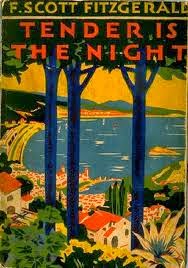
Tender is the Night by F. Scott Fitzgerald

“On the pleasant shore of the French Riviera, about half way between Marseilles and the Italian border, stands a large, proud, rose-coloured hotel.”

Early this year I read The Great Gatsby with, I’ll admit, some trepidation, since I’d read it in high school pretty much hated it. But my second exposure was much more pleasant and, if not my favourite book, I could definitely appreciate certain aspects of its structure, and especially Fitzgerald’s descriptive power.  So when my Goodreads group decided to read Tender is the Night, I was in with only minor hesitation.

Continue reading

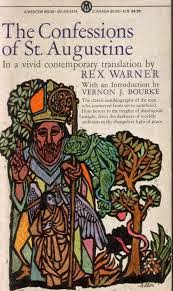
Confessions by Saint Augustine

“You are great, Lord, and highly to be praised: great is your power and your wisdom is immeasurable.”

Book No. 1

Book:  The Confessions of Saint                   Augustine
          
          Oxford World Classics
            Translation:  Henry Chadwick

I’m starting my Well-Educated Mind Biography Project with possibly the first biography ever written, Confessions by St. Augustine.  Born in 354 A.D. in Thagaste, which is modern day Algeria, Augustine reveals his time as a boy growing up in North Africa, his profession as a teacher of rhetoric, his travels to Rome, his connections with the Manicheans*, and finally his conversion to Christianity.  We, as a reader, are privileged to have a window into his life and internal struggles, as he asks questions about life and God.

*Manicheanism:  a quasi-religion that taught a dualism of everything that is material is evil, and everything that is spirit is good.  Their beliefs caused them to take rather bizarre views of Christian teachings such as:  because God created a material world, he cannot be good; Jesus did not become man because all material is evil, etc.

First Stage of Reading:

What historical events coincide-or merge-with these personal events?
Augustine lived in the Roman Empire during a time of political, social and religious turmoil, which helped him to produce prolific amounts of writing addressing these situations.  

Augustine was born in a century where at the beginning, Christianity was a persecuted religion, yet at the end of the century most people of the Roman Empire were at least ostensibly Christian and Christianity was the official religion of the Empire.  As the church attempted to determine its nature,  there were many disputes among Christians and much of Augustine’s writing deals with these issues.  He also endeavoured to reconcile pagan thought with Christian values, one of the first Latin writers to explore the benefits of pagan ideas as well as assessing their limitations.
Who is the most important person (or people) in the writer’s life?

Perhaps the most important person in Augustine’s life was his mother, Monica.  Her prayers and petitions for him were unceasing and what a wonderful thing for her to see him eventually become a believer.  

Ambrose, the archbishop of Milan, was instrumental in Augustine’s journey away from Manichean belief and towards a belief in God.  Augustine respected his intellect and his influence on Augustine was unequivocal, as he encouraged him to look beyond the literal into the substance of the Bible, and asserted that a deeper meaning could be found there, contrary to what Augustine had learned from his Manichean teachers.  
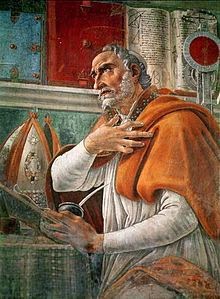
Saint Augustine in his study (1480)
Sandro Botticelli
source Wikipedia


The Second Stage of Reading:


What is the theme that ties the narrative together?
Confession is the most important word in this work.  It is as if Augustine must confess to make his journey complete. 
What is the life’s turning point?  Is there a conversation?

Well, of course, Confessions is a very long conversation of Augustine’s with God.  But in reference to his conversion, I believe it was more a process.  Augustine himself said that he believed that God was with him and guiding him even when he was living with sin and recriminations.  He also makes reference to not being ready to hear or act on certain convictions, so in retrospect, while Confessions is a conversation with God, it is also the story of his life.  I like this presentation because it makes his life meaningful; even though Augustine at times made poor choices and employed wrong-thinking, none of his life, in effect, was “wasted.”

The Confessions of Saint Augustine
source Wikipedia

The Third Stage of Reading:


What are the three moments, or time frames, of the autobiography?
1.        As a child, forming a poor character by stealing and valuing things that were superficial .  He grew up accepting the social value of using knowledge as an end, rather than as a means to forming good character, yet he could see that there was no fruit in this approach to life.

2.        As a young man, being influenced by friends and being draw into the Manichean beliefs as he searched for meaning in the world.  Augustine seemed to straddle the life of worldly pleasures and the search for a life of  abiding faith.

3.       As a more mature man, finding a way of reconciling God to his intellect, converting to Christianity, discovering joy and peace, and writing his confessions.
Do you agree with what the writer has done?

I absolutely love that Augustine kept searching.  We all get pulled into the world to a certain extent, by technology, materialism, etc. and we all struggle with our human nature.  Augustine’s search for God ended not only in finding Him, but by learning that God had been search for him all-along.  And in the end, Augustine was no longer living for himself but for God, a manner of living that brought such joy and contentment to his spirit.
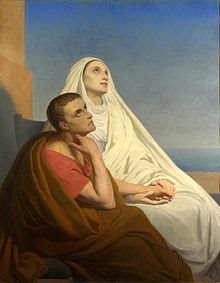
Saint Augustine & Saint Monica (1846)
Ary Scheffer
source Wikipedia

This book is broken up into two section, the first being Augustine’s autobiography (the first 9 books) and the second being theological & philosophical works (the last 4 books).  With regard to the latter, Augustine’s curiosity and quite astounding intellect can leave his reader going “huh?” as we try to navigate with him through the quite confusing realms of memory & senses, the meaning of time, and the book of Genesis and how it intersects with the Trinity.  In retrospect, the change in tone between these two sections are perhaps not as unusual as they first appear.  In the first nine autobiographical books, Augustine is dealing with the past, yet with the second section, he deals with the present and some of the thoughts that he is reflecting on during his life as a bishop.  These subjects also tie into the material he has already presented:  memory affects his presentation of his past experiences, time relates to the existence of his past recollections, and the chapters on Genesis and the Trinity are reminiscent of his earlier inquiries on how to read the Bible and how to view God.

During my first reading of Confessions, the last few chapters honestly went over my head, but with this second reading, I was able to follow Augustine’s train of thought at least now and then.  I will definitely re-read this book in the future.  There is so much to draw from this great intellect and I still feel that I have only scratched the surface.

Portrait by Phillipe de Champaigne
17th century
source Wikipedia

Favourite Quotes:

“If anyone find your simultaneity beyond his understanding, it is not for me to explain it.  Let him be content to say ‘What is this?’ (Exod. 16:15).  So too let him rejoice and delight in finding you who are beyond discovery rather than fail to find you by supposing you to be discoverable.”

In our present time, where progress counts for so much, how many people would be content with not knowing?  And how paradoxical that a desire for discovery of something unknowable, actually brings less knowledge than “not knowing”.

“There is never an obligation to be obedient to orders which it would be pernicious to obey.”

Further reading: 

http://www.college.columbia.edu/core/node/1759