Metamorphoses – Book IV

Book IV


The Daughters of Minyas / Pyramus & Thisbe / Mars, Venus, Vulcan, the Sun / Leucothoe & Clytie / Salmacis & Hermaphroditus / The Daughters of Minyas / Athamas & Ino / Cadmus & Harmonia / Acrisius / Perseus & Atlas Perseus & Andromeda / Perseus & Medusa

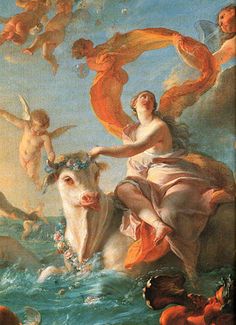
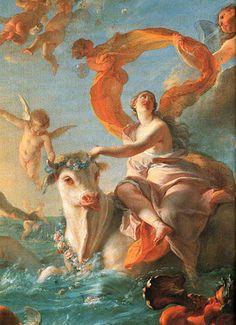
Minyas’ daughter Alcithoe and her sisters disdain Bacchus’ revelries and deride the god. The daughters of Minyas sit at home during the festivities, and as they weave their cloth, they also weave stories as they work, carefully choosing their tales.

Continue reading

On Reading ‘The Faerie Queene’ by C.S. Lewis


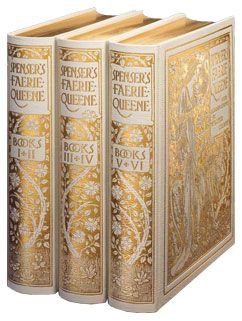
“Beyond all doubt it is best to have made one’s first acquaintance with Spenser in a very large — and, preferably, illustrated — edition of The Faerie Queene, on a wet day, between the ages of twelve and sixteen; and if, even at that age, certain of the names aroused unidentified memories of some still earlier, some almost prehistoric, commerce with a selection of ‘Stories from Spenser’, heard before we could read, so much the better.”

A number of us are going to be reading The Fairie Queene beginning sometime in April and, considering the difficulty of the poem, I decided to do some pre-reading investigation.

Continue reading

A Lover’s Complaint by William Shakespeare


From off a hill whose concave womb re-worded
A plaintful story from a sistering vale,
My spirits t’attend this double voice accorded,
And down laid to list the sad-tuned tale;
Ere long espied a fickle maid full pale,
Tearing of papers, breaking rings a-twain,
Storming her world with sorrow’s wind and rain


This “fickle maid” relates her story, a story of love unrequited, but as she describes her inner conflict, we receive a vision of the maid, no longer young:


“Whereupon the thought might think sometime it saw
The carcass of a beauty spent and done;
Time had not scythed all that youth begun,
Nor youth all quit; but, spite of heaven’s fell rage,
Some beauty peept through lattice of sear’d age.”


Crying despondently and wiping her eyes with a handkerchief, the maid tells a respectable man, who is grazing his cattle nearby, of her troubles.


“Not age, but sorrow, over me hath power;
I might as yet have been a spreading flower, 
Fresh to myself, if I had self-applied
Love to myself, and to no love beside.”


She fell in love with a young man with a silken tongue and enchanting brown curls, who stole her heart in spite of other more questionable qualities.


“His qualities were beauteous as his form,
For maiden-tongued he was, and thereof free;
Yet, if men moved him, was he such a storm
As oft twixt May and April to see,
When winds breathe sweet, unruly though they be.
His rudeness so with his authorized youth
Did livery falseness in a pride of truth.”


She “gave him all my flower,” without being demanding of him like others.  She claimed that “mine honour shielded” but she became an “amorous spoil.” Even though she knew of his other women, of his “foul beguiling” and of his illegitimate children, still she is taken in by his false charm.  Yet, in spite of this sorrow that is a burden to her heart, she claims that she would be captivated by him all over again.


O, that infected moisture of his eyes,
O, that false fire which in his cheek so glow’d,
O, that forced thunder from his heart did fly,
O, that sad breath his spongy  lungs bestow’d,
O, all that borrow’d motion seeming ow’d,
Would yet again betray the fore-betray’d,
And new pervert a reconciled maid.
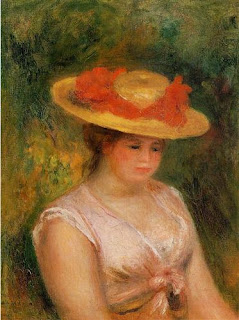
 

Young Woman in a Straw Hat (1901)
Pierre-Auguste Renoir
source Wikiart

Popular in medieval and renaissance times, this “complaint poem” is written in rhyme royal (ababbcc), with seven lines per stanza in iambic pentameter, which I just encountered while recently reading The Brubury Tales (in The Feet’s Prologue), a take on Chaucer’s The Canterbury Tales.  Because this style was unusual for Shakespeare, some critics question his authorship, yet there are parts of the poem that certainly echo of Shakespeare, and coincidentially the first stanza is very close to the first stanza of The Rape of Lucrece.

As for figures of speech, the following are included in the poem:  alliteration, anaphora, hyperbole, metaphor, paradox, personification and simile.  Could I identify them all on the first read?  No, but that means that I’ll have to read The Lover’s Complaint again!

Deal Me In Challenge #4 


The Suppliant Maidens by Aeschylus

“Zeus Protector, protect us with care,
From the subtle sand of the Nile delta
Our ship set sail …….”

Originally thought to be the earliest extant Greek tragedy, having been produced in 490 B.C., more recent evidence places it with a trilogy produced in 470 B.C., making it one of Aeschylus’ later plays. More primitive in style than The Persians, and using the archaic practice of having the protagonist as the chorus, it’s possible that Aeschylus kept it unseen for 20 years, but his motivation for this concealment would certainly be inexplicable.

Continue reading

Metamorphoses – Book III

Book III


Cadmus / Actaeon / Semele / Tiresias / Narcissus & Echo / Pentheus


Cadmus and Minerva (17th century)
Jacob Jordaens
source Wikimedia Commons

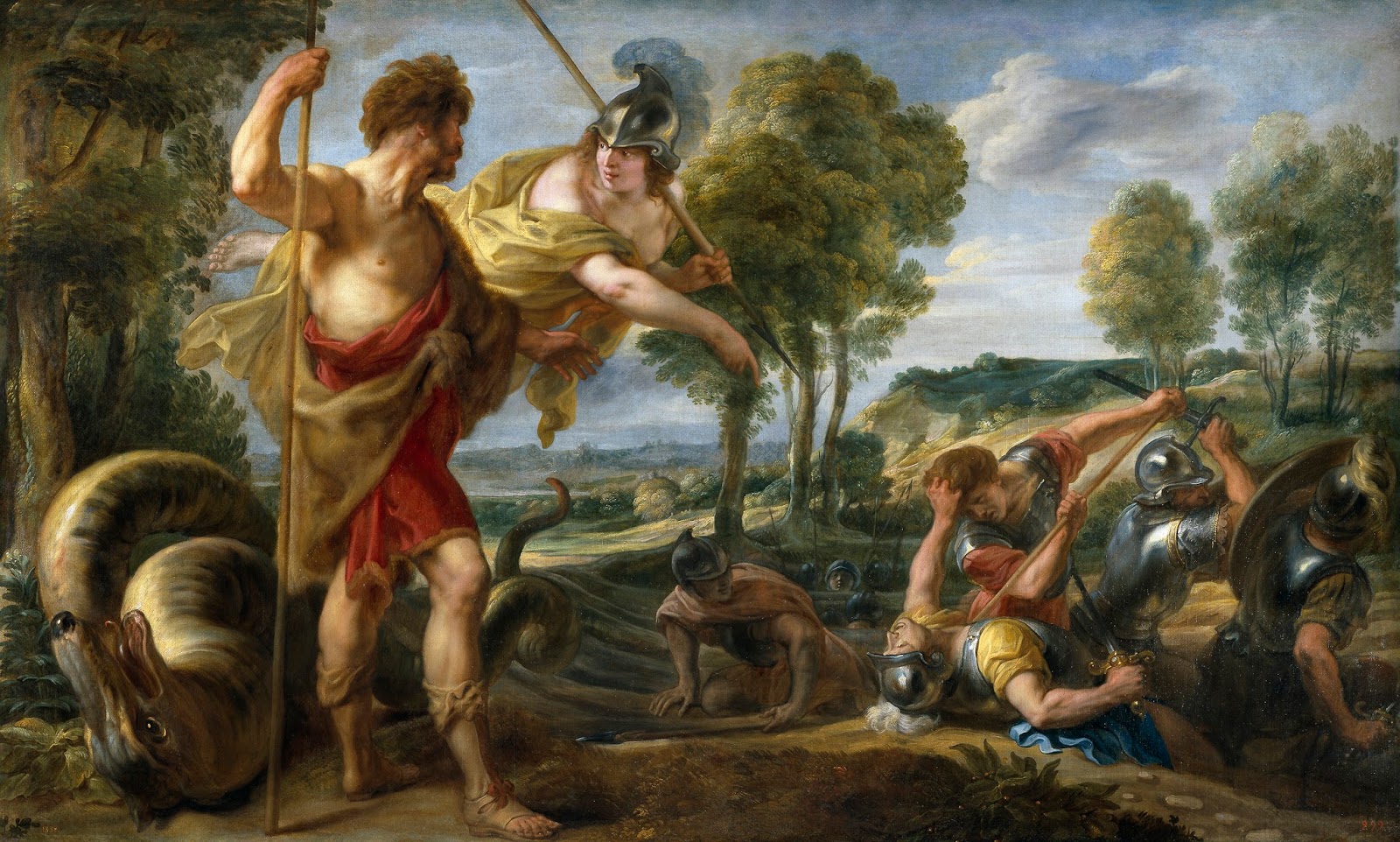
Agenor commands Cadmus to find his sister, Europa, yet while he wanders near and far, success eludes him, until the oracle of Apollo tells him to find a heifer who has never worn a yoke and there in Boeotia, he is to build his city, Thebes.  Cadmus kills a serpent and under Minerva’s orders, plants its teeth from which spring men, but warriors that, in their battle frenzy, kill each other until there are only five left: Echion and four others.  Together they build the walls of Thebes.

Continue reading

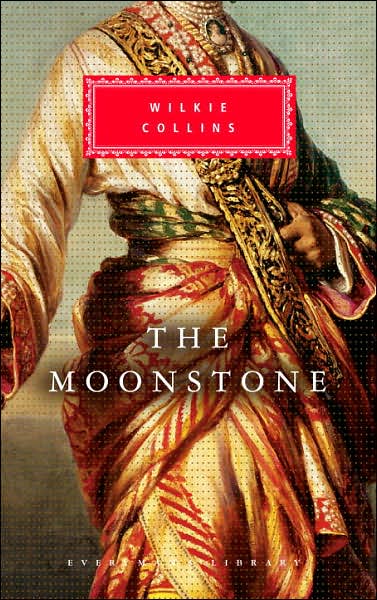
The Moonstone by Wilkie Collins

“I address these lines — written in India — to my relatives in England.”

The Moonstone …….. a yellow diamond, sacred to the Indian people, guarded over by an ancient curse and three Brahmins devoted to its preservation. Yet the revered diamond is stolen.  Time passes, and the Moonstone ends up in the hands of Colonel Hearncastle who returns to England with the ill-fated gem. Angry at the relatives who shun his advances, he leaves the Moonstone in his will to his niece, Rachel Verinder.  Did the Colonel leave the stone as a profitable legacy, or was it intended to wreak destruction on those who had earlier rejected his gruff overtures?

Continue reading

The Autobiography of Alice B. Toklas by Gertrude Stein

“I was born in San Francisco, California.”

Gertrude Stein was a Jewish-American writer who lived in France for over 40 years, becoming an intrinsic part of the Parisian art world in the early 1900s. Part of an avant garde artistic movement that thumbed its nose at past artistic structure, she was intimate with artists, both painters and writers, such as Pablo Picasso, Henri Matisse, Juan Gris, George Braque, Guillaume Appolonaire, Henri Rousseau, Ernest Hemingway, Mildred Aldrich  and many others, who were frequent visitors to her 27 rue de Fleurus location.  She attempted her own literary movement, writing many works that were deemed “incomprehensible”, but received a small following.  Her autobiography is perhaps a more gentle exposure to her “art”.

Continue reading

Metamorphoses – Book II


Book II

Phaeton / The Heliades / Cycnus / Phoebus / Callisto / Arcas The Raven / Coronis, the Raven, the Crow, Nyctimene / Ocyrohoe / Battus / Mercury, Herse, Aglauros / Europa & Jove


The Fall of Phaeton (c. 1604-05)
Peter Paul Ruebens
source Wikimedia Commons

Phaethon reaches the gorgeous palace of Phoebus, where his father confirms his birthright.  Arrogantly, Phaeton requests to drive his chariot, and sadly Phoebus concedes, giving instructions to his son for his safe journey. Thetis unbars the way for her grandson and the horses leap high in the air, but it’s as if they have no rider and control is lost.  Phaethon regrets his decision, yet is paralyzed and the chariot finally plunges down to earth destroying large swaths of it with fire.  The earth cries out and “the Almighty Father” (Jove) hurls a thunderbolt, unseating Phaeton, yet combatting fire with fire.  Phaeton, consumed by the fire, is buried by the river Po by the Naiads, while his father in grief buries his face and shuts out the sun for a day.  Clymene laments with her daughters, the Heliades, at her son’s grave, but her daughters metamorphosize into trees in spite of her attempts to save them.

Continue reading

Shooting An Elephant by George Orwell

“In Moulmein, in Lower Burma, I was hated by large numbers of people — the only time in my life that I have been important enough for this to happen to me.”

Orwell tells of his stint in Burma as a police officer under British colonial rule.  He was despised by the people as an agent of the perceived oppressors, but in spite of his job, his sympathies lay with the natives and he felt constant guilt because of his duties.

Continue reading

Metamorphoses – Book I

“Sing, Ovid, to me of Metamorphoses, and breath all these stories into my mind as a remembrance of your fine craft” ……….  But since there are so many mythological stories in this book, and Metamorphoses is either referred to, or used as a basis for stories in so many other works of literature, I’ve decided to compile reasonably detailed posts.  My mind is certainly not going to hold such detail, so my blog will have to.

Book I

Prologue / The Creation / The Four Ages / The Giants / Lycaon / The Flood/ Deucalion & Pyrrha / Python / Apollo & Daphne / Io & Jove / Syrinx / Io & Jove / Phaeton

“My soul would sing of metamorphoses.
But since, o gods, you were the source of these
bodies becoming other bodies, breathe
your breath into my book of changes; may
the song I sing be seamless as its way
weaves from the world’s beginning to our day.”
Creation begins featureless and confused, both land and seas uninhabitable.  Opposites battle and there is chaos.  “A god” and nature come together to bring unity and organization to the world, and there are two possibilities as to the birth of man:

  1. He is created from a divine seed
  2. Prometheus made him from new-made earth and rainwater.  

To man, “he gave a face that is held high; he had man stand erect, his eyes upon the stars ….”

During the first or golden age, laws and punishment do not exist as all kept faith by righteousness. and man only needed to gather as the harvest was plentiful.

Saturn is banished and his son, Jove’s rule begins, starting the second or silver age.  Jove split the year into seasons, and the change of weather prompted men to build houses.  As the bullock groaned under their yokes we sense a decline in the ease of life.

The third bronze age begat more cruelty and battle, yet it was not sacrilegious.

The fourth and last age, the age of iron, began the foulest of all ages and “the earth saw the flight of faith and modesty and truth” and in their place sprang up wicked behaviour.  Instead of accepting the earth in an almost innocent way, only seeking to fulfill their basic needs, men instead began to seek beyond their needs to their wants, exploring and pursuing treasures which corrupted their simple faith.  The lust for gold and iron brought wars, and distrust and familial discontent and strife followed.
Jove must contend first with the Giants, who attempt to gain control of the sky, and then man who is now scattered all over the earth, doing what he will.  They are tainted and like a pestilence, and he longs to eradicate their infestation. Yet the other gods are worried; if Jove eradicates man, who will worship them, so Jove employs a new plan, enlisting different gods to create a flood and only two people survive:  Deucalion, the son of Prometheus, and his wife, Pyrrha.
Deucalion & Pyrrha (1635)
Giovanni Maria Bottalla
source Wikimedia Commons

Deucalion is overcome when he sees the devastation of the earth and decides to pray to the oracle but is told that they need to throw behind them the bones of the great mother.  Pyrrha is terrified that she needs to offend the Shade of her mother, but her husband says the great mother is earth and they need only throw stones.  Amazingly the stones become the new race of men.

  
Apollo and Daphne (1908)
John William Waterhouse
source Wikimedia Commons

Python, a terrible serpent, slithers from the earth, but Phoebus (Apollo) kills him with his arrows, and the sacred Pythian games were establish in memory of the act.  Daphne, daughter of the river god, was Phoebus’ first love but Cupid, resentful at Phoebus’ mocking of him, shoots him with an arrow that ignites love and Daphne with one that spurns it. Apollo pursues, and as he catches her, in response to a prayer to her father, she is turned into a laurel tree.  Yet Apollo loves her still, and this is why the leaves of the laurel crown the heads of the Roman chieftains.

Juno Confiding Io to the Care of Argus (1660)
Claude Lorrain
source Wikimedia Commons

The river god, Inachus wept for his missing daughter Io. She is fleeing the god, Jove, who catches her and rapes her, yet to hide his deed from his wife, Juno, he turns Io into a beautiful white cow.  Yet Juno is not easily fooled and she sets a guard on Io, Argus of the hundred eyes, who never sleeps with all closed at once.  Jove finally feels compassion at Io’s plight and sends Mercury to lull Argus to sleep with his reed pipes with a song of Syrinx (who fleeing from Pan was turned into a reed), and then he cuts off his head. Juno set the eyes of Argus into the tale of a peacock, whereas Io returns to her original form in her refuge on the banks of the Nile and becomes the goddess, Isis.

Io’s son by Jove, Epaphus, mocked the son of Phoebus, Phaeton’s, claim that the Sun was his father.  Mortified, he asks Clymene, his mother, for proof and she confirms the truth, sending him across Ethiopia and India to Phoebus’ palace.

Mercury, Argus and Io (1592)
Abraham Bloemaert
source Wikimedia Commons

From O’s brilliant post, I realized that it would be fun and helpful to add the transformations in each book in a more obvious form than merely reading of them in the text.  So here they are!

Metamorphoses

Chaos  ❥  Creation
Golden Age ❥  Silver Age  ❥  Bronze Age  ❥  Iron Age
Giant’s Race  ❥  New Race
Lycaon  ❥  Wolf
Irreligious, Combative Men  ❥  Deucalion & Pyrrha ⇒ (via Rocks)  ❥  New Mankind
Daphne  ❥  Laurel Tree
Io  ❥  White Heifer  ❥  Io  ❥  Isis
Syrinx  ❥  Marsh Reeds  ❥  Panpipes
The Eyes of Argus  ❥  Peacock’s Tail

Metamorphoses – Book I