The Monk by Matthew Lewis

The Monk“Scarcely had the abbey-bell tolled for five minutes, and already was the church of the Capuchins thronged with auditors.”

Wow! What an appalling book!  I had expected something scary but I never expected something quite so perverted.  It’s melodramatic and sensational and, while the writing is good, the plot is not necessarily subtle or nuanced. At first, it reminded me of The Mysteries of Udolpho but I soon realized that it was much worse, much, much darker.


Set in Spain during the Inquisition, Lewis’ story follows three main storylines with a cast of intertwining characters.

Continue reading →

Ginger Pye by Eleanor Estes

Ginger Pye“Ginger’s eyes had always been beautiful, gay, sparkling, laughing and intelligent”

Jerry and Rachel Pye live with their mother and travelling bird-expert father in the fictional town of Cranbury, Connecticut which Estes based on her hometown, New Haven.  There is nothing Jerry wants more than a dog, and even has one picked out, as the Speedy’s dog has just had puppies.  When his mother agrees with his plans, he is ecstatic but he has one barrier to having his dream realized.  Money.


Continue reading →

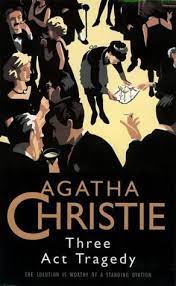
Three Act Tragedy by Agatha Christie

Three Act Tragedy

Three Act Tragedy: “Mr. Satterthwaite sat on the terrace of ‘Crow’s Nest’ and watched his host, Sir Charles Cartwright, climbing up the path from the sea.”

Also Published As: Murder in Three Acts

Detective:  Hercule Poirot

Amateur Detectives: Mr. Satterwaite, Sir Charles Cartwright, Hermoine “Egg” Lytton

Published: 1934

Length: 224 pages

Setting:  Cornwall, Monte Carlo,

Continue reading →

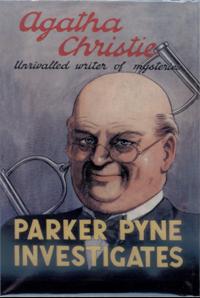
Mr. Parker Pyne Investigates by Agatha Christie

Mr. Parker Pyne Investigates

Parker Pyne Investigates: “…. the mere sight of Mr. Parker Pyne brought a feeling of reassurance.  He was large, not to say fat; he had a bald head of noble proportions, strong glasses, and little twinkling eyes.”

Detective: Mr. Parker Pyne

Published: November 1934

Length: 251 pages

Setting: London, Geneva, Paris, Venice, Trieste, Constantinople, Damascus, Iraq, Tehran, Shiraz, Delphi, Palma, Dartmouth and other places

Continue reading →

The Toilers of the Sea (Les Travailleurs de la Mer) by Victor Hugo

Toilers of the Sea“The Atlantic wears away our coasts.”

Victor Hugo must have been a pretty amazing person.  Not only did he have an exceptional grasp of history, but his attention to detail far surpasses your average person and his descriptions illustrate this unusual ability.  Add to that his artistic capacity for drawing, and you have quite an impressive composition of talents. He exhibits all three talents in The Toilers of the Sea, or Les Travailleurs de la Mer.

Running afoul of Napoleon III in 1851, Hugo fled France to Brussels and Jersey, finally settling in Guernsey in 1855 where he purchased Hauteville House in St. Peter Port.  He spent 15 years in exile here.  In his studio at the top of his house, with a stunning view of the harbour, it is there he finished his most famous novel, Les Miserables.  While in Guernsey, Hugo rambled all over the island, often with his son, Charles, and his mistress, Julliette Drouet.  In a notebook, he scrawled copious notes about the reefs, tides, currents and absolutely anything that caught his imagination. Les Travailleurs de la Mer was born out of his excursions.

Continue reading →

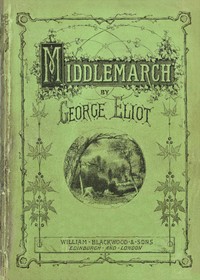
Middlemarch by George Eliot

Middlemarch“Miss Brooke had that kind of beauty which seems to be thrown into relief by poor dress.”

I first read Middlemarch during the summer of    2014 and was mesmerized.  The lives of the inhabitants were painted in detail and somehow came alive until I was part of the community and involved in all their celebrations and struggles.  I finished it in three weeks and then longed to go back.  Well, it’s been over ten years since my last read of it and with some more maturity and the input of others, I was curious as to how I would respond upon my second reading.

Continue reading →

Brideshead Revisited by Evelyn Waugh

Brideshead Revisited“When I reached ‘C’ Company lines, which were at the top of the hill, I paused and looked back at the camp, just coming into full view below me through the grey mist of early morning.”

I went into this read with some trepidation.  I had some experience with books set in this time period of the early to mid-1900s and I haven’t found them very edifying:  The Good Soldier, Testament of Youth, The Great Gatsby, etc. There is some sort of depressing pall that seems to have affected the world after the First World War and authors appear to have contracted an especially virulent dose of it.  Nevertheless, I thought I would give Waugh and try and see if he could surprise me.

Continue reading →