The Club of Queer Trades by G.K. Chesterton

The Club of Queer Trades is a “society consisting exclusively of people who have invented some new and curious way of making money,” and Chesterton’s delightful collection of fantastical tales give us a view of these entrepreneurs who ply their trades in perhaps an unorthodox manner and often with surprising results.

The Tremendous Adventures of Major Brown: The subject of this title seeks out Rupert Grant, an amateur detective, and with the help of Swinburne, the narrator, and Grant’s brother, Basil, a former “mad” judge, they proceed to cleverly solve his dilemma.  Retired and living comfortably and quietly in a tiny picturesque villa, Major Brown has a mania for pansies.  One day while strolling down a lane, he meets a man pushing flowers in a wheelbarrow and is convinced to purchase the pansies among them.  Yet before departing, the man whispers that if the Major will only climb the garden wall, he will see the most admired pansies in the whole of England.  Against his nature, Major Brown accepts a boost up and is flabbergasted by what he sees.  It is not the pansies themselves that catch his attention but the arrangement of them, spelling out “Death to Major Brown.” Never one to quail in any situation, Brown introduces himself to the gardener of the house who takes him inside to meet a peculiar lady who is staring out the window, but he remembers to warn him beforehand not to mention the “jackal.”   They begin to converse but suddenly their conversation is cut short by a blood-curdling screech, “Major Brown, Major Brown, where does the jackal dwell?”  When the Major runs outside, he spies a coal-black decapitated head on the sidewalk, where apparently the screams are coming from.  What is going on?  Who is trying to kill the Major?  And why does idiosyncratic Basil seem unconcerned?   Chesterton ties up his story with his usual aplomb, and yet still leaves you wondering.  There is also a neat contrast between Basil and Rupert, the former using his intellect and the latter acting on impulse.  A very fun tale!

The Painful Fall of a Great Reputation:  Charles Swinburne, the narrator of the last tale, and Basil Grant are travelling on the top of a deserted tramcar, speaking philosophically about the plight of the poor and the perception of them.  Basil declares that in spite of their circumstances, the majority of the poor are good people and that “the very vileness of life of these ordered plebeian places bears witness to the victory of the human soul.”  No sooner has he uttered these words than he spies a man on the street and his astonishment is palpable.  He announces that he’s observing the most wicked man in the world.  When Swinburne requests to know the man’s sins, Grant admits that he has never seen him before this moment.  Swinburne is startlingly perplexed.  How has Basil made his assumption?  But there is no time to question as his friend grabs him and they are off on a chase after the most wicked man in the world.  In a world of fact versus impression and appearance versus reality, how are they to know whom to trust?

The Awful Reason of the Vicar’s Visit:  Swinburne is dressing to meet Basil Grant at a dinner party when suddenly the sound of the doorbell resounds through the house.  It is the Reverend Ellis Shorter who has heard of his friend, Major Brown’s adventures and has come to seek help.  Swinburne, impatient to be off to his engagement, gets impatient with the Vicar’s dodderings and prevaricating whereupon the Vicar gives him leave to go, but states if he does not hear him out before he does, a man will be dead!  He relates a queer story of being kidnapped by a women’s sewing club, and a subsequent photograph of himself that had never been taken.  Swinburne is perplexed and takes the vicar to Basil to sort out the mystery!

Reverend Oliver Maron, Vicar of Lancaster
George Romney 

The Singular Speculation of the House Agent:  Lieutenant Keith Drummond manages to excite Rupert’s suspicions and barely concealed contempt with his larger-than-life stories and exaggerated claims.  Upon Drummond requesting a loan from Basil and claiming a visit to a house-agent, Rupert near demands to accompany him in hopes of exposing sinister purposes.  All four men set off together, and after a curiously unintelligible conversation between the odd little house agent and Drummond, in which the agent presents a ferret, some lizards and a spider, Drummond escapes before the rest.  When they follow him, they come upon a commotion and find that there has been a brawl. Drummond has been part of it, with his clothes torn and his sword, which he commonly carries with him, drawn.  The police get his address, yet Swinburne, Basil and Rupert discover the next day that the address was a fake.  Rupert is exultant with the proof of his suspicions of Drummond’s disreputable character, but Basil merely laughs, claiming that Drummond his one of the most honest men and that truth can be stranger than fiction.  How can this be?  Is some of the mad judge’s madness finally showing through?  The truth will be discovered at the address that doesn’t exist.

Purley, Surrey (now south London)
source Wikipedia Commons

The Noticeable Conduct of Professor Chadd:  Basil Grant doesn’t have many friends, but the ones he does have are a motley collection of idiosyncratic characters.  One day, he is discussing with his friend, Professor Chadd, an eminent ethnologist and expert on the relation of language to savages, the impact of science on the observable knowledge of Zulus versus the knowledge gained by living like a Zulu.  Chadd, a stuffy academic, who has recently been appointed as curator of the Asiatic manuscripts at the British Museum, answers in stuffy, didactic prose.  The next morning, Basil receives a telegram from one of Chadd’s three sisters: Chadd has suffered a mental breakdown and Basil is entreated to come at once.  Upon his arrival, Basil discovers that the Professor will not communicate with anyone and, instead, will only move his legs in a kind of rigid, hopping dance.  The doctor is with him and when Basil approaches, he asks for a moment with his friend.  The observers are surprised to see the respectable Mr. Grant with a paper and pencil, following Chadd about and jotting notes as he goes.  They are further astounded when he begins to hop around in a parody of Chadd.  The situation is further complicated with the arrival of Mr. Bingham of the British Museum. Great Scots!  How can a lunatic be curator of the Asiatic manuscripts?!!  Yet Basil declares to Bingham that they need to pay Chadd £800 per year until he stops dancing.  What?  Has Basil gone mad as well?  Are there two lunatics, one or none?

Bedford Gardens, Bloomsbury
source Wikimedia Commons

The Eccentric Seclusion of the Old Lady:  Swinburne is walking with his friend, Rupert Grant, the amateur detective, when Grant spots a milkman walking ahead of them.  Suspicious because of the careless way the man carries his milk can, Grant swears that if they follow him, they will find a mystery at the end of the trail.  When the milkman disappears down area steps to a basement, Grant follows and emerges triumphant.  He has heard a cry for help in the downstairs room, repeating, “When shall I get out?  Will they ever let me out?”.  Determined to rescue the imprisoned lady, they enlist Basil’s help and with his usual aplomb, Basil gains entry to the house but when he emerges, he claims that the men inside are good chaps.  Incensed, both Rupert and Swinburne insist on entering the house themselves to find the victim.  The “chaps” allow them in but a fight ensues in which our three rescuers are pinned.  Will they get free to release the poor woman who’s been detained?  Yet with Basil Grant, nothing is every as it seems.

Milkman and cart 1900s
source Wikimedia Commons

In Basil Grant, Chesterton creates, not a scientifically brilliant detective like Sherlock Holmes, but one who is astute in the workings of human nature, which makes for truly fascinating cases.  Another fantastic effort by Chesterton who keeps the reader guessing, and never quite sure whether up is down or down is up in The Club of Queer Trades.
Erewhon by Samuel Butler

“If the reader will excuse me, I will say nothing of my antecedents, nor of the circumstances which led me to leave my native country; the narrative would be tedious to him and and painful to myself.”

I’ve been reading oodles of satirical fiction lately and entirely inadvertently, as this genre just seems to be dropping onto my lap.  My first taste of utopian satire was given to me by Voltaire’s Candide, which left me rather unsure if we were going to be good friends.  Then came Utopia by Thomas More and I was firmly hooked, only to have my enjoyment of it further strengthened with my read of Gulliver’s Travels.  My most recent Classics Club spin book landed me with Erewhon by Samuel Butler.  I was somewhat familiar with Butler from my skimming of some of his translation of The Odyssey (wouldn’t recommend it for a first read) so I wasn’t quite sure what to expect.  Would he be a Voltaire, or a Swift or somewhere happily in between?

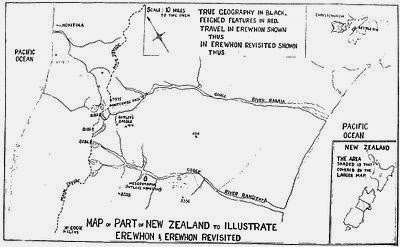
The narrator of Erewhon, Higgs, tells the reader of his journey to a fictional country, in fact, modelled on the country of New Zealand where Butler spent the early part of his life.  Higgs loses his native guide, Chowbok, on a trek into the wild, and manages to wander into a society who, while they resemble the human race, have completely different standards for managing their nation.

Map of part of New Zealand to illustrate
Erewhon & Erewhon Revisited
source Wikipedia

Butler explicates on some rather curious aspects of Erewhon society.  For a start, the Erewhons view machines as dangerous to their community and anyone caught with one can be at risk of being put to death.  Machines are regarded as having a greater ability than people in that they are growing and evolving at an exponential rate and thus, they have the capacity to enslave mankind.  The Erewhons also view immorality as a sickness and actual illness as a crime.  For example, a man who has lost his wife to illness is tried as a criminal, yet is lauded for his action of raising her insurance premium immediately before her death and, therefore, benefiting from it before he’d paid even two premiums.  There are other curious idiosyncrasies to this society, such as the repellent manner with which they view birth, the rights of animals and vegetables, and their promotion of the idea of unreason, claiming that reason could not exist without it.

Samuel Butler’s Mesopotamian Homestead
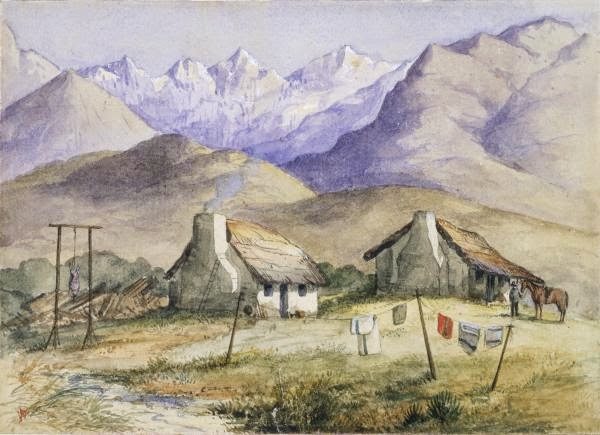
New Zealand
source Wikimedia Commons

Butler claimed that Erewhon nearly wrote itself with some resistance from its author:

“I did not want to write Erewhon.  I wanted to go on painting and found it an abominable nuissance being dragged willy-nilly into writing it.  So with all my books — the subjects were never of my own choosing; they pressed themselves upon me with more force than I could resist.  If I had not liked the subjects I would have kicked and nothing would have got me to do them at all.  As I did like the subjects and the books came and said they were to be written, I grumbled a little and wrote them.”

Apparently it was Butler’s aim to make a commentary on the ills of Victorian society, but I had a difficult time finding Butler’s voice in the prose.  With Voltaire or Swift, it was easier to see the issues that they were targeting with their criticism, but Butler was more obscure.  He presented issues, but was less clear as to which side of the fence he stood, as some of the most ridiculous laws often had an element of truth to them.  In fact, in a second preface to the book, Butler had to correct some misconceptions with regard to his novel, stating that contrary to the assumption that he was showing Darwin’s theory of evolution as absurd, in fact, he had a healthy respect for it, and he goes on, quite charmingly, to blame the Erewhons for all the inconsistencies in the story. For me, the novel soon degraded into great swathes of philosophical narrative with little to prop it up.  I love philosophy, but to engage a reader one needs the background of a story to support it; Butler attempted the reverse in hoping that his philosophy would prop up his story.  This approach only served to weaken the novel as a whole.

In spite of the novel’s mediocrity, it is quite obvious that Butler was a great thinker who explored some fascinating ideas that remain with us in the 21st century.  His analogy between crime and disease, the over-emphasis on appearance of an individual, and the especially significant topic of how humans interact with technology and their enslavement to it are all powerful issues that still resonate with us through the centuries.

” …. so ingrained in the human heart is the desire to believe that some people really do know what they say they know, and can thus save them from the trouble of thinking for themselves, that in a short time would-be philosophers and faddists became more powerful than ever, and gradually led their countrymen to accept all those absurd views of life …… I can see no hope for the Erewhonians till they have got to understand that reason, uncorrected by instinct, is as bad as instinct uncorrected by reason ….”

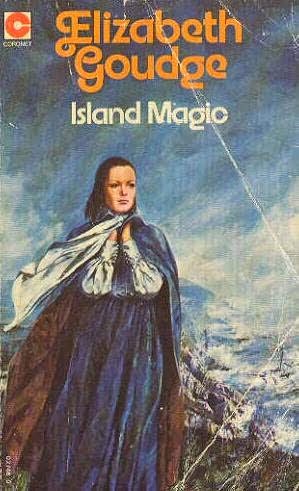
Island Magic by Elizabeth Goudge

“The little fishing boat rounded the buoy and came in sight of the Island.”

Lory at Emerald City Book Review hosted an Elizabeth Goudge Reading Week from April 24-30th and for the event, I chose to read Goudge’s first book, Island Magic. Goudge is an author that pops up here and there on different blogs and based on the reviews I’d read, I was looking forward to an enjoyable read.

It is the year 1888, and Andre du Frocq lives with his wife Rachel and their five children in the town of St. Pierre in the Channel Islands.  Their life is hard as they eke out a living on Bon Repos, the family farm, yet the love they hold for each other and the struggles they face knit them together against the odds.  However, in spite of their courage, the farm is failing and the family must find a way to survive or abandon the only life they have known.

A ship is wrecked on the treacherous rocks of La Catian Roque, and a dishevelled stranger is brought into their midst.  Will his appearance be the saviour of Bon Repos and the du Frocq’s, or will his presence be the catalyst that tears the family apart?

photo courtesy of Neil Howard
Creative Commons

Goudge’s detailed and poetic descriptions paint a story with vibrant life.  Not only does the reader become intimately familiar with the du Frocq family, their house, Bon Repos, and the village of St. Pierre become almost like characters themselves and you are left with a feeling of fellowship with not only those who live within the book’s pages but with the setting itself.  I’m firmly convinced that if I had the good fortune to visit the Channel Islands, I would be looking for the du Frocq’s and all the places they frequented without a second thought!

photo courtesy of Neil Howard
Creative Commons

Gouge has masterfully crafted a book that on the surface appears like light fiction, yet the deep psychological insight, the innate knowledge of human nature, and the paradoxes of life that Goudge explores, makes it much more than a common contemporary novel; instead it is a unique and unparalleled visit into the past which allows you to inhabit a world that is both new, yet familiar, and experience the human struggles and joys which are universal to all.

photo courtesy of Neil Howard
Creative Commons

For anyone wanting to find out more about Elizabeth Goudge, please check out The Bookwyrm’s Hoard biography post, which contains some excellent information.

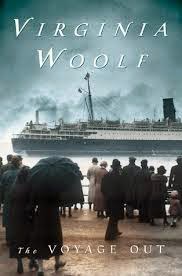
The Voyage Out by Virginia Woolf

“As the streets that lead from the Strand to the Embankment are very narrow, it is better not to walk down them arm-in-arm.”

O at Behold the Stars is a Virginia Woolf aficionado and when she suggested a read-along of Woolf’s, The Voyage Out, I was immediately on board (excuse the pun!).  I’d loved To The Lighthouse, but Mrs. Dalloway had left me in a rather uncertain and confused stupor, while Orlando somehow didn’t resonate with me at all, so I wondered how I would react to this novel.  It could have gone either way.

The Voyage of Life Childhood (1842)
Thomas Cole
source Wikipedia

“The voyage had begun, and had begun happily with a soft blue sky, and a calm sea.  The sense of untapped resources, things to say as yet unsaid, made the hours significant, so that in future years the entire journey perhaps would be represented by this one scene, with the sound of sirens hooting in the river the night before, somehow mixing in.”

The Voyage of Life: Youth (1842)
Thomas Cole
source Wikipedia

In The Voyage Out, we meet a myriad of characters, but the main focus is on Rachel Vinrace, a young sheltered English girl who departs on a voyage with her uncle and aunt to South America.  The only accomplishment in life that she has mastered is playing the piano, which she does with artistic efficiency.  During the voyage and at their destination she encounters a number of characters, from Mr. and Mrs. Dalloway (do they sound familiar?  Yes, these are the characters from Woolf’s later novel, Mrs. Dalloway) on the ship, to Hirst and Hewet, two young men who capture her interest and stimulate her introspection, as well as various other male and female characters.  Through this cast Woolf conducts an examination, from the microscopic world of human nature, giving the reader an insightful tapestry of the faults and dreams of the various personalities, to the macroscopic world of Edwardian England with all its characteristics of pleasure, luxury and hope. Just as the era brought a change in social structure, we can see changes in Rachel, as she is rather abruptly pulled from her sheltered, unadventurous world and introduced into active society and more pointedly, the admiration of men.  Still, the alterations in Rachel’s character from her experiences, happen in a rather muted and introspective manner and one must wonder at the end, if any true changes occurred at all.

The Voyage of Life: Manhood (1842)
Thomas Cole
source Wikipedia

The sense of isolation seeps and oozes out of the pages of the novel and its characters appear immersed in it, as if in a fog.  The voyage itself isolates the characters from the society with which they are familiar, the country they visit being new and exotic, yet the book also indicates an emotional detachment from each other and even oneself.

“…… To feel anything strongly was to create an abyss between oneself and others who feel strongly perhaps but differently ….”

“….. What solitary icebergs we are, Miss Vinrace!  How little we can communicate! ….”

“….. A feeling of emptiness and melancholy came over them; they knew in their hearts that it was over, and that they had parted forever, and the knowledge filled them with far greater depression than the length of their acquaintance seemed to justify.  Even as the boat pulled away they could feel other sights and sounds beginning to take the place of the Dalloways, and the feeling was so unpleasant that they tried to resists it.  For so, too, would they be forgotten ….”

” …… She became a ship passing in the night — an emblem of the loneliness of human life, an occasion for queer confidences and sudden appeals for sympathy…..”

“Although they had talked so freely they were all uncomfortably conscious that they really knew nothing about each other.” 

A sense of beginnings and endings also permeate the pages, and while Woolf’s delightful prose and descriptions can bring a lightness to the situations, there is an uncomfortable sense of the unknown that hovers just outside of our sight.  It is life, life in an essence that Woolf is a master at capturing.

The Voyage of Life: Old Age (1842)
Thomas Cole
source Wikipedia

   
The word that jumps out at me when I think of this novel is capricious.  Woolf stream-of-consciousness style of writing allow ideas and images to float in and out of the narrative, weaving a tapestry of a story, and like a tapestry, the picture is not always crystal clear.  As the character of Rachel does not settle comfortably into her society and her surroundings, neither does this novel sit comfortably with a recognizable label or description.  It exemplifies the Woolf I’m beginning to know, and while I’m not yet at ease with her writing, I can certainly say that I’m getting used to it and am developing an enthusiastic appreciation.

Other Reviews:

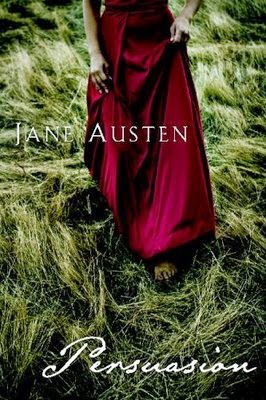
Persuasion by Jane Austen

“Sir Walter Elliot, of Kellynch-hall, in Somersetshire, was a man who, for his own amusement, never took up any book but the Baronetage; there he found occupation for an idle hours, and consolation in a distressed one ……”

Persuasion was the only major Austen novel that I had not read, so I was thrilled when Heidi at Literary Adventures Along the Brandywine announced her read-along.  I wasn’t expecting to enjoy the novel quite as much as Pride and Prejudice, one of my favourites, but I’d heard enough positive reviews to whet my curiousity. And so I plunged in.

Anne Elliot is one of three daughters of Sir Walter Elliot, a vain baronet who is obsessed with the peerage.  While her sister, Elizabeth, is somewhat bossy, and Mary proves a proud, yet questionable, invalid, Anne shows a quiet reserve with more than average good sense and judgement.  Eight years ago, her engagement to Captain Frederick Wentworth was almost certain, but without a mother for guidance, and influenced by a respected friend of the family, Lady Russell, she broke off the engagement with a deep regret.

Manor House, Somersetshire (Halsway Manor)
source Wikipedia

Now, eight years later, Anne is confronted with a number of upheavals in her life. Not only does she and her family have to leave their ancestral home, Kellynch-hall, because of reduced finances, but Captain Wentworth has returned, and to further complicate matters, his sister and her husband are the new tenants of Kellynch-hall.  The blows would have reduced a weaker woman to despondency, but Anne is not only resourceful, she has learned to suffer life’s troughs with resilience, and her positive attitude brings her through the stormy seas.

Initially, Captain Wentworth is all resentment and cool responses, but gradually, as he sees Anne’s quiet sacrifices, calm demeanour, and strength of character, his acrimony softens towards her.  Yet, at the same time, he appears to be playing the eligible bachelor, and it is uncertain as to which woman he will chose to be Mrs. Wenworth.  Both of Anne’s sisters-in-law, Henrietta and Louisa, vie for the title and Anne must watch the perceived courtships with an uneasy mind.  A near-tragedy causes introspection in more hearts than one, Mr. Eliot, Anne’s cousin and heir to Kellynch, enters the picture to further obscure the matters of courtship, but the final culmination exemplifies that a steadfast love is strengthened by misfortune and time, and the past lovers reunite in a now more matured and seasoned alliance.

Lyme Regis

Persuasion is a tale of new beginnings and second chances, not only for Anne and Wentworth, but for the characters surrounding them. Anne’s family, because of their financial straits, must begin a new life in Bath; both the Musgrove girls will be looking forward to the start of their married lives; and even Mrs. Smith, who has found herself in poverty after her husband’s death, is given a second chance at the end of the book as, with help from Wentworth, she recovers money from her husband’s estate that will help her to live more comfortably.

While Austen, as per her usual method, allows the reader to examine certain segments of society, in this book especially, she seems to be highlighting the movements between the social classes, either by marriage or by economic necessity.  Within Anne’s family, we not only have the family as a whole dropping in perceived standing by the lack of money to maintain their position at Kellynch, we also have the numerous characters dealing with the descent with different outlooks.  Sir Walter is obsessed with his Baronetage book and the importance of his place within the realm of society.  At first, he employs denial as to their new position, but thanks to a rather blind self-importance, is able to be persuaded to accept their new situation as if nothing has practically changed.  Anne’s sister, Elizabeth, too, acts as if nothing has altered, yet you can see at certain points in the novel that she is aware of the disadvantage of their new situation and that they must have a heightened awareness of appearance to maintain the respect and dignity that they view as a societal necessity.  Anne does not seem to be bothered by the family’s reduced circumstances, as position to her comes secondary to character and honesty and integrity.  In the old governess, Mrs. Smith we can examine what has come from her rise in stature upon her marriage, and then her subsequent fall upon her husband’s death when she finds herself in financial troubles.  Finally, cousin William Elliot falls from his seat of grace with his scandalous behaviour at the end of the novel.

Pulteny Bridge, Bath
18th century
source Wikipedia

We are given the title of Persuasion for the book, yet Austen did not choose this title; instead her beloved brother, Henry, gave the book its name, as it was published posthumously, and there is no indication of what Austen’s preferred title would have been.  Cassandra Austen, Jane’s older sister, reportedly said that a name for this novel had been discussed, and the most likely title was “The Elliots,” but as Austen passed away before selecting a definitive title, no one will know for certain her final choice. Nevertheless the word “persuasion”, or a derivative of it, occurs approximately 30 times in the novel, a good indication that it is one of the main themes.  Yet as I finished the novel, what metamorphosed out the “persuasion” was the stronger theme of duty.  While Wentworth still appears to be disgruntled by Anne’s choice to follow her family’s wishes in breaking off their engagement eight years before, she however appears to have a different sentiment.  At the end of the novel, Anne concludes:

“I have been thinking over the past, and trying impartially to judge of the right and wrong, I mean with regard to myself; and I must believe that I was right, much as I suffered from it, that I was perfectly right in being guided by the friend whom you will love better than you do now.  To me, she was in the place of a parent.  Do not mistake me, however.  I am not sayng that she did not err in her advice.  It was, perhaps, one of those cases in which advice is good or bad only as the event decides; and for myself, I certainly never should, in any circumstance of tolerable similarity, give such advice.  But I mean, that I was right in submitting to her, and that if I had done otherwise, I should have suffered more in continuing the engagement than I did even in giving it up, because I should have suffered in my conscience.   I have now, as far as such a sentiment is allowable in human nature, nothing to reproach myself with; and if I mistake not, a strong sense of duty is no bad part of a woman’s portion.”

In the book Anne is consistently dutiful, to her friend, Mrs. Smith, to her family and, more importantly, to her own conscience; and so we learn that a strong sense of duty and obedience to it is more crucial than any personal inclinations or aspirations.

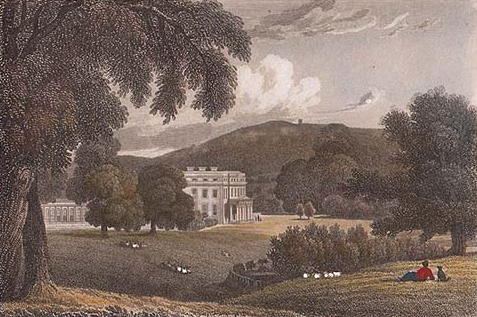
Sandhill Park, Somerset (1829)
J.P. Neale/W. Taylor
source Wikipedia

Persuasion deviates from Austen’s usual style and content.  By having a hero without ties to nobility, Austen explores in depth an area of society that had to date been given only a cursory treatment by her. Anne, as an older heroine, is presented in a new way; the reader learns of her character not necessarily through how she actually behaves, but more through her silence and by seeing her in contrast to the intensely flawed people around her. Contrary to other Austen novels, the romance develops almost in isolation, as the characters hold little conversation with each other until the end of the novel.  While the novel was interesting for these new features, I felt it to be weaker than Austen’s previous novels, lacking a certain plausibility at times and a solid cohesiveness.  As she was writing Persuasion, Austen was ill with the disease that would eventually kill her, and because of this fact, her usual detailed pattern of revision was not completed; in this light, the diminished quality of the novel can certainly be understood.  However, while not shining with her usual brilliance, Austen still produced a jewel in its own right, and perhaps more intriguing because of its flaws, as these flaws contribute to its uniqueness.  As the character of Anne experiences a new beginning in Persuasion, so does the novel indeed appear to symbolize a new beginning by Austen, this beginning sadly cut short due to her untimely death.


Further reading:


Doctor Marigold by Charles Dickens

“I am Cheap Jack, and my own father’s name was Willum Marigold.”

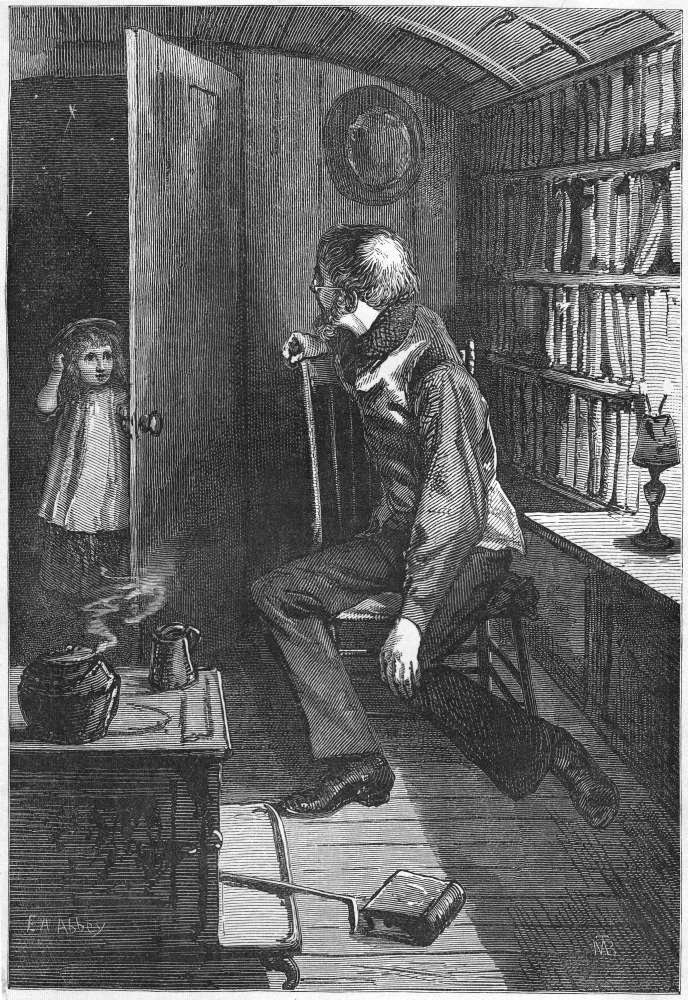
And so we are introduced to Doctor Marigold, bestowed with such an unusual first name for a Cheap Jack in honour of the doctor who delivered him.  I did not imagine him in the appearance of the rather dandified peasant-gypsy looking gentleman on the cover to the left, but I suppose that’s beside the point.  In any case, Doctor Marigold, as you know, is a Cheap Jack. For those who don’t know what a Cheap Jack is (I raise my hand), it’s a hawker who deals in bargain merchandise, anything from plates to frying pans to razors to watches to rolling pins and everything in between.  Marigold has followed his father’s trade like a good son.

Doctor Marigold 1868
E.G. Dalziel
source Victoria Web

Soon Marigold marries a woman who is not a bad wife by his estimation, but whoa, does she have a temper!  She berates and torments her husband, and later beats their daughter, Sophy, while Marigold stands and watches.  Why doesn’t he intervene?  Because it causes more of a ruckus than observing, and then people suspect that he is beating his wife.  Wimp.

Sophy grows up especially attached to her father and fearful of her mother — no kidding.  Yet with their vagrant lifestyle, she becomes ill and passes away.  One fateful day, the now childless couple come across a mother beating her tearfully pleading daughter, and with a shrill scream his wife tears away and drowns herself in the river.  Good riddance.

Lonely Marigold now roams the country alone, until one day he comes across a deaf and dumb child whom he purchases and calls Sophy.  They are devoted to each other for years, until, when she reaches sixteen, he decides to have her educated and puts her in an institution for two years.  When he returns she is thrilled to see him, but as they resume their lives, he learns that she has acquired a suitor.  Old generous Marigold decides he cannot stand in the way of their love —- although Sophy is willing to give it up to stay with her father —- and allows them to marry.  The couple then move to China and five or so years later return with Marigold’s granddaughter for a reunion.

Grandfather
E.A. Abbey
source Victoria Web

Again, Dickens is somewhat of a trial to read.  On one hand, his stories engage you for being overly maudlin and nauseatingly sentimental but I can never shake the feeling that he seems to think that as long as he uses affected emotional scenes and obscurely clever sentences, he can win adherents with such contrived effort.  I find it almost insulting. However, as much as the first part of the story really irritated me, I must admit, I somewhat fell for it in the end. Perhaps Dickens achieved his desired effect after all.

This short story, so far is my least favourite of my Deal Me In Challenges.  We’ll see what next week brings.

Deal Me In Challenge #7 – Three of Clubs

Grace Abounding to the Chief of Sinners by John Bunyan

“In this my relation of the merciful working of God upon my soul, it will not be amiss, if, in the first place, I do, in a few words, give you a hint of my pedigree, and manner or bringing up; that thereby the goodness and bounty of God towards me, may be the more advanced and magnified before the sons of men.”

John Bunyan was born in Elstow, a village near Bedford in Bedfordshire, and was baptized on November 28, 1628, the first son of Thomas Bunyan and his second wife.  In 1644, he joined the Parliamentary army as a soldier and was active until 1647.  The year 1655 saw him joining the congregational church at Bedford and the following year he was actively disputing with the Quakers, out of which was born his first book, Some Gospel Truths Opened.  With the death of Oliver Cromwell in 1658 and the restoration of the monarchy, the persecution of Non-Conformists began. Bunyan was given every opportunity to conform by the surprisingly tolerant Royalists, but he was staunchly resistant to a compromise of principles that could weaken the faith of his followers.  Prevented from preaching by various imprisonments, Bunyan turned to writing.  Grace Abounding is a record of his spiritual experiences from his first meaningful encounter with God to his life of preaching.

Bunyan admits to having a lack of religion in his upbringing and it was only later, with some the influence from his wife, that he came to entertain thoughts of spirituality:

“But I observe, though I was such a great sinner before conversion, yet God never much charged the guilt of the sins of my ignorance upon me; only he showed me I was lost if I had not Christ, because I had been a sinner; I saw that I wanted a perfect righteousness to present me without fault before God, and this righteousness was nowhere to be found, but in the person of Jesus Christ.”

After hearing a sermon preached from the Song of Songs, Bunyan was struck by the love of God and came to the following conclusions:

That the church and so every saved soul, is:

  1. Christ’s love, when loveless
  2. Christ’s love without a cause
  3. Christ’s love when hated to the world
  4. Christ’s love when under temptation, and under desertion
  5. Christ’s love from first to last

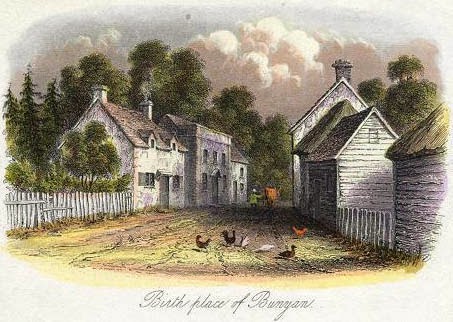
Birthplace of John Bunyan
source Wikipedia

Though Bunyan had moments of euphoric revelation and joyful epiphanies, his conversion was still fraught with doubts and fears.  Had he abused God too much for forgiveness?  Was forgiveness given to others but not to him?  Like Esau, had he sold his birthright and would never be able to regain it?  His agonies leapt off the page with a startling clarity:

“Yet I saw my sin most barbarous, and a filthy crime, and could not but conclude, and that with great shame and astonishment, that I had horribly abused the holy Son of God; wherefore, I felt my soul greatly to love and pity him, and my bowels to yearn toward him; for I saw he was still my Friend, and did reward me good for evil; yea, the love and affection that then did burn within to my Lord and Saviour Jesus Christ did work, at this time, such a strong and hot desire for revengement upon myself for the abuse I had done unto him, that, to speak as then I thought, had I a thousand gallons of blood within my veins, I could freely then have split it all at the command and feet of this my Lord and Saviour.”

Bunyan eventually is able to reason his way through his doubts and come to peace with his faith.  He realizes that while he prayed fervently when he was in the midst of troubles, he neglected to pray for himself to avoid the pitfalls and temptations.  The sense of being a sinner did not ever leave him completely, but as he grew, so did his understanding of the depth and breadth of the grace of God, and he was finally at peace.

Stained glass of Bunyan in prison
source Wikimedia Commons

At the end of the book, Bunyan explains the cause of his imprisonment, which appears to be directly related to his refusal to use the Book of Common Prayer.  When questioned by the justices, Bunyan stated that he would be pleased to use the Book, if the justices could so kindly point to him in Scripture where the particular book was referenced.  The justices, however, viewed the Book of Common Prayer as second only to the Bible.  Bunyan was stubborn, the justices unyielding, and so began Bunyan’s time in the gaol. When released from prison in 1672, on a declaration of indulgence issued by the king under a new wave of religious tolerance, Bunyan returned to preaching, this time legally, and continue as the pastor of the Bedford Meeting, a position he had been given while languishing in prison a year before.  In 1688, while visiting London, he contracted a fever and passed away on August 31st.

The title Grace Abounding to the Chief of Sinners comes from two Biblical scripture references:

“Moreover the law entered that the offence might abound.  But where sin abounded, grace abounded much more, so that as sin reigned in death, even so grace might reign through righteousness to eternal life through Jesus Christ our Lord”  Romans 5: 20-21

“This is a faithful saying and worthy of all acceptance, that Christ Jesus came into the world to save sinners, of whom I am chief.”  1 Timothy 1: 15

My absolute favourite part of this book was when Bunyan realized the impact of conversion.  His fellow men and women were suddenly lovely to his eyes and he viewed them “like a people that carried the broad seal of heaven about them.”  What a transformative experience!  Instead of being irked, or disdainful, or petty, or indifferent toward our fellow man, if we could see them as beloved children of God, how differently we might treat them!

John Bunyan at the Gates of Heaven
William Blake
source Wikimedia Commons

I must say that while I liked this read, so far I’m finding the biography list rather quirky.  Taken separately, the books have been enjoyable, but when taken together, they don’t strike me as a concise, chronological order of biographies that perhaps expand ideas or give insight into changes in societies or thought.  Ruth, I’d love to know what you thought of the novel list as a whole.  The other remaining lists (plays, history and poetry) look much better, but I’m not that impressed with this one.

This book counts towards my Reading England Challenge and since Cat at Tell Me A Story has been doing such a wonderful job with educating us as to the English counties along with her novels, I thought that I should add at least a few photos of Bedfordshire, where the narrative takes place.

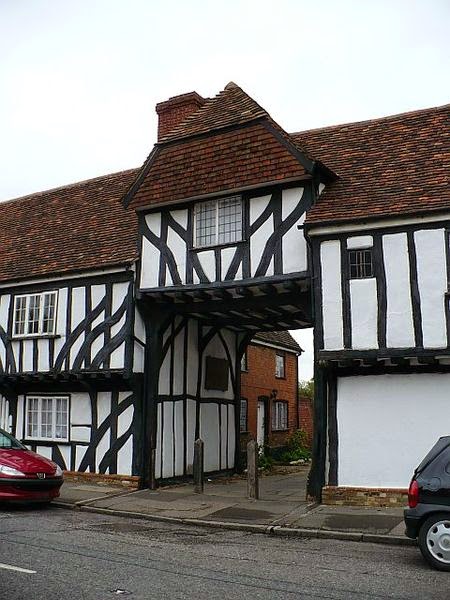
Elstow

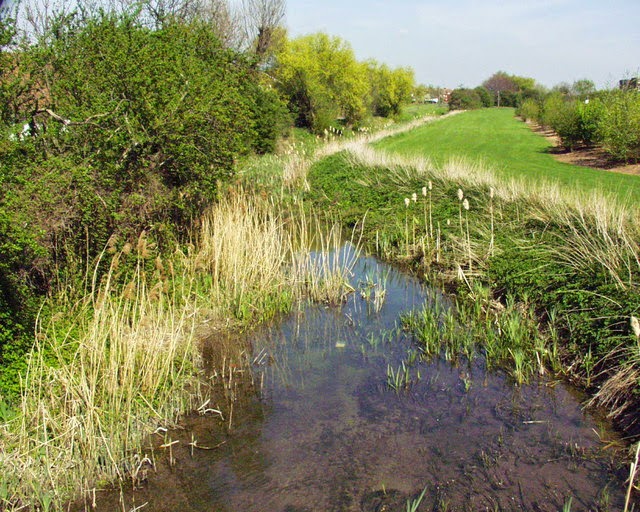
Elstow Stream

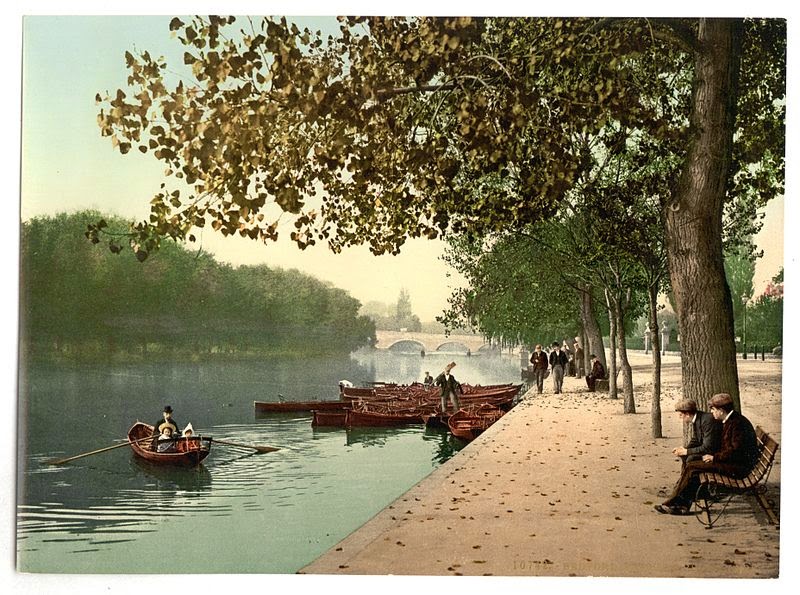
Bridge and Promenade

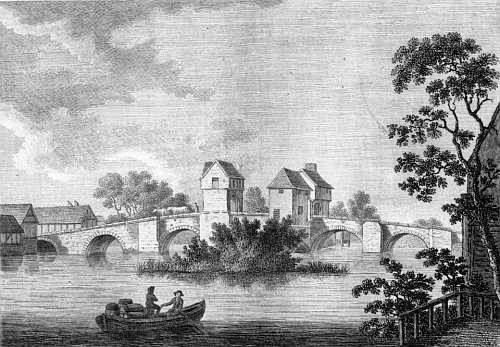
Bedford Bridge

Orlando: A Biography by Virginia Woolf

“He — for there could be no doubt of his sex, though the fasion of the time did something to disguise it — was in the act of slicing at the head of a Moor which swung from the rafters.”

My experience with Woolf’s writing is limited yet expanding.  I loved reading To The Lighthouse for its somewhat dream-like qualities and was rather pleasantly lulled by its stream-of-consciousness style.  Mrs. Dalloway I enjoyed, but I didn’t connect with it as much as I’d hoped and was left in a somewhat puzzled frame of mind at the end.  After reading Orlando, I was left with this same feeling.  What exactly did I just read and who was this Orlando?

Orlando is a young man born in the reign of Elizabeth I, and the novel follows him through his youth, as he has an affair with a Russian princess, cares for his ancestral estate, travels on diplomatic missions, etc.  The theme of writing is also explored, in his rejection by a famous poet and various other allusions. Finally he falls into a trace and, lo, awakes a woman.  This transformation does not seem  to surprise him, and she carries on her life as if nothing remise has occurred, yet upon returning to England she finds her estate embroiled in financial turmoil.  While remaining a woman, she fashionably switches between genders, eventually marries a sea captain, wins the lawsuit with regard to her property and that’s about it.  Woolf herself acts as an historical biographer and with her comic and satirical descriptions of certain people, I wasn’t sure if she was parodying herself as narrator, or taking a poke at a particular figure of her time and society.

Honestly I don’t have much to say about the book.  Twentieth century literature always does this to me.  I expect to be “informed and amused,” as books attempted to do historically (see my Gulliver’s Travels post for some extra information on writers’ intent) and end up somewhat disappointed when I’m only amused.  While I enjoyed the book, it would probably get only 3.5 stars from me.  In spite of my resolution to love it, 20th century literature always falls short.  Certainly the stream of consciousness writing is an interesting experiment, the disjointed prose perhaps a comment on the human psyche and the other artistic experiments are worth examining, but I’m always left with an empty feeling at the end.  What was the author really trying to say?  What did I learn?  What could I take away from the book that would change me in some fundamental way?

Yet, it turns out Woolf herself perhaps was not as satisfied with Orlando as she’d hoped.  Woolf wrote in her diary:

“I have written this book quicker than any; and it is all a joke; and yet gay and quick reading, I think; a writer’s holiday.”

“……… begun ….. as a joke: and now rather too long for my liking.  It may fall between stools; being too long for a joke, and too frivolous for a serious book.”

“Orlando taught me how to write a direct sentence; taught me continuity and narrative and how to keep the realities at bay.  But I purposely avoided, of course, any other difficulty.  I never got down to my depths and made shapes square up, as I did in the Lighthouse …… I want fun.  I want fantasy.”

And yes, Woolf wasn’t meaning this book to be serious at all:

“My notion is that there are offices to be discharged by talent for the relief of genius: meaning that one has the play side; the gift when it is mere gift, unapplied gift; and the gift when it is serious, going to business.  And one relieves the other.”

And so Orlando was a playful, frivolous fantasy that enraptures the reader, as Woolf captures your imagination with her wonderfully vibrant prose and light-hearted fanciful tone.  And I can enjoy it on that level.  Yet it is still only a wonderfully decorative cake, and I feel like I’ve missed the main meal.

O at Behold the Stars has an excellent review of Orlando, and with her comprehensive knowledge of Woolf, will be able to give you much more insight into the book than I have.

Gulliver’s Travels by Jonathan Swift

“My father had a small Estate in Nottinghamshire; I was the Third of five Sons.”

As Samuel Johnson stated, Gulliver’s Travels is a work “so new and strange, that it filled the reader with a mingled emotion of merriment and amazement.”  One must remember that at the time of Gulliver’s Travels, readers had rarely encountered prose fiction in the form of stories, let along the fantastical stories and adventures of Gulliver.  They didn’t quite know how to respond.

In the last chapter of the this book, its purpose is laid out to the reader, that Swift’s “principal Design was to inform, and not amuse thee.”, a deviation in form, since most medieval writers sought to do both.  The Roman lyric poet, Horace, stated that, “The poet who pleases everyone is the one who blends the useful with the sweet, simultaneously amusing and informing the reader.”  Likewise, Thomas More in his Utopia states that his book is “A Truly Golden Handbook, No Less Beneficial than Entertaining”; Shakespeare seeks also to entertain and instruct, and The Cantebury Tales are described as “tales of best sentence and sola”, expressing the standard medieval definition of literature which both informs and gives pleasure.  So why does Swift no longer want to amuse readers?  Why does he choose to change the medieval model of how literature was represented?  If his readers have not noticed the festering undercurrents of judgement within the story, it’s as if Swift was determined emphasis the seriousness of the work.  As throughout his story, he gives the English people strengths that do not exist, so he also gives the reader amusement, where amusement does not exist.   No wonder people were puzzled by his unique representation.

Born in Dublin  in 1667, Swift spent the early years of his life moving between his hometown and London, attempting to gain a footing both in politics and the Church.  His first position was with Sir William Temple a retired English diplomat who was writing his memoirs.  Swift formed a close relationship with Temple and when he died, Swift hoped to gain a position at Canterbury or Westminister through King William, but the position never materialized.  Amid various other disappointments, Swift continued his travels between Ireland and England, and during these years, he produced A Tale in a Tub and The Battle of the Books, gaining a reputation as a writer.  Gulliver’s Travels was published later in his career, in 1726.

Mural depicting Gulliver surrounded by
the citizens of Lilliput
source Wikipedia

Episodic in nature, Gulliver’s Travels follows Lemuel Gulliver as he visits various unknown civilizations and learns their ways while gently comparing their societies with those of his own.  I say gently because Gulliver makes his musings appear as a gentle examination, but Swift has other ideas. One doesn’t have to look very hard to see that this work is a sweeping condemnation of the human race.

Gulliver first lands in Lilliput where the society is diminutive in stature compared to Gulliver’s enormity.  Initially accepted by the Lilliputians because of his good behaviour, he eventually upsets them by refusing to help them conquer another province and he is forced to escape.

Gulliver exhibited to the Brobdingnag
Farmer – Richard Redgrave
source Wikipedia

His second adventure is nearly an inversion of the first, in that this time Gulliver is small and, landing in Brobdingnag, soon realizes the gigantic features of its inhabitants.  While being poorly treated by his first family, Gulliver eventually comes to the Queen who treats him reasonably well and he is able to converse with the King.  The King, however, becomes unhappy with his description of the state of Europe, in particular their use of guns and cannons.

Gulliver discovers Laputa,
the flying island
J.J. Granville
source Wikipedia

The next adventure includes the flying island of Laputa, which is a rather bizarre place.  The inhabitants are devotees of the arts of mathematics and music only, but not only fail to employ them for any benefit to society, they also, through self-deception, are blindly unable to recognize their failures.

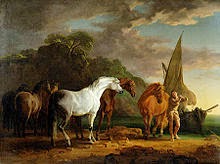
The land of the Houyhnhnms is Gulliver’s fourth and final stop, a land of wise and noble horses, but he also encounters a race called Yahoos, a race very much like himself yet more filthy, vulgar, bestial and stupid.  Although they at first recognize him as a Yahoo, the Houyhnhnms finally take to Gulliver, impressed with his cleanliness and ability to reason.  Yet in spite of the relational ties he makes in this land and his desire to remain among these highly civilized beasts, the horses foresee a danger in Gulliver’s presence and send him off in a boat.  When he arrive home, our protagonist is a changed man.  Disgusted with the “Yahoos” of his country, he is barely able to live in their company, finally choosing a rather secluded life.

Gulliver taking final leave of
the Houyhnhnms (1769)
Sawrey Gilpin
source Wikipedia

Through Gulliver’s interaction with the Liliputans and the Brobdingnagans, Swift satirizes British politics.  The Liliputans are only concerned with petty and trivial problems, and in their self-aggrandization can only see themselves as governors of the whole world.  Yet while Liliput represents a small view of man, Brobdingnag represents a large one.  As in Liliput, Swift explores the contrasts between liberty and law, but now the situation is reversed as Gulliver is in miniature in a land of giants.  The island of Laputa is built upon philosophy and it’s inhabitants are seen as Swift’s critque of scientism, or that the only way to true knowledge is through scientific disciplines.  Only what can be seen and measured is taken into account, but, of course, this leaves no room to examine the soul.  The land of the Houyhnhnms is perhaps the most fascinating part of the voyages.  In this land the beasts are the civilized society and the Yahoos, who are human, are savages.  The Houyhnhnms live by reason and that reason, working within nature, give rise to their idyllic existence.  Gulliver believes that if he lives long enough with his friends, this virtue will rub off on him, but in fact the horses see his reason as imperfect and therefore he is more dangerous than a Yahoo who has no reason at all.  In reality, Gulliver is half-way between both species, halfway between pure passion and pure reason.

Apparently both Sir Walter Scott and William Thackeray were shocked and repulsed by Gulliver’s fourth voyage, yet there is still argument as to whether Swift’s work was a satire in the form of Horace, where he is only lightly satirizing Gulliver’s idealism, or the heavier satire of Juvenal, whereupon his writing is a vitriolic, sarcastic diatribe condemning the human race.  I’ll leave it to the reader to decide.  Yet perhaps Swift himself can shed light on his intentions:

“I have ever hated all Nations professions and Communityes and all my love is towards individualls for instance I hate the tribe of Lawyers, but I love Councellor such a one, and Judge such a one for so with Physicians (I will not speak of my own trade) Soldiers, English, Scotch, French; and the rest but principally I hate and detest that animal called man, although I hartily love John, Peter, Thomas and so forth.  This is the system upon which I have governed myself for many years (but do not tell) and so I shall go on until I have done with them I have got materials toward a treatise, proving the falsity of that definition animal rationale [rational animal], and to show it would be only rationis capax [capable of reason].  Upon this great foundation of Misanthropy (though not in Timon’s manner) The whole building of my Travells is erected.  And I will never have peace of mind until all honest men are of my Opinion.”

While I thought Swift’s satire brilliant, and his characterizations mostly just, I felt that he focused only on the negative aspects of human nature.  If Swift really saw the world only through a lense of disappointment, treachery, selfishness, and deceit, yet missed the integrity, loyalty, virtues and goodwill of the flip-side of human nature, that is truly a tragedy.

Read for my Classics Club Spin #8, Fariba from Exploring Classics joined me in reading this one.  Here is her most excellent review.  Thanks for the company, Fariba!

(And further reflections by Fariba on Gulliver’s Travels)

Utopia by Thomas More

“The moste vyctoryous and tryumphante Kynge of Englande, Henry theight of that name, in all royal vertues Prince moste peerlesse, hadde of late in contrauersie with the right hyghe and myghtie king of Castell weightye matters, and of greate importaunce; for the debatement and final determination wherof the kinges Maieste sent me Ambassadour into flaunders, ioined in commission, and whom the kinges maiestie of late, to the greate reioysyng of all men, did preferre to the office of maister of the Rolles.”

I certainly promise not to write this review in Middle English but I thought I’d give you a taste of it.  And, no, I didn’t read the complete book in ME, I was able to get through about 1/5 of it and then changed to a modern English version.  And most happily, I might add.  The original Utopia was written in Latin in a fine emulation of Ciceronian Latin, yet More took it a step further in humour and playfulness.

Sir Thomas More, Lord Chancellor
Hans Holbein the Younger
source Wikipedia

Born in London in 1478, Thomas More was a very learned man and, if he had been able to follow his inclinations, would have been destined for the church.  His father, however, had other aspirations for him and, being a dutiful son, he conceded to his wishes and chose the law as his profession.  Unexpectedly, he was a marvellous success as a lawyer.  He soon had a thriving business and his extraordinary aptitude quickly brought him under scrutiny of the “higher-ups”. The political positions he was eventually offered were always accepted reluctantly, and More had a life-long dilemma with reconciling his loyalty to his sovereign and his loyalty as a Christian to his conscience.

As a Catholic, More opposed the Protestant Reformation.  Serving as Lord Chancellor under King Henry VIII, he was accused of inflicting harsh treatment on heretics, but he denied the accusations.  What is interesting is that his son-in-law at the time, was enticed by “Lutheran heresies”, and More’s reaction when speaking with his daughter, was surprisingly temperate: “Meg, I have borne a long time with thy husband.  I have reasoned and argued a long time with him and still given him my poor fatherly counsel; but I perceive none of all this can call him home again.  And, therefore, Meg, I will no longer dispute with him, not yet will I give him over; but I will go another way to work, and get me to God and pray for him.”

A man of honour and high standards, he would not even compromise for his family.  When one of his sons-in-law expected preferential treatment  because of More’s office, More stated, “If my father whom I dearly love were on one side and the devil, whom I sincerely hate, were on the other, the devil should have his rights.”

With King Henry VIII’s decision to divorce his queen, Catherine, More’s power began to unravel.  While remaining quiet publicly, he continued to support the Pope over the King, and when he was required to sign a letter asking the Pope to annul the marriage, More refused.  Henry soon began to isolate him. Eventually when More openly refused to acknowledge the annulment, Henry took action, arresting More for treason.  He was decapitated on July 6, 1535. When the Holy Roman Emperor, Charles V, heard of his death, he said, “Well, this we will say, if we had been the master of such a servant, we would rather have lost the best city of our dominions than have lost such a counsellor.”

Map: This picture was taken from
 one of the first editions of the book,
which is published online at the 
Bibliotheca Augustana

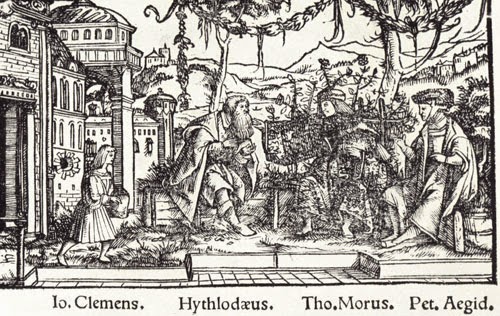
Probably inspired by his close friend, Desiderius Erasmus, Thomas More wrote Utopia in 1516 during an embassy to the Netherlands.  A very brief book, yet with a complex structure, More used himself and a character called Raphael Hythloday to present political philosophies that range from the insightful and wise, to the curiously peculiar.  In Book I, More crafts the setting for Utopia and then, through his character and Hythloday’s, offers a discourse on the evils and ills prevalent in European society.  While having a parallel set-up to Plato’s Republic (Morton = Cephalus; Hythlodaye = Socrates; lawyer = Thrasymachus), More adopts occurrences from his own day to structure the framework of Utopia and construct a more politically and socially organized text.   More uses this venue to chastize the actions of kings who use the country’s money for unproductive warmongering, and especially vilifies the practice of hanging thieves on the gallows, often for very petty infractions.  In Book II, More offers a detailed description of Utopia, its inhabitants and its societal structure. The Utopian community supports common property, slavery and religious tolerance.  Agriculture is the most treasured occupation but each Utopian is required to learn some other trade as well.  Finery is frowned upon, pre-marital sex and adultery punishable, and while atheists are allowed in Utopia, they are shunned because their views are counter-productive to the Utopian community.

More & Hythloday discuss Utopia
source

Scholars are still in disagreement as to More’s purpose when writing this book. On one hand, some purport that More’s intent was to write and endorse a treatise on communism and its implementation.   Others scholars differ in opinion; while the book had a basis in the condition of European politics, it was nevertheless written tongue-in-cheek.  Brewer in his Reign of Henry VIII, appears to support this view:

“Though the Utopia was not to be literally followed —- was no more than an abstraction at which no one would have laughed more heartily than More himself, if interpreted too strictly.  Utopia might serve to show a corrupt Christendom what good could be effected by the natural instincts of men, when following the dictates of natural prudence and justice.  If kings could never be elective in Europe, Utopia might show the advantage to a nation where kings were responsible to some other will than their own.  If property could never be common, Utopia might teach men how great was the benefit to society, when the state regarded itself as created for the wellbeing of all, and not of a class of a favoured few …….”

C.S. Lewis, a medieval and renaissance scholar, takes More’s book as a light holiday work, and this summation rings true, as More make some comments himself that were obscure, but appeared to poke fun at his work.  Lewis states:

 “….. it appears confused only so long as we are trying to get out of it what it never intended to give.  It becomes intelligible and delightful as soon as we take it for what it is —- a holiday work, a spontaneous overflow of intellectual high spirits, a revel of debate, paradox, comedy and (above all) of invention, which starts many hare and kills none …..  There is a thread of serious thought funning through it, an abundance of daring suggestions, several back-handed blows at European institutions …….  But he does not keep our noses to the grindstone.  He says many things for the fun of them, surrendering himself to the sheer pleasure of imagined geography, imagined language, and imagined institutions.  That is what readers whose interests are rigidly political do not understand: but everyone who has ever made an imaginary map responds at once.”

If we take into account some of the regional names in this work, the purpose may become clearer still.  “Utopia” literally means, “no place”; “Achoria” means “Nolandia”; “Polyleritae” means “Muchnonsense”; “Macarenses” means “Happiland”; and the river “Anydrus” means “Nowater”.  Even Raphael’s last name, Hythlodaeus, translates as “dispenser of nonense”.  Was More being ironic or serious?  I doubt we can ever know for sure.

In spite of the obscurity of the book and some of the controversies surrounding More, I loved both the author and this work.  He appeared to treat both his wives well, quite clearly loved his children, was well thought of and respected, and in spite of his position, chose to write a story that not only amused his readers, but allowed them to explore human nature and come to their own conclusions with regard to universal issues.  Thomas More is a man to be admired and Utopia is certainly a book to be read!

  • translated by Clarence H. Miller (English translation)
  • also Oxford Press “student” edition edited by J. Churton Collins (Middle English translation)

Further reading: