Spenser’s Images of Life by C.S. Lewis

Normally, I don’t read introductions or commentaries on books or poetry that I plan to read, until after I’ve finished the work.  I prefer to experience the art from a point of innocence (or perhaps, ignorance is a better word!), forming my own opinions without influence, even if I struggle with my first read through. However, this time I threw all my ideals to the winds and called for help.

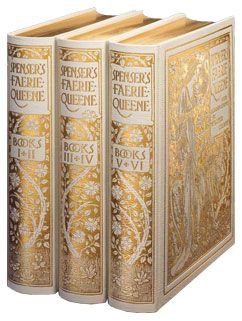
In April I’m reading The Faerie Queene with OCirtnecce, JeanRuth, and Consoled Reader, and considering the length and complexity of this poem, I confess that it was wiser to admit my complete ineptitude and look for someone who was very familiar with this type of poem and era to give me a little boost.  Since C.S. Lewis’ expertise was in Medieval and Renaissance literature, I suspected that he would be a good place to start.  His book, Spenser’s Images of Life is a compilation of lectures notes, put together by Alastair Fowler, to give students a deeper insight into The Faerie Queene.

Continue reading

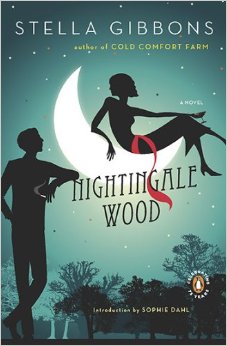
Nightingale Wood by Stella Gibbons

“It is difficult to make a dull garden, but old Mr. Wither had succeeded.”

Stella Gibbons writes rather odd books.  Cold Comfort Farm, her best known and highly acclaimed novel, follows an orphaned, pert young woman to a mucky, rural farm and observes while she neatens and tidies all the morose, lurking, and deranged occupants into their proper places, finding love in the process.  Gibbons has a knack for depicting rather unusual and sometimes bizarre characters, and this flair for the unique has continued in her writing of Nightingale Wood. The introduction to the story labels it as a “fairy tale” and it is, although not along the usual lines one would expect from such a tale.  Gibbons’ evil creatures often have angelic faces, and her happily-ever-afters can leave the reader uncertain of reality.  In playing with her characters, Gibbons appears to play with society and even the reader himself.  Her writing is not easily defined.

Continue reading

Out Of Your Car, Off Your Horse by Wendell Berry


This “essay” is set up in point-form with the sub-title, Twenty-seven Propositions About Global Thinking and the Sustainability of Cities.  It’s going to be difficult to review, not only because of the structure, but also because Berry is such an original thinker and has so much of value to say.  It is almost a shame to leave anything out.

Continue reading

Lysistrata by Aristophanes

“The War shall be women’s business …….”

Staged during the Peloponnesian War and a mere two years after the disastrous defeat of Athens during the Sicilian Expedition, Aristophanes wrote Lysistrata ( Λυσιστραταη), meaning “disbander of the army”, as a protest against the waste of both resources and lives caused by the acts of war.

The play begins in the year 411 B.C., the twentieth year of the Peloponnesian War between the city states of Athens and Sparta, and the women of the participating factions are becoming disaffected by the incessant fighting.  Lysistrata, a woman of Athens, gathers neighbouring women from the areas of Sparta, Bœotia, Corinth, Peloponnese, etc. in protest of this gratuitous war.

Continue reading

A Man’s A Man For A’ That by Robert Burns

A Man’s a Man For A’ That
By Robert Burns


Is there, for honest poverty,
         That hings his head, an’ a’ that?
The coward slave, we pass him by,
         We dare be poor for a’ that!
                For a’ that, an’ a’ that,
                        Our toils obscure, an’ a’ that;
                The rank is but the guinea’s stamp;
                        The man’s the gowd for a’ that,


Continue reading

Seven Against Thebes by Aeschylus

“You citizens of Cadmus, he must speak home
that in the ship’s prow, watches the event
and guides the rudder, his eyes not drooped in sleep.”

Produced in 467 B.C. and winning first prize in the City Dionysia drama competition, The Seven Against Thebes is assumed to be the last of a trilogy of plays which dealt with the Oedipus cycle, the other two being called Laius, and Oedipus, both lost, as was the concluding satyr play, The Sphinx.  Driven mostly by dialogue, this play requires some background history to add some further insight.

Continue reading

The Time Machine by H.G. Wells

“The Time Traveller (for so it will be convenient to speak of him) was expounding a recondite matter to us.”

I read this book for the Classics Club Spin #11.  Was it my spin book?  No, it was Mockingbirds, Looking Glasses, and Prejudices spin book but I decided to read along with her.  Why?  Well, her book was much shorter than my Spin book, and I couldn’t imagine getting through God in the Dock in the allotted time frame.  Yes, I’m breaking the rules, but it’s on my Classics Club list, AND at least I read something!

Continue reading

On Reading ‘The Faerie Queene’ by C.S. Lewis


“Beyond all doubt it is best to have made one’s first acquaintance with Spenser in a very large — and, preferably, illustrated — edition of The Faerie Queene, on a wet day, between the ages of twelve and sixteen; and if, even at that age, certain of the names aroused unidentified memories of some still earlier, some almost prehistoric, commerce with a selection of ‘Stories from Spenser’, heard before we could read, so much the better.”

A number of us are going to be reading The Fairie Queene beginning sometime in April and, considering the difficulty of the poem, I decided to do some pre-reading investigation.

Continue reading

A Lover’s Complaint by William Shakespeare


From off a hill whose concave womb re-worded
A plaintful story from a sistering vale,
My spirits t’attend this double voice accorded,
And down laid to list the sad-tuned tale;
Ere long espied a fickle maid full pale,
Tearing of papers, breaking rings a-twain,
Storming her world with sorrow’s wind and rain


This “fickle maid” relates her story, a story of love unrequited, but as she describes her inner conflict, we receive a vision of the maid, no longer young:


“Whereupon the thought might think sometime it saw
The carcass of a beauty spent and done;
Time had not scythed all that youth begun,
Nor youth all quit; but, spite of heaven’s fell rage,
Some beauty peept through lattice of sear’d age.”


Crying despondently and wiping her eyes with a handkerchief, the maid tells a respectable man, who is grazing his cattle nearby, of her troubles.


“Not age, but sorrow, over me hath power;
I might as yet have been a spreading flower, 
Fresh to myself, if I had self-applied
Love to myself, and to no love beside.”


She fell in love with a young man with a silken tongue and enchanting brown curls, who stole her heart in spite of other more questionable qualities.


“His qualities were beauteous as his form,
For maiden-tongued he was, and thereof free;
Yet, if men moved him, was he such a storm
As oft twixt May and April to see,
When winds breathe sweet, unruly though they be.
His rudeness so with his authorized youth
Did livery falseness in a pride of truth.”


She “gave him all my flower,” without being demanding of him like others.  She claimed that “mine honour shielded” but she became an “amorous spoil.” Even though she knew of his other women, of his “foul beguiling” and of his illegitimate children, still she is taken in by his false charm.  Yet, in spite of this sorrow that is a burden to her heart, she claims that she would be captivated by him all over again.


O, that infected moisture of his eyes,
O, that false fire which in his cheek so glow’d,
O, that forced thunder from his heart did fly,
O, that sad breath his spongy  lungs bestow’d,
O, all that borrow’d motion seeming ow’d,
Would yet again betray the fore-betray’d,
And new pervert a reconciled maid.
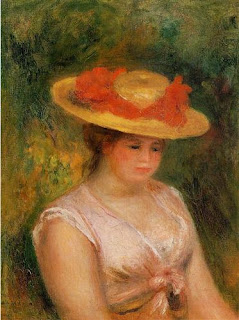
 

Young Woman in a Straw Hat (1901)
Pierre-Auguste Renoir
source Wikiart

Popular in medieval and renaissance times, this “complaint poem” is written in rhyme royal (ababbcc), with seven lines per stanza in iambic pentameter, which I just encountered while recently reading The Brubury Tales (in The Feet’s Prologue), a take on Chaucer’s The Canterbury Tales.  Because this style was unusual for Shakespeare, some critics question his authorship, yet there are parts of the poem that certainly echo of Shakespeare, and coincidentially the first stanza is very close to the first stanza of The Rape of Lucrece.

As for figures of speech, the following are included in the poem:  alliteration, anaphora, hyperbole, metaphor, paradox, personification and simile.  Could I identify them all on the first read?  No, but that means that I’ll have to read The Lover’s Complaint again!

Deal Me In Challenge #4 


The Suppliant Maidens by Aeschylus

“Zeus Protector, protect us with care,
From the subtle sand of the Nile delta
Our ship set sail …….”

Originally thought to be the earliest extant Greek tragedy, having been produced in 490 B.C., more recent evidence places it with a trilogy produced in 470 B.C., making it one of Aeschylus’ later plays. More primitive in style than The Persians, and using the archaic practice of having the protagonist as the chorus, it’s possible that Aeschylus kept it unseen for 20 years, but his motivation for this concealment would certainly be inexplicable.

Continue reading