Different Tastes in Literature by C.S. Lewis

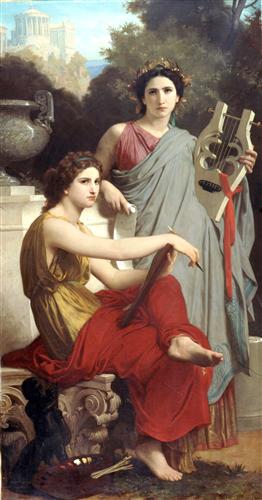
Art and Literature (1867)
William-Adolphe Bouguereau
source Wikiart

Is there good literature?  Is there bad literature?  How do we make the determination, and do we even have the criteria to judge?  In his essay, Different Tastes in Literature, if Lewis does not directly answer these questions, he at least gives the reader criteria that makes it easier to judge, and challenges us to examine our reading experiences.

Continue reading

Jane Eyre – Chapters III & IV

Chapter III

Jane awakes from her fit to find herself being attended by the apothecary.  After her fright, she is strangely unsettled, unable to find joy in things that previously made her happy.  When the apothecary returns, he asks Jane a number of insightful questions with regard to her feelings and state of mind.  He then recommends that she be sent off to school, which agrees mightily with Mrs. Reed.

Continue reading

Jane Eyre – Chapters I & II

And we’re off!  The Edge of the Precipice’s Jane Eyre read-along is off to a great start. It’s been a good number of years since I read this work last, and it’s certainly one of my favourites.  With a reasonably adequate background to the book, I’m looking forward to digging deeper into its pages.  My last Charlotte Brontë read, Villette, was less than thrilling (in fact, I could hardly believe it was the same author), so it will be refreshing to revisit her masterpiece.  So without further ado, let the reading begin!

Continue reading

The Faerie Queene ~ Book I (Part II)

The Faerie Queene

Book 1
Contayning
The Legende of the Knight of the Red Crosse
Or
Of Holinesse


So far this is proving a much more difficult read than anticipated.  It does get easier as you get used to the style and delivery, but there is so much information and I do want to cover as much as I can in my reviews in case I never read it again.  I mean I want to read it again, but right now it’s rather exhausting.  Cantos I to VI introduced us to the Redcrosse Knight and Una, documenting Redcrosse’s descent into sin and Una’s unwavering faith in him.  The following cantos conclude Book I.

Continue reading

The Faerie Queene ~ Book I (Part I)

The Faerie Queene

Book 1
Contayning
The Legende of the Knight of the Red Crosse
Or
Of Holinesse


Canto I
The Patron of true Holinesse,
Foule Errour doth defeate:
Hypocrisie him to entrape,
Doth to his home entreate.


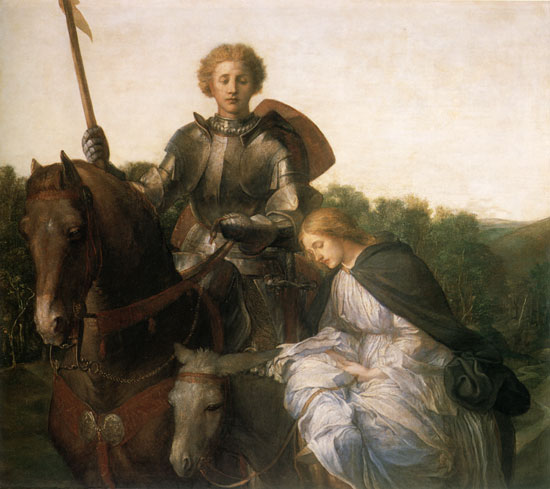
At the behest of the Faerie Queene, the Gentle Knight, or Redcrosse Knight, sets out with his companion, Una, a daughter of a king, who is riding an ass and leading a small lamb.  His quest is to slay a terrible Dragon, that is holding Una’s parents captive. Accompanied by a Dwarf as a servant, the travellers come upon a fierce storm and are forced to take shelter in a forest bower for the night.  When morning dawns, they fear that they have lost their way until they come upon a cave.  Una cautions the Knight, fraught with fearful doubts and premonitions of this den, but the Knight will not heed and enters, “full of fire and greedy hardiment”.  Inside he discovers a terrible monster, Error, surrounded by her young.  He commences a battle:

Continue reading

The Jane Eyre Read-Along

Hamlette at The Edge of the Precipice is hosting one of her excellent read-alongs, this time on the most wonderful classic, Jane Eyre.

If you haven’t participated in one of Hamlette’s read-alongs before, you are in for a treat. They progress at such a slow pace, that it allow the reader time to read deeply, mull over what they have read, and come up with insights that would have perhaps been missed with a quicker read.  When you finish, you feel like you know the book backwards, forwards, and upside-down.  They are so beneficial!

This read-along will begin on May 29th and proceed through the summer until we finish. Having just read Brönte’s Villette and being less than thrilled with it, I’m looking forward to re-visiting one of my all-time favourites.

Please visit this page if you want to see how Hamlette’s read alongs work, and then please join us May 29th.  It’s an experience not to be missed!


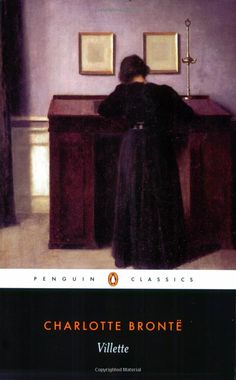
Villette by Charlotte Brönte

“My godmother lived in a handsome house in the clean and ancient town of Bretton.”

What on earth have I just read?  This book simply cannot be written by the same author who wrote Jane Eyre!  The mind rebels!  The heart rebels!  It cannot be!  Am I sounding very dramatic and flourishing and vocal?  That’s because I’ve spent 572 pages being lulled catatonic.  What happened …..??

Continue reading

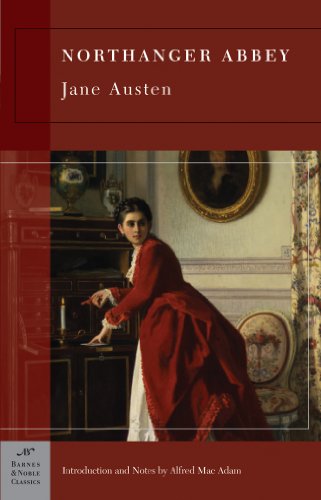
Northanger Abbey by Jane Austen

“No one who had ever seen Catherine Morland in her infancy would have supposed her born to be an heroine.”

While Northanger Abbey was the first novel written by Jane Austen and sold to a publisher by her brother, Henry, in fact it was repurchased by the author and not published until six months after her death in December 1817.  Austen’s parody of 17th century Gothic novels is told with a good-natured humour, but a valuable lesson lies beneath the surface of its narrative.

Continue reading

Spenser’s Images of Life by C.S. Lewis

Normally, I don’t read introductions or commentaries on books or poetry that I plan to read, until after I’ve finished the work.  I prefer to experience the art from a point of innocence (or perhaps, ignorance is a better word!), forming my own opinions without influence, even if I struggle with my first read through. However, this time I threw all my ideals to the winds and called for help.

In April I’m reading The Faerie Queene with OCirtnecce, JeanRuth, and Consoled Reader, and considering the length and complexity of this poem, I confess that it was wiser to admit my complete ineptitude and look for someone who was very familiar with this type of poem and era to give me a little boost.  Since C.S. Lewis’ expertise was in Medieval and Renaissance literature, I suspected that he would be a good place to start.  His book, Spenser’s Images of Life is a compilation of lectures notes, put together by Alastair Fowler, to give students a deeper insight into The Faerie Queene.

Continue reading

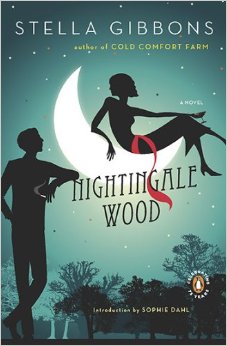
Nightingale Wood by Stella Gibbons

“It is difficult to make a dull garden, but old Mr. Wither had succeeded.”

Stella Gibbons writes rather odd books.  Cold Comfort Farm, her best known and highly acclaimed novel, follows an orphaned, pert young woman to a mucky, rural farm and observes while she neatens and tidies all the morose, lurking, and deranged occupants into their proper places, finding love in the process.  Gibbons has a knack for depicting rather unusual and sometimes bizarre characters, and this flair for the unique has continued in her writing of Nightingale Wood. The introduction to the story labels it as a “fairy tale” and it is, although not along the usual lines one would expect from such a tale.  Gibbons’ evil creatures often have angelic faces, and her happily-ever-afters can leave the reader uncertain of reality.  In playing with her characters, Gibbons appears to play with society and even the reader himself.  Her writing is not easily defined.

Continue reading