The Toilers of the Sea (Les Travailleurs de la Mer) by Victor Hugo

Toilers of the Sea“The Atlantic wears away our coasts.”

Victor Hugo must have been a pretty amazing person.  Not only did he have an exceptional grasp of history, but his attention to detail far surpasses your average person and his descriptions illustrate this unusual ability.  Add to that his artistic capacity for drawing, and you have quite an impressive composition of talents. He exhibits all three talents in The Toilers of the Sea, or Les Travailleurs de la Mer.

Running afoul of Napoleon III in 1851, Hugo fled France to Brussels and Jersey, finally settling in Guernsey in 1855 where he purchased Hauteville House in St. Peter Port.  He spent 15 years in exile here.  In his studio at the top of his house, with a stunning view of the harbour, it is there he finished his most famous novel, Les Miserables.  While in Guernsey, Hugo rambled all over the island, often with his son, Charles, and his mistress, Julliette Drouet.  In a notebook, he scrawled copious notes about the reefs, tides, currents and absolutely anything that caught his imagination. Les Travailleurs de la Mer was born out of his excursions.
Continue reading →

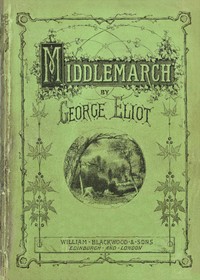
Middlemarch by George Eliot

Middlemarch“Miss Brooke had that kind of beauty which seems to be thrown into relief by poor dress.”

I first read Middlemarch during the summer of    2014 and was mesmerized.  The lives of the inhabitants were painted in detail and somehow came alive until I was part of the community and involved in all their celebrations and struggles.  I finished it in three weeks and then longed to go back.  Well, it’s been over ten years since my last read of it and with some more maturity and the input of others, I was curious as to how I would respond upon my second reading.

Continue reading →

Brideshead Revisited by Evelyn Waugh

Brideshead Revisited“When I reached ‘C’ Company lines, which were at the top of the hill, I paused and looked back at the camp, just coming into full view below me through the grey mist of early morning.”

I went into this read with some trepidation.  I had some experience with books set in this time period of the early to mid-1900s and I haven’t found them very edifying:  The Good Soldier, Testament of Youth, The Great Gatsby, etc. There is some sort of depressing pall that seems to have affected the world after the First World War and authors appear to have contracted an especially virulent dose of it.  Nevertheless, I thought I would give Waugh and try and see if he could surprise me.

Continue reading →

The Diary of a Madman by Guy Maupassant

The Diary of a Madman“He was dead—the head of a high tribunal, the upright magistrate whose irreproachable life was a proverb in all the courts of France.”

In The Diary of a Madman, a renowned and respected judge of the highest order dies at the age of eighty-two.  All his life he had dedicated to pursuing the most vicious criminals and to defending the weak and helpless. Defendants trembled because It was as if he could read the minds of those who were to be tried in his court.  At his funeral, soldiers carried his coffin and there were many tears as this respected and venerable magistrate was finally laid to rest.

Continue reading →

Reginald’s Christmas Revel by Saki

Christmas Stories And now we arrive at the ninth story included in the 20 Christmas Stories volume of Everyman’s Pocket Classics, Reginald’s Christmas Revel.

I’ve always been intrigued with Saki but hadn’t read any of his stories.  In fact, I lacked even the cursory knowledge that his real name was Hector Hugh Munro and he was British, not Asian as I had thought.  So with a lively curiosity, I began this story with relish.

Continue reading →

The Road to Serfdom by F.A. Hayek

The Road to Serfdom“When the course of civilization takes an unexpected turn — when, instead of the continuous progress which we have come to expect, we find ourselves threatened by evils associated by us with past ages of barbarism — we naturally blame anything but ourselves.”


I suspect that you would call The Road to Serfdom F.A. Hayek’s magnum opus.  It was written in 1944 towards the end of the Second World War, when countries had been exposed to various socialist political experiments and the effect they had on the countries that adopted them were very, very evident.  But Hayek did not take for granted that people’s common sense would see the dangers.  He was well aware of the hazards socialism still posed with its pernicious ideology and promises of a better future where everyone would be equal, the rich would pay their fair share, and all would be secure within the society.

Continue reading →

Whatever Happened to Penny Candy? Tanstaafl, the Romans and Us

Whatever Happened to Penny Candy? by Richard J. Maybury

2.  Tanstaafl, the Romans and Us


The question, whether one generation of men has the right to bind another, seems never to have been started …. [I believe] no generation can contract debts greater than may be paid during the course of its own existence …. The conclusion then, is, that neither the representatives of a nation, nor the whole nation itself assembled, can validly engage debts beyond what they may pay in their own time. ~ Thomas Jefferson

Rome Pantheon

During the 1970s and early 1980s, many western countries experienced double-digit inflation.  Even Japan had double-digit inflation.  Double-digit inflation means that each year prices are rising at 10% or more.  So, for example, if a coffee cost $1.00, it would cost $1.10 the following year. Inflation this serious and far-reaching had not happened in the U.S. since the country had become a nation.  However, we have an example from Roman times of where this type of inflation occurred and we can see the trouble it caused.

Continue reading →

Whatever Happened to Penny Candy: Money: Coins and Paper

Whatever Happened to Penny Candy? by Richard J. Maybury

Money: Coins and Paper

Coin Banknotes Money

There is so much talk about money and inflation and recession in the world lately.  These important topics affect our daily lives yet it seems that few people actually know how they work, including myself.  So with a vague idea that inflation isn’t directly driven by what we’re being told in the news, I decided to learn more.  What Ever Happened To Penny Candy by Richard J. Maybury is a simple yet highly educational book on economics that will assist you in your career, business, investments and money strategy.  It will also give you tools so you don’t have to blindly rely on what others tell you.  Forewarned is forearmed.   I’ll be posting chapter by chapter and the first is: Money: Coins and Paper.

Continue reading →