The Silver Chair by C.S. Lewis

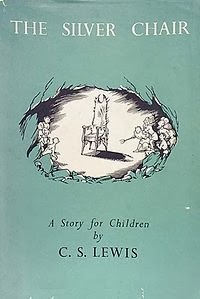
The Silver Chair
First Edition Dustjacket
source Wikipedia

“It was a dully autumn day and Jill Pole was crying behind the gym.”

Eustace Scrubb and Jill Pole seek shelter from bullies in their Experiment House school and, after stumbling through a door, find themselves in Aslan’s country, not realizing that Aslan has called them there for a very special purpose.

Ten years ago after the death of his mother, Prince Caspian’s son, Rillian, disappeared into the North without a trace.  With Puddlegum, the pessimistic Marshwiggle as their guide and companion, Eustace and Jill set out to discover his fate.  However, Jill missed some of the four signs that Aslan had given her and the adventurers wonder if their quest has not been made more difficult because of her oversights.  Will they be able to save the heir of Narnia from the evil Emerald Witch, and even more importantly, what will they have learned by the end of their adventure?

Lewis makes me laugh with some of the symbolism he inserts into these tales for children.  In one scene, the Witch attempts to enchant the children, striving to convince them that their world is only a dream and that her world is, in fact, the real thing.  Bravely, Puddleglum, in desperation, stamps on the fire, hoping the resulting pain will break the spell.  He declares even if they have imagined all the wonderful things of their world, he prefers them to the cold, dark, menacing world of the Witch, and he pledges to live as a Narnian even if Narnia does not exist.  Puddleglum’s curious statement echoes Blaise Pascal’s famous wager that argues that even if God does not exist, to live by His precepts will ensure a better earthly life; what one would gain would be infinitely more valuable than what one would lose.


Puddleglum the Marshwiggle

This book is my least favourite of the Chronicles so far, but Lewis still manages to tell an engaging tale that keeps the reader interested and invested in the characters.  Next up is The Horse and His Boy!

C.S. Lewis Project 2014

Other Narnia Books


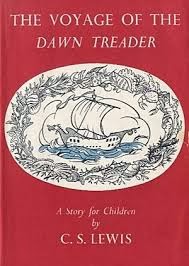
The Voyage of the Dawn Treader by C.S. Lewis

First Edition Dustjacket
source Wikipedia

“There was a boy called Eustace Clarence Scrubb and he almost deserved it.”

Another year has passed.  Peter and Susan Pevensie are able to travel with their parents to America, while Edmund and Lucy are sent to live with their cousin, Eustace Scrubb.  Eustace is a spoiled pest, a child who has been raised by “very up-to-date and advanced” parents and who attends a “modern school.”  When the three children pass through a picture of a sailing ship and back into the land of Narnia, they are tossed into another wild adventure.

The Dawn Treader is the pride of the Narnian fleet and is carrying Prince Caspian on a journey to find the seven lost lords of Narnia, friends of his father who sailed east and went missing long ago.  As they explore both uncharted land and water, the children find themselves in situations of danger and moments of decision that will change their lives forever.

This book is the third book published of the Narnia chronicles and with each book, Lewis weaves more gems of wisdom into the story and does it with a genuineness that is particularly appealing.  Lucy once again has an encounter with Aslan: Lucy is instructed to look for a particular spell in a book of Magic but decides, against her conscience, to read a spell that will stroke her vanity and make her more beautiful than her sister.  Immediately she spies Aslan on the page, growling and showing his teeth, which stops her selfish action.  Instead she chooses to read a spell that allows her to eavesdrop on two girls from her school, and what she hears about herself is not pleasant, especially since she had viewed one of the girls as her friend.  Aslan gently admonishes her about listening to their conversation and says that her relationship with her friend will now never be the same.  When Lucy wishes to know what would have happened if she hadn’t eavesdropped, Aslan tells her, as he told her in Prince Caspian, “Child, did I not explain to you once before that no one is ever told what would have happened?”  Actions have consequences and we need to weigh the repercussions before we act, instead of being guided by impulse.

Wikimedia Commons

Eustace Scrubb is certainly a wonderful character and Lewis’ development of him is extraordinary.  Going from a petulant, spoiled, impertient child, he is transformed by a frightening experience, yet Lewis does not make him perfect in his transformation.  As we see by his reactions, he still holds some of the same prejudices, assumptions, and, at times, behaviour as he originally did.  Eustace’s encounter with Aslan fundementally changed his soul, yet he is like an Everyman, struggling with life’s circumstances while trying to live a life of integrity, and still making mistakes along the way.

Lewis makes a point in this book of examining the views of an exclusively scientific mentality and what results from this kind of worldview.  Eustace is initially presented as boy who goes to a model, or progressive school, and is only exposed to factual experience.  Because of his sterile formation, he is unable to enjoy or even recognize, the magic and joy in Narnia.  He has straightforward knowledge, but when situations do not fit into his technical understanding, he is handicapped by his lack of wonder and curiosity, and is unable to accept, understand or cope with them.  What is particularly telling, is that he doesn’t recognize what lies right in front of his face:  in spite of being on the Dawn Treader and being able to see that it is a ship, he tries to tell Caspian what a real ship is like; when they land on Droon, it is reasonably obvious (and he has been told) that they are in another world, yet Eustace insists they should find the British consul; and even after Eustace’s transformation, when they land in the country of the Dufflepuds, he makes an impulsive judgement about the area and its people based on his first sight of technology: “Machinery!  I do believe we’ve come to a civilized country at last!”  By living solely by “the facts”, Eustace can recognize what makes us physically human, yet misses the wonder, enjoyment, and recognition, of what makes us spiritually human.

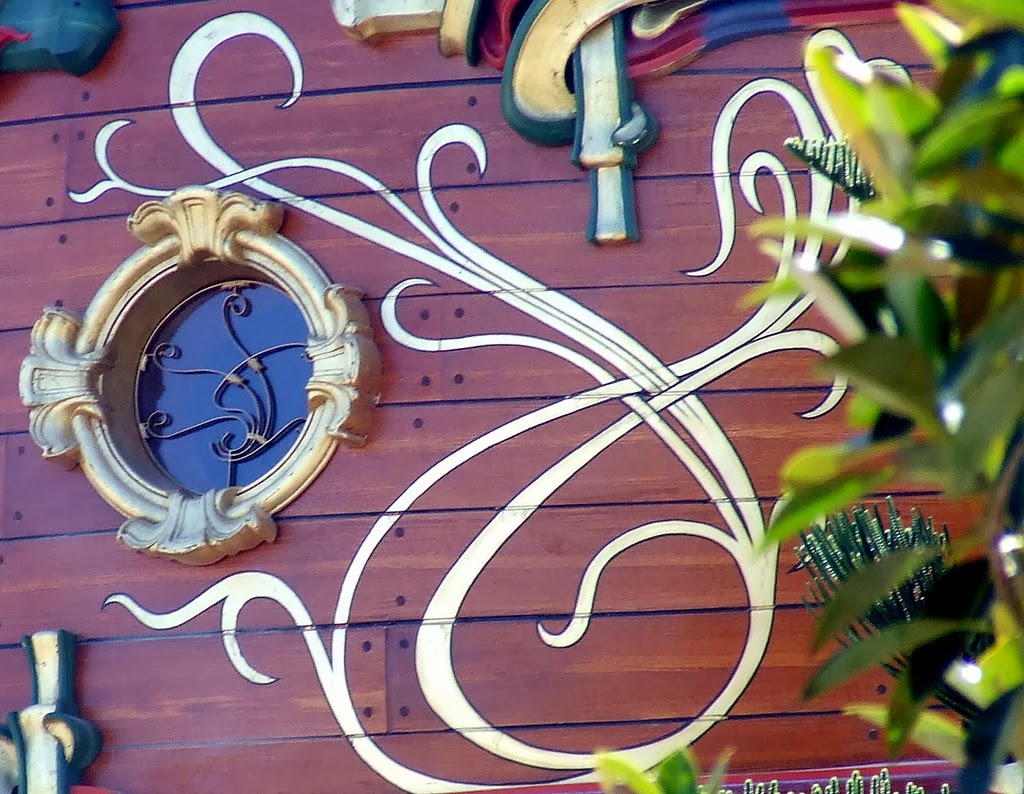
Detail of Dawn Treader port stern porthole
photo courtesy of David Jackmanson
Creative Commons License

Living during the Second World War and being exposed to the Nazi’s views of racial superiority and social-Darwinism,  Lewis’ was unavoidably confronted with certain aspects of science and was forced to ponder their eventual outcomes:


“Again, the oligarchy must more and more base its claim to plan us on its claim of knowledge …….  This means they must increasingly rely on the advice of scientists …… Now I dread specialists in power because they are specialists speaking outside their special subjects.  Let scientists tell us about science.  But government involves questions about the good of man, and justice, and what things are worth having at what price; and on these a scientific training gives a man’s opinion no added value …… On just the same ground I dread government in the name of science.  That is how tyrannies come in.  In every age the men who want us under their thumb, if they have any sense, will put forward the particular pretension, which the hopes and fears of that age render most potent.  They ‘cash in’.  It has been magic, it has been Christianity.  Now it will certainly be science.”

Lewis was not concerned about science itself, but the importance placed on it and for what means it could be used.

Once again, Lewis weaves a wonderful adventure for children, but leaves questions and ideas that relate to an adult world.

C.S. Lewis Project 2014

Other Narnia Books

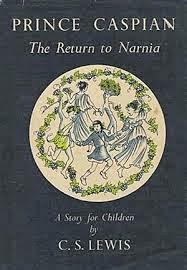
Prince Caspian by C.S. Lewis

First Edition Dustjacket
Source Wikipedia

One year later, Peter, Susan, Edmond and Lucy return to Narnia (via a train station —- I’m curiously reminded of Harry Potter) only to find their castle at Cair Paravel in ruin, the talking animals in hiding and a despotic foreign ruler, a Telmarine, has assumed control of the kingdom.  The sacrifice of Aslan and the children’s reign has been forgotten, reduced to a mere myth in the minds of the Narnians.

Assisted by Trumpkin, a drawf, the children learn that they have been recalled by the blowing of Susan’s horn by Prince Caspian, and that they must aid him in battle against his uncle, Miraz, the man who slew his father, the rightful king.  Aslan appears to Lucy and, while she ignores his first summons under pressure from her siblings, she soon learns from a gentle remonstrance from Aslan, that she must always try to do what is right and not follow the crowd.  She also realizes that she will never know what would have happened if she had obeyed the first time, that choices have consequences; lessons learned to increase her wisdom.  The children finally reach Caspian’s hideout and, with the help of the animals, dwarves, Aslan and Bacchus and his merry men, they manage to defeat the forces of the evil Miraz and place Prince Caspian on the throne of Narnia.

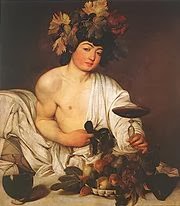
My, my, what is Bacchus doing in a children’s book with Christian undertones?!  Some critics were astonished and perplexed at Lewis’ insertion of the Greek god of wine and merrymaking into this novel.  His inclusion of pagan deities, into a hodge-podge of talking animals and quasi-medieval culture was perhaps mystifying, but Lewis grew up devouring Norse and Greek mythology and had no issues with the pagan gods.  His essay, Myth Became Fact, can give the reader further clues as to his love of myth and the symbols related to it. Probably with this essay in mind, one Lewis scholar, Louis Markos, argues that he sees the Bacchus scenes as Lewis’ way of bringing all pagan myths together, that “when viewed from the life, death and resurrection of Christ, the pagan myths are not only tamed but come true ……… Christ … is all the myths come true …..”  The myths can assist us in a deeper understanding of spiritual realities.


Bacchus by Caravaggio
source Wikipedia

While Prince Caspian was published after World War II, in 1951, the consciousness of the country was still unsettled, and many people, Lewis included, were concerned with the direction England would take after the war. With setting the reign of the Pevensie children so far into Narnia’s past, Lewis brings a curious parallel to his own post-war England.  In Narnia, the people have forgotten Kings Peter and Edmund, Queens Susan and Lucy, the lion, Aslan, and the medieval pomp and joyous times of their reign.  So, in post-war Europe, if the traditional medieval Christian past disappeared from peoples’ thoughts and actions, so too would its values and morality.  It was important that, like in the case of Lucy first seeing Aslan, the correct choices were made.

“War creates no absolutely new situation; it simply aggravates the permanent human situation so that we can no longer ignore it.  Human life has always been lived on the edge of a precipice.”  

All in all, another delightful story from Lewis, filled with adventure, suspense, and life themes that are not only pertinent in Narnia, but echo throughout all the ages and into our own.

C.S. Lewis Project 2014

 Other Narnia Books


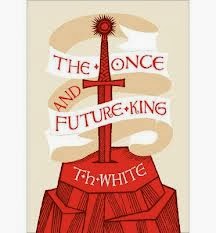
Once and Future King by T.H. White

“On Mondays, Wednesdays and Fridays it was Court Hand and Summulae Logicales, while the rest of the week it was the Organon, Repetition and Astrology.”

The Once and Future King encompasses five books written by author T.H. White about the legend of King Arthur.  In The Sword and the Stone, we meet Wart, a young boy who is the ward of Sir Ector and who lives with his guardian and his guardian’s son, Kay, near the Forest Sauvage.  By an unexpected set of circumstances, he encounters the wizard, Merlyn, who becomes his and Kay’s tutor, although we can see from the beginning that Merlyn favours Wart and there is obvious foreshadowing that we should expect something extraordinary from him later in the tale.  This book concludes with Wart unknowingly pulling the sword from the stone, a clear indication that he is England’s next king.  The book The Witch in the Wood (re-written as The Queen of Air and Darkness and apparently with little resemblance to the original) follows, chronicling the establishment of Arthur’s court under the political idea of right instead of might, and, of course, the love affair between Lancelot and Guinever receives the most attention.  The third book, The Ill-Made Knight, gives primary focus to Lancelot, his quests to purge his thoughts of Guinever, his relationship to Elaine who bears him a son, the development of a odd love-triangle, the quest for the Holy Grail, and Lancelot’s fight to defend Guinever’s honour.  A Candle in the Wind waxes philosophically about the metamorphosis of England into its present condition and the ideologies of war.  The height of tension appears in this book as Lancelot and Guinever’s relationship is revealed by a dastardly plot of Arthur’s Orkney clan, a war begins and the throne is seized by a usurper.  The death of Arthur and his son, Mordred are foreshadowed.   The Book of Merlyn, published posthumously, is added at the end and sets an aged Arthur amongst Merlyn and his animal friends from Book I, as they discuss the evils of war, why men want it, and how can it be avoided.

Photo courtesy of Moyan Brenn
(source Flickr)
Creative Commons License

I’m really stumped as to where to start with reviewing this book.  My idea of the Knights of the Round Table was woven with nobility, courage, daring, self-sacrifice, self-denial and chivalric actions.  While the Arthur of this tale professes to have started the Round Table with the idea that might does not equal right, White makes Arthur a rather weak character.  In his youth, he is quite simple; Merlyn plants the social and political ideas into his head and as a reader, I never got the feeling that Arthur intrinsically believed in them himself.  He knowingly allows Lancelot and Guinever to have an illicit relationship and is often paralyzed in moments when it is necessary for a king to show his strength and decisiveness.  He is a simple, loving old soul who calls everyone “my dear” but it is a hard task to imagine him as the legendary King Arthur.  Lancelot for a good part of the book is a brooding morass of insecurity and dark thoughts.

“The boy [Lancelot] thought that there was something wrong with him.  All throughout his life — even when he was a great man with the world at his feet — he was to feel this gap:  something at the bottom of his heart of which he was aware, and ashamed, but which he did not understand ….  We do not have to dabble in a place which he preferred to keep secret.”

 However after Lancelot’s quest for the Grail and his encounter with God, he at least develops into a man with a sense of what is important in life and an internal code of conduct that he believes is worth following.  Guinever is a moderately believable character, professing her loyalty and love to both men, but White puts her through a period of womanly jealously that is almost embarrassing to read and certainly not worthy of her.  With Arthur’s half-relatives from Orkney, the devious and twisted brothers who become not only knights of the Round Table but are the poison that festers inside Arthur’s kingdom, White does a satisfying job with crafting their personalities.  At times they can be quite appalling …… perfect villains to fit the story.  Also, King Pellinore and his Questing Beast should receive an appreciative nod, adding delightful humour to the first book.

Lancelot and Guinevere (1890s)
Herbert James Draper
source Wikimedia Commons

T.H. White was a rather tortured soul.  He was beset with fears of nearly everything, except, apparently, God.  After holding the position of head of the English Department at Stowe School, he retreated to a game-keeper’s cottage at Stowe Ridings on the Stowe Estate and, with hawks, owls and a setter bitch as his only companions, he began to write.  As war loomed over England in 1938, White’s fear almost choked him.  He declared himself a conscientious objector and in February 1939 found himself lodging in a farmhouse in Doolistown, Ireland, out of harm’s way.  He remained there for the next six and a half years.  In a December 1940 letter to L.J. Potts, a former tutor at Cambridge, he wrote: “….. [The Candle in the Wind] will end on the night before the last battle, with Arthur absolutely wretched.  I am going to add a new 5th volume in which Arthur rejoins Merlyn underground ….. and the animals come back again, mainly ants and wild geese.  Don’t squirm.  The inspiration is godsent.  You see, I have suddenly discovered that (1) the central theme of Morte d’Arthur is to find an antidote for war, (2) that the best way to examine the politics of man is to observe him, with Aristotle, as a political animal …….”

The above information perhaps explains White confusing re-crafting of the legend, and the plethora of social and political philosophical concepts that twist the characters into a means of furthering the development of these ideas.  Instead of White employing creativity to show the reader various themes in the novel, he simply tells us, which leaves a very weak effect.  As one of my reading buddies stated, instead of cleverly weaving his opinions into the story, White attempts to weave the story into his opinions.  The result is sloppy and, in effect, he actually strips these noble characters of the dignity they had been given by previous writers.

The Sword in the Stone, by itself is an appealing read, a nice story about the young Arthur and his upbringing.  By the second book, the story takes a turn for the worst.  I only have two words:  very disappointing.

The Wizard of Oz by L. Frank Baum

“Dorothy lived in the midst of the great Kansas prairies, with Uncle Henry, who was a farmer, and Aunt Em, who was the farmer’s wife.”

Whether first introduced to the book or the movie, which one of us is not familiar with the story of The Wizard of Oz?  As I child, I remember feeling dizzy as Dorothy was whirled away in the cyclone to the land of Oz; those shoes she inherited from the dead Wicked Witch of the East, just dazzled; the Scarecrow who wanted a brain, the Tin Man who wanted a heart, and the Lion who wanted courage stirred my sympathies, and I was as in awe of Oz as Dorothy and her companions, until I found out, as they did, that his persona was all a hoax.  All throughout Dorothy’s adventures with the Munchkins, the Flying Monkeys, and  the Wicked Witch of the West, I cheered for Dorothy to find a means to return safely to Uncle Henry and Aunt Em and her home in Kansas.

Dorothy meets the cowardly Lion
from the first edition
(source Wikipedia)

Re-reading this book as an adult, I admit I’ve lost the delight of the childhood experience, yet I found if I focused on the story’s simplicity, there was charm in it.  Both Dorothy and her companions were straightforward, uncomplicated personalities, trusting, honest and unquestionably sincere.  In spite of the dangers they encountered, somehow their innocence and naiveté helped them pass through their trials and realize their dreams.  While the Scarecrow, the Tin Man and the Lion each desire a quality that they perceive they lack, their actions in situations of danger, show that they already possess these qualities, and that they simply had to employ them, in order for them to be revealed.  Perhaps this shows that we all have special qualities within us that only rise to the surface in the face of adversity.  
All in all, I found this a short and pleasing read, a chance to travel back to a childhood favourite and revisit memories that still linger in spite of childhood left behind.

Classic Children’s Literature Event – January 2014

Amanda at Simpler Pastimes is hosting a Classic Children’s Literature Event for January 2014.  I will be reading at least two classic children’s books in January and I will try to participate in The Wizard of Oz read that she has scheduled for this month.  It is one of the few well-known children’s books that I haven’t yet read, so I am looking forward to it!

Rules for the challenge:

~  During the month of January, read as many Children’s Classics as you
    wish and post about them on your blog and/or leave a comment on the 
    event page on Amanda’s blog.  She will have a link page starting the first
    of the year to gather posts so that we may share as we go.

~  The optional RAL title:  The Wonderful Wizard of Oz by L. Frank Baum.
     She plans on discussion the weekend of January 24-26.

~  Use your own judgement for what fits the category but here are some 
     guidelines:
            *  Read books prior to 1963.
            *  Books appropriate for approximately an elementary-school aged
                child or preteen including fairy tales.
            *  Feel free to included books from any country, in translation or not.
            *  Feel free to double up with other events or challenges if you wish.

~  There is no deadline for joining or participating (except, of course, the end 
    of January.

Most important:  Have Fun!

I will start my list here and hope to get at least 2 – 4 done by the end of the month:

1.  The Wizard of Oz – L. Frank Baum

2.  The Lion, the Witch and the Wardrobe – C.S. Lewis

3.  Once and Future King – T.H. White

4.  Prince Caspian – C.S. Lewis

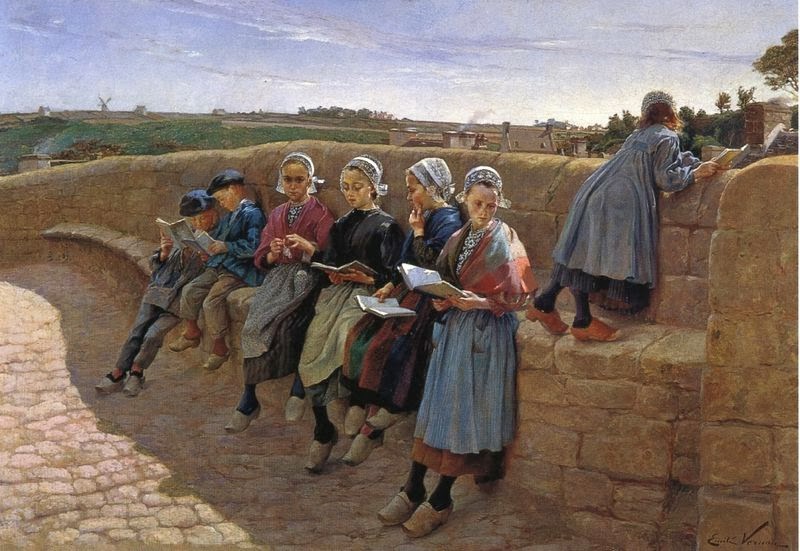
Breton Children Reading by Emile Vernon

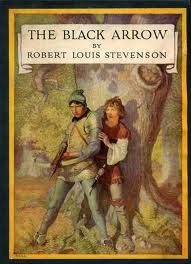
The Black Arrow by Robert Louis Stevenson

“On a certain afternoon, in the late springtime, the bell upon Tunstall Moat House was heard ringing at an unaccustomed hour.”

On my goodness, where do I start?

The Black Arrow is set during the War of the Roses and follows Dick (Richard) Shelton, a young man who discovers that his guardian, Sir Daniel Brackley, is actually responsible for his father’s death.  Dick sets out, not only to seek revenge, but to rescue the beautiful Joanna Sedley from his guardian’s clutches.  In his quest, he gets embroiled in “The War of the Roses,” the battle between the House of York and the House of Lancaster for the English throne and poor Dick must decide which side deserves his loyalty.  An interesting cast of characters assist or impede him on his journeys until he is able to overcome his struggles: win his bride, gain justice for his father and receive a knightship in the bargain.

On one hand, the novel is ripe with the promise of a wonderful adventure: a handsome young man, a romance, an historical battle, power struggles, revenge, trust, loyalty, and betrayal.  However, the manner in which Stevenson crafted this novel is rather bumbling.  There is little introduction to the setting; the characters are plunked into the story with a very brief background; perilous situation after perilous situation is fired rapidly at the reader with sketchy development; and the characters’ actions are contrived to move the plot along rather than with the intent to build strong, plausible characters.

For example, in one particular scene, on the drop of a coin, Dick decides to steal a ship (which no one really knows how to sail), attacks a well-fortified castle, with the result that he barely escapes with his life and ends up shipwrecked.  The skipper from whom he stole the ship is ruined, and it is only when Dick sees the culmination of his actions that he feels any remorse.  A matter of the ends justifying the means, which never sits well with me.

Stevenson himself disliked the book, describing it as “tushery” or the affected use of archaic language. The fact that he wrote it while in the grip of a debilitating case of influenza might act as an excuse for his sub-par creation:

The influenza has busted me a good deal; I have no spring, and am headachy. So, as my good Red Lion Counter begged me for another Butcher’s Boy-I turned me to-what thinkest ‘ou?-to Tushery, by the mass! Ay, friend, a whole tale of tushery. And every tusher tushes me so free, that may I be tushed if the whole thing is worth a tush. The Black Arrow: A Tale of Tunstall Forest is his name: tush! a poor thing!”

Personally I did not have a huge issue with his use of language, it was more the fact that Stevenson’s prose took the appearance of a run-away train and left the reader little time to breathe, as well as the lack of a guide for the readers by giving them merely the faint whiff of background for the story and the characters.  It is worth a read but read it with no expectations; if you anticipate another Treasure Island, this isn’t it.  Sorry, Robert!

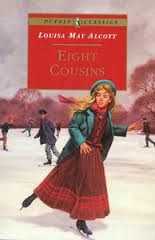
Eight Cousins by Louisa May Alcott


“Rose sat all alone in the big best parlor, with her little handkerchief laid ready to catch the first tear, for she was thinking of her troubles, and a shower was expected.”
And so the reader is introduced to Rose Campbell, who has recently lost her only remaining parent, her father, and who is left to the care of six obtrusive aunts and their families who live on “The Aunt Hill”.  Then, in walks her guardian, Uncle Alec, and her life is changed forever.  Uncle Alec makes certain that Rose does not give in to despair, mitigates the influence of Aunt Myra’s hypochondriac tendencies, and Rose meets her seven boy cousins who turn out to be much more pleasant than expected.
The book follows Rose as she grows from a nervous, delicate, serious child to blossom under her uncle’s moral guidance into a healthy, selfless, admirable, young lady, who sets a good example for her mischievous cousins.  While I usually really enjoy books with a moral lesson, I found Alcott would often get in the way of her characters.  Instead of allowing them to show the correct way to behave, she would interject long moral or societal monologues that detracted from the essence of the message; at times I felt like I was being whacked on the back of the head with a moral baguette.  Even so, her ideas were ahead of their time and interesting to read.  In effect, Rose teaches us to to take care of ourselves, to think of others, and to stay loyal to family.  Eight Cousins is a wonderfully timeless read!

30 DAY CHALLENGE – Day 25

Day 25 – A Character That You Relate to Most

Not only is Anne of Green Gables one of my favourite books, but Anne is one of my favourite characters.  I just loved Anne’s approach to life, her imagination and her loyalty to those dear to her.  After her experience as an orphan, her life at Green Gables was really idyllic for a child, a perfect place to grow character, develop a sense of community and a joyful spirit.  If I could be any character, I would choose to be Anne!

30 DAY CHALLENGE – DAY 22

Day 22 – A Book That Makes You Cry

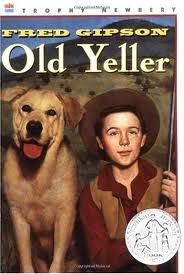
This book was soooooo sad!  As a child reading this book, I cried and cried when Old Yeller died.  I’ve always wanted to re-read it to see if I would find it as heart-wrenching as an adult, but just the thought of experiencing the emotions I did as a child, has made me hesitant.  Does that mean I was traumatized the first time? 😉