Classic Spin #4 – And the Winner Is …… (Drum Roll …..)

From my Classics Spin #4 post, the Spin number chosen was 10, so my classic to read is ……… BLEAK HOUSE!

The spin number worked in my favour as I am scheduled to read Bleak House after David Copperfield, so I won’t have to add any extra books to my ever-expanding pile.  This is good.

However, I must admit that I am not going to start this read until I’ve finished David Copperfield, which won’t be until mid-January so I won’t technically complete the Spin as specified (finish date January 1st).

Perhaps next time I will get one of the books which make me tremble, such as Ulysses, Moby Dick or The Communist Manifesto, but for now I’m happy with such a convenient read.

_____________________________________________________________

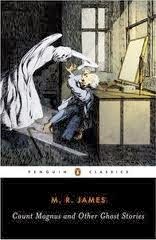
Count Magnus and Other Ghost Stories by M.R. James

“By what means the papers out of which I have made a connected story came into my hands is the last point which the reader will learn from these pages.”  (from Count Magnus)

I first must say that horror genre isn’t really my thing, even if the book is a classic.  So, despite the fact that I decided to read at least one scary story for the month of October, I was not approaching this read with much joy or interest.  How fortunate that I decided to choose M.R. James, who has perhaps changed my opinion of ghost stories forever.

The back of my Penguin Classic, “Count Magnus and Other Ghost Stories” says:  “M.R. James, referred to by H.P. Lovecraft as ‘one of the few really creative masters in his darksome province,’ was a pioneer in the history of the English ghost story, transforming the ghost from a wispy, ethereal figure into an aggressive, malevolent, and all too palpable force of evil ……”

My favourite story in this compilation was “Casting the Runes.”  Eerie and terrifying, it gave the main character some power over the dark force and, instead of becoming a victim, he emerges as triumphant over his spectral foe.  This story was apparently the basis for a classic horror film, “Curse of the Demon” (which I’ve never seen).

I also enjoyed, “Oh, Whistle and I’ll Come to You, My Lad,” where blowing a whistle has very unexpected repercussions, “Canon Alberic’s Scrap-book,” “The Ash Tree“, which, for me, was one of the scariest in the book, “Number 13,” a creepy tale about a haunted hotel room, and “Count Magnus,” where the reader learns to be careful what you ask for.

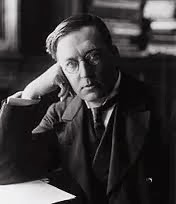
Montague Rhodes James specialized in medieval illuminated manuscripts and was the provost of both Kings College, Cambridge, and Eton College.  He is known for redefining the ghost story by “using contemporary settings and abandoning trite Gothic clichés.”  He was highly articulate, extroverted and sociable and, though he never married, was known for having a great number of treasured friendships.

His introduction to ghosts came at a young, and perhaps impressionable, age:  “What first interested me in ghosts? This I can tell you quite definitely. In my childhood I chanced to see a toy Punch and Judy set, with figures cut out in cardboard.One of these was The Ghost. It was a tall figure habited in white with an unnaturally long and narrow head, also surrounded with white, and a dismal visage.  Upon this my conceptions of a ghost were based, and for years it permeated my dreams.”

What was particularly refreshing about James’ stories was that his treatment of his subject was very subtle.  His stories were full of shadows and dark blots, old trees personified and deaths with no concrete explanation.  He gives the reader just enough for a rough outline, then leaves them to use their imagination to formulate even more terrifying surmises based on his carefully crafted descriptions. One feels that these malevolent spirits should never have been disturbed.  Brrr!

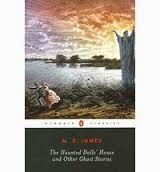
I have The Haunted Doll’s House and other Ghost Stories sitting on my bookshelf and I can’t wait to pick it up and fade into the supernatural world of James’ ghostly tales.

Classics Club Spin #4

For this spin, the rules are the following:

1.  Go to your blog.
2.  Pick twenty books that you’ve got left to read from your Classics Club List.
3.  Try to challenge yourself: list five you are dreading/hesitant to read, five you
      can’t WAIT to read, five you are neutral about, and five free choice (favourite
      author, rereads, ancients — whatever you choose.)
4.  Post that list, numbered 1-20, on your blog by next Monday.
5.  Monday morning, we’ll announce a number from 1-20.  Go to the list of twenty
      books you posted, and select the book that corresponds to the number we 
      announce.
6.  The challenge is to read that book by January 1, even if it’s an icky one you
      dread reading!  (No fair not listing any scary ones!)

I used the random list organizer here to choose the 20 books from my master list.  After having to drop a few books for various reasons (out of series order, they are scheduled with a group at a certain time, etc.) my list looked like this:

  1. The Bucanneers (1938) – Edith Wharton
  2. Paradise Lost (1667) – John Milton
  3. The Mysteries of Udolpho (1794) – Ann Radcliffe
  4. Thus Spoke Zarathustra (1883 – 1885) – Freidrich Nietzsche
  5. The Cloister and the Hearth (1861) – Charles Reade
  6. Common Sense (1775 – 1776) – Thomas Paine
  7. Slaughterhouse Five (1969) – Kurt Vonnegut
  8. Travels with a Donkey in Cévennes (1879) – Robert Louis Stevenson
  9. The Mill on the Floss (1860) – George Eliot
  10. Bleak House (1852/53) – Charles Dickens
  11. The Moonstone (1868) – Wilkie Collins
  12. Tales of Ghosts and Men (1910) – Edith Wharton
  13. Antigone (441 B.C.) – Sophocles
  14. Tevye the Dairyman and Motl the Cantor’s Son (1894) – Sholem Aleichem
  15. The Warden (1855) – Anthony Trollope
  16. Murder in the Cathedral (1935) – T.S. Eliot
  17. Essays (1580) – Michel de Montaigne
  18. We (1921) – Yevgeny Zamyatin
  19. Utopia (1516) – Thomas More
  20. The Pilgrim’s Regress (1933) – C.S. Lewis

Then I broke them into the listed categories …….

5 Books I’m Hesitant to Read:

  1. Paradise Lost (1667) – John Milton
  2. Thus Spoke Zarathustra (1883 – 1885) – Freidrich Nietzsche
  3. Common Sense (1775 – 1776) – Thomas Paine
  4. Essays (1580) – Michel de Montaigne
  5. Utopia (1516) – Thomas More


5 Books I Can’t Wait to Read:

  1. Travels with a Donkey in Cévennes (1879) – Robert Louis Stevenson
  2. The Bucanneers (1938) – Edith Wharton
  3. The Pilgrim’s Regress (1933) – C.S. Lewis
  4. The Warden (1855) – Anthony Trollope
  5. The Cloister and the Hearth (1861) – Charles Reade

5 Books I Am Neutral About Reading:

  1. The Mill on the Floss (1860) – George Eliot
  2. Murder in the Cathedral (1935) – T.S. Eliot
  3. We (1921) – Yevgeny Zamyatin
  4. Slaughterhouse Five (1969) – Kurt Vonnegut
  5. The Mysteries of Udolpho (1794) – Ann Radcliffe

5 Free Choice:

  1. Tevye the Dairyman and Motl the Cantor’s Son (1894) – Sholem Aleichem
  2. Bleak House (1852/53) – Charles Dickens
  3. The Moonstone (1868) – Wilkie Collins
  4. Tales of Ghosts and Men (1910) – Edith Wharton
  5. Antigone (441 B.C.) – Sophocles

Please God, don’t let me get Montaigne’s Essays.  That will kill me, especially with the January 1st deadline.  I await the number to be chosen with trepidation and hope it is one of the books that I already have in progress (The Pilgrim’s Regress and Tales of Men and Ghosts), although I know that is not the purpose of the spin.  Normally I would be happy to be challenged, but with Christmas just around the corner I wonder if I will be able to accomplish it.

Strangely this is a little like gambling ………..  although, safe gambling with a purpose of higher education.  No wonder it’s so fun!

________________________________________________________


A to Z Survey

I found this survey randomly on A World of Books and decided to give it a whirl.

Author you’ve read the most books from:
Yikes, I think it would be either Jane Austen or Arthur Ransome, thanks to his Swallows and Amazons series.
Best Sequel Ever:
Well, I’m going to change this to best book in a series and my vote would go to Rilla of Ingleside from the Anne of Green Gables series.  It was a more serious book than the others, exploring the effects of WWI on Gilbert, Anne, their family and the people of the town of Ingleside.  Montgomery did an excellent job.
Currently Reading:
Too many books at once, however I will pick only two to list here:  War and Peace by Leo Tolstoy and David Copperfield by Charles Dickens.
Drink of Choice While Reading:

During the day, water and during the evening, either tea or water.  I especially like Honeybush Tea for its warm, comforting taste.


E-reader or Physical Book?
I MUCH prefer a physical book …….. somehow reading isn’t truly reading for me with a Kindle but I have to admit e-readers are handy and all those free classics are hard to resist.
Fictional Character You Probably Would Have Actually Dated In High School:
Hector from The Iliad.  I love how he conducts himself with honour and bravery and how he treats his wife, Andromache.  
Glad You Gave This Book A Chance:
To The Lighthouse by Virginia Woolf – I did not think I would have the taste or patience for her works but for some reason I loved the stream of consciousness style of writing in this book.  I don’t think it would have worked for any plot but in this story it was lovely.  I enjoyed it much more than expected.
Hidden Gem Book:
The Picture of Dorian Gray by Oscar Wilde – I hated it for about three quarters of the book but towards the end I realized the value of his experiences as good warning against certain life and lifestyle choices.  It became one of my favourites.
Important Moment in your Reading Life:
When I discovered the classics and realized that they deal with timeless issues, problems and human emotion, yet there seems to be more scope and deeper treatment of these situations in past times.  Such interesting content that intersects with life.
Just Finished:
New Grub Street by George Gissing.  I recently discovered Gissing and this was my first read of his works.  I enjoyed it but found that he manipulated his characters just a wee bit too much for my liking.  His societal commentary was interesting but he needed to be more subtle.
Kinds of Books You Won’t Read:
Much modern fiction.  If the plot is simplistic, correct grammar almost non-existent, the characters not believable, the social message more important than the other parts of the book and there is no real life-learning involved in the book, I have little interest in reading them.  Not to say I don’t read any modern books, but I am very selective.
Longest Book You’ve Read:

I think it would be The Count of Monte Cristo, with Don Quixote coming in a close second.  I’m currently reading War and Peace so that would count too when I finish.


Major book hangover because of:
Rebecca by Daphne Du Maurier.  I hated this book.  Other than the wonderful descriptions, the story was completely unbelievable, forced and pretty much ridiculous.  When the main character accepted her husband as a murder without a blink of an eye, I was done.  I’m not sure I could even try another du Maurier novel.
Number of Bookcases You Own:
Can you believe, seventeen?  
One Book You Have Read Multiple Times:

A Christmas Carol by Charles Dickens.  We read it each Christmas.  I’ve also read Beowulf and Pride and Prejudice quite a few times, Mere Christianity by C.S. Lewis, and The Undergound History of American Education I try to read at least once every couple of years.


Preferred Place To Read:
In a big, cushy comfortable chair on a dreary day with no noise other than nature.
Quote that inspires you from a book you’ve read:
“It is absurd to hold that a man should be ashamed of an inability to defend himself with his limbs, but not ashamed of an inability to defend himself with speech and reason; for the use of rational speech is more distinctive of a human being than the use of his limbs.” 
― Aristotle, The Rhetoric & The Poetics of Aristotle

“In the world it is called Tolerance, but in hell it is called Despair ….. the sin that believes in nothing, cares for nothing, seeks to know nothing, interferes with nothing, enjoys nothing, hates nothing, finds purpose in nothing, lives for nothing, and remains alive because there is nothing for which it will die.”
—  Dorothy L. Sayers

Reading Regret:
With life right now I do not have enough time to read.  I find myself squeezing in my reads between responsibilities and a busy life.  It is just the seasons of life and I look forward to a period when I will have more personal time to devote to reading.
Series You Started And Need To Finish(all books are out in series):
I’m embarrassed to admit it but it is The Chronicles of Narnia.  Especially embarrassing because C.S. Lewis is one of my favourite authors.  I WILL read it completely in 2014 —- one of my resolutions!
Three of your All-Time Favorite Books:
How can one choose only three?!!  If pressed and forced to make a quick decision, I would say, The Iliad, The Bible and Pride and Prejudice.
Unapologetic Fangirl For:
The Dharma Bums by Jack Kerouac.  People ask me why I was interested in reading about dope smoking, irresponsible, young hippies but honestly, I found their outlook, in some aspects, refreshing.
Very Excited For This Release More Than All The Others:
Well, since I’m not really that interested in modern books, I can’t think of one I’m really excited about.  Perhaps another book by David McCullough.  Sadly, Christopher Hibbert recently passed away, or he would be another author I would add.
Worst Bookish Habit:
I annotate in my paperbacks.  Gasp!  But I find it really helps me experience a deeper read.  My two most annotated books are Beowulf and Mere Christianity.
X Marks The Spot: Start at the top left of your shelf and pick the 27th book:
A Treatise of Human Nature by David Hume, Volume 2.  No, I have not read it yet! 😉

Your latest book purchase:
All Hallows’ Eve by Charles Williams.
ZZZ-snatcher book (last book that kept you up WAY late):
Guilt by Jonathan Kellerman, but only because I wanted to finish it and get on to my next classic!

History Reading Challenge 2014

Each year I try to schedule in more non-fiction books into my reading lists.  Sometimes I succeed in my attempts but most times I fail miserably.  So what better way to force myself to read more non-fiction than by joining a challenge and being held accountable!  I came across this challenge on one of my favourite blogs and was immediately hooked.

History is one of my favourite non-fiction genres.  What particularly intrigued me about this challenge was the detailed requirements that I found to be eminently sensible.

1.  The history books must be written by an historian and pure non-fiction.  How many times have I been frustrated by books where the author is unable to understand the era which he is writing about, and the reader is left with much of the author’s opinions as well as modern ideas applied to historical issues?  This requirement should minimize this problem.

2.  It must be a work formed through investigation and research.  Another issue that horrifies me is the number of new non-fiction histories which list a bibliography that includes only modern or relatively recent books.  How on earth could the author get a reasonable perspective this way?  So I will make sure my choices have broad investigation and research.

3.  Biography can be chosen but not autobiography as it can lack historical objectivity.  I had never even thought of this but I can certainly see her point.  Another very sensible requirement.

4.  She provides wonderful analysis questions to answer after the book is finished.  An excellent way to get more meaning out of a read.

Now to try to narrow it down.  I was going to go for the “scholar” level of 4-6 books, but, in keeping with my resolution to read less but more deeply next year, I will choose the “student” level of 1-3 books.

At the top of my list are the following:


I’ll have to check if they all qualify but these are what I could come up with off the top of my head.

Oooo, I can’t wait until the new year!

Books read:

1.  The Guns of August – Barbara Tuchman
2.  The Way of King Arthur – Christopher Hibbert
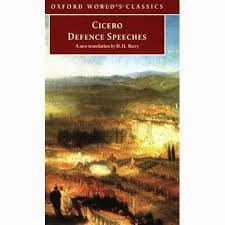
3.  Cicero’s Defence Speeches
4.  The Sayings of the Desert Fathers

The Beast by Faye Kellerman

There’s not much I can say about this one.  The Kellermans are my brain candy that I indulge in about once per year.  The writing isn’t stellar and the plots are formulaic but I’ve been reading them long enough to get interested in the characters and, since they are readable in less than 24 hours, they don’t cramp my classical style!  The content, however, is not something that I would want to expose myself to on a regular basis.

I enjoy the addition of their foster son, Gabe, to the Decker/Lazarus household.  The Beast is a better-than-average book in the series.

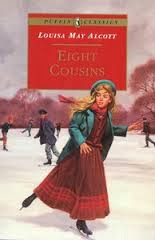
Eight Cousins by Louisa May Alcott


“Rose sat all alone in the big best parlor, with her little handkerchief laid ready to catch the first tear, for she was thinking of her troubles, and a shower was expected.”
And so the reader is introduced to Rose Campbell, who has recently lost her only remaining parent, her father, and who is left to the care of six obtrusive aunts and their families who live on “The Aunt Hill”.  Then, in walks her guardian, Uncle Alec, and her life is changed forever.  Uncle Alec makes certain that Rose does not give in to despair, mitigates the influence of Aunt Myra’s hypochondriac tendencies, and Rose meets her seven boy cousins who turn out to be much more pleasant than expected.
The book follows Rose as she grows from a nervous, delicate, serious child to blossom under her uncle’s moral guidance into a healthy, selfless, admirable, young lady, who sets a good example for her mischievous cousins.  While I usually really enjoy books with a moral lesson, I found Alcott would often get in the way of her characters.  Instead of allowing them to show the correct way to behave, she would interject long moral or societal monologues that detracted from the essence of the message; at times I felt like I was being whacked on the back of the head with a moral baguette.  Even so, her ideas were ahead of their time and interesting to read.  In effect, Rose teaches us to to take care of ourselves, to think of others, and to stay loyal to family.  Eight Cousins is a wonderfully timeless read!

New Grub Street by George Gissing

“As the Milvains sat down to breakfast the clock of Wattleborough parish church struck eight; it was two miles away, but the strokes were borne very distinctly on the west wind this autumn morning.”

I wanted to like New Grub Street more than I actually did.  Gissing obviously wanted to show the struggle which writers faced where they were required to produce a product that would “sell” rather than write something they considered art.

Jasper Milvain is presented as a middle-class man who is rather lazy but has a talent for finding his place in the literary business because of his aptitude for targeting publishers with a product that the public wants.  He has no real standards and no true feeling and his only aim is to know the right people, make an advantageous marriage and grow richer.

Edwin Reardon is a writer who has had mild success with a novel and is attempting to write another, however his marriage to Amy Yule, a woman slightly higher in social status, puts pressure on him to perform and he suffers from writer’s block.  We experience his slow spiral into poverty, culminating in his death.

Other characters populate the novel, such as Marian Yule, who falls in love with Jasper, only to learn through his disloyalty, that he is a money-grasping swine.  Jasper’s two sisters play important roles and the lesser characters of Alfred Yule, Marian’s father, and the writers Whelpdale and Biffen (who sticks to writing for art) add depth to the story.

On one hand, the story was excellent but I had issues with Gissing’s handling of the characters.  Often I found they acted in ways particularly to get a point of Gissing’s across and not because they would naturally act in that manner.  This took away from the plot and diminished the issues the story was meant to bring to light.  In fact it bothered me so much, I really lost focus during a few points in the novel.  Overall it was a good read but I felt that the characters struggled to maintain integrity and plausibility.  I would give it 3.5 stars.


30 DAY CHALLENGE – Day 30

Day 30 – Your Favourite Book of All Time

Can I cry “unfair”?!  How can one, after decades of reading, choose just one book as their favourite?  Impossible.  So, therefore I will choose a few:


All of C.S. Lewis’ books, basically because they inspire such deep thoughts and he writes as if you and he were having a conversation.  He is also very respectful, yet can be sharply direct and humorously witty.  I read at least one of his books every year.


I don’t really think I have to even explain my choice with this one.  Austen makes all the characters so engaging and each play their parts with an unmatched brilliance.  I have read it a number of times.


I love how Bronte made Jane meek, yet with an unquenchable spirit, and Rochester is certainly not your perfect male hero however his character is complementary to hers.  The balance between them is precarious, yet perfect.  Excellent!


As for children’s books, I will choose The Phantom Tollbooth.  A brilliant book for its play on puns and idioms, it is a fun read for all ages.


30 DAY CHALLENGE – Day 29

Day 29 – A Book You Liked But Everyone Else Hated

I was so looking forward to reading this book with my online reading group.  I had read it once already and, in spite of its “streams of consciousness” style, I was able to just let myself go and flow along with the character’s thoughts, almost as if you were lying in a stream and letting the water rush over you.  Well, as it turned out, most readers were put off by Woolf’s manner of writing and found the book to be confusing and not particularly cohesive.  

While I was surprised by the reactions, I could understand them.  Some novels speak to certain people and not to others and this was obviously one of them.  I gave it five stars, but I suspect I was the only one.