Back to the Classics Challenge 2014

Here it is!  The challenge I have been waiting for!  Back to the Classics Challenge 2014 is being hosted this year by Books and Chocolate.  She has taken over for Sarah at Sarah Reads Too Much and has already done a wonderful job organizing this challenge.

The rules for this year are as follows, including a few changes:

This year there are six required categories and five optional categories.

1.  20th Century Classic   The Man Who Was Thursday by G.K. Chesterton
2.  19th Century Classic   David Copperfield by Charles Dickens
3.  A Classic By A Woman Writer  Mrs. Dalloway by Virginia Woolf
4.  A Classic In Translation   Son Excellence, Eugène Rougon by Émile
                                                  Zola
5.  A Wartime Classic  War and Peace by Leo Tolstoy
6.  A Classic by an Author Who is New to You  The Warden by Anthony Trollope

Optional:

1.  An American Classic   The Old Man and the Sea by Ernest Hemingway
2.  A Classic Mystery/Suspense Thriller  The Big Sleep by Raymond Chandler
3.  A Classic Historical Fiction Book  The Once And Future King by E.B. White
4.  A Classic That Has Been Adapted into a T.V. or Movie Series  Othello by William Shakespeare
5.  Extra Fun Category – Write a Review of #4  Othello movie reviews

She also has made another rule:  All classics must be published 50 years ago or earlier, so nothing before 1964 will be considered a classic.

Please check out her blog for information on prizes and additional explanations.

Even without a blog, I participated in this challenge every year.  It is my easiest challenge and probably the most fun for me.  So if this challenge sounds like fun to you too, pop over to Books and Chocolate to check it out.  And good luck to everyone!

Books on France 2014 Reading Challenge

Words and Peace is having a Books on France 2014 Reading Challenge.  Since I am going through the Rougon-Macquart series by Emilé Zola, this will be an easy challenge for me.

The rules for this challenge are:

Any book related to France

  • it can be set in France
  • written by a French author
  • written in French, by authors from any country
  • about a French theme: French cuisine, French fashion, etc.
  • it can be a book counted for another challenge

All genres are accepted
All media is accepted

LEVEL 1: “un peu” = 3 books

LEVEL 2: “beaucoup” = 6 books
LEVEL 3: “passionément = 12 books
LEVEL 4: “doublement passionément” = 24 books
LEVEL 5: “a la foile” = 52 books

Please see her post for details about a special giveaway!

I will go for LEVEL 1, because I’m not sure if I will make LEVEL 2 but I will give it a try.

1.  Son Excellence, Eugène Rougon – Émile Zola

2.  Candide – Voltaire

3.  Madame Bovary – Gustave Flaubert

4.  La Curée – Émile Zola

5.  La Parure (The Necklace) – Guy de Maupassant (en français)

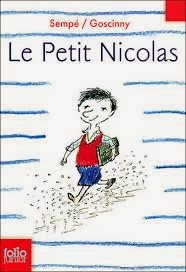
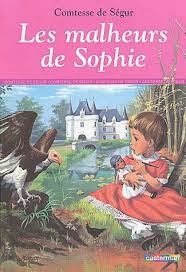
In addition to Zola, I am going to try to read at least one book in French in 2014, possibly two.  Sadly I am going to make them children’s books, because my French needs serious review.  My choices are:


Bonne chance!

The Apology of Socrates by Plato

The time is 399 B.C. and Socrates has been charged with the corruption of youth and for believing in gods other than the gods of Athens.  His defence?  He was told by Chaerophon, a companion of his, that the gods at Delphi had declared that no one was wiser than Socrates, and Socrates, knowing that he was neither great nor wise, set out to find a wiser man than he.  But ….. surprise! …… with each man, or segment of society Socrates questioned, he discovered that, while most men had knowledge, they were lacking wisdom and, as of the date of the trial, it does not appear that he has found one wise man.

So what made these respectable men of Athens so enraged that they demanded Socrates’ death?  Perhaps the problem was that Socrates didn’t merely question men …… he grilled them, he roasted them, he flambéd them, he broiled them and he probably verbally flogged them, before going on his merry way.  Is it any wonder that a large segment of Greek society was out for his blood?  Yet Socrates was not ignorant of his unfortunate affect on people.  He was aware of the brooding animosity of the enemies he had left scattered in his wake, but he proclaimed that his duty to God, nay, his responsibility to God, was to answer the question that was set before him:  Is Socrates the wisest man?

“Strange, indeed, would be my conduct, O men of Athens, if I who, when I was ordered by the generals whom you chose to command me at Potidea and Amphipolis and Delium, remained where they placed me like any other man, facing death —- if, I say, now, when, as I conceive and imagine, God ordered me to fulfil the philosopher’s mission of searching into myself and other men, I were to desert my post through fear of death, or any other fear; that would indeed be strange, and I might justly be arraigned in court for denying the existence of the gods, if I disobeyed the oracle because I was afraid of death: then I should be fancying that I was wise when I was not wise.  For this fear of death is indeed the pretence of wisdom, and not real wisdom, being the appearance of knowing the unknown; since no one knows whether death, which they in their fear apprehend to be the greatest evil, may not be the greatest good.  Is there not here conceit of knowledge, which is a disgraceful sort of ignorance?”

And to the possibility of being freed on the condition that he agreed to no longer attempt to influence the people (or to tell the truth, as Socrates would term it), he responds:

” ……. if this was the condition on which you let me go, I should reply:  Men of Athens, I honour and love you; but I shall obey God rather than you, and while I have life and strength I shall never cease from the practice and teaching of philosophy, exhorting anyone whom I meet after my manner, and convincing him, saying: O my friend, why do you who are a citizen of the great and mighty and wise city of Athens, care so much about laying up the greatest amount of money and honor and reputation, and so little about wisdom and truth and the greatest improvement of the soul, which you never regard or heed at all?  Are you not ashamed of this? …….”

As far as Socrates was concerned, he had a duty to God and to truth to fulfill his purpose and nothing was going to sway him from this quest.  His rhetoric is brilliant but he really makes no effort to placate his accusers.  Though his life is important, which is evidenced by his attempt to refute the charges, there is something he places in much higher esteem:  the truth and his obligation to it.

“….. I cannot hold my tongue, you will not believe that I am serious; and if I say again that the greatest good of man is daily to converse about virtue, and all that concerning which you hear me examining myself and others, and that the life which is unexamined is not worth living …..”  

The Death of Socrates
by Jacques-Louis David

Sadly, the verdict was death for Socrates, his final words a moving epitaph:

“The hour of departure has arrived, and we go our ways — I to die, and you to live.  Which is better, God only knows.”

The Pre-Printing Press Challenge 2014

I stumbled across The Pre-Printing Press Challenge at All Booked Up via Howling Frog Books (can you tell that I like her blog?).  It’s rules are reasonably unstructured so I thought it might fit nicely into my year.

The rules of the Pre-Printing Press Challenge:

     1.  All books must have come out before 1440, when the printing
          press was first invented.
     2.  Books chosen for this challenge can overlap with other
          challenges.
     3.  Books can be translated into the language of your choice.
     4.  All the books you’ve chosen must be read by December 31,
         2014.
     5.  You can read 1-3 books, 4-6 books, 7-9 books or 10 or more
          books if you’re feeling particularly ambitious.
     6.  The choice of books is up to you.  There are not set reading
          lists, and you don’t have to set one when you join.
     7.  Post your blog address where you’ll be posting your
          comments on your choice of books in the comments of
          this post when you  join, and tell me how many books
          you’ve chosen.  I’ll set up a link to participating blogs 
          from here.
     8.  Above all, have fun!!!

The challenge starts December 1, 2013.

So, remaining list-less (that’s me!) I will add my books to the list below as they are read:

1.  The Apology (of Socrates) by Plato  —  December 12, 2013

2.  The Odyssey by Homer  —  March 23, 2014

3.  Oedipus Rex by Sophocles —  May 25, 2014

4.  Oedipus at Colonus by Sophocles —  June 24, 2014

5.  Confessions by St. Augustine —  June 30, 2014

6.  The Book of Margery Kempe — August 1, 2014

7.  The Epic of Gilgamesh — August 14, 2014

8.  Defence Speeches by Cicero — August 20, 2014

9.  The Sayings of the Desert Fathers — August 25, 2014

10.  The Inferno by Dante Alighieri — October 15, 2014

11.  The Vita Nuova by Dante Alighieri — October 25, 2014

12.  Le Morte d’Arthur by Thomas Malory — December 6, 2014

I’m so glad that this challenge begins in December so I can get started right away!

Russian Literature Challenge 2014

O at Behold the Stars came up with the wonderful idea of a Russian Literature challenge for 2014!

Everyone is probably wondering why on earth would I join another challenge?  I was wondering the same thing, but his one is too good to pass up.  I have been making my way through the Russian literary greats but much too slowly, and this challenge will help me focus and give me connection with friends who are doing the same thing as I.  What better reason to join?

The requirements are as follows:

Because this is a classics blog, I would limit it to classic literature. It can be a novel by a Russian author or a novel set in Russia, and how you choose to define “classic” is up to you. And, of course, you can use books from any other challenge you’ve set yourself. Finally, you can list list your books before you start, or, like me, you can just explore and read whatever comes your way.

There are four levels:

  • Level one: 1 – 3 books
  • Level two: 4 – 6 books
  • Level three: 7 – 12 books
  • Level four: 12 + books
If there’s enough interest, I’ll put a post up each quarter for people to link any posts may have written.
So, if you want to join in, write a post on your own blog writing your intentions, then leave me a comment so I know to read it.

I am going to go completely against my nature and be conservative, aiming for Level One.

1.  Eugene Onegin – Alexander Pushkin

2.  The Idiot – Fyodor Dostoyevsky

3.  Doctor Zhivago – Boris Pasternak

4.  War and Peace – Leo Tolstoy

5.  Fathers and Sons – Ivan Turgenev

The Eugene Onegin Read-Along will soon give me my first Russian book for the year.

Best of luck with the challenge, everyone!  And thanks to O for creating it!

2014 TBR Pile Challenge

Straight from Roof Beam Reader and under the gentle influence of Jean at Howling Frog Books, I have decided to tackle the 2014 TBR Pile Challenge.

This challenge is somewhat different from my other TBR Challenge.  The rules are:

The Goal: To finally read 12 books from your “to be read” pile (within 12 months).
Specifics:
1. Each of these 12 books must have been on your bookshelf or “To Be Read” list for AT LEAST one full year. This means the book cannot have a publication date of 1/1/2013 or later (any book published in the year 2012 or earlier qualifies, as long as it has been on your TBR pile – I WILL be checking publication dates). Caveat: Two (2) alternates are allowed, just in case one or two of the books end up in the “can’t get through” pile.
2. To be eligible, you must sign-up with Mr. Linky on Roof Beam Reader’s site – link to your list (so create it ahead of time!) and add updated links to each book’s review. Books must be read and must be reviewed (doesn’t have to be too fancy) in order to count as completed.
3. The link you post in the Mr. Linky must be to your “master list” (see Roof Beam Reader’s site). This is where you will keep track of your books completed, crossing them out and/or dating them as you go along, and updating the list with the links to each review (so there’s one easy, convenient way to find your list and all your reviews for the challenge). See THIS LINK for an idea of what I mean. Your complete and final list must be posted by January 15th, 2014.
4. Leave comments on Roof Beam Reader’s post as you go along, to update us on your status. Come back to the post if/when you complete this challenge and leave a comment indicating that you CONQUERED YOUR 2014 TBR LIST! Every person who successfully reads his/her 12 books and/or alternates (and who provides a working link to their list, which has links to the review locations) will be entered to win a $50 gift card from Amazon.com or The Book Depository!
5. Crossovers from other challenges are totally acceptable, as long as you have never read the book before and it was published before 2013!
*Note – You can read the books on your list in any order; they do not need to be read in the order you have them listed. As you complete a book – review it, and go back to your original list and turn that title into a link to the review – that will keep the comments section from getting ridiculously cluttered. For an example of what I mean,Click Here.
Monthly Check-Ins: On the 15th of each month, Roof Beam Reader is going to post a “TBR Pile Check-In.” This will allow participants to link-up their reviews from the past month and get some recognition for their progress. There will also be small mini-challenges and giveaways to go along with these posts (Such As: Read 6 books by the June Check-in and be entered to win a book of your choice!). This will help to keep us all on track and make the challenge a bit more engaging/interactive. 

  My original hesitation in joining this challenge, was due to the fact that I am terrified of making lists in case I don’t follow them.  However, I have decided to really challenge myself in 2014 by participating in this challenge.  My list is as follows:

  1.  Defense Speeches by Cicero  August 20, 2014

  2.  Le Morte d’Arthur by Thomas Mallory  December 6, 2014

  3.  Frankenstein by Mary Shelley   April 4, 2014

  4.  The Great Divorce by C.S. Lewis   June 15, 2014

  5.  The Epic of Gilgamesh  August 14, 2014

  6.  Stories from the East from Herodotus by Alfred J. Church


  7.  The Sayings of the Desert Fathers  August 25, 2014

  8.  Tom Brown’s School Days by Thomas Hughes


  9.  Socrates by Paul Johnson


10.  Daniel Deronda by George Eliot  February 24, 2014

11.  Idle Thoughts of an Idle Fellow by Jerome K. Jerome


12.  The Man Who Was Thursday by G.K. Chesterton  August 20, 2014

And my alternates:

1.  Allegory of Love by C.S. Lewis

2.  Oedipus Rex/Oepidus at Colonus/Antigone by Sophocles  December 28, 2014

Yes, I am actually going to attempt to follow a list!  Everyone wish me luck …….. I’ll need it!

Eugene Onegin Read-Along

Marian at Tanglewood is having a Eugene Onegin Read-Along for 5 weeks beginning January 7, 2014.  Pushkin was seen as setting the foundation for Russian literature so if you are looking for an introduction, this work is a wonderful place to start.

Here is the schedule:

Ch. 1 & 2 – January 7 to 16
Ch. 3 & 4 – January 16 to 25
Ch. 5 & 6 – January 25 – February 3
Ch. 7 & 8 – February 3 to 12

She has decided to allow 1 1/2 weeks per every two chapters, which seems like a decent balance between going at a regular clip and dragging on too long.

Please see the Tanglewood blog for further instructions and also a lovely calendar for a visual schedule of the read.

Since I just finished reading Eugene Onegin, I am very excited to be participating in the discussion of Pushkin’s “untranslatable” poem.  Thanks for organizing the read, Marian!

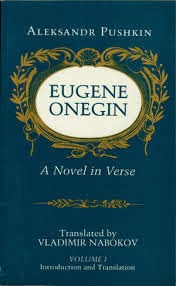
Eugene Onegin by Alexander Pushkin

“My uncle – high ideals inspire him;
but when past joking he fell sick,,
he really forced one to admire him –
and never played a shrewder trick.”

Eugene Onegin is a fun-loving, rakish young man who lives carelessly among fashionable society and cares nothing for any of the responsibilities of life.  Yet soon his wild living becomes stale and, desperately bored, he moves to an estate in the country inherited from his uncle, to recapture the zest in life.  Onegin’s lack of growth and a stable character causes him to return to his constant feelings of ennui and he passes his days in careless endeavours.  Enter, Tatyana, a sheltered girl who falls passionately in love with Onegin.  Finally, amid her torments of love, she composes a letter to Onegin, confessing her devotion.  Giving her a surprisingly gentlemanly refusal, he then, on a whim, proceeds to seduce his friend, Vladimir Lensky’s, future wife, Olga, who is the sister of Tatyana.  Lensky, in a fit of poetic rage, challenges Onegin to a duel, where Lensky is shot through the heart.  A number of years later, Onegin spies a married Tatyana at a party and is immediately drawn to her.  He pursues her to the point of exhaustion and finally writes her a letter acknowledging his love and eternal devotion.  Tatyana, in spite of still harbouring tender feelings for Onegin, spurns him from the outset, and eventually declares that she would never be unfaithful to her husband.  Because Onegin has never made any effort to develop into anything other than an empty man, he is left with a bleak future ahead of him.

I’ve hear it mentioned that Tatyana is the true hero of this novel, and her strength and effect is certainly evident.  While she shows a naivety and a juvenile infatuation with Eugene when she first meets him, years later when they meet again, she exhibits the poise and maturity of a sophisticated and experienced young woman.  In the magnificent finale, she admits her love for him but says, “… but I’ve become another’s wife — and I’ll be true to him for life.”   Onegin has spent his whole life blowing around like a leaf in the wind, consumed by ennui, driven by precipitate decisions and self-absorption, while Tatyana grows and blossoms into a strong woman with firm convictions.  She became a truly admirable character.

One wonders at the commonalities between this work and Pushkin’s life story.  Pushkin, himself, was no stranger to duelling.  He was involved in many contests before being killed in a duel while defending his wife’s honour, echoing his poet Lensky’s fate in an ironic prophesy. And, of course, there was the question of Pushkin’s wife being unfaithful, as Olga was untrue to Lensky, which one can also contrast with Tatyana remaining true to her vows of marriage at the end of the tale.

In one way, the poem is an eerie premonition of future events, while on the surface it takes many forms; playful, romantic, humorous, mocking, tragic.  It’s a tribute to Pushkin’s genius that he was able to artfully blend a myriad of themes and emotions into a introspective classic that examines the human condition and began a Russian literary tradition.

(translated by Sir Charles Johnston)


Classic Children’s Literature Event – January 2014

Amanda at Simpler Pastimes is hosting a Classic Children’s Literature Event for January 2014.  I will be reading at least two classic children’s books in January and I will try to participate in The Wizard of Oz read that she has scheduled for this month.  It is one of the few well-known children’s books that I haven’t yet read, so I am looking forward to it!

Rules for the challenge:

~  During the month of January, read as many Children’s Classics as you
    wish and post about them on your blog and/or leave a comment on the 
    event page on Amanda’s blog.  She will have a link page starting the first
    of the year to gather posts so that we may share as we go.

~  The optional RAL title:  The Wonderful Wizard of Oz by L. Frank Baum.
     She plans on discussion the weekend of January 24-26.

~  Use your own judgement for what fits the category but here are some 
     guidelines:
            *  Read books prior to 1963.
            *  Books appropriate for approximately an elementary-school aged
                child or preteen including fairy tales.
            *  Feel free to included books from any country, in translation or not.
            *  Feel free to double up with other events or challenges if you wish.

~  There is no deadline for joining or participating (except, of course, the end 
    of January.

Most important:  Have Fun!

I will start my list here and hope to get at least 2 – 4 done by the end of the month:

1.  The Wizard of Oz – L. Frank Baum

2.  The Lion, the Witch and the Wardrobe – C.S. Lewis

3.  Once and Future King – T.H. White

4.  Prince Caspian – C.S. Lewis

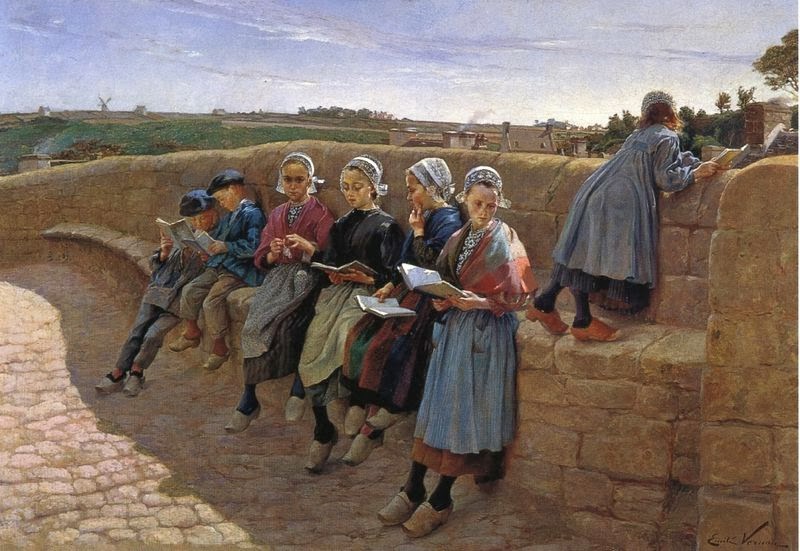
Breton Children Reading by Emile Vernon

The Classics Club – December Meme Question #17

What is your favourite classic book?

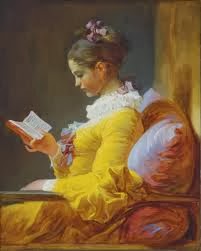
A Young Girl Reading by Jean-Honoré Fragonard

Being a lover of the classics it is impossible for me to pick just one book. There are a few dozen that come to mind, all with special memories.  It is like trying to choose a favourite from among your children.  So instead, I am going to choose my favourite classic book from this year: 2013.

And the winner is:

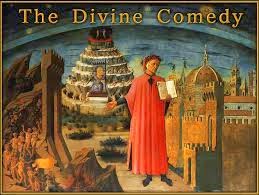
Dante Alighieri’s epic work, The Divine Comedy, was just amazing in its scope. This was my first read, so I spent much of my time attempting to familiarize myself with the various historical figures and allusions.  I plan a re-read in another couple of years.  This time I read the translation by John Ciardi that, while not the best one for sticking to original content, apparently conveys the “flavour” of Dante the best of all the translations.  Next time I will probably try the Mandelbaum translation which is more balanced in content.  Dorothy Sayers’ translation intrigues me as well but she sacrificed content for form, so it is not one of the higher recommendations.

Honorable mentions go to:

The House of Mirth was a surprise star for me this year.  Wharton’s masterful handling of the character of Lily Bart captured my respect and admiration.  She paints on the surface, a scheming, artful coquette who is, in spite of her humble origins, at ease in fashionable society, yet underneath we get glimpses of a purity and innocence that seem impossible given her experiences.  The story unfolds into a poignant and tragic ending which left me speechless yet anticipating my next Wharton read.

What can one say about Pride and Prejudice?  I usually read it at least once every two years and enjoy it just as much each time.  Lizzy’s spunky character and her ability to mold Darcy’s prideful reserve into to a more mellow and empathetic character is an entertaining read, and the cast of supporting characters is outstanding!  A true classic!

____________________________________________________________