
 The tenth story from Christmas Stories from the Everyman’s Pocket Classics is a story from Vladimir Nabokov called Christmas. Just like I’d read nothing from Saki until I’d read the previous story, I had read nothing by Nabakov either, but this tale was an enchanting crafting of a story, unlike Saki’s before.
It is just before Christmas but instead of the joyful tidings of the season, Nabokov gives us an inverted story which tugs at our hearts, especially with the contrast of the season.
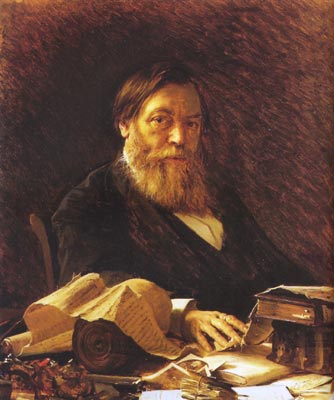
Russian writer Pavel Melnikov (1876) Ivan Kramskoy ~ source Wikiart
It is Christmastime but not for Sleptsov, for this man is in a mire of profound grief. Only yesterday he had buried his much beloved son and the sadness is overwhelming him. He remembers his son’s laughter, and cheerfulness and the joy he took in his insect collection. In fact, as he surveys his son’s room, he discovers a biscuit tin with a pear-shaped cocoon, some writing about his insects and, to his father’s surprise, notes about a girl whom he had loved. Back in his own room, he is sure he will die tomorrow, even though his servant had informed him that tomorrow would be Christmas. But in that fragile second, he hears a snap and sees that, with the warmth of the room, the chrysalis in the tin is splitting open and a creature is emerging. Slowly, it transforms from a wrinkled creature to a great Attacus moth. A day ago, Sleptsov had faced a death and now he is observing a transformation into new life.
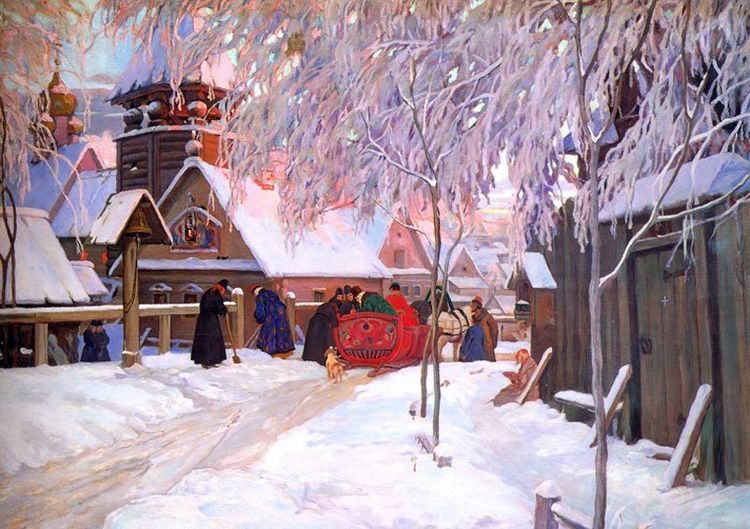
Boyar’s Visit to a Minster (1912) Горюшкин-Сорокопудов Иван Силыч ~ source Wikimedia Commons
I really loved this story. Nabokov’s writing is so descriptive and lush. The reader merges with the story as you can vividly see Sleptsov’s room, the wintery village scene, his son’s room and the emerging of the moth. The theme of death and life was very poignant, and I wondered if the birth of the moth symbolized a picture of the resurrection of his son in the heavenly realm. Thus, one hopes that Sleptsov will be able to move past his grief and find joy in life again.
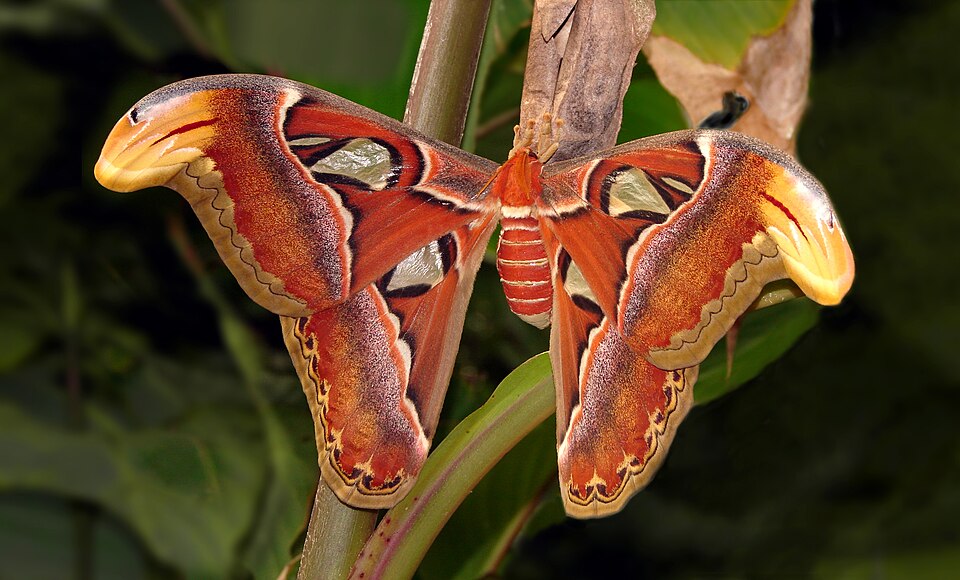
Attacus Atlas moth ~ source Wikimedia Commons
So far, I would say that this story is one of my favourites and I’m looking forward to reading more by Nabokov.
⇐ Reginald’s Christmas Revel Dancing Dan’s Christmas ⇒
